Reading Harry Potter

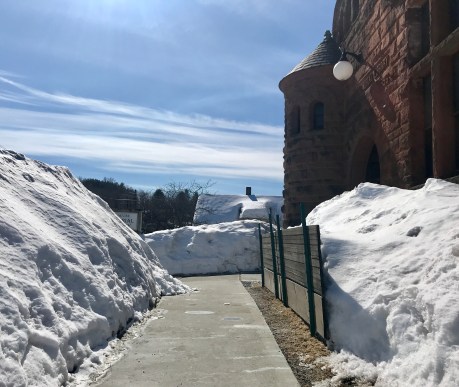
Like in-laws who have overstayed their welcome, winter lingers. While you might be wanting to mop mud from the in-laws’ boots off your kitchen floor, they keep coming and going, anticipating lunch and then dinner.

So, too, winter.

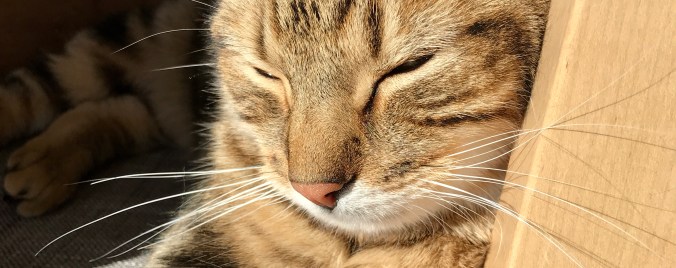
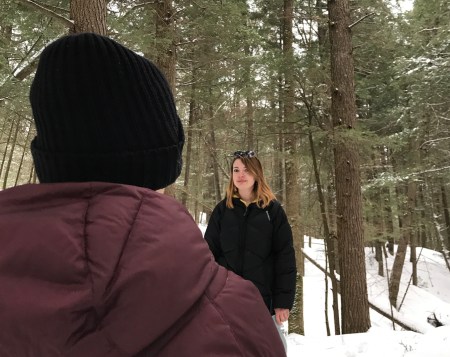
Sunday afternoon, my daughter reads Harry Potter with a cat curled sleeping beside her. I stretch on the rug with the other cat, reading David Wallace-Wells’ The Uninhabitable Earth: Life After Warming. She pauses to relay a Dumbledore tidbit. I consider sharing the word desertification, and then decide the heck with that. Later, we put on our boots — again, again. In the woods, we follow a narrow snowshoe trail.

I’m likely to lay down the grim reading and pick up Potter as a survival guide, in the current season and for the longer haul….

That epic era once derided as ‘prehistory’ accounts for about 95% of human history. For nearly all of that time, humans traversed the planet but left no meaningful mark.
IMG_4875.jpg

The Twisty Road North

Late afternoon on a Friday, I take a winter road trip north, nearly to Canada, along Route 14 so rutted with frost heaves my little Toyota bounces. The pavement and passing cars are bleached with road salt — rust, pernicious rust, I keep thinking, apprising the mortality of my vehicle.

My daughter and I return in the dark from her concert. It’s 8:30 pm, but might as well be midnight. No one’s on the road but a tractor with blinking lights before a barn. This is farming country. The few gas stations and general stores in the small towns we pass through have all snapped off their lights, shut up, gone home.

Even in the dark, this highway is familiar, although we rarely drive this way anymore. In the dark car, eating crackers, we swap stories. My daughter tells me about the  high school she just visited and its long locker room. I point out the state’s largest landfill. Whoo-hoo, my daughter says. A claim to fame. We pass a farm where she once believed Santa’s reindeer lived. I was so sure of that! She tells me about a tiny turtle on Lake Memphramagog I’d forgotten. She repeats the story with precise details; in a flash, I remember that brilliant April morning, the black and white checked dress she wore and loved.

Listening to her, at age 13, I hear her imagining a different life. What would it be like to live here? I think of her as so young, but I’m wholly wrong. Her stories keep flowing. Along this road we hardly ever travel, she has a whole history already, a detailed map of her past.

What an age 13 is: so full of wonder, of mystery: which direction will I steer my life?

To move, stay put, say the Buddhists. To see, stop looking. Don’t imagine paradise in the sky. Make paradise in the kitchen.

— Kate Inglis, A Field Guide to Grief: Notes for the Everlost

IMG_4855.jpg

A sampling of our everyday snowbanks this March

Memory, Body

In the middle of the night, I’m awake thinking of myself, years ago at 30, standing at the roundabout in Montpelier between Main Street and Route 12, baby on my back, trying to figure out where my life—where our lives—would go. It was October then, 1999, and the news amped Y2K fears.

Every time I walk along that section of street in Vermont’s capital city, I think of that cold autumn’s crepuscular hour, as if I pass through its shadow again. The notion of linear time is supercilious. Walking with a friend in the Hardwick town forest, we talk about our 13-year-old daughters. Both of us mothers now, long past adolescence—and yet, we’re both 13. Our conversation crackles with memory.

That baby on my back is now 20. No one but myself will ever remember that evening. And yet, there it is: always with me.

Women have been driven mad, “gaslighted,” for centuries by the refutation of our experience and our instincts in a culture which validates only male experience. The truth of our bodies and our minds has been mystified to us. We therefore have a primary obligation to each other: not to undermine each others’ sense of reality for the sake of expediency; not to gaslight each other.

— Adrienne Rich

IMG_4653

Februrary sunbathing….

Putting It All Together…

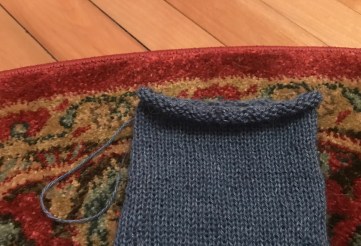
No earthshaking moment, but satisfying nonetheless, last night I cast off the second sleeve on the sweater I’m knitting for my daughter, and she slipped the blue sweater over her head.

Verdict? Unravel the hem and lengthen. But this will fit; I can see it now. Whether she wears this or not, my knitting eyes and fingers, a little math, some decent yarn, are pulling together.

I love knitting because it’s functional — especially in Vermont — creative and satisfying, because it’s portable, comforting when alone, a source of interest when together, because fellow knitters are often decent and curious people. Knitting never ends. Sure, eventually I’ll tie in the loose threads of this sweater, decide the length will do, and pass it along to my daughter. She will wear it; if not, I will. The cornflower blue yarn will hold dirt. The sleeves will fray. I’ll repair with a silver needle and scrap yarn. Maybe eventually her beloved cats will claim this sweater, nestling and purring.

The more a thing tends to be permanent, the more it tends to be lifeless.

Alan Watts

IMG_4117.jpg


Mid-October Garden

In the garden, fat Brussels sprouts nestle against the stalks. My daughter says two words when she sees them: With bacon.

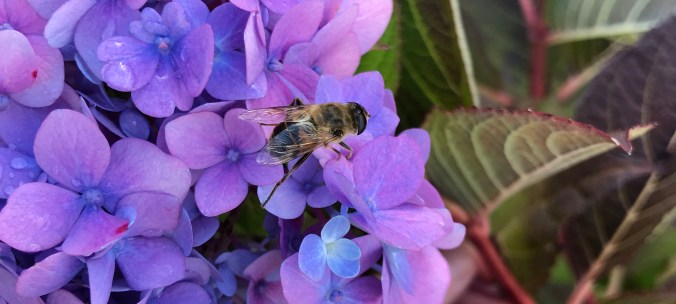
While the light funnels away — every single day, a little less — the remaining flowers in my garden brighten: marigolds, pink and violet hydrangeas, gold calendula, ragged now and past their prime.

None is travelling
Here along this way but I,
This autumn evening.

— Basho

IMG_3599

Ode to the Miraculous Melon

And then there’s this: at the very end of Vermont’s summer months — August 27th, a day of jumbled work and bruised adult egos, a day of existential pondering, after a moonlit night when I consider my very genuine failings as a parent to my oldest child, a day of humidity that ends with my daughters sitting on the bank of the pond while I swim with my friend, in all that cool water, its glassine surface broken in circular ripples with biting fish, and I long to keep swimming, swimming, we drive the 30 seconds home with a garden-grown cantaloupe cradled in my hands.

The melon had already split at its oblong end, vaguely skull- and exposed-brain-esque. As I carry the melon into the kitchen, the girls eye it skeptically. Already, that cracked end is clustered with fruit flies — where did they come from? — and I brush them away quickly with my hand and open the melon with a cleaver. The orange flesh bleeds juice.

With the cleaver, I slice off irregular squares, and then I’m eating it — famished not for the fruit, not for the sugar, not for the sticky liquid — but for the sheer miracle of a hard-shelled seed turned into such sweetness from soil and rain and sunlight, for all that this summer has been — both amazing beauty and clustering flies and ugliness of split rinds and quickly — hush, wait, yes — how just momentarily — we’ll all disintegrate back into that dust.

But not yet. Not this evening, with its creamy, rising nearly-full moon, two girls and two cats, a handful of chickens, and the crickets all night long, their songs still soldiering solidly.

IMG_3092