Oatmeal Chat, Vultures.

Vermont sends its swiftwater team to North Carolina, repaying a favor when Vermont was in need. Word comes of similar terrain and climate causes, but far worse devastation. We send them our empathy, our skilled folks, certainly money, to their world broken apart….

In Vermont, these weeks have been tepid, the foliage gently rotating to gold, the sun warm in the afternoons. This year, the purple asters decorate the landscape everywhere, pallets of brushiness.

Thursday afternoon, I take my laptop to our picnic table, the bluejays creeping near, curious, my bent-over sunflowers in the garden shaking with feathered gleaners. I’m stuck on this notion of impermanence my father and sister and I have been kicking around, when we connect in our disparate parts of the country via our laptops. Autumn in Vermont personifies impermanence. Stepping out for firewood in the early morning, geese clack over my porch roof, getting their V formation together, out of here for warmer waters.

In the co-op, I round an aisle and meet an old friend filling a paper bag with oatmeal. You can imagine me, he tells me, standing at my back door, just staring at the mountainside. What perfection today. From there, our conversation quickly bends into small town democracy, how each of these three adjacent towns are different. We step to the aisle’s side and dig into the grittier details of a legal letter circulating on email. My friend, thinking like me, asks about motivation. Who’s desiring what? Why? What’s the intent, for what human footing?

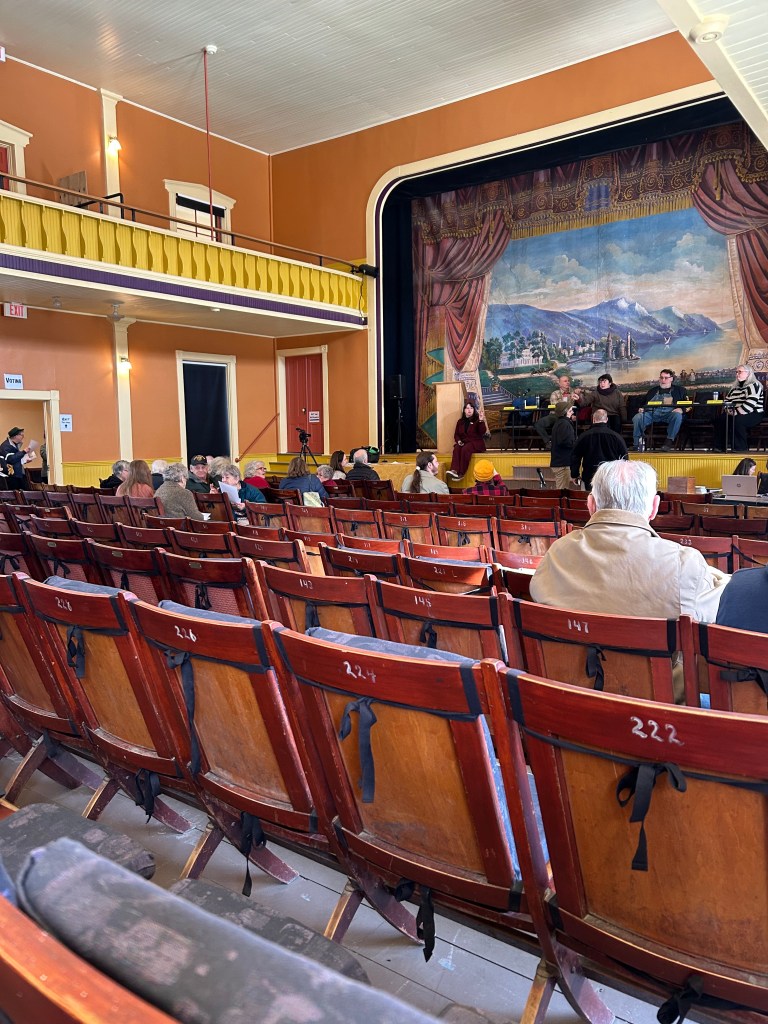
Fascinating questions. Vermont Selectboard meetings are generally unfettered democracy. Anyone can show up and speak their piece, ask questions.

Later, I step outside with my pound of coffee and pound of butter. The turkey vultures are circling, swooping low over this section of highway and co-op and river. In my wool sweater, barefoot in Danskos, I stand watching for the longest time, the sun falling behind the hillside.

A passerby, walking in, glances up, too, and shudders. “Them. Those birds.”

I start up the hillside, under the gyrating vultures.

 Even  in Kyoto—
hearing the cuckoo’s cry—
 I long for Kyoto.

— Bashō

Mysterious Visitors

When my youngest daughter was four, she and one of her best four-year-old friends were playing outside and called me to come from the kitchen and, “See the bunnies, mama!”

This was right around Easter, when the yard was worn-down snowbanks interspersed with wet earth. Two enormous hares were hopping around the yard, their white winter fur turning brown in patches. Or maybe the hares looked so large because the girls in their boots were so small.

Our house was surrounded by thousands of wild acres. We had seen moose and deer and bear wander through, but never hares that came to visit for a morning. The girls had made an open air house beneath the branches of a spruce tree. All morning, the hares came and went, hopping through on their powerful legs, then disappeared and never returned to play.

This Easter arrives in a strange and disorienting period in our family life, of tests and quarantining, of worry and waiting, of days of eating take-out Japanese food sent from my parents and coconut birthday cake. We’ve abandoned the dining room for the living room, surrounded by piles of library books, cats sleeping on blankets, and my two knitting projects. I’ve begun to wonder if I might ever brush my hair again.

My youngster asks what’s this holiday about anyway, with the rock rolling away and the ascension? On the phone, my brother offers his own explanation that I’ll keep unrepeated, although I woke wondering if Jesus himself wouldn’t have objected. Jesus walked in the most profane of the human world and perhaps embodied the most holy, too.

On this spring morning, with the robins singing in the box elder outside our kitchen, I’m grateful for both the ineffable mystery of spring — thaw and crocuses — and the mundane chores of dish washing and a kitchen floor badly in need of a sweep. Or, maybe, as so often before, I’m utterly wrong, and there’s not two things, not a both, but one.

Put a Fork in Winter

On a sunny and breezy Friday afternoon, the Transfer Station Guys assure me the back of winter is broke. Their weatherman — who’s never wrong — told snowmobilers and skiers to put a fork in winter. It’s about done in.

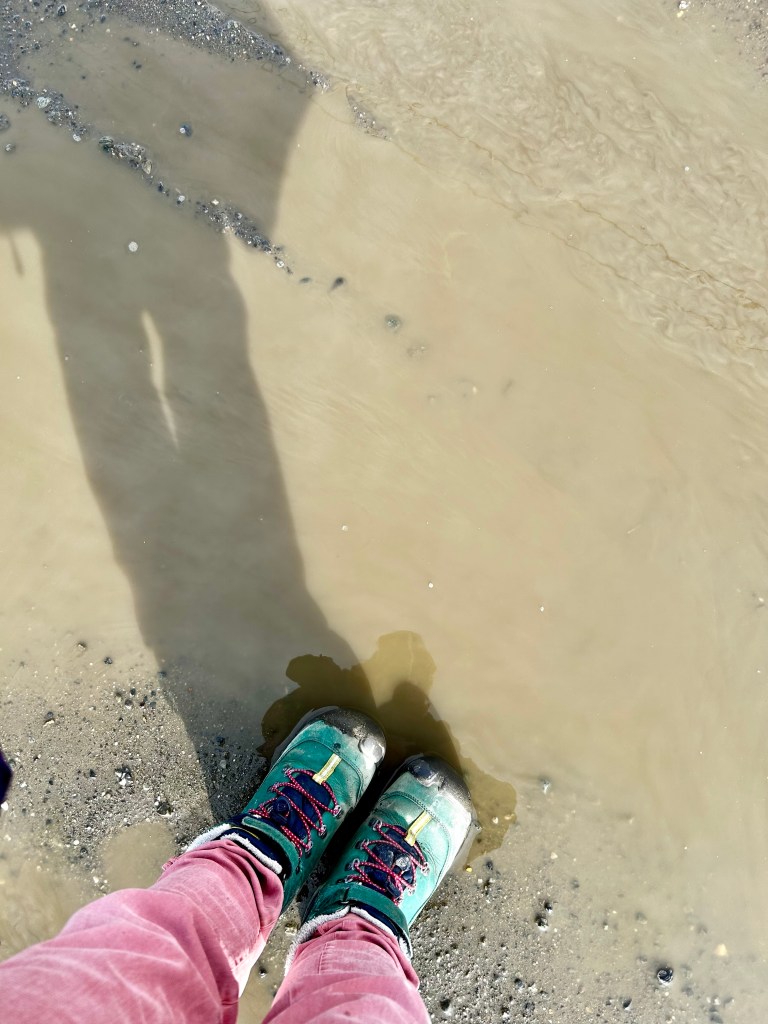
I’m on my way from here to there, later changing out of the mud boots I’d worn to the dump, switching to shoes on a sidewalk. A log truck driver, seeing me in sock feet, raises one hand in a thumbs up.

Later, picking up my daughter around five at the high school, the grownups stand around chatting while the kids scale the enormous, dirt-blackened snowbanks flanking the parking lot.

Redwing blackbirds are singing: oh, sweet harbingers of spring.

IMG_7275

Visitor, An Ask

On a sleety day in rural Woodbury, the bright spot in my afternoon is the woman who walks to the library — a mile or so on slushy backroads because she and her partner have no vehicle. The truck died.

She checks out books, we talk about men and raising kids, the cost of living in Vermont. I’ve been working in rural libraries and schools long enough now that I quickly know who’s hard up versus who’s driving that old Subaru because an old Subaru might make them look a little less affluent. In the sogginess of March, my library visitor is sharp and funny, with an amusing eye for details. Sitting there, in the warm library, after a few hours of relative quiet to catch up on work, I winch, thinking of how carless-ness, unemployment, and rural Vermont can crowd up against a person.

When I leave, I drive her down the road to Hardwick, the two of us, talking, talking. It’s after 5, and while dusk isn’t far off, the day still holds light. She’s pragmatic about her chances for a ride back up the road. I never know. Then, just before she gets out, she asks for two dollars, for him, the boyfriend.

… understanding, and action proceeding from understanding and guided by it, is the one weapon against the world’s bombardment, the one medicine, the one instrument by which liberty, health, and joy may be shaped or shaped towards, in the individual, and in the race.

James Agee

IMG_1309

Stories

My favorite opening line from a Ray Carver short story reads, “I’ve seen some things.” Winter weary, in mid-February: I’ve heard some things.

A colleague shares a nearly-unbelievable story of her marriage breakup, and I think, madness, madness. The story is so unreal, it’s plausible to me. Kierkegaard wrote, “Life can only be understood backwards; but it must be lived forwards.”

Every morning, every evening, the light lingers just a little longer, reminds us that spring is buried deep but not impossibly buried, that forwards is always the thrust of life.  Smartphones and the internet notwithstanding, the human story in many ways repeats its endless variations of the same simple story, over and over. We’re sentient beings on a changing planet. Snow trickles into tulips. Spring light inevitably emerges.

IMG_6235

Little Kid Yellow

Two summers back, I bought a gallon of paint for $10. At the local hardware store, the clerk had inadvertently mixed the wrong color and offered it to me. What a score, I thought. The color approximated the hue I once used to paint windows in a cupola — a color I christened Little Kid Yellow.

Not everyone in my household has been an enormous fan of painting our front steps bright yellow. Afterwards, even I wondered, Why do I do these things?

Likely, because of January. Because of November, too, and December, and February. Heck, March and April. By the end of May, tiny blue squill will sprinkle the greening-up grass.

But right now, color in northern Vermont is hard to come up. And the little bits of brightness — that’s gold.

The winter wind
flings pebbles
at the temple bell

— Buson

IMG_7057.jpg