Hefty Lifting

In my first pregnancy, I developed a fear of the transition phase of labor. Even without experiencing labor, I knew that would be my point of trial and terror. As it turned out, that so dreaded transition was but a moment or two. I had my single place of easy breathing. I looked at an analog clock, the time of 3:14 pm lodging in my memory. Sunlight streamed through an enormous window.

Moving, as Ben Hewitt once told me, sucks. As usual, Ben is succinct and dead-on right. Moving is the transition phase I dreaded in labor, the leaving one place and not-yet-in-another.

In days of acute stress, like the times my former husband was arrested, I wrote notes to guide myself through days – call this person or buy coffee, but also fragments of dialogue, or the state’s attorney’s ironed, lavender shirt – anchoring those moments in my notebook, hungry writer that I am, to return to that time later, when the miasma dissipated, and glean.

I want people who write to crash or dive below the surface, where life is so cold and confusing and hard to see.

Your anger and damage and grief are the way to the truth.

– Anne Lamott, Bird By Bird
FullSizeRender

Sunday: Math Homework

One embarrassing aspect of my parenting that keeps rearing its ugly head is my abysmal understanding of math. Or, as my brother might phrase it, the complete and total absence of even meager understanding. My daughter, grappling with variables and graphing, asks for help, and then is reduced to querying, How did you get through calculus anyway? Or are you lying about that?

As I was flanked on either side by math luminosity in my older sister and younger brother, headed up by my PhD-in-physics father, skipping out of math wasn’t an option for me… and yet somehow I always felt in Prob & Stats class like I was the dog with its head hanging out the window, tongue flapping, dreaming of distant rivers to swim.

Hence, my humanities path.

Now math returns to me frequently (often on Sunday evenings). With something approaching horror, I heard my daughter claim her teacher doesn’t want to see her math work, merely the answers. What? I demand. Show your work was a cardinal rule of my student life, along with always use a pencil, these dictums wound so deeply into me I can’t abide the thought of breaking these basic rules. That’s tantamount to crossing a street with your eyes closed. My daughter looks at me with complete exasperation, fully ready to do just about anything else.

While I admit Solve for x still runs a chill up my spine, I have learned a few things since those trig days. My advice: begin with what you know. Scope out your variables, size up your know-how, and savvy up a plan.

Almost all good writing begins with terrible first efforts. You need to start somewhere.

— Anne Lamott

IMG_0379

Elmore, Vermont


Cycle of Seasons, Firewood, Re-Envisioning Your Soul….

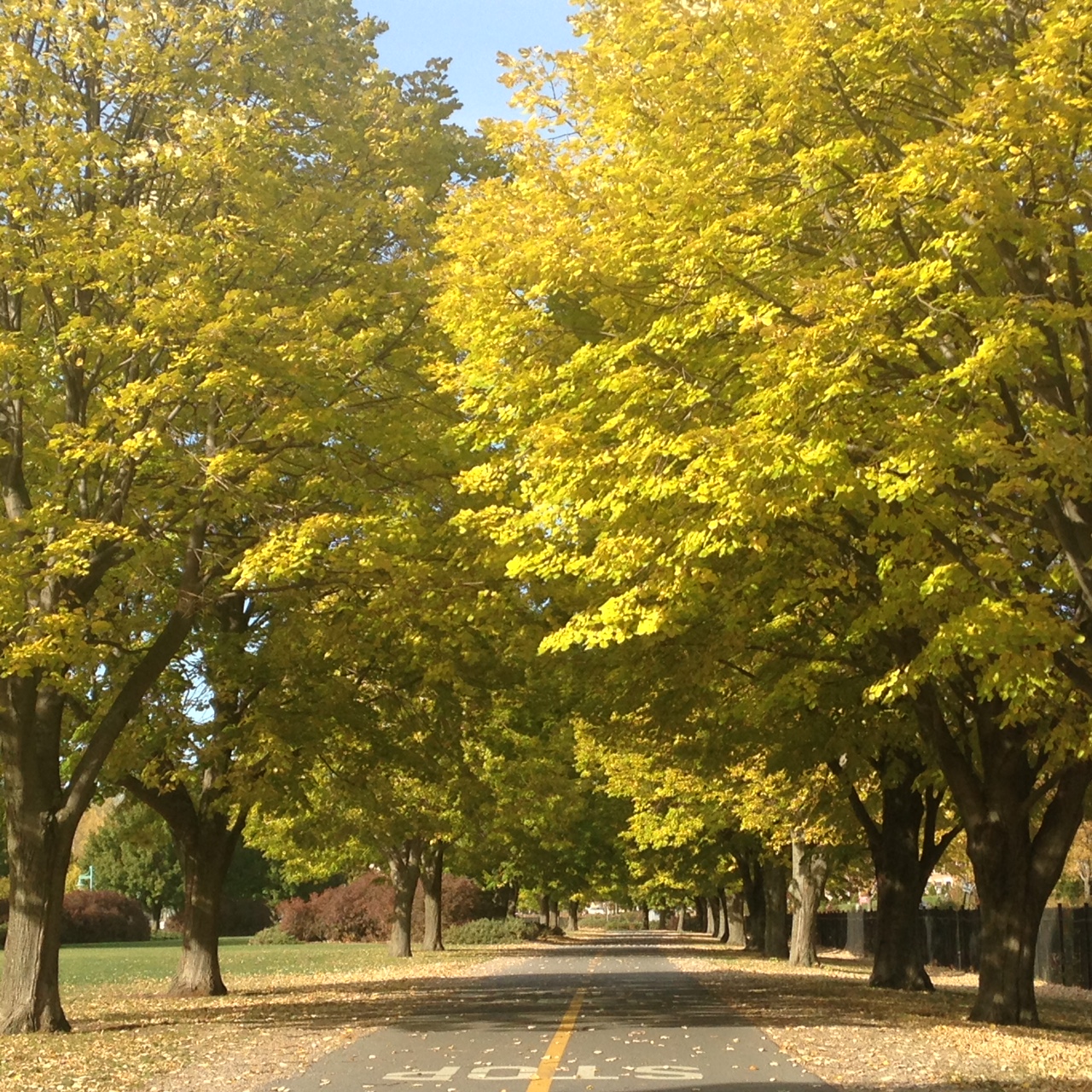
Driving home today, last week’s mantel of golden leaves had fallen from Elmore Mountain, leaving only a dull gray and dark evergreen. In Vermont, the seasons change fierce and hard, the fall hammering away summer’s softness, the spring mud swallowing winter’s crystalline beauty.

The last of our winter’s firewood has yet to be stacked, sprawled over the grass. I’m impatient, anxious for the wood to be stacked and drying, my precious heat. My older daughter complains about the ceaselessness of this chore: we cut and split the wood, stack piles, carry armloads into the house, load the stove, shovel the ashes out, and do all this again. And again, and so on….

I point out this year I actually bought firewood.

Whatever, she says, rolling her eyes, exasperated.

As kindly as I can (which might be little), I say, But that’s life.

She’s sixteen; she’s not buying my advice. I can hardly fault my daughter. At sixteen, my own eyes were on the linear horizon, eyeing the freedom of the open road, the sky unbounded. I believed I could remake – or re-envision – my own soul. Perhaps, yet, even with my hands full of firewood and ashes, I still believe I can.

But you can’t get to any… truth by sitting in a field smiling beatifically, avoiding your anger and damage and grief. Your anger and damage and grief are the way to the truth. We don’t have much truth to express unless we have gone into those rooms and closets and woods and abysses that we were told not to go in to. When we have gone in and looked around for a long while, just breathing and finally taking it in – then we will be able to speak in our own voice and to stay in the present moment. And that moment is home.

–– Anne Lamott, Bird By Bird

IMG_0162

Burlington, Vermont

Singing and Writing: a Small Blue Book

The other morning, between errands, I stopped in at Bear Pond Books in Montpelier, and found a small novel by Tomas Gonzalez, a Columbian, In the Beginning was the Sea. The book is beautifully crafted and fit just about in the palm of my hand, yet with a real heft and weight. And – it was my favorite color: blue.

These past few days I’ve swum down into the sea of this book. I’m not at all likely to head south to Columbia, and the book itself is not gleaming feel-good read. But it’s writing with a depth that goes down and down, and is as true and real to me as drinking a glass of my own well water.

As a Vermont writer, I’m often asked about sense of place and its importance in my writing. Yes, of course, place-centered geography centers in my writing. But equally, I know, the beauty of  a tropical paradise can also drive an inhabitant over the edge, and to write with a sentiment that place is only holy seems false to me. Surely, the yingyang flip of holy is unholiness. While this short novel holds the beauty of human life and the moonlit sea, the writing also contains the deeper elements of all the vagaries of human existence.

“So WHY does our writing matter again?” (my students) ask.

Because of the spirit, I say. Because of the heart. Writing and reading decrease our sense of isolation. They deepen and widen and expand our sense of life: they feed the soul… We are given a shot at dancing with, or at least clapping along with, the absurdity of life, instead of being squashed by it over and over again. It’s like singing on a boat during a terrible storm at sea. You can’t stop the raging storm, but singing can change the hearts and spirits of the people who are together on that ship.

— Anne Lamott, Bird By Bird

IMG_0124

Storm Windows, Fiction

While I was at work yesterday, my daughters washed and latched storm windows on the kitchen windows. They also biked in the season’s first snow, baked a chocolate cream pie from Pie which the younger daughter is reading, argued, played memory games, and spread out a rug in front of the wood stove as an official opening to the wood stove/snow season. Already, the piles of games and books and knitting are growing in uneven piles on that rug.

As my own book nears its publication date, I’m pushed to speak more about how I came to write this book, and why. In my own busy household that mixes children and rural Vermont, what’s increasingly clear to me is that writing is a human activity as essential to our lives as stocking your root cellar or bank account or however you do it for the long, colder season ahead. Our culture emphasizes material gain above pretty much everything else, but, really, at the day’s end, there’s little else of relevance besides stretching your bare toes toward a hot fire, with the children nearby, and the windows buttoned up against the growing dark and cold.

The society to which we belong seems to be dying or is already dead. I don’t mean to sound dramatic, but clearly the dark side is rising. Things could not have been more odd and frightening in the Middle Ages. But the tradition of artists will continue no matter what form the society takes. And this is another reason to write: people need us, to mirror for them and for each other without distortion – not to look around and say, “Look at yourselves, you idiots!,” but to say, “This is who we are.”

Anne Lamott, Bird by Bird

IMG_0119

October/West Woodbury, Vermont