Sometime In Autumn

This morning, the younger daughter and I noticed the phlox, now fully blackened with frost, has withered enough to let light beneath our deck. The two of us (barefoot in October!) looked down through the slats. What might lie under there?

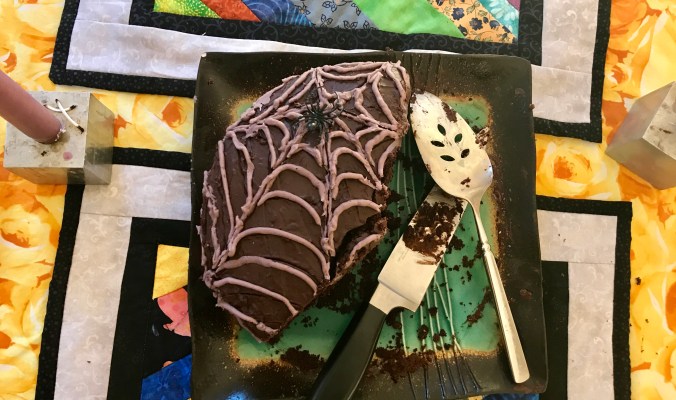
No school for a few days. While the laundry flaps free from the clothesline, the girls bake a chocolate cake for a visitor tonight, and I spread my work over the dining room table.

Every day, less and less leaves on the trees, but the sunlight’s still holding strong.

It was like this:
you were happy, then you were sad,
then happy again, then not.

It went on…

– Jane Hirschfield

IMG_0097.jpg

East Hardwick, Vermont

No Fear

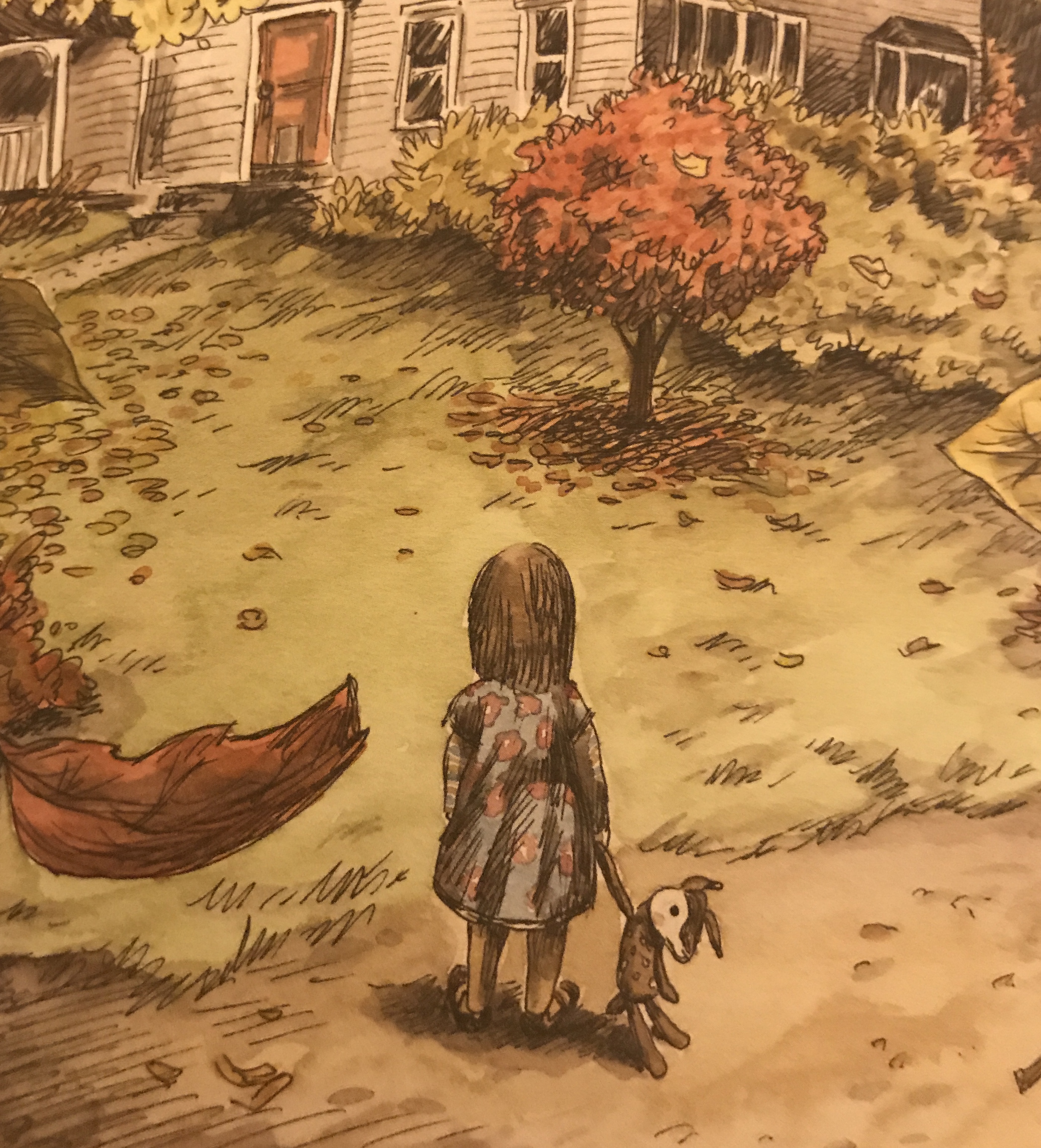
I’ve heard authors read work from mesmerizing poetry to an essay about a colonics session – but the Argentinian cartoonist I just met likely ranks at the very top. Incredibly famous outside the verdant realm of Vermont, the cartoonist sat on the floor with the kids and told stories and made the little ones laugh, and assured them they could all draw, too.

Even after the adults tried to close the hour, he kept on answering the kids’ questions, saying, This is an important question. This is good.

At the very end, a boy asked how he could become a cartoonist. The cartoonist said, Like this. Tell your parents you will need a book without these things – and here the cartoonist drew four parallel lines on a piece of paper – those are not helpful. You will need a black marker. And then you are on your way.

Great rule of thumb: when in doubt, get rid of the lines.

In my opinion, childhood is one of the most intriguing phases in life… For instance, when they (kids) draw, they do it with such freedom…! We adults can’t ever experience that level of freedom again, simply because we are scared of looking ridiculous or failing or making mistakes. When they draw, my kids have no fear. And that’s the hardest trick for an artist.

Liniers


Elementary School Literature

On my wedding invitations, I printed a line from Robert Frost, and a guest, mistaking Carl Sandburg for crusty Frost, gave us a collection of Sandburg’s poems.

I woke this frosty morning thinking of a poem we read aloud in my fifth grade class, in the basement of a three-story brick building later converted to senior housing. Although I grew up in wooded New Hampshire, far from any harbor or city, the poem’s perfect for kids – short and muscled, primed to pounce, cat-like.

Here’s the past again materializing: I’ve long since forgotten that teacher’s name, or even anyone else in the class. Yet I distinctly recall sitting there as a quiet kid wearing orange tights, in a warm classroom where the basement windows opened to the back driveway, loving this poem.

Hard frost last night. Wearing winter coats, the 12-year-old and I walked last evening, the stars overhead, passing no one.

“Fog”
The fog comes
on little cat feet.
It sits looking
over harbor and city
on silent haunches
and then moves on.
– Carl Sandburg

Balmy Days (Yet)

This autumn gives us day after day of warmth, and while the days’ length dwindles, the light oddly expands as the branches shake down their leaves, opening up the landscape around our house and on the distant mountains, too.

The cold will come. That isn’t an if; it’s a when. At its front, our house has a two-story glassed-in porch, and, pretty as these windowed rooms are, I can imagine January wind and grainy snow drifting through these old panes.

It’s October, time of house arts-and-crafts. The girls wash the windows, and my older daughter weather-strips with caulk, smoothing the beads. I bury crocus and snowdrop bulbs in the front flowerbed, smoothing the soil over these knots of roots. We leave the doors wide open, and sunlight fills our rooms. The neighbor’s little white dog comes to visit.

The crow
walks along there
as if it were tilling the field.

– Issa

IMG_0066.JPG

October, Vermont

This has been a terrible week in Vermont news, involving brutal violence against young women, their mothers, and their children. I don’t usually write about violence and domesticity, for a very raw reason: I am one of those women who called the state police into her home, not once, not twice, but seven times in a period of days. But my life – and my daughters’ lives – did not end in bloodshed. Last night, I said goodnight to my daughters as they spoke to each other while lying in their beds, with their doors open across the hall. We live in a house where a Christmas cactus blooms profusely.

While I struggle with the usual junk – a too sparse income, a book I’m trying to sell – I consider myself unbelievably lucky. At certain junctures, our lives could literally diverge either one way or another, and sometimes those places may span out lengthily, over days or weeks, or sometimes nothing more than seconds: the driver that swerved and did not hit the child, the plane missed by moments that later fell from the sky.

Those intangibles, in so many ways, drive our lives: I remind myself, over and over, that it matters whether I see the world with bitterness or with gratitude. As my brother once impressed on me, there are things that cannot be undone. Violence is one of those things. In my life, the sage kindness of strangers pushed my life away from an abyss. That’s a debt I owe to the world, and I debt I intend to repay in largesse, one way or another, to a world that is sometimes beneficent and sometimes unimaginably brutal.

Most people are afraid of the dark. Literally when it comes to children, while many adults fear, above all, the darkness that is the unknown, the unseeable, the obscure. And yet the night in which distinctions and definitions cannot be readily made is the same night in which love is made, in which things merge, change, become enchanted, aroused, impregnated, possessed, released, renewed.

– Rebecca Solnit, Men Explain Things To Me

Light

On a late afternoon, I walked out of the Montpelier Library and down the street. The trees along the street were shedding their pale yellow leaves in a balmy, golden light; the sidewalks were busy with children, the afternoon commute already inching its way home.

I walk this way frequently, and always, at one particular place, in front of the stately Montpelier Inn, I remember one evening I stood there, many years ago, with my baby daughter on my back. It was late October then, although I don’t remember any cold. Instead, I remember swaying from foot to foot, already habituated to holding a baby – in my arms or on my back – and watching the twilight creep in, the day’s pale light slowly passing to dusk.

I remember that afternoon-slash-evening as one of the longest pauses in my adult life, waiting for someone who never appeared. Later, I realized my message had gotten lost along the way.

It’s odd, how even in the sunniest and lightest moments of our lives, there’s the past we keep walking through – and I do keep walking, every time, heading back into the busyness of my life – this afternoon, at least, graced with that lovely autumn light.

The trees go on burning
Without ravage of loss or disorder.

From Donald Hall’s “Letter In Autumn”

IMG_0037.jpg