Go on and wonder.

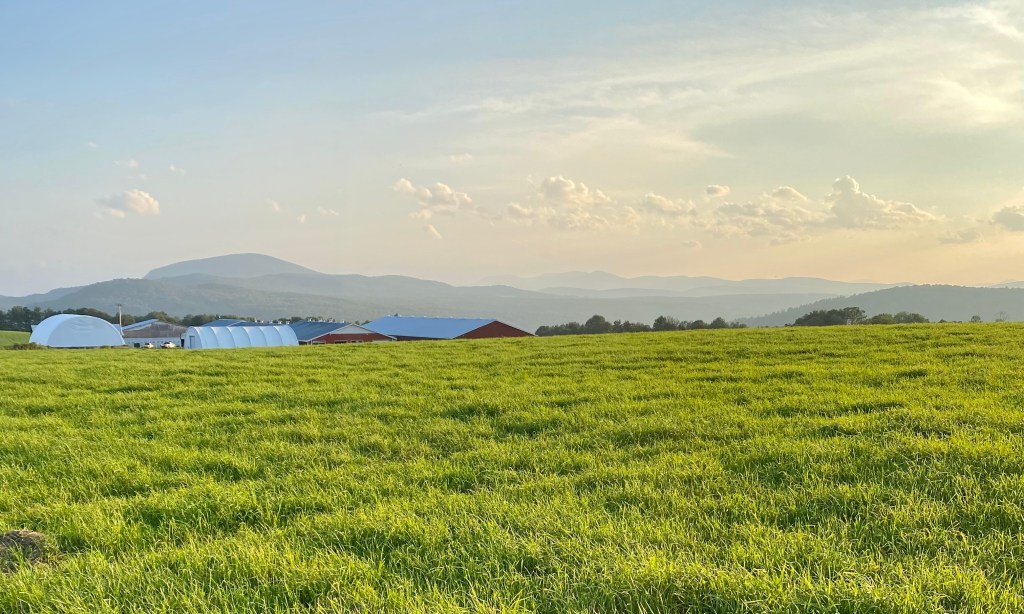
I skip out halfway through a Selectboard meeting and take a backroad home. Since the floods, I haven’t driven these dirt roads. The roads are back together mostly, with rocky channels on either side of the steepest places. At the road’s highest place, I pull over.

August light.

I’d started that morning in jeans and a sweater, working on my back deck while rain splattered down, the morning large with a cold damp breeze that made me wish for socks in my sandals. This evening, I’m wearing a sundress again.

All summer long, we’ve been collecting complaining about the summer in Vermont. First, no rain. Then, too much rain. I have plenty of firewood left from the tepid winter, and then burned fires into the summer.

The evening spreads out radiantly. For this moment, I’m in no rush to head anywhere, so I park and walk down the road a short ways, crickets sizzling in the hayfields. A pickup rolls slowly down the road. The driver, an acquaintance, stops, and we chat for just a moment, about the particular green and blue surrounding us, then he glides away.

Light in August. My father bought me a used copy of Faulkner’s novel for a dime in a used bookstore. I was a teenager, a fanatic of Tolstoy and Dostoyevsky, those immense Penguin paperbacks that were so gratifyingly fat. I kept that copy with me for so many moves, thousands of miles, and I’m guessing I have that version yet, crammed on my bookshelves.

Faulkner’s world is the complexity of past and present, the world jammed against our faces right now, floods and fires. This morning, again, a crimson dawn, curls of fog in the blue valley. My east windows need washing. Get on this, I think, get on this…

“Wonder. Go on and wonder.” 

— Faulkner
Reading Harry Potter

Like in-laws who have overstayed their welcome, winter lingers. While you might be wanting to mop mud from the in-laws’ boots off your kitchen floor, they keep coming and going, anticipating lunch and then dinner.

So, too, winter.

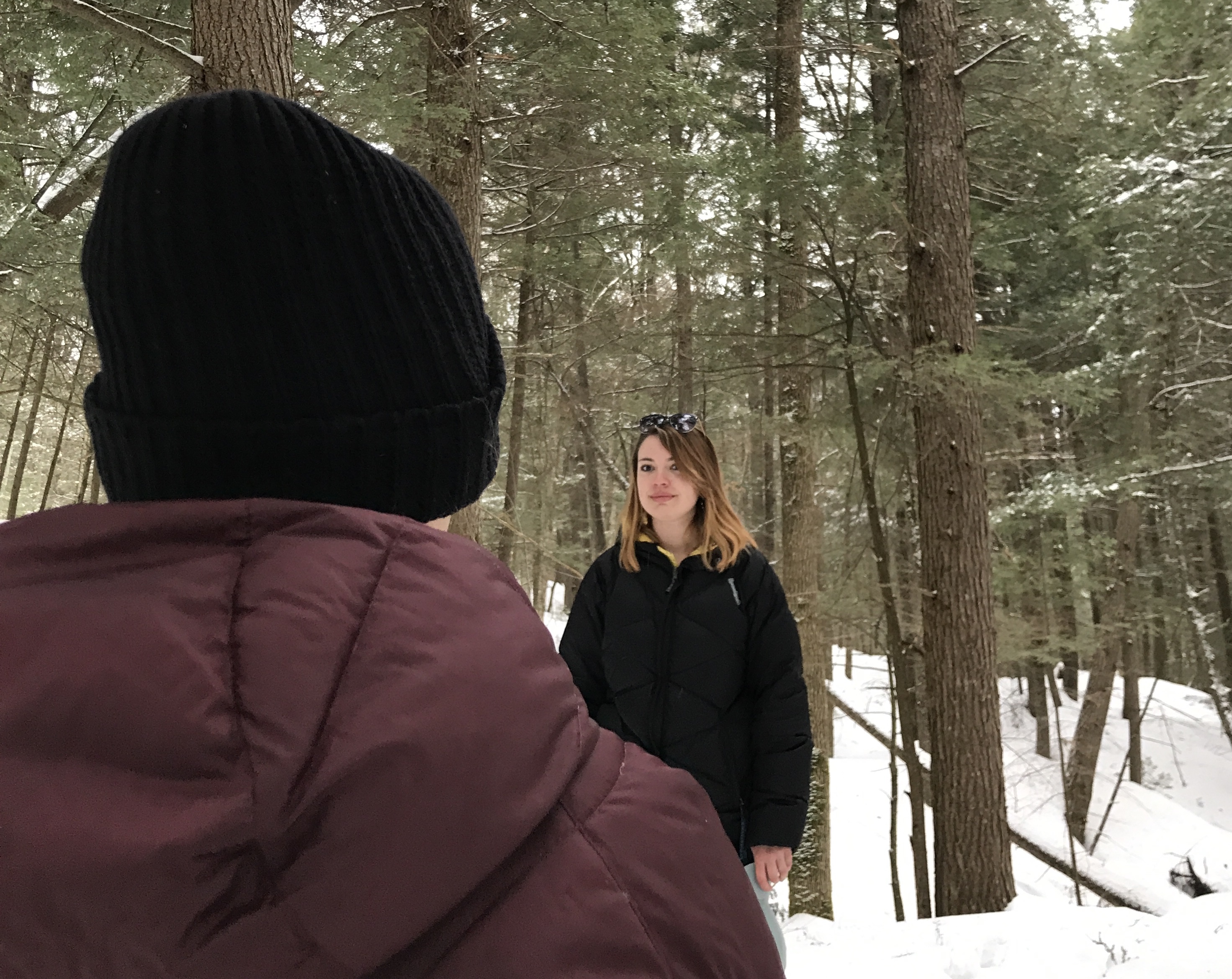
Sunday afternoon, my daughter reads Harry Potter with a cat curled sleeping beside her. I stretch on the rug with the other cat, reading David Wallace-Wells’ The Uninhabitable Earth: Life After Warming. She pauses to relay a Dumbledore tidbit. I consider sharing the word desertification, and then decide the heck with that. Later, we put on our boots — again, again. In the woods, we follow a narrow snowshoe trail.

I’m likely to lay down the grim reading and pick up Potter as a survival guide, in the current season and for the longer haul….

That epic era once derided as ‘prehistory’ accounts for about 95% of human history. For nearly all of that time, humans traversed the planet but left no meaningful mark.

IMG_4875.jpg

Snippet

For dinner last night, my daughter fried beef for enchiladas. From the garden, I brought in a basket and began washing vegetables. Here, throw in slender leeks, sweet red peppers, onions with their fat greens. I filled a salad bowl with mesclun, radishes, sun gold tomatoes.

Do people talk about the weather as much as Vermonters do? What a summer, we say.

Yesterday: muggy heat, steady rain, a perfect evening. We swam in the nearby pond again, a little chillier after the rain. Then we gathered up our towels and went home.

More from that stack of donated books:

Our story is never written in isolation. We do not act in a one-man play. We can do nothing that does not affect other people, no matter how loudly we say, “It’s my own business.

— Madeleine L’Engle, Walking on Water: Reflections on Faith and Art

IMG_2658.jpg

Girls camping, Lake Champlain: water, rocks, sky, and s’mores

Weighty Reading

A 8-year-old boy appears in my library and asks for a copy of the wrinkle book. He’s looking for Madeline L’Engle. When I place the book in his hands, he holds it, staring at the cover. It’s an old hardback copy, the dust jacket long since disappeared, so the cover is a plain turquoise, the corners worn down.

This book’s too hard for him to read. I know it, and he knows it, too. I ask if his parents ever read to him at night, and he says, No.

I was a little younger than this boy when my father read this book to my sister and me, and even now, I have to think a little about a tesseract: what is this odd, strange wrinkle in time?

This child isn’t shy, but he stands there, holding this book in two hands. Gently, I suggest he take a second book, too, one I know he can read and will likely love, but he takes the L’Engle, too, pushing the books deep into his backpack without a word.

Life, with its rules, its obligations, and its freedoms, is like a sonnet: You’re given the form, but you have to write the sonnet yourself.

— Madeline L’Engle, A Wrinkle In Time

IMG_1007

The Value of One Word

My 11-year-old opened a box with a brand-new puzzle today and said happily, “This smells puzzle-y.”

What a world this is, where a kid can make up a word that’s indicative of so much – winter evenings around a table, cheerfully chatting – and spin together that treasured past with the tangible promise of future pleasure literally in her hands.

Our physical world is dictated by laws of equal and opposite action; the earth gives generously, but the earth taketh, too, and doesn’t skimp on the taking. Which is perhaps why that word puzzle-y shines so brilliantly. Like Noah’s olive branch, my daughter’s word treasures the past and beckons in the goodness of the future.

And it came to pass… the waters were dried up from off the earth: and Noah removed the covering of the ark, and looked, and, behold, the face of the ground was dry…. (The Lord said) bring forth with thee every living thing that is with thee, of all flesh, both of fowl, and of cattle, and of every creeping thing that creepeth upon the earth; that they may breed abundantly in the earth, and be fruitful, and multiply upon the earth… While the earth remaineth, seedtime and harvest, and cold and heat, and summer and winter, and day and night shall not cease.

Genesis 8:13-22, King James Version

fullsizerender

Stowe, Vermont

The Barbed Past

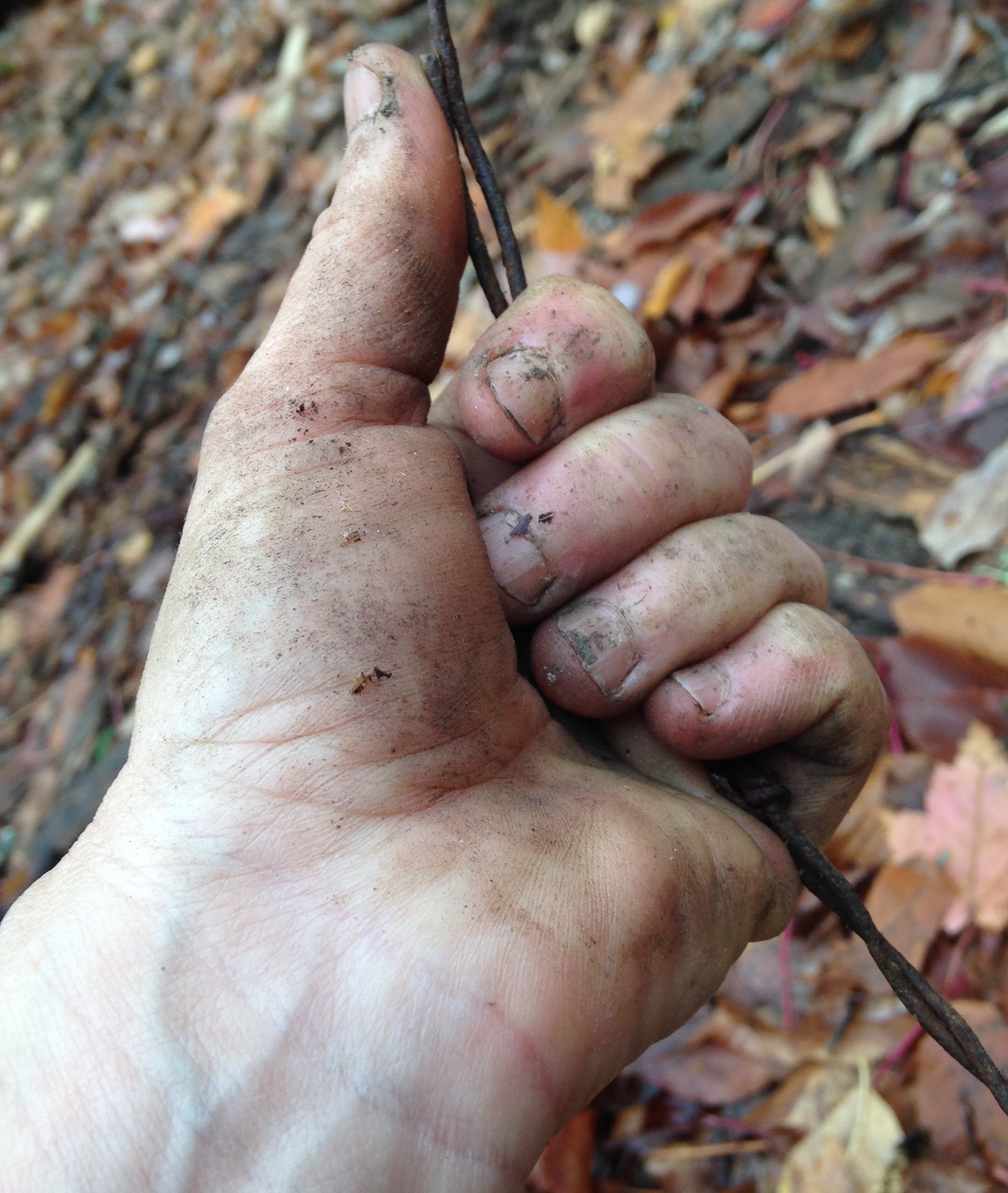
Hefting rotted stumps in fall clean-up today, I tripped on a surprising strand of rusted barbed wire and tore my pants. What crude past is this, surfacing near my well-trod woodpile path?

Whoever strung this barbed wire is no doubt long since passed from the living.

Here’s the past again  – tangible in my hand and elusive with its story – or so the cliché goes. But this last week, I received an email that explained a great deal of my life, all the way back to my very earliest childhood, that gloaming of early memory. Like a tangled wire that has been straightened and trued, I saw a clear thread of my own life shiningly clear.

And yet, time is a strange thing. Ten years ago, I might not have understand what an illumination these words are; I kept the letter to myself. Someday, perhaps, I’ll pass it along to my own children. In the meantime, I’m likely to snip away at that barbed wire, so no one else trips on that particular debris of the past.

There, in front of us, where a broken row of houses stood between us and the harbour, and where the eye encountered all sorts of stratagems, such as pale-blue and pink underwear cakewalking on a clothesline, or a lady’s bicycle and a striped cat oddly sharing a rudimentary balcony of cast iron, it was most satisfying to make out among the jumbled angles of roofs and walls, a splendid ship’s funnel, showing from behind the clothesline as something in a scrambled picture – Find What the Sailor Has Hidden – that the finder cannot unsee once it has been seen.

– Vladimir Nabokov, Speak, Memory

fullsizerender