Sun. Rain Moving In.

These April days, suddenly full with light rushing back. I’m up early, getting things done, putting order into the messiness of my life. Does it make a difference? Who knows? Still, we need to eat. We wash up. Teen does homework. The songbirds and turkey vultures return in force. Now, blue herons fly over my house every day, from the reservoir to the pond near my friend’s house. I think, what if a heron dropped a note or a homemade donut? How cool would that be? But the herons fly on, way cooler than our little human minds.

Here’s a cool poem, though:

Over the Weather – Naomi Shihab Nye, 

We forget about the spaciousness
above the clouds

but it’s up there.The sun’s up there too.

When words we hear don’t fit the day,
when we worry
what we did or didn’t do,
what if we close our eyes,
say any word we love
that makes us feel calm,
slip it into the atmosphere
and rise?

Creamy miles of quiet.
Giant swoop of blue.

Promise.

Hurray! A whole day (Covid card and mask required) devoted to a workshop at Jenna’s Promise. I haven’t been to a full gathering in, well, about two years. The workshop was about the future of recovery in the Green Mountain State.

One of the key speakers lifted a blue vase. Her daughter, now passed away from an overdose, had brought home the vase from India. The vase had broken in her luggage on the return flight, and it had sat on a shelf in pieces. The speaker raised the vase and explained how her grandson had suggested they repair the vase with super glue. Together, they mended the beautiful vessel.

The thing about this audience — the recovery crowd — is that the rose-colored glasses have long since shattered for everyone in the room. Any wet eyes are likely to be from tears — from sorrow or laughter — either is likely. Hardly any rational human would disagree that the pandemic broke our world where it was already ailing. While I’ve long since relinquished any belief in magic, I do know the power of super glue. And I do know what’s broken can sometimes be repaired.

(And, I heard the inimitable Johann Hari read….)

April. Spring. Robins mudding those fat-walled nests.

“It isn’t the drug that causes the harmful behavior—it’s the environment. An isolated rat will almost always become a junkie. A rat with a good life almost never will, no matter how many drugs you make available to him…. Addiction is an adaptation. It’s not you—it’s the cage you live in.” 

— Johann Hari, Chasing the Scream

Holy Language.

Montpelier, Vermont

On a rainy day last week, I parked on a Montpelier side street and walked into town to attend an opioid summit as a writer.

The last time I had been in the conference space in the Plaza Hotel was nearly precisely two years ago, when I attended a conference as a journalist, charged by my editor to “make connections,” and spent most of it drinking coffee and eating sugar cookies and talking with a para-educator at my daughter’s high school about his experiences. Like darn near everyone else in Vermont, he has a side gig for income, and runs a seasonal bakery.

I sat at a table with people I admire who I’ve met through writing. For those few hours, I had the nearly heady experience of meeting new people; I had remember that deep pleasure. Years ago, I traveled on a train from Charlottesville, VA, to Chicago, and sat beside a man from West Virginia. We talked off and on for those hours. It’s been so long since I had that experience of just listening and talking with people.

For a few hours, I listened to stories about addiction and struggle, about suffering and redemption, about profound loss and grief. Listening, my heart grew full. Our stories and words, the act of telling and listening, of sharing the hard and the beautiful things in our lives, bound us together. The summit began and ended with singing. I’ve never been one for group activities, for open sharing, but at that moment, I utterly understood; I got it. The melody of our language and experiences pulled us together, acknowledging both the beautiful and the terrible about human life, and made our world shine brighter.

…. Grateful to have a terrific piece about Unstitched run in the Brattleboro Reformer and the Manchester Journal by Gena Mangiaratti. And The Rumpus included my essay about the backstory of Unstitched in their Voices On Addiction column this month.

Snowfall.

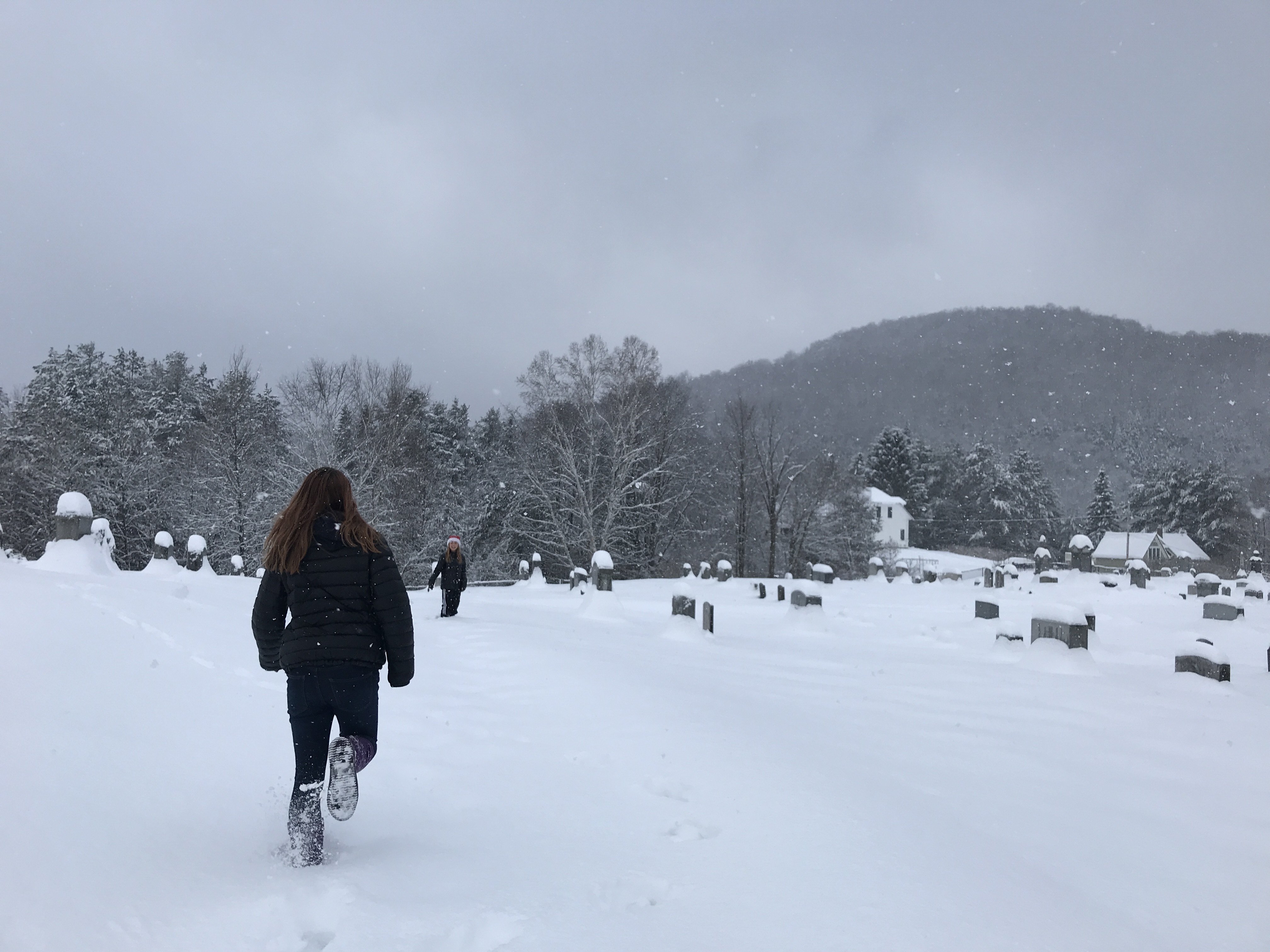
We’ve had so little snow this winter in Vermont that this morning’s deep snowfall comes almost as a kind of surprise. The day before, a cold rain fell all morning. As I bent into work, I kept glancing through the windows, glad of the indoor work that morning.

This snow is the classic, pillowy powder of the most magical childhood memories. Sure, spring is far in the offing on a day like this, but the billows and mounds embody winter’s profound silent beauty.

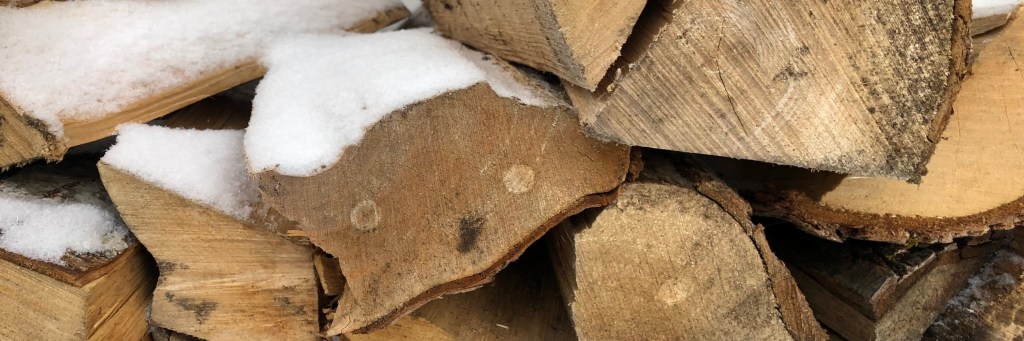
A decade ago in my life, this kind of storm would have whooshed in with a number of worries — will the sugarhouse collapse before the roof is raked? How long can I endure cooped-upness with small children? Will our firewood hold out? These days, my worries are different, as my life is in another place. But I’ve changed, too. We’ll do what needs to be done. What doesn’t get done, perhaps doesn’t need to be done. And some sun is in the forecast for this weekend, too.

[The 1800s opium epidemic in China] was once widely interpreted as a story of a once noble society destroyed by a powerful drug, but more recent scholarship has argued that this simplistic explanation overlooks the turmoil, poverty, and widespread dislocation caused by the wars themselves which in turn exacerbated the epidemic.

Carl Erick Fisher, The Urge

Talking with Strangers

Yesterday, I was on the phone at work, talking with a woman I had never met who was helping me unravel a work question.

She paused suddenly and mentioned that she could hear the governor’s Tuesday press conference on the radio in my office. She told me she worked in the governor’s building and had been told to bring home work. Vermont’s capital — Montpelier — like so many places in our country now, is under careful public safety scrutiny.

Then, as I’ve found happening so often since last mid-March, a stranger and I had a passionate conversation about the uncertain state of our world. While a moment before we had been talking about details, we suddenly began sharing stories of our families.

Then her cell phone crackled, and we ended our conversation before her connection broke.

Green Mountains Review Online published the first chapter of my book Unstitched: Exploring Addiction in a Small Town. The book will be published by Steerforth Press in September. May our world be a less tension-choked place by autumn.

Postcard #10: Uninvited Guest

This marks an even dozen of Hardwick posts, despite the #10, but all of these have skirted around the jagged edges of where I’m really aiming: that community, like family, is suffused with some of the best and some of the very worst, too, of human nature. The little, one-room library (nearby, but not the Hardwick library) where I reign as Chief Cataloguer and Window Washer is visited by kids who sprawl on the carpet between the shelves and read, who crawl behind the wing chair and create magical worlds with puppets and stuffed animals — toys I leave when I vacuum and then turn off the lights, for children I expect will return.

My library has also been visited through a window and burglarized. My desk, where I keep stickers and budget sheets and book orders has been touched by hands not mine.

There’s a story behind this that’s not a nice story, about this visitor I didn’t invite in, but whom I would have, had he used the door like anyone else. My face, writing this, must reflect my anger and my fear. I’m no tabula rasa, and this entry into a place I’ve considered a kind of personal sanctuary cuts me.

And yet — and this is a very, very big and yet — I’m familiar with that ghastly howl of addiction, and my guess is that this intruder seeks the intrinsic human need of coming in out of the cold.

Yet, he didn’t come through the open door.

Driving home with my daughters over snowy roads in the dark last night, listening to their music, we drove around Lake Willoughby with no one else on the roads, and the waxing moon pushed through a scrim of clouds. Cold, cold: nearly zero. Enchantingly beautiful. A terrain known and yet unknowable.

I don’t have answers to why some children are well-tended and dressed, while others have drawn a short stick of basic things like food and clothing. I’m not naive enough to think the uninvited guest will ever use the library door, nor do I ever intend to welcome him through a window. But in this Christmas season of redemption and giving, I keep returning to that reality that doors and windows open, and the world is wider than I’m often inclined to credit.

I wanted to try to write a book about poverty that didn’t focus exclusively on poor people or poor places. Poverty was a relationship, I thought, involving poor and rich people alike. To understand poverty, I needed to understand that relationship. This sent me searching for a process that bound poor and rich people together in mutual dependence and struggle. Eviction was such a process.

— Matthew Desmond, Evicted: Poverty and Profit in the American City
IMG_0699

Hardwick, Vermont