Days of Little Light.

Night has fallen down all the way by the time I leave work. Just below freezing, the wind cuts up with a taste of wet — the feel of sugaring season but the light is all wrong. It’s a month before the solstice, and now I’ve given into the darkness utterly. The truth is, much as I rail against the scantness of light at this annual time, I relish it, too. This time of year entices us to go deep, soul-search, spread out the cards and see what’s there.

Dark to dark, our days go. My daughter phones on her way to work, two stray cats yowling in her car. She’s bathed these hungry creatures and found a home for them, a tiny bit of kindness in the midst of a complicated world. Ever in her blur, she hands off these cats to a new home, blessing them in her own way, and moves on into her day.

“What does it mean to grow rich?… Is it to retain a capacity for awe and astonishment in our lives, to continue to hunger after what is genuine and worthy? Is it to live at moral peace with the universe?” 

— Barry Lopez
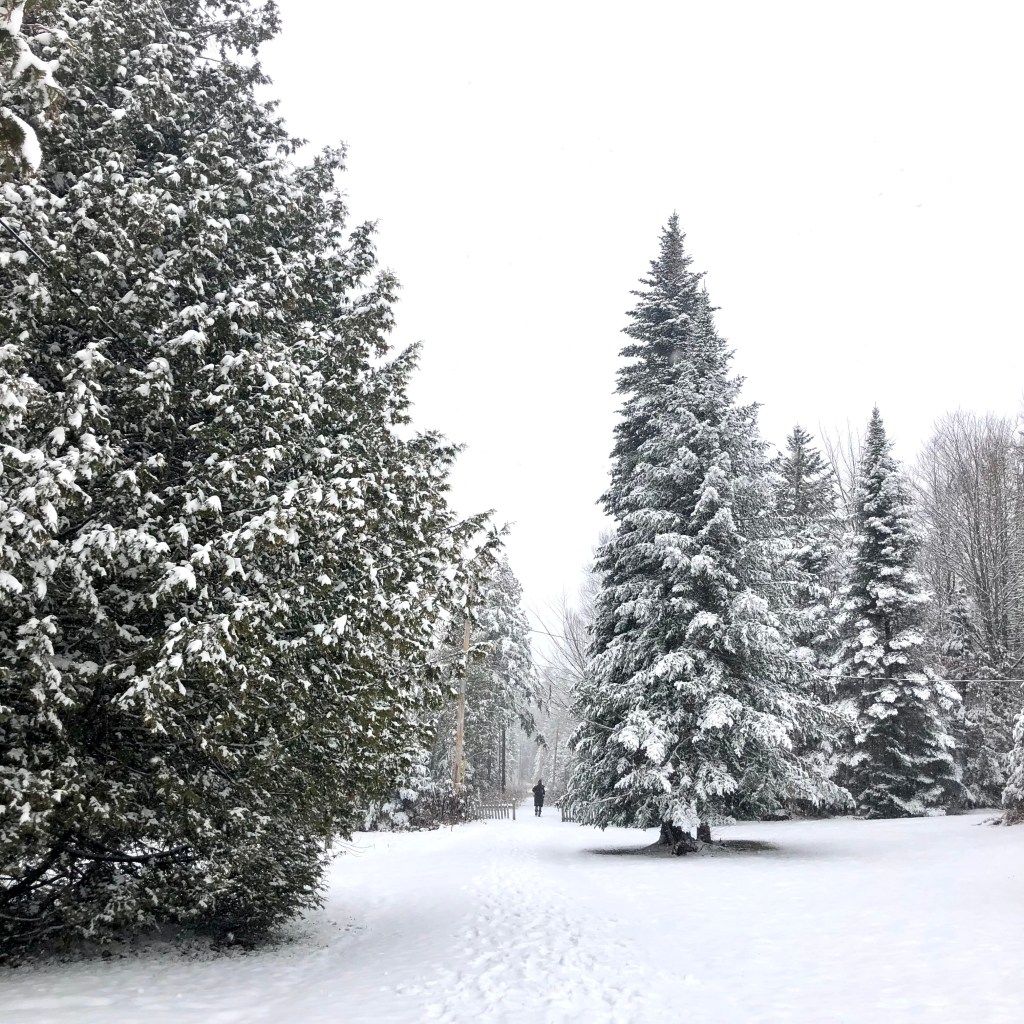
First Snowfall, Again.

In a race with the season’s first impending snowstorm, I drive home from southern Vermont in those numberless hours of the night. I-91 northward to St. Johnsbury is bereft on traffic on an ordinary day. In the pocket of night, it’s me, a few rocketing cars from New York and Connecticut, interspersed long-haul truckers hurrying elsewhere.

I drink espresso and listen to This American Life, and when my attention wanes, Sam Birger and Fresh Air keep me company with Michael Imperioli. In the vessel of my Subaru, swathed with the blindness of night, my radio is oddly intimate.

Somewhere in that stretch, I do what I’ve cautioned my daughters never to do: I stop at a closed rest area and walk up and down the sidewalk vigorously. The night, with its promise of snow rushing in, bites coldly. Two trucks idle. The rest area is lit by lights tinged an orange-yellow, suffused with mist, as if we’re in a nether world, maybe the Underworld, maybe a halfway point between two realms. There’s such a strange, almost heady relief in being this unknown place, the allure of endless miles unfolding before me. My mind is filled with the night’s experiences — an enchanting home, the stories of strangers, a woman who poured out her heart about a funeral she attended that afternoon — the embrace of what’s resilient in our Vermont towns and what’s broken, cracked, fissured. I follow my advice to strangers and take my time, breathing in that damp and diesel-choked air, the freshness of wetlands at the far end of the lot, where the ground has not yet frozen. I wear my wool hat and a thin cotton dress. The night goes on and on.

In the morning, snow falls steadily. My daughter and I drink coffee and eat Helga’s delicious blueberry torte and lemon mascarpone. A shift already, from gray November to winter’s enchanting light.

Darkness.

My daughter comes in the house tonight and says, “The world smells of rain.”

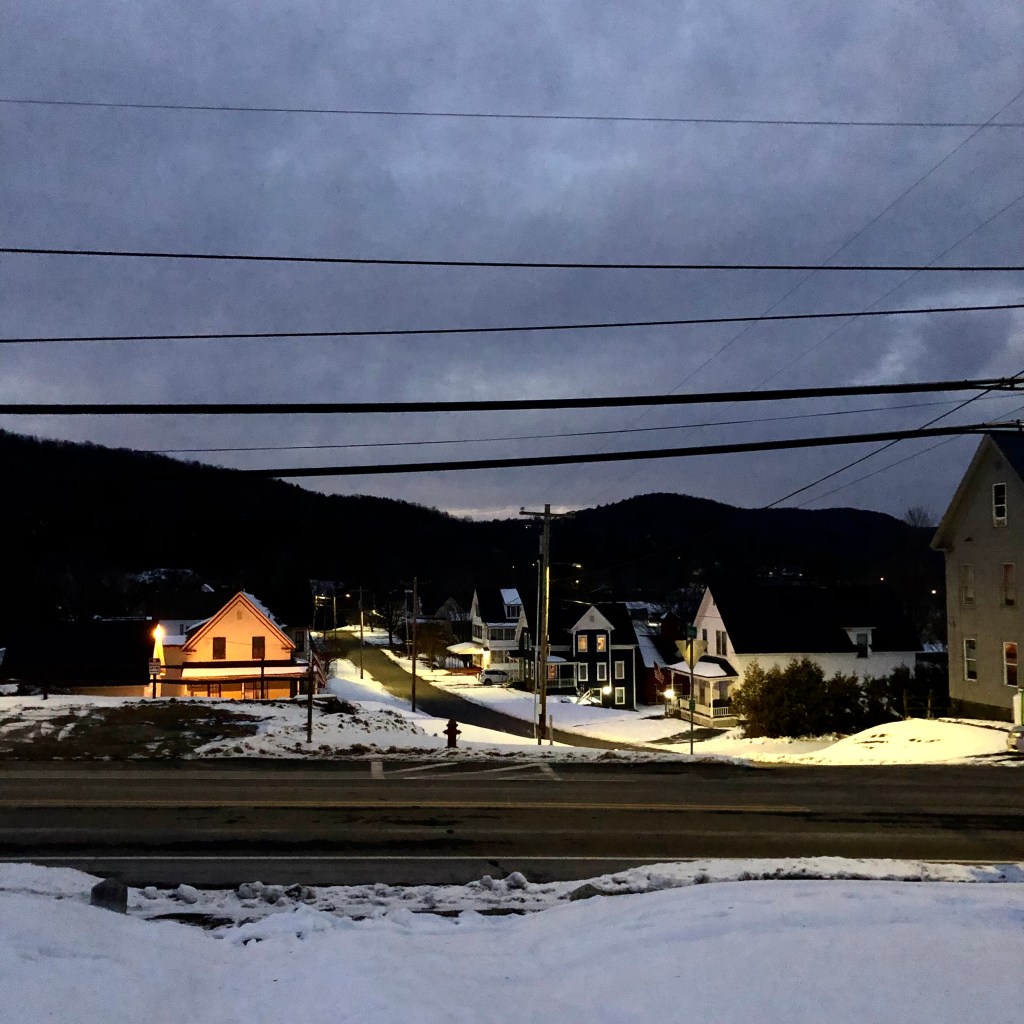
I put the enchiladas in the oven and walk out in a warm drizzle. The darkness already lies impenetrably. By a scant light from the neighbors’ house, I head into the woods behind our house and then walk by feel and memory, knowing where the blackberry canes meet the white pines. There’s months ahead of the darkness to come; I need to step into it again, know it fully not as foe.

As I head through the back side streets into the village, I think of this deep darkness like drinking. How I feared for so long even the scent of liquor. Now, sober for so many years, I’ve been to countless bars with my brother the brewery owner, hung out with him in good times and terrible, and what’s in his glass or his hand seems nothing to me. Then, this: just recently, a horrific thing happened to someone I know slightly, an occurrence he did not cause and tried, in fact, very hard to prevent. When I learned of what happened, I sensed the tsunami of suffering that would wash through this man’s life. The utter enigma and apparent injustice of the world.

At home, that evening, I leaned against our house’s clapboards, let the cold breeze tug my hair into my eyelashes. I was alone that night, and I remembered, again, what I sought for so many years in the darkness of drinking, my own private little story in such a multifaceted universe. Crucible, I thought. I am a crucible.

Returning to our house tonight savory with dinner, bright with the little lights my daughter hung up in the kitchen, I flung open my bedroom window and let the warm rain blow in. The million mysteries and more of this world.

…. And last, I’ve been graciously invited to the Rockingham Free Public Library, Rockingham, Vermont, this Tuesday, November 15, 6 p.m. Come if you’re in town.

Chasing Dreams.

With our household size decreased, so is our garbage. On a sunny Friday afternoon, I swing by the transfer station with two bins of recycling and a bag of trash. The roving raccoon who appears regularly outside my kitchen door, pre-dawn, apparently found a way into my barn and enjoyed the trash far more than I did.

At the transfer station, I interrupt a woman who’s eating her lunch salad. I apologize, and then I stand at the open window as we kick around a weather conversation for bit — flowers blooming in my garden and all. She tells me she’s headed to Florida next week — not for the winter, but to drive down her convertible and store it at her father’s house. Where he lives, he’s eight hours from New Orleans, eight hours from Nashville, eight hours from just about anywhere worth going. The trash business slows in the winter (something I’d never considered), and she’s looking forward to doing some traveling this winter.

I’m no fan (who is?) of consumption and trash, but the transfer station has a particular allure to me: so many stories here. When I moved from our last house, I negotiated with the transfer station owner about swapping used tires for metal, and what could he offer for two old pickups in the woods? We each held up our end of the bargain we struck.

A flock of juncos settled around my house this afternoon. While I folded up the laundry I had hung on the back porch, I imagined my acquaintance driving south, roof cranked down and the breeze in her hair, speeding towards her dreams.

On some nights, I still believe that a car with the gas needle on empty can run about fifty more miles if you have the right music very loud on the radio.

— Hunter S. Thompson

Geometry.

Strangely warm weather prevails. 28 years ago when I moved northward from southern Vermont, snow fell by the end of October and stayed until April. That April, I walked in a warm rain and wondered if I had made a mistake.

This afternoon, red clover in the fields, Johnny-jump-ups in the garden. I walked to the co-op and paid my tab and bought a loaf of bread for dinner with a crosshatch baked into its crust. At the register, we talked about the mysteries of calculus. Someone wondered if a radius calculation — r = √(A / π) — meant the center would never reach the edge of the circle, as π is an infinity? I volunteered to phone my brother or father and then steered the conversation to the surely more pressing question of color. Through the co-op’s wide windows, the autumn twilight sprinkled down in its charming way that intimated of the night’s stars yet to come, its gray scattershot with the remnants of this summer’s lingering gold leaves.

I went out and slipped through the side streets and up the hill behind the house that was once a nursery school. A woman with New York plates sat in her car at the ballfields, talking on her phone, staring up through the windshield at the turkey vultures circling over the pines where they nest.

Home again, I stood on the back porch and drank a glass of water. Dead curled leaves sprinkled the back deck.

Will the center reach the edge? Surely, a question of importance.

“Great things are not done by impulse, but by a series of small things brought together.” 

— Van Gogh

Voyages, Tiny & Massive.

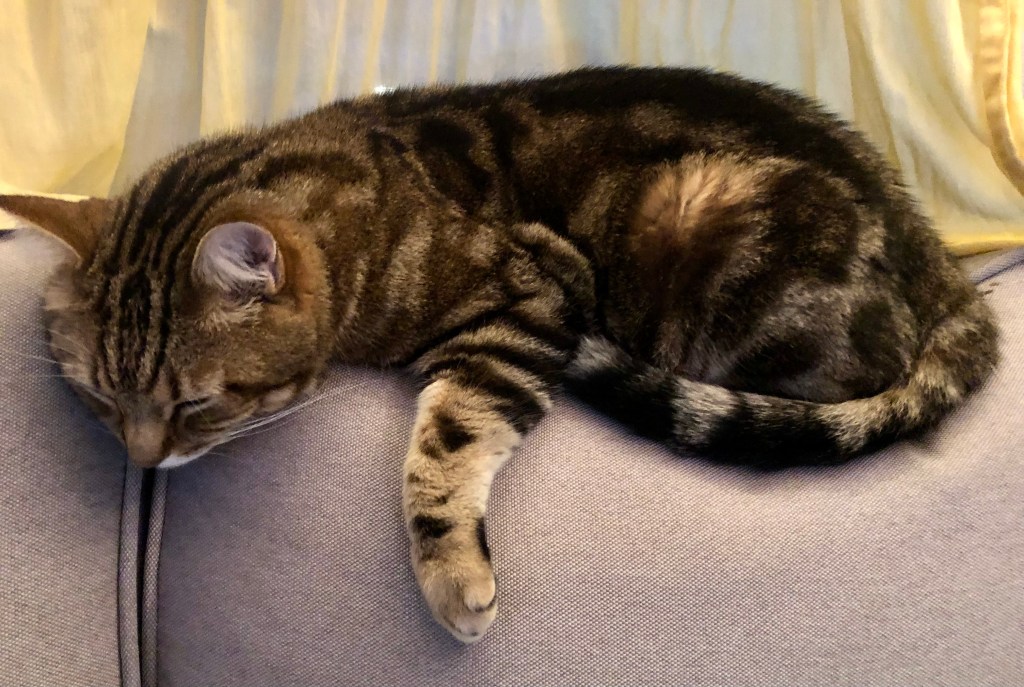
As has been noted repeatedly in our house — the cats live in their own sleeping and dreaming schedule, small world within our world. My daughter, heading out early to work, remarks about this again.

October, and the days shorten daily. I’m awake in the dark with the full moon and a radiance of clouds passing over our house. The cats appreciate their full bowls, and I stir the wood stove’s ashes, grateful for the bone-dry wood I lay on the embers.

As I make coffee, I remember strands of a conversation I had yesterday with someone I’ve known peripherally for years. His parents met in Eastern Europe at the end of World War II. We swap stories for a bit, and I tell him about my grandparents who immigrated from Romania. He spoke Hungarian as a child and later returned to the country and relearned, to an extent, his original language.

My cats oversee what I’m doing with the wood stove (proprietary as always about their heat source). The acquaintance and I mused for a bit about the loss of language in the Great American Empire, the great push for conformity. But that’s facile, too. Our ancestors lived in harder times and sought reasonable things — a steadier life, a solid home, maybe even peace.

All afternoon, I pull up frost-killed flower stalks and bury hard knots of bulbs — narcissus and crocus. My hands stain with soil. The sunlight is radiant but thin now, scant. The fatness of spring looms so distantly that these bulbs I plant don’t even seem a promise. Walking around, appraising, I note the barn needs painting. Next spring, I think. Get on it then.

…. And a quote from Laurence Bergreen’s phenomenal book Columbus: The Four Voyages.

To his Sovereigns and their ministers, it was intended as a landgrab and a way to plunder gold. Instead, it became, through forces Columbus inadvertently set in motion and only dimly understood, the most important voyage of its kind ever made.