Inoculation, Fallacy, and the Sacred.

A few years back, I did a joint reading with a woman who claimed she had discovered an inoculation for kids to prevent drug and alcohol addiction. She’s way more famous than me – and has made far more money – but the premise seemed prideful to me. There’s no shot against addiction, no simple fix.

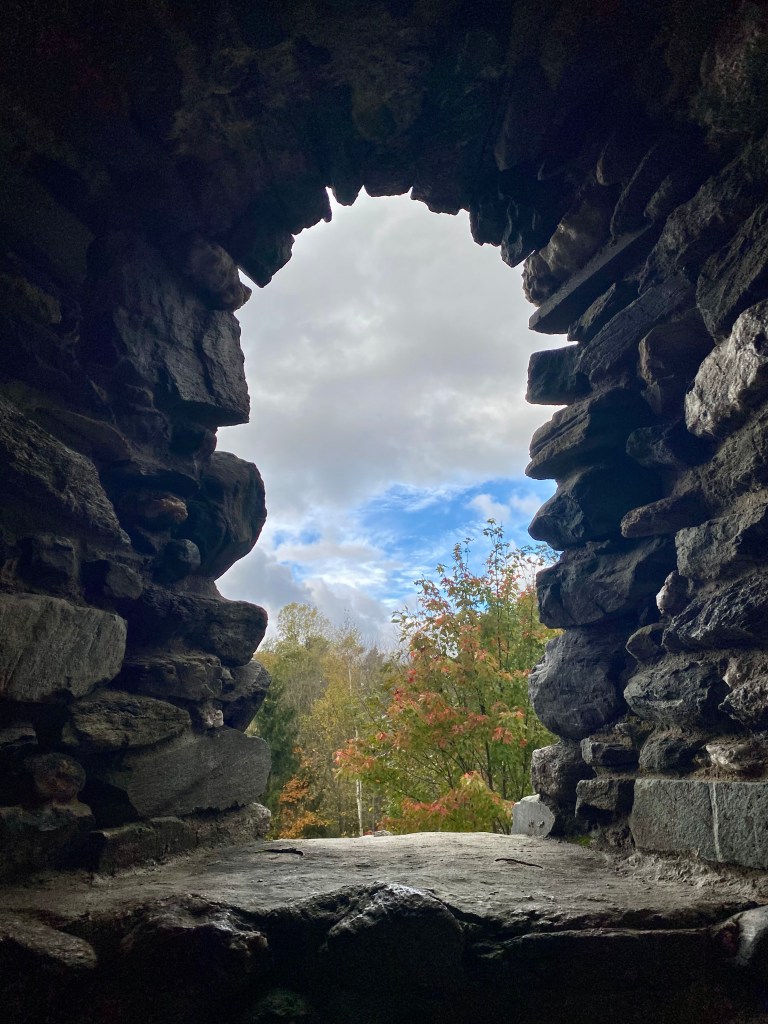
For no particular reason, I was thinking of this on a recent walk. As part of my healing, I’m determined to walk every day, through rain, shine, or wildfire smoke from Canada. Sometimes with friends, sometimes alone. Late afternoon, I was on the wooded trails behind the local high school. Hermit thrush sang their endearing notes. I spent my childhood in the New Hampshire woods. As an adult, I backpacked. My former husband and I sugared for two decades and knew our maple acres in every variation of weather.

Not so many weeks ago, exhausted from chemo and surgery, I walked crooked over. Now, my boots confident on the path, I remembered those winter visits to the ER, more out of my mind than not with pain. A frequent visitor, I requested IV Zofran, Dilaudid, fluids, in that order. The scent of saline washing through the IV tubing became synonymous for me with the near promise of breathing easily again, the temporary ability to inhabit my body.

Dilaudid promises to make whole what’s broken. How well I know this enchantment. For anyone who judges this, I reply, you endure chemotherapy, you endure the way the lymphoma choked my innards, more brutal than childbirth labor. The narcotics pulled me back from pain into the world. There was that subzero night when we drove to the ER, and my daughter and her partner kept leaning against the ER’s wall heater, while the nurses buried me under heated blankets. And the balmy midnight I sat outside the ER entrance, high as hell again, listening to the heat shield rattle on my Subaru as my sister drove around the hospital. Those nights, the dilaudid nights, are all done. May they be finished, forever, for me.

These mornings, I take vitamins, mundane, boring. There’s that trite phrase that we’re all on a journey, but so much of our lives we simply click along. The lymphoma broke that clicking-along for me, the regularity of waking up and going about the day. Now, on these daily walks, I hold to this sacredness, this euphoria.

“One morning in April, I woke up a little sick. I lay there looking at shadows on the white plaster ceiling. I remembered a long time ago, when I lay in bed beside my mother, watching lights from the street move across the ceiling and down the walls. I felt the sharp nostalgia of train whistles, piano music down a city street, burning leaves. A mild degree of junk sickness always brought me the magic of childhood. It never fails, I thought, just like a shot; I wonder if all junkies score for this wonderful stuff.”

~ William S. Burroughs, Junky
“Our stories from around here…”

I convince a friend to pull on her raincoat and meet me along the rail trail. The story this summer and fall has been rain, rain, more rain; the river runs high. Grabbing alders, we stumble along the edges, marvel that the two cars rammed deep into a bank have finally been removed. What remains is a sandy patch.

This amble is not conducive to talking: we toss bits of our lives between us as we struggle through the mud. Eventually, we make our way back to the trail. The bridge there is intact from July’s flood, but where the river rewrote its course the bridge hangs over the river, the bank jagged black earth. The rain falls hard now, streaming down my cheeks.

Vermonter Kenneth Cadow’s novel Gather (just named a finalist for the National Book Award) is fresh in my mind, a contemporary version of Huck Finn. Walking back in the rain that’s determined not to let up, my friend and I talk about growing up in New England: how powerful the autumn is, redolent with the scent of rotting leaves, the earth shaking off her pretty leaves, exposing the bones of mountains, rocks, the hungry rivers. Another friend sent word recently of this particular date’s power for him: the date his world shifted, spun from destruction to creation.

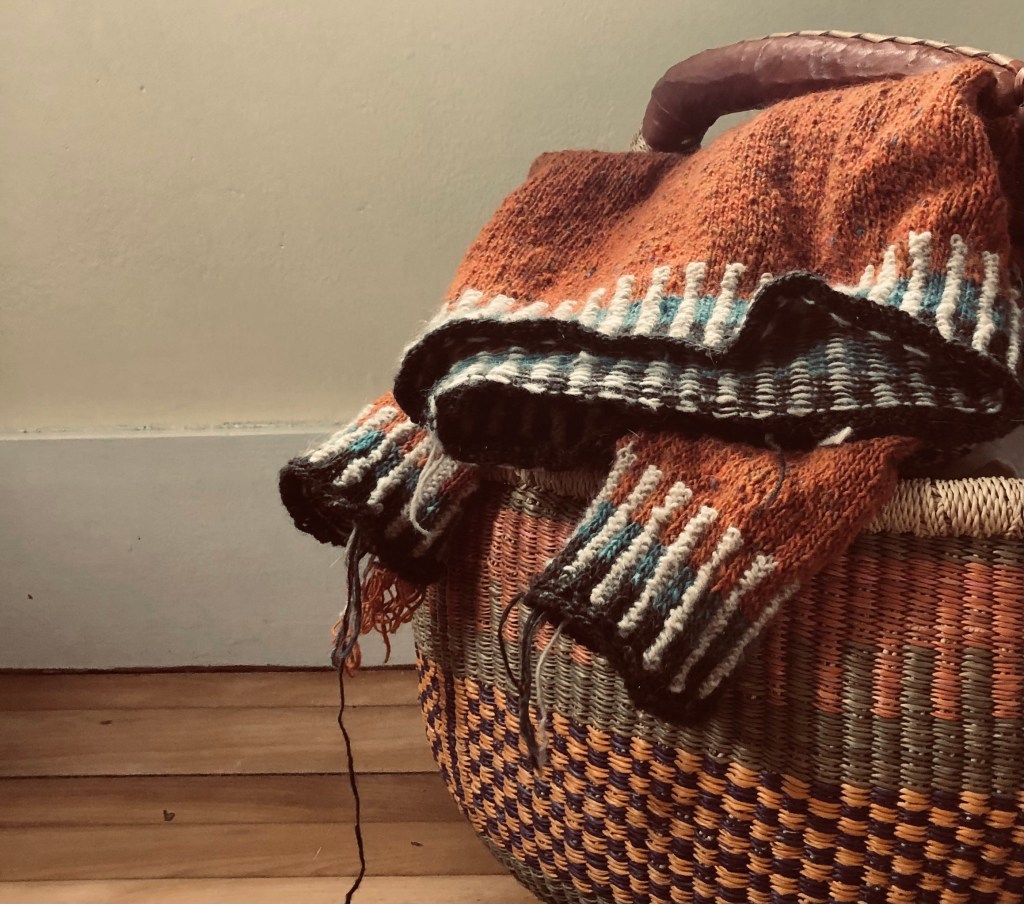
Walk finished, I’m grateful, ever so grateful, to return to my hot hearth, my wool sweater steaming, redolent of the sheep and grass that gave me these materials to knit….. and so it goes….

From Gather:

But I feel like you need to understand this. Our stories from around here come out like the way we keep our work shed: you go in there, see what you have lying around, some of it being old as hell, some of it being stuff you might even have had the money to buy for yourself. You move something, you find something else. You brush it off a little, then you use it or set it back down. But you need it all to piece together how things come to be the way they are now, how you come to be who you are.

Order.

Dreaming, I untangle my knitting conundrums: rip out one half-finished cardigan and use the yarn for a cabled pullover. Nothing earth-alternating, planet-changing, simply my need for order and creation. Some small measure of satisfaction.

Which is why I understand the volunteer in the Giving Closet, the room in the old school building where I work these days. The Giving Closet holds the community’s castoffs and giveaways, an endless motion of clothes and toys and dishes and not enough artwork that swaps around from household to household.

Late afternoon, low clouds pressing around the wide windows as a storm moves in, I wander into her space and offer hot water for tea. She’s endeavored to straighten and tidy the concatenation of stuff that invariably slides into chaos. Two women are looking for scrubs, holding up shirts and asking each other, This? or This?

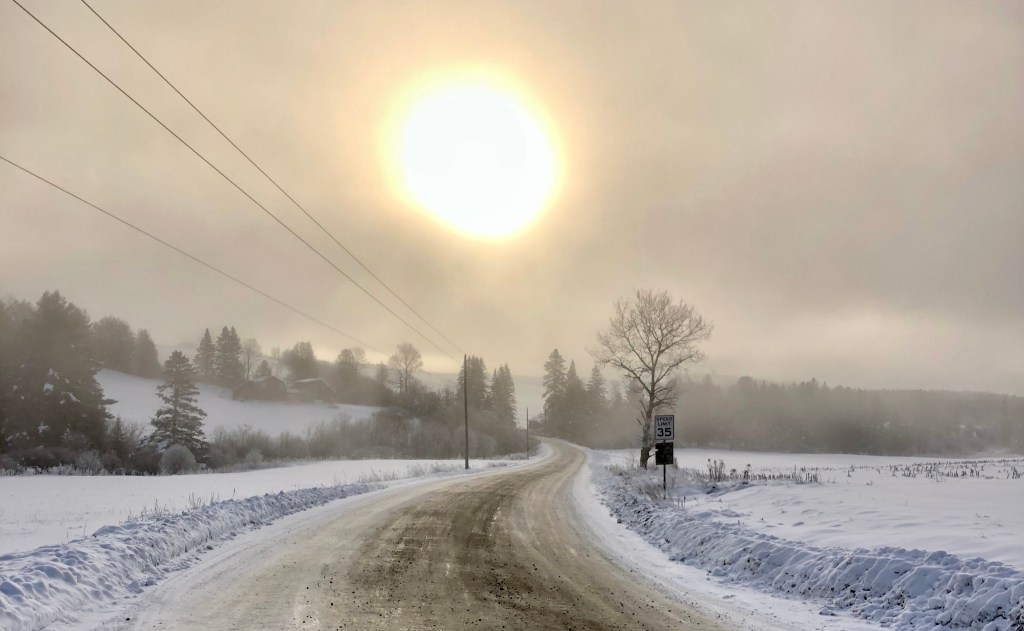
Through the windows, snow drifts down. The roads part and V around this old schoolhouse, empty. Across the way, the Ukrainian flag hangs down from the church’s sign.

….. and here’s a few lines from a recent review of Unstitched by Joanna Theiss.

While Unstitched is a valuable and important book for its discussion of opioid addiction, the writing is quietly beautiful, every word appreciative of the Vermont landscape and its seasons, on mothering girls while grieving with a mother who lost her own daughter, on the stark class divides that hinder our efforts to grow past this crisis, and the joy of community, no matter how much mending it requires.

Soundtrack.

My oldest plays Noah Kahan as the soundtrack to her life, the young man who sings of loving Vermont in all its bareness and glory: I love Vermont, but it’s the season of the sticks

I pull over on the roadside. There’s no one around, not even a crow keeping me company. Solstice season, the precipice of one thing tipping into another, the darkest of the season tipping over into the real winter yet to begin. I am decades into my own love personal affair with Vermont.

Winter is the perfect season for a writer with its shocking beauty, the looming threat of frostbite, the profound metaphor of darkness and light, heat and cold, stillness and the edging-in resurrection of spring. On the deepest level, perhaps, winter reinforces the need for patience.

Noah Kahan sings: So I thought that if I piled something good on all my bad
That I could cancel out the darkness I inherited from dad…

How’s that for a variation of an Eugene O’Neill play?

Curious about this Kahan character? Check out Vermont Public Radio’s story.

Winter Koan.

I stop in at the former Hardwick Gazette building, now turned into the Civic Standard, an organization trying to figure out itself. An acquaintance and I stand at the windows in the building’s rear, staring down at the Lamoille, where ice feathers only along the edges. The water is low enough that the rocks are mighty in the rushing current.

I drink coffee and sit crosslegged on the couch, and we talk for hours. I finally vaguely inquire if we haven’t had enough of our own words, and then we go on and on again. The building itself seems marooned in the 1970s, and even in 1972 the building likely felt stranded in 1957. An old printing press hulks beside us. One of us has an Hungarian immigrant family, and our conversation inevitably weaves in the first half of the 20th century.

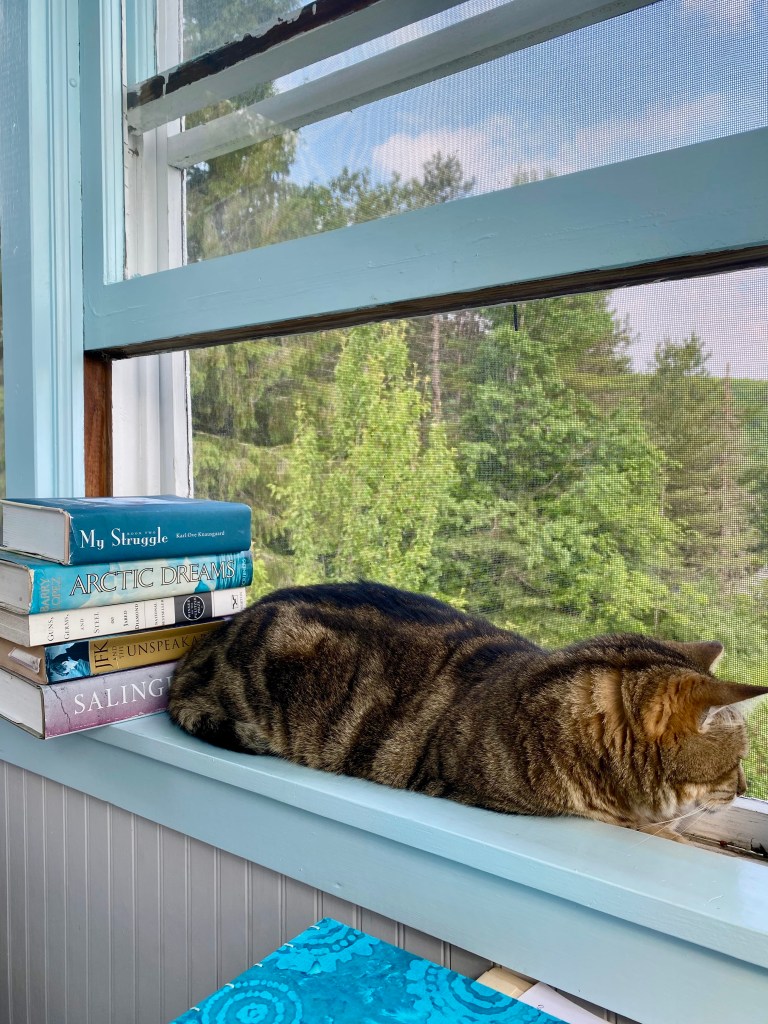
December in Vermont is as good a time as any to ponder the Zen koan chop wood, carry water in the pieces of my life. Sunlight on the living room floor. Kim chi and brown rice. Reading Ruth Ozeki’s The Face on the rug.

Sunday afternoon, light snow sifts down, the sweetest gift, its fresh cold sweeping away our stale human layers of mind and emotion. I carry in an armful of wood to feed our little stove for the night. The snowflakes melt in my eyebrows. Finally, I think, finally, a scattering of snow. Then I quit thinking, close my eyes, and listen to the falling snow.

“The past is weird. I mean, does it really exist ? It feels like it exists, but where is it ? And if it did exists, but doesn’t now, then where did it go ?” 

— Ruth Ozeki

The Beginning of Genius.

An acquaintance comes into work today to update the town’s website. We talk back and forth, little details here and there, the mechanics of putting the website together and how the pieces of democracy work: minutes and transparency. The public can and does come to Selectboard meetings with requests to move roads and complaints about cowshit spilled over roads. Our conversation tips into philosophical territory. Nearing the end of a challenging week, I’m drinking my 46th cup of coffee that morning and espouse that we’re in end-stage capitalism. Sometimes we behave very badly. Sometimes, not so.

I am not at all a Facebook fan, not a FB reader, but all week I’ve been dipping into the stories people have posted about Ray McNeill. So many stories, some from people I once knew very well. I lived in Brattleboro when I turned 21, completely alone in an apartment over The Shin La, a Korean restaurant still in operation. One night, I closed Céline’s Death on the Installment Plan and went out in the rain. Even then, I was a loner. I didn’t go to public places alone. But that night, the rain fell so hard I ran into Three Dollar Deweys. My friend Debi was there. In those days, she lived with my ex-boyfriend. She came up to me and rubbed my long hair with bar towel. We played darts for hours. The bar lights shone out into the falling rain.

“The beginning of genius is being scared shitless.” 

— Louis-Ferdinand Céline