Kicking Up Leaves.

My daughter and I are standing on a street corner in Montpelier, Vermont, talking about some little thing — maybe the mighty silver maple on the library’s lawn and how those leaves are always the last to turn gold. How I remember this every year at the same annual mark, and then forget this for the rest of the year.

While we’re talking, I keep thinking of this lovely library, and how I took my daughters there as little girls. Later, I often worked all day in the upstairs reading rooms with views of the trees. Not so, anymore, in our pandemic world.

Across the street, a couple kicks fallen leaves at each other. I stop talking, thinking, Oh, no, what fresh hell is this? when the couple begins laughing. They’re each holding white paper cup, and he has a paper bag that might be full of sweet delicious things from a nearby bakery.

That moment — that tiny joyful moment — opens up our day. Sweet normalcy. Oh, yes. Bring that on.

One of my most favorite autumn poems:

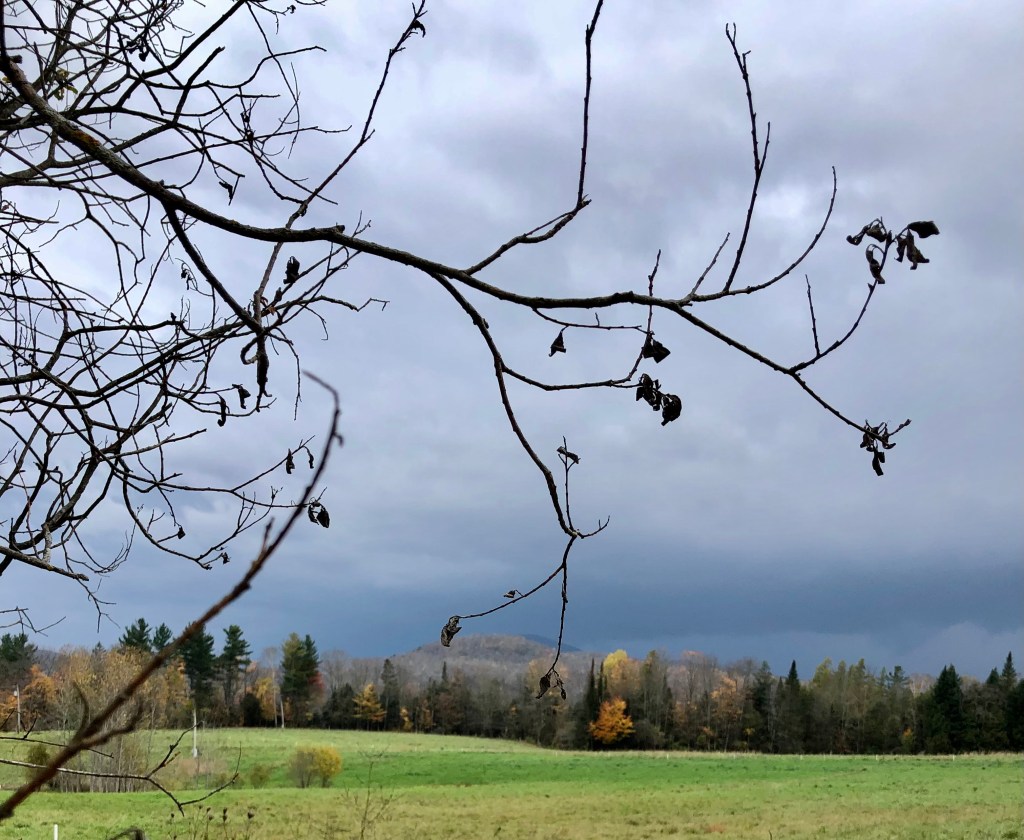
on a withered branch
sits a crow
autumn nightfall

—Basho

We’re Geese.

Saturday afternoon, I’m walking with an acquaintance on the trails behind the high school, talking about public education. How is education changing? What’s happening?

Beneath a maple, we stop and talk for a little. I tell her about my youngest daughter, who’s 16 and at a place of reflection, asking, Who am I? Where is my life going? Writing made me realize how easily we drift into one life or another, drawn along by circumstances and the people surrounding us. How easily we fall into what seems like a good idea, a fad that might define us.

What seems like a hundred years ago when I was an undergraduate at Marlboro College, someone painted Know Thyself on the sidewalk beside the dining hall. Listening to my daughter as I go about doing my same old things — washing dishes or making dumplings or knitting a hat for a Christmas present — I realize I’m witnessing her small adolescent pack struggle with this same old question made completely brand-new for each of these young people. I’m riveted.

On the trail, a flock of geese flies so low I hear their wings flapping. On our way back to the school, I keep thinking about those geese.

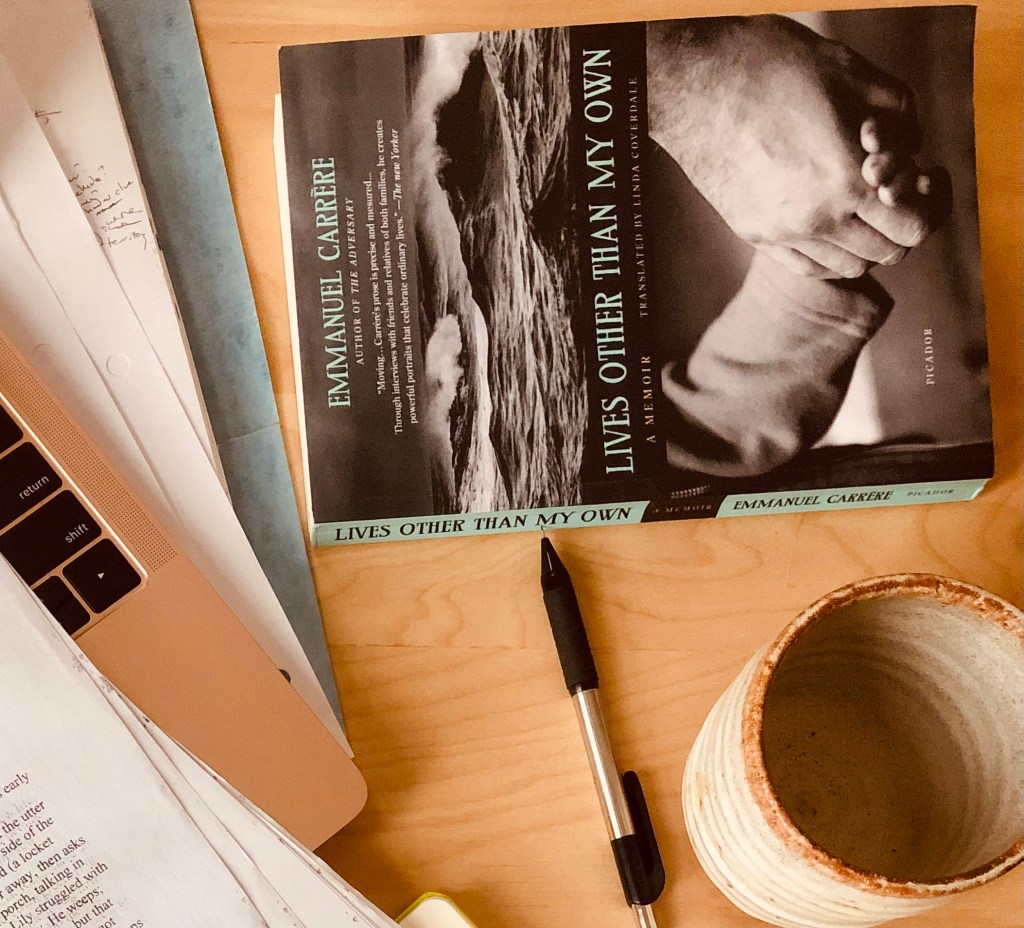
One can claim that growing up… means abandoning magical thinking for rational thinking, yet one can also maintain that nothing should be abandoned, that what is true on one floor of the mind may not be true on another, but that one must live on every floor of the mind, from the cellar to the attic.”

— Emmanuel Carrère, Lives Other Than My Own

Fall.

The moon is a perfect circle of cream.

In the dark, we walk downtown and leave letters in the mailbox. Through the valley’s mist, house and streetlights glow. November looms. Poet Thomas Hood described November: “No dawn — no dusk — no proper time of day.”

The news around us is of two, unrelated homicides, neither far from our house, in our rural state with scant violent crime. In the dark, I bring in an armful of wood and pause for a moment. Across the valley, I see a pair of headlights crest a dark hillside and begin a descent, slow to my eyes through the mist.

Through the house windows, I see my daughters before the wood stove, our walls painted butter-yellow. The crickets are gone. Late fall pushes in. Every year, the darkness enfolds us again, inescapable and mysterious.

Over my shoulder there’s that moon.

Hardwick, Vermont

Driving Dream. Daughter.

In a dream, my daughter drives along an interstate and rounds a curve. A semi spreads across the road, its back-end across our lane. In a fraction of a moment, I predict we’ll hit the truck. Before I can speak, my daughter steers to the right, and I have a sickening foreboding that she’ll hit the truck and I, on the right, will emerge unscathed. I’m not afraid really; it’s grief that nails me.

She steers us around the truck, over the grass, back onto the road, and keeps driving. My heart hammers.

In the dark, I lay awake. There’s a lesson here, I counsel myself.

On this rainy October morning, here’s a few lines about parenting from Anne Lamott and an excerpt of my book in The Fix.

…one of the worst things about being a parent, for me, is the self-discovery, the being face to face with one’s secret insanity and brokenness and rage.” 

― Anne Lamott, Operating Instructions: A Journal of My Son’s First Year
Greensboro, Vermont

A Woman’s Body in the World.

On this balmy October morning, the cats and I woke up early to read Katherine Dykstra’s What Happened to Paula. In book’s midpoint, the word “possibility” appears, the same word that appears in my book Unstitched.

As the mother of two daughters, there’s so much conversation in our house about women’s bodies in this world — what keeps us well, what feeds our souls, and, inevitably, how women and men have a different experience in this world. Dykstra’s book is a narrative about a long-unsolved murder of a young woman, but also the story of women’s bodies and souls in our nation. Dykstra writes: “There is rarely physical equality between men and women.”

Here’s possibility:

Book Recs. Messy Democracy.

I’ve been on a reading binge on the Anthony Swofford/Christa Parravani husband and wife author duo, jumping around their memoirs. I picked up Parravani’s most recent book, Loved and Wanted, and then interlibrary-loaned others. Swofford wrote Jarhead — the marine memoir that just about everyone was reading a number of years ago, and I never did.

Yesterday morning, my oldest daughter got up at three to make her flights to visit my parents in New Mexico. In those murky depths of the night, I got up at three, too. When she left, a cat and I lay on the couch, reading Hotels, Hospitals and Jails. Ending with a father and son RV journey, the book’s ending did that miraculous thing, spinning not just that book but how I look at literature in a wider, more powerful light.

Hotels ends with the beginning of the couple’s marriage. Parravani’s Loved and Wanted takes place years into marriage and baby-raising. That, perhaps, is about all I’ll say about that.

My papers and notebooks were scattered around the couch from the virtual select board meeting I attended the night before. Nearly four hours long, the Selectboard discussed darn near everything in town, from federal Covid money to the sheriff’s update regarding a shooting to whether the board should consider moving a road. While democracy may be struggling in much of the country, in rural Vermont, messy democracy still rules.

Autumn is nearly over

that person dressed in fine silk

has borrowed everything.

— Buson

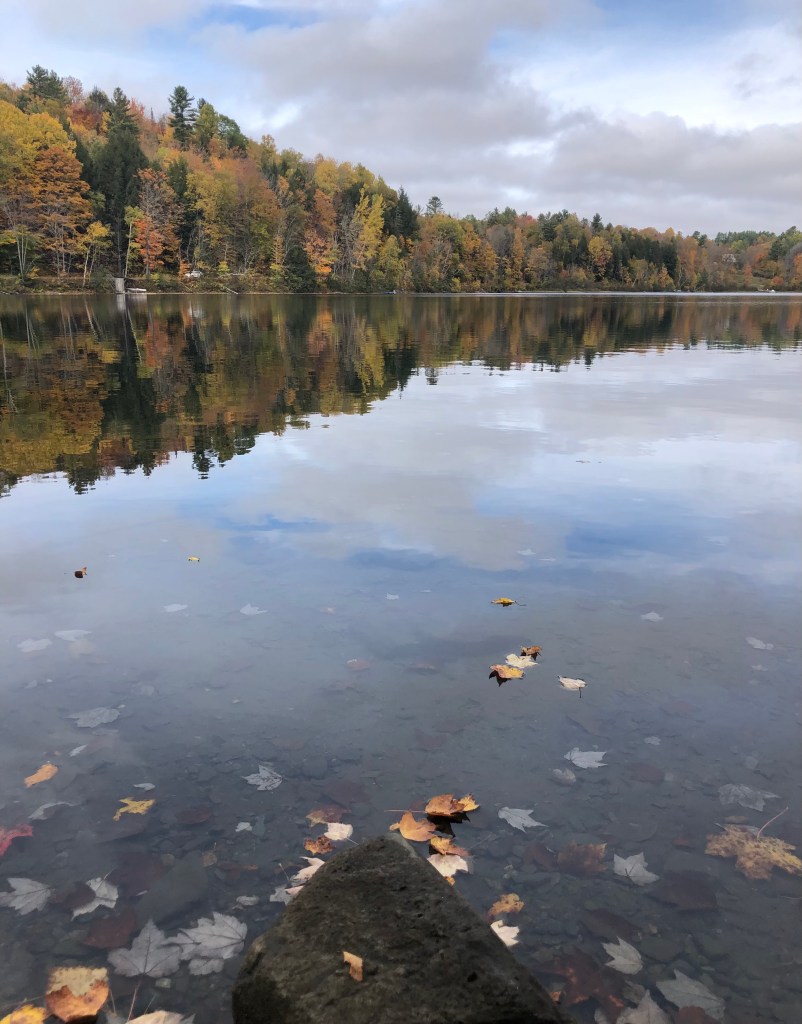
#10 Pond, Calais, Vermont