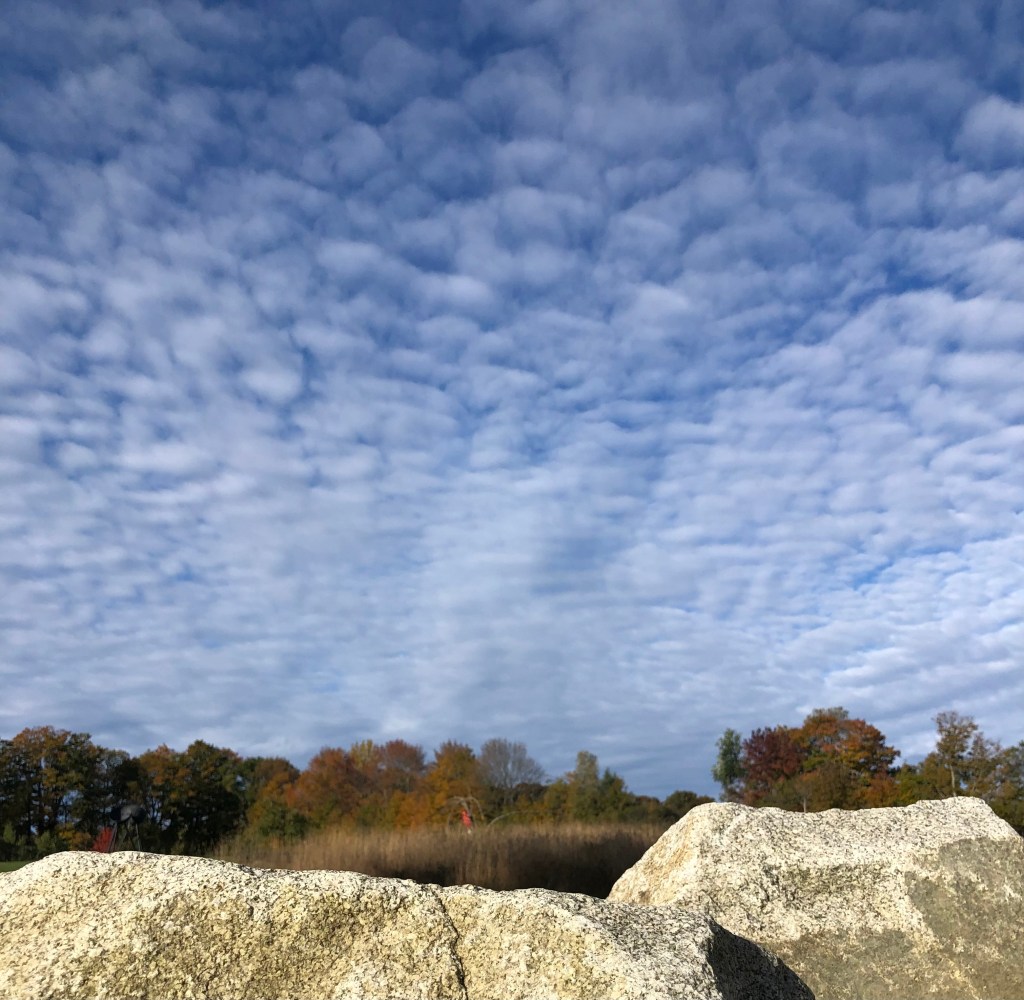
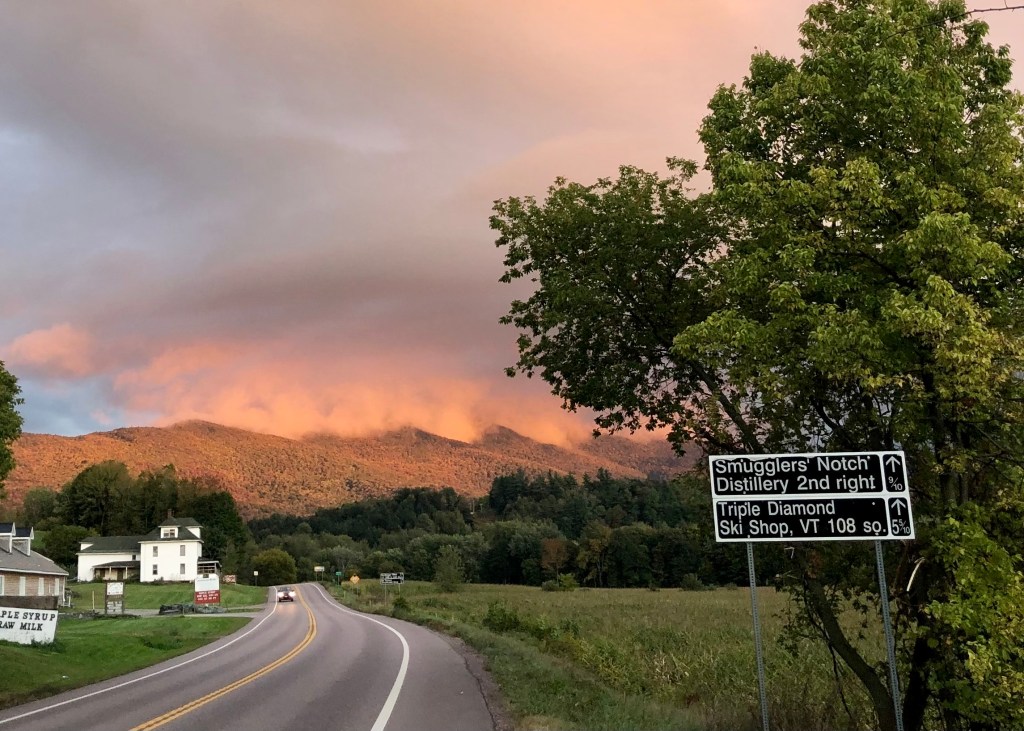
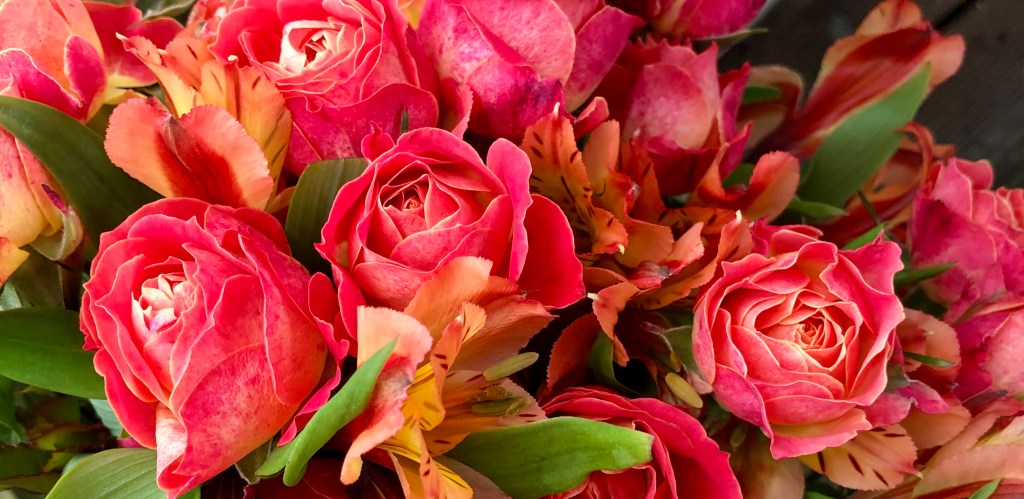
October Afternoon.

On my way back to Hardwick, I’m stopped in road construction on the County Road. While I wait for the steamroller, I glance at the passenger seat and notice my knitting has slipped from my bag. The project is a simple hat, and the yarn slid from the needles. To save my work, I lift the unfinished hat and slide the stitches back on the needles.

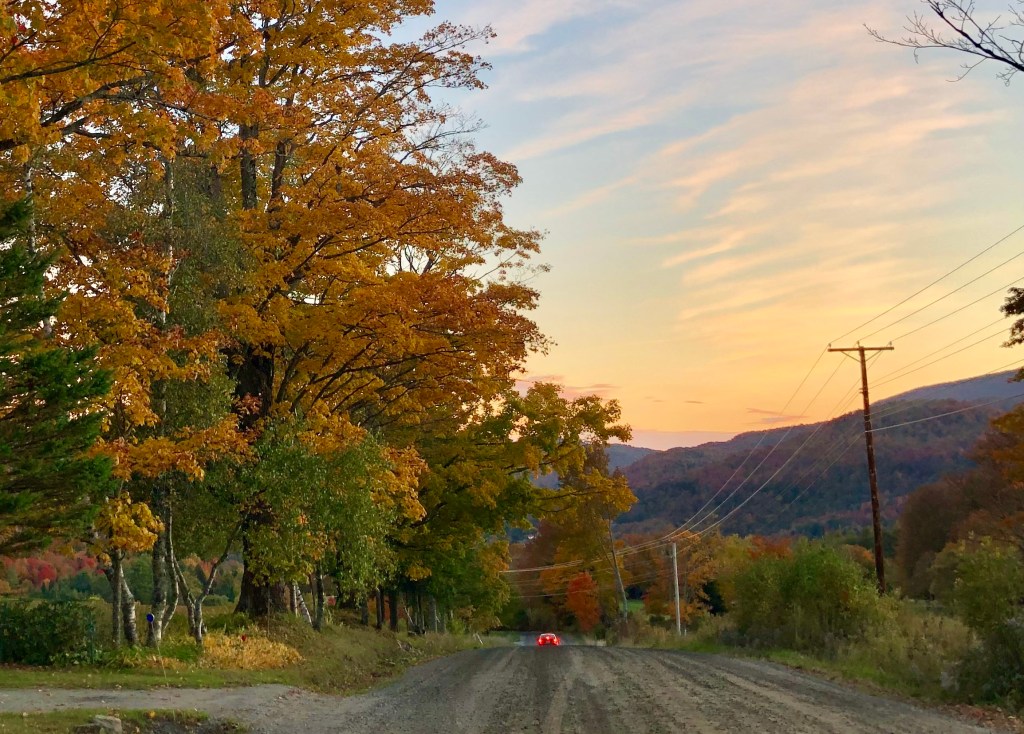
Just before my car hood, the woman in bright yellow holding a STOP sign leans against the pole. I turn off my Subaru engine, thinking of where I’ve come from and the high school soccer game where I’m headed. How quickly cold shadows edge in when the sun slips behind the mountains at this time of year. The mountains around the road dazzle with crimson and gold, but gray is visible in patches, too. Stick season marches in inexorably.

I’m at the town line somewhere between Montpelier and Calais. A few years ago, I sold our arch — the long firebox and pans used for making syrup — to a man who said he’d pick it up in a few months. His address was in this area. I promptly cashed his sizable check. He didn’t return. More than a few months later, I had sold the house, too, and my daughters and I were moving. I wrote list after list with things like pack canning jars and Salvation Army drop-off and get rid of Toyota transmission in shed. On those endlessly reworked lists, I added arch must be moved. While tracking down the buyer, I discovered an unspeakably sad thing had happened to his family a number of years before he wrote me that check.

I found him. He arrived with a friend and loaded the arch on a trailer. He and his friend were older than me, in a different phase of their lives than I was. They spoke kindly to my daughters.

For just a fleeting moment, still waiting for that steamroller to move, I remember that arch precisely. Stainless steel, black metal, the scrape of a shovel on firebrick.

The woman with the STOP sign appears at my open window. I expect her to chide me for daydreaming. Instead, she points to a nearby pond where a flock of geese have landed. The sun hits the sugar maples around the water. There’s so much in that moment — the clamoring and splashing birds, the stunning leaves, that crystalline memory, the sunlight and green yarn in my lap. The woman tells me, “Head on when you’re ready.”
Voyages, Tiny & Massive.

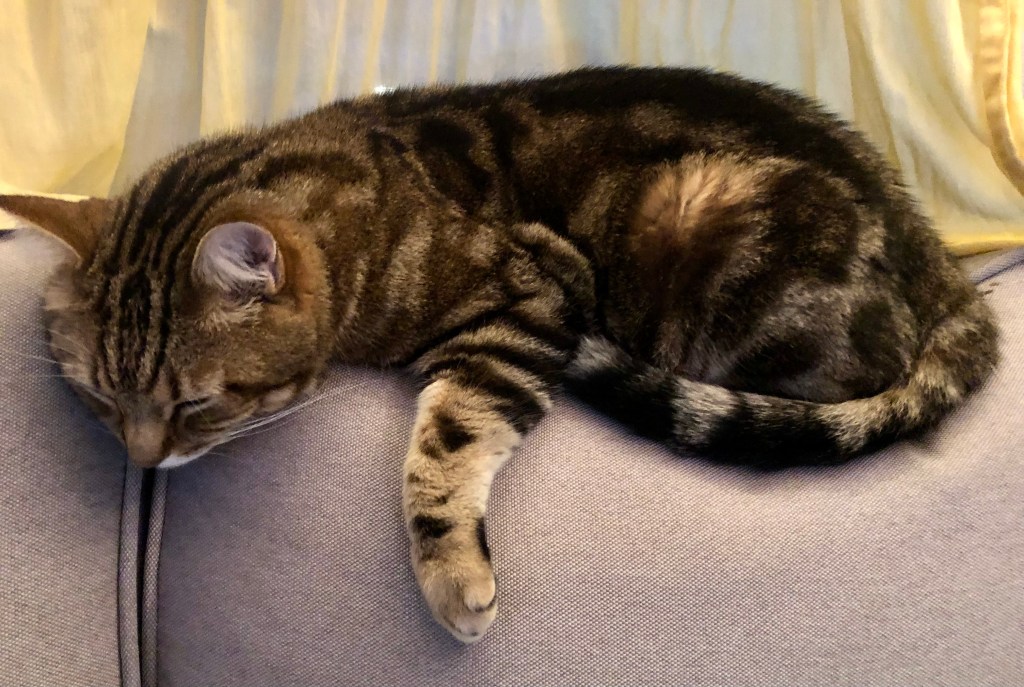
As has been noted repeatedly in our house — the cats live in their own sleeping and dreaming schedule, small world within our world. My daughter, heading out early to work, remarks about this again.

October, and the days shorten daily. I’m awake in the dark with the full moon and a radiance of clouds passing over our house. The cats appreciate their full bowls, and I stir the wood stove’s ashes, grateful for the bone-dry wood I lay on the embers.

As I make coffee, I remember strands of a conversation I had yesterday with someone I’ve known peripherally for years. His parents met in Eastern Europe at the end of World War II. We swap stories for a bit, and I tell him about my grandparents who immigrated from Romania. He spoke Hungarian as a child and later returned to the country and relearned, to an extent, his original language.

My cats oversee what I’m doing with the wood stove (proprietary as always about their heat source). The acquaintance and I mused for a bit about the loss of language in the Great American Empire, the great push for conformity. But that’s facile, too. Our ancestors lived in harder times and sought reasonable things — a steadier life, a solid home, maybe even peace.

All afternoon, I pull up frost-killed flower stalks and bury hard knots of bulbs — narcissus and crocus. My hands stain with soil. The sunlight is radiant but thin now, scant. The fatness of spring looms so distantly that these bulbs I plant don’t even seem a promise. Walking around, appraising, I note the barn needs painting. Next spring, I think. Get on it then.

…. And a quote from Laurence Bergreen’s phenomenal book Columbus: The Four Voyages.

To his Sovereigns and their ministers, it was intended as a landgrab and a way to plunder gold. Instead, it became, through forces Columbus inadvertently set in motion and only dimly understood, the most important voyage of its kind ever made.

Autumn, Moon, Small Town.

While my daughter washes the dinner dishes, I head out for coffee. That morning, I finished the last of the grounds. I pull on a sweater and cut through the back woods to the cemetery. A gibbous waxing moon hangs like a splash of cream over the cemetery and keeps me company as I cut through the elementary kids’ ballfield.

As I walk down a side street, I see the co-op below, lit in the falling twilight. Last year, the co-op moved from its tiny Main Street store — packed literally to the ceiling with stuff — to a much larger boxy grocery store around the corner. A number of years ago, the co-op quit selling bottled water after a staff member complied compelling reasons to quit. Instead, the co-op offered cups of free water. Now, the co-op sells local veggies and cheese and meat and wine and so on — and Cocoa Puffs.

As a long-term co-op shopper, I’ll simply note that people don’t know how to use this larger parking lot. For whatever reason, we keep tangling up ourselves, backing out into Route 15, nearly colliding.

In the parking lot, I stand for a moment, admiring the moon and the scent of autumn. All day, the sun has shone brilliantly, unseasonably hot, and rain will be pushing in Friday. The man who lives in the apartment across the street opens the co-op door and gestures for me to walk in ahead of him. We stand talking for a few moments about that drop-of-cream moon and how the scent of fallen leaves reminds us of childhood.

Peak Foliage, Thursday 1:35 p.m.

… or so I predict. Such a silly thing. The branches of some trees have already blown bare, others are just beginning their radiance. It’s later that the torches of tamaracks will begin.

On these stunningly beautiful autumn days, the cats and I wake early. They’re easily satisfied with a few morsels of cat food, a rub on their furry heads, a few more sticks in the wood stove. The two of them stretch on the rug before the stove, worshipping.

Daughter and I go about our day. Coffee and dishes and firewood. At night, I dream of spring peepers.

Here’s not the famous lines from Robert Frost that rattle through my mind these days. Instead, Ezra Pound:

IN A STATION OF THE METRO

The apparition of these faces in the crowd:
Petals on a wet, black bough.

— Ezra Pound

October 1.

I spend the better part of Saturday stacking wood, beginning bundled in a sweatshirt and hat, and quickly stripping to a tank top and shorts. A black cat wanders by and appraises my work which, admittedly, is uneven but certainly sufficient. I breathe in fresh sap, wet earth, dusty bark crumbles.

The month of September — all thirty days — disappeared in a few heartbeats. I’m still pulling in frost-choked parts of my garden, the dead lily stalks, putting away the clay fairy house in the rock garden my daughter made so many years ago.

Friday, I’m at a summit all day that brought together people, who, in one way or another, are enmeshed in healing from addiction. Here’s the thing: a few years ago, I never would have attended a summit like this, let alone speak to a large group. For years, I said nothing about my own struggles with addiction. But publishing Unstitched acknowledged in a very public way my own miserable struggles with drinking. Because I had written the book, I had to answer questions publicly about this, and I needed a surprising amount of time to acknowledge this, to really accept what this meant. But I heard — and I kept hearing — from people I both knew and complete strangers — about their struggles, or a friend or family member’s struggles.

The Rumi line I quote in Unstitched is “the wound is the place where light enters.” When I returned Friday evening, my daughter asked me why I go to these sad things. And it’s true; there’s such grief that’s shared. But now I understand that there’s my own grief — still much of it in a private place in my heart — but grief is our human commonality, too. The wound is what renders the light possible.

When I step out, three hot air balloons are rising.

Nearby the expo where the summit is held is a hair salon named The Rusty Clipper where I dropped off maple syrup wedding favors about twenty years ago. The father of the bride gave me a check. When the bride opened a box, she told me I had given her the wrong bottle — hearts instead of leaves, or leaves instead of hearts. I gave the check back to the father. I put the boxes back in my car. I buckled in my three-year-old and drove home. At home, I redid all the favors and drove back the next day. When I got the check again.

I stand there under the hot air balloons and wonder about that bride whose name I’ve long since forgotten. Then I follow the crescent moon home over the mountains as the light gives way to twilight.

Gifts.

Before I leave for the North Danville Library on Tuesday, I sit for a moment with my daughter at our kitchen table. She eats a quesadilla, and we talk about things that matter — who’s behaving in what way and why that might be. The rain has knocked off for a bit, and I drive the way I often knit, more by feel and memory than anything else.

At this time of year, the farm fields are their deepest green. Sunflowers appear in gardens and along houses, their yellow leaves weathered by cold nights. I passed the house where my former sister-in-law lived when her four children were little. In the backyard, we built a playhouse. Her oldest daughter slept in the upstairs bedroom, and milk trucks rumbled down the road in the very early mornings.

The Brainerd library is housed in a former schoolhouse. I parked and stood for a moment in the lot shared by the library and a church. Cows ambled in the field behind the parking lot. Across the street, children pushed each other in a swing hung in an enormous tree. I imagined these were a few after-dinner moments gleaned in the falling twilight before bedtime.

I had been generously invited to talk and read a little about my book Unstitched. Driving over, I remembered the two years I spent writing this book, much of these hours at my kitchen table. Writing a book can be such a long and lonely process. So these moments of connection and resonance, of meeting readers and other writers, are manna to my soul. The library was well-cared for and had a real sense of so much living that had happened in those walls.

Unstitched is about hard things — addiction and guilt, poverty and illness. But I left that night and drove back home along the roads that had no traffic with my heart full of happiness kindled by an evening of literature and discussion and homemade cookies in a beautiful library with kind people. At home, the stars sprinkled over the sky, and the night was still warm enough that I could pretend winter was not in the near offing. Inside, my daughter and I picked up our conversation where we had left off.