Today…

All week, people have been dropping in at work, with ideas and needs and so much school board talk. A stranger dropped in yesterday and mentioned she expected to become a grandmother that day, possibly the next. Candlemas, the ancient festival, forty days after Christmas and its official end. February 3 marks my own holy day, the day my oldest joined us in the world and I crossed over into motherhood.

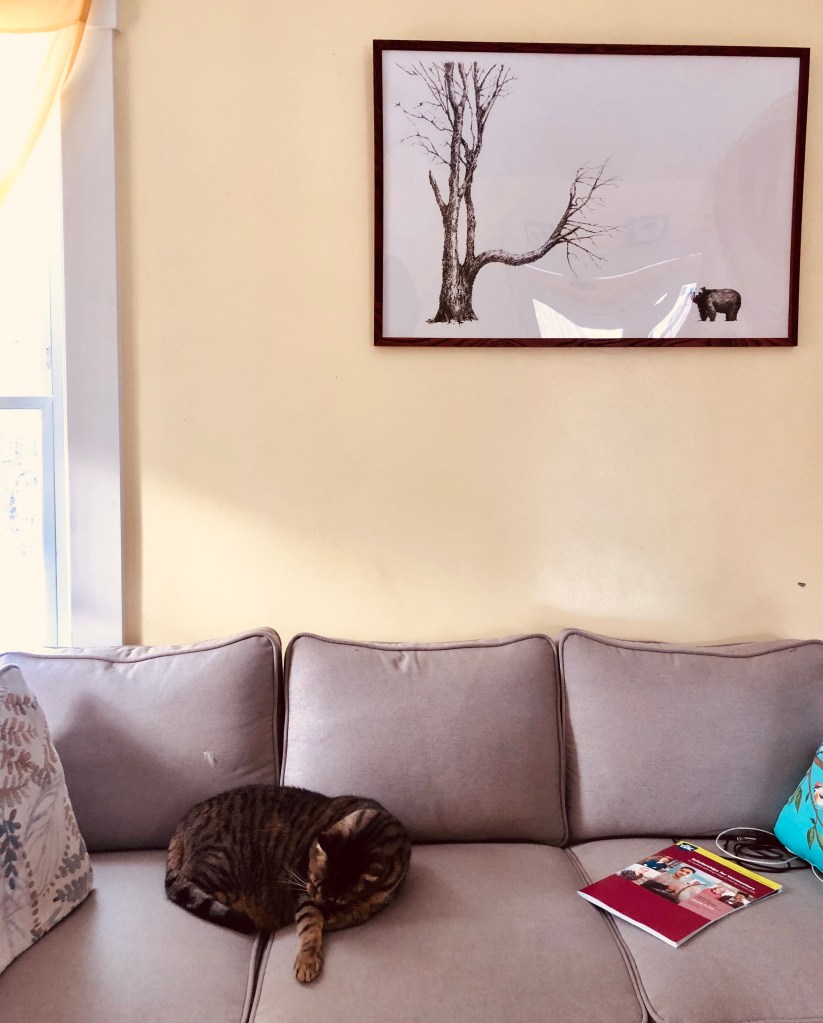
In labor, I walked outside in Birkenstocks and stared at the melting snow that was running in sunny trickles. Just days after she was born, a fierce cold sunk in to stay. The neighbors brought a blueberry pie. As a toddler, I called this child a wildcat. Now, all grown up, she’s still a cat, with a cat’s complexities — half-feral and blissfully domestic, fierce-clawed and loving.

With worry edging her voice, the stranger told me she expected her family’s birth to be healthy. These usually go well, she noted. I agreed, and we walked out together. The wind carried dry snow over the parking lot. She disappeared in her car, but I stood for a moment longer, remembering my daughter was born shortly before midnight. My long labor ended with a surgeon who held my vernix-smeared baby in his gloved hands so I could see her. Her eyes were wide open, and she looked directly at me.

listen,
you a wonder.
you a city
of a woman.
you got a geography
of your own.
— Lucille Clifton

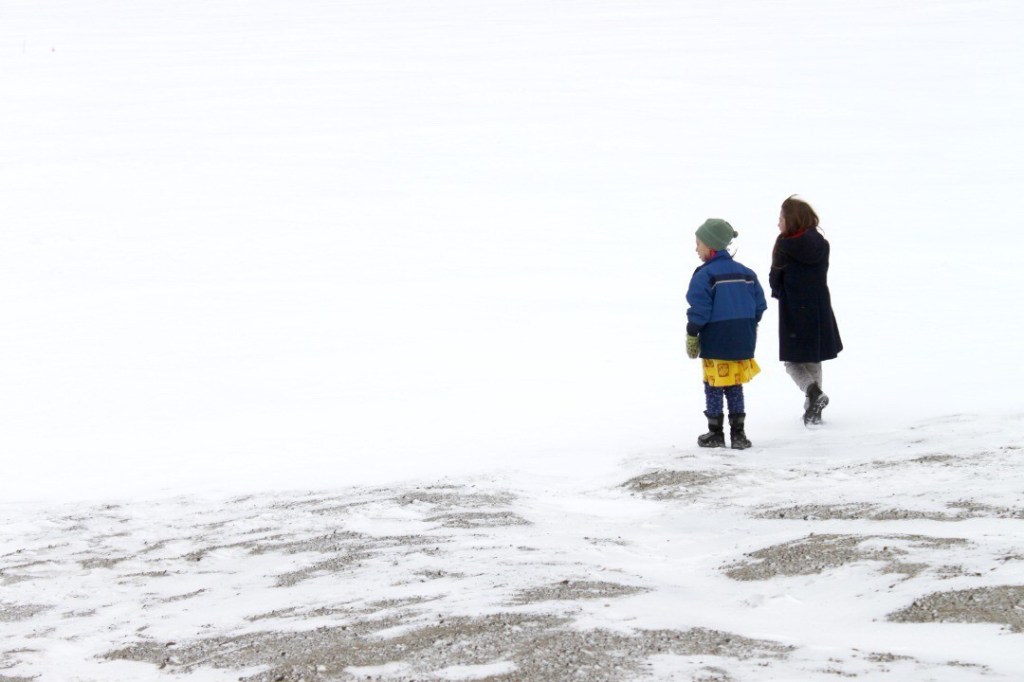
The Horizon’s Edge.

Photo by Diane Grenkow

Many years ago, one of my daughters’ playmates wandered through our sugarhouse with a huge pine branch over her shoulder. My then-husband and I were working in the kind of frantic way we often did in those days, sap-turning-to-syrup boiling fiercely in the pans. The playmate was a slight and quiet child. She moved through us and then disappeared outside again, enmeshed in whatever imaginative world.

On this below zero morning, heading towards my oldest daughter’s birthday, this photo taken by my friend comes into my email, which reminded me how much of my approach to parenting little kids was let them wander around the world. More than a few times, that seemed to have evolved into a kind of what the heck is happening now sense from the kids.

Just for the record, we swam a great deal at this beach, too, although never in the frozen months.

The horizon’s edge, the flying seacrow, the fragrance of saltmarsh and shoremud;
These became part of that child who went forth every day, and who now goes and will always go forth every day,
And these become of him or her that peruses them now.

— Walt Whitman

Snow, Yarn, Patterns.

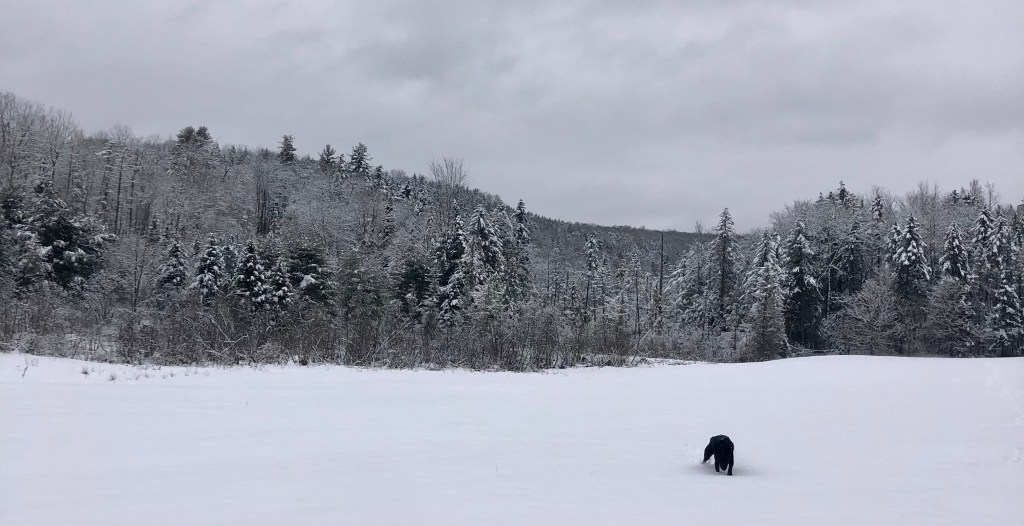
Snow notwithstanding, the temperature is solidly spring for January. My neighbors and I stand at the end of our dead-end road, talking about the escalating price of food and raising kids, the random things that three tired parents share. It’s not cabin fever, not a chafing against the cold, not the dreariness of winter gone on too long. It takes me a little while to figure out what it is, and then I realize it’s nothing more than simple camaraderie.

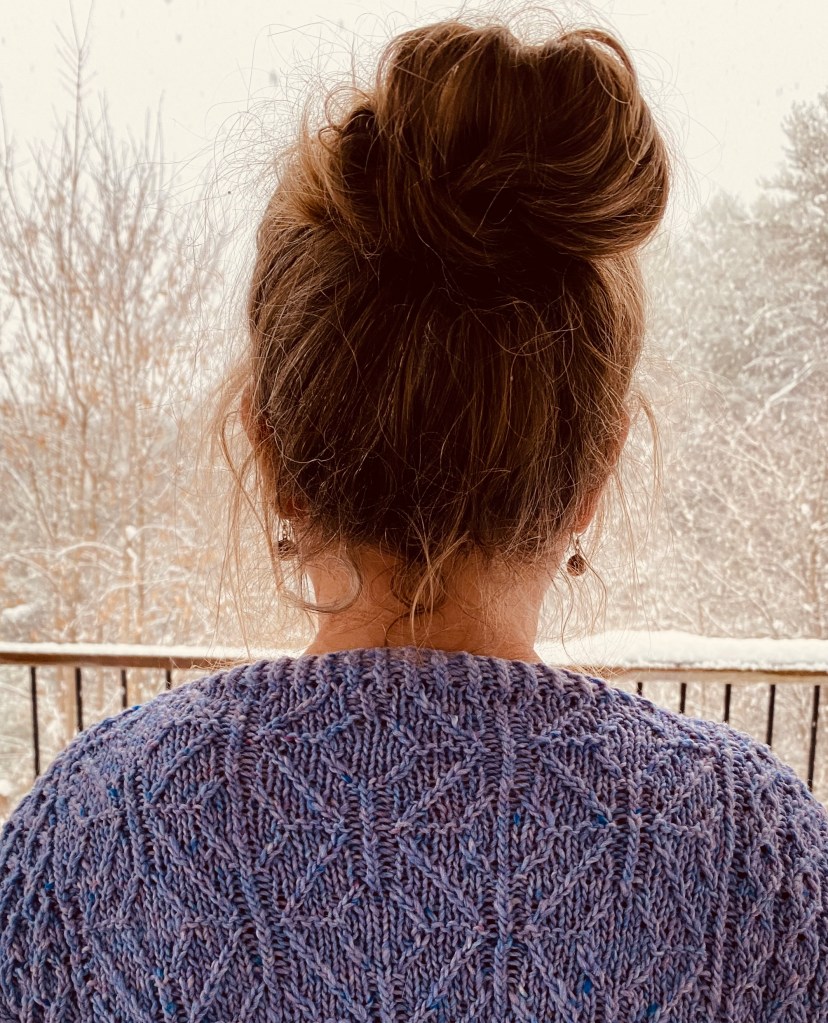
So here’s the thing about knitting — I resisted knitting for so long because I considered knitting old-lady-ish, an occupation for those who had nothing better to do. Oh, how those sentiments smote me now. Sure, men knit, but knitting is generally the terrain of women. At work the other day, a stranger asked me about a fair isle sweater I had knit. Without thinking, I pulled off my sweater, flipped it inside out, and laid it on my desk. The two of us talked tension, seaming, yarn. Cables. The pleasures of putting your hands to wool.

“No two people knit alike, look alike, think alike; why should their projects be alike? Your sweater should be like your own favorite original recipes — like nobody else’s on earth. 
And a good thing too.” 

— Elizabeth Zimmermann

Light Turning.

Walking into town, I pass a house that has been abandoned for the five years I’ve lived here. Last winter, a vehicle skidded off the road and smashed through the front window. Since then, plywood has covered the front.

There’s a few houses like this in that neighborhood, the paint gray, the windows filthy, tiny yards gone over to weeds or dirt. In the pandemic’s craze, people moved back into a few of these, converting abandoned places into homes again. The driver of a fuel truck stood outside this house yesterday with a young couple, the three of them talking seriously, nodding heads. Sheets of foam insulation leaned against the house. On the side wall, someone had ripped off the dirty plastic and exposed a large square window, its top edge red and blue stained glass. Without stopping, I wondered what else was inside the house.

End of January — and suddenly the sunlight returned in full force. Today may be cloudy, tomorrow, too, maybe for days to come, but the earth is tilting. Slow as spring is, we’re leaning that way.

Don’t say my hut has nothing to offer:

come and I will share with you

the cool breeze that fills my window.

— Ryōkan (trans. John Stevens)

A Little Poetry.

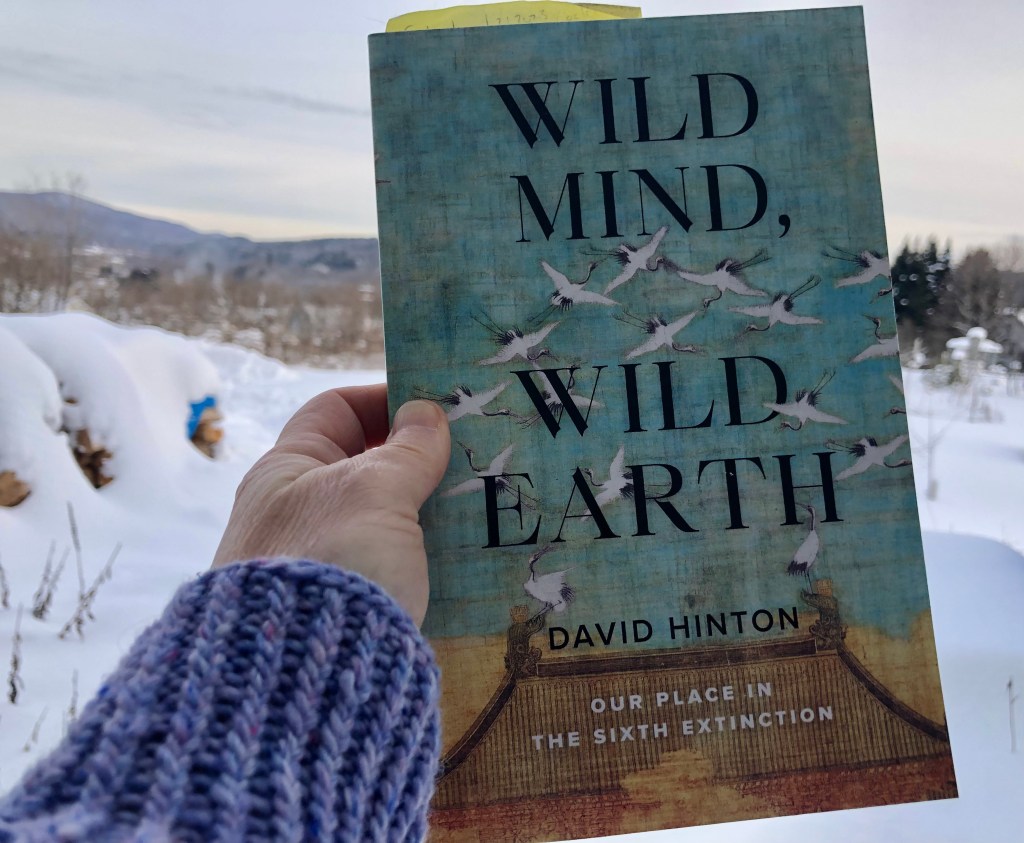
Wild Mind, Wild Earth — David Hinton’s book is exquisitely beautiful and certainly not a feel-good book. It’s a book where poetry is motion. On this cold January day, snow begins falling midday, little bits, then steady showers as dusk filters in. I stand outside the library, my head tipped back. An acquaintance, on his way in, pauses. “Remember this?” he asks. “It’s winter.”

Robes of snow, crests of snow, and beaks of azure-jade,
they fish in shadowy streams. Then starting up into

flight, they leave emerald mountains for lit distances.
Pear blossoms, a tree-full, tumble in the evening wind.

Tu Mu, “Egrets,” translated by David Hinton

Bobcat. Saw-Whet Owl.

I arrive a few minutes early to meet my friend for coffee and look for a window table to open my notebook. A writer I know just a little is eating a ham and cheese sandwich and asks me to sit down. He’s old enough to be my father if he began fatherhood at a young age, which I know he didn’t. He immediately tells me two things: he’s waiting for his back road to be sanded and he saw a bobcat in a tree behind his house that morning. He describes the cat’s reddish fur, and I ask detailed questions about the wild creature’s size and location and poise. My friend arrives and they keep talking about San Francisco, and then he tells us about studying with Joan Baez at The Institute for the Study of Nonviolence.

The bakery is at a busy intersection in Montpelier. Through the window, I see people in colored winter coats. Until the pandemic, I often brought my laptop to work at this bakery and the one across the street that closed a year or two ago. Two blocks up is the public library where I wrote long sections of my last book. None of these places I’ve returned to work. Like everyone else, my life has changed, my habits recreated.

The bakery is closing. The day moves along. My friend and I walk through Bear Pond Books. She buys me a novel, hugs me goodbye, and heads on her way. I walk the long way back to my car. That night, I dream about the saw-whet owl my daughter and I glimpsed in the woods behind our house. A toddler, she pointed at the hemlock branch where the tiny bird was nestled in the greenery, its eyes wide-open. We stood there for the longest time, wordless, our breath frosty clouds in the winter air.

“… nothing is a promise, but that beauty exists, and must be hunted for and found.”

— Joan Baez