Saturday, Snow, River.

A snow-globe snow flakes down all afternoon. In a meeting, I sit near the window and look over the river. Plenty of listening. Plenty of talking. Ice clings in chunks to the shoreline, but the current runs swiftly. This March day is just at that brink where snow piles on last year’s dead grass, melts on the pavement.

As sometimes happens in this group, the conversation winds around to the world’s wider themes — the pandemic and literacy, disparity of wealth — very big picture things — how the world is broken in places and how these pieces may or may not fit together. There’s plenty of coffee, and sandwiches, too, that someone has brought from somewhere, and I keep drinking the coffee and studying those currents, how the water crashes up over rocks and flows on again, heading that long way to Lake Champlain and north through rivers heading towards the North Atlantic. Someone beside me remarks that he’s not convinced our world can be put back together.

In the very big picture, however, things are always going together, breaking apart, heading together again. I keep watching that dark river and the foamy curls of waves. The coffee is lukewarm and lousy at best. Nonetheless, I keep drinking it and drinking it. We keep talking and listening.

“That’s religion in America, under constant revision.” 

Jeff Sharlet

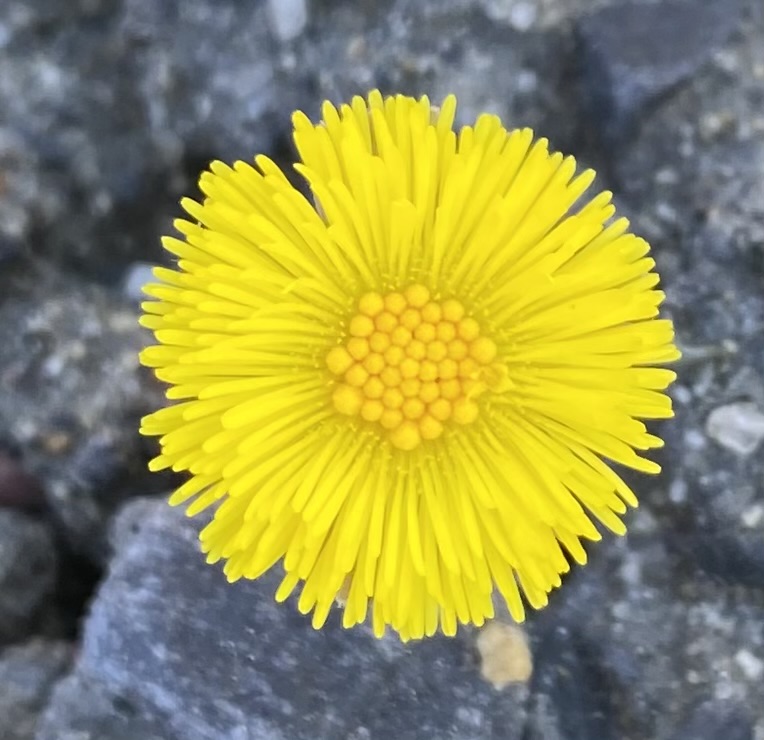
March. Flowers.

At the co-op, the words are: dirty March. So much snow, rain, the deep ooze of mud, what feels like the very faraway promise of green. Returning home, the teenager has burned herself reading on the back deck. One cat let the other eat his dinner and yowls plaintively, furiously, at household injustice. Stove ash and common dust have invaded the house. Sunlight spills through the windows onto the floor.

March: the season of radiant joy, sullen unhappiness. I lie awake and wonder about my own private death: next week, next month, or four decades from now? I decide the only reasonable course is to bargain for forty more years on this planet, and inevitably take what comes.

Thursday, the day dawns with the scent of loosening mud. The rain slides in. Midday, redwing blackbirds.

A good day for a poem:

Flowers, by Cynthia Zarin

This morning I was walking upstairs
from the kitchen, carrying your
beautiful flowers, the flowers you
 
brought me last night, calla lilies
and something else, I am not
sure what to call them, white flowers,
 
of course you had no way of knowing
it has been years since I bought
white flowers—but now you have
 
and here they are again. I was carrying
your flowers and a coffee cup
and a soft yellow handbag and a book
 
of poems by a Chinese poet, in
which I had just read the words “come
or go but don’t just stand there
 
in the doorway,” as usual I was
carrying too many things, you
would have laughed if you saw me.
 
It seemed especially important
not to spill the coffee as I usually
do, as I turned up the stairs,
 
inside the whorl of the house as if
I were walking up inside the lilies.
I do not know how to hold all
 
the beauty and sorrow of my life.

Buzzards. Robins. Writing.

Turkey buzzards have returned. On this first day of spring, these birds fly broad-winged over the river, slow, slow, fixated. Late afternoon, I have a few minutes before I’m expected home again for daughter time, daughter chat. I keep walking and discover robins are singing in a tree behind the train station. A slight thing? No way. I stand there, listening, looking up at the treetops where the branches are still barren, months yet away from leaves. I can’t see them, but it’s robins, definitely.

The Sunlight Press was kind enough to run a short pandemic piece I wrote.

Greet the unknown. Much later that night, you’re reading Hunter Thompson’s Fear and Loathing in your bedroom when your daughter runs in, alarmed, and opens your window….

Wood.

Friday, the fire in the wood stove gone cold, I shovel out the ash and discover two honeycomb boxes. I’ve been cleaning this stove for three years now, but I’ve never taken these pieces apart. The manual cautions me to be gentle. So I’m gentle.

The first essay I had published in a slick magazine, Taproot, was for their Wood issue. In those days, we burned countless cords of wood every year, for the few cords in our house to the many more to make maple syrup. Wood was far more verb than noun in our house; we did wood.

In my wooden house, whose floor joists in the basement still have ribbons of bark, on my maple floor, I empty ash and soot and creosote into a metal sap bucket. I kindle the fire with crumpled newsprint and ripped cardboard. The cats sprawl on the rug, satisfied as the heat suffuses our house again.

The late afternoon is raw and damp. So much snow has buried us in. I ski on a section of former railroad bed where I’ve never gone before, up a long slope fenced in by a cedar forest. There’s no one around, not a dog walker, not a snowmobiler, just me and the crows. At a crest, the valley below opens. I’m above a large dairy farm dug deeply by barns and fields and family generations into what had once been forest.

The sun has melted a section of trail to slush here. A cold wind blows down from the north. I stand here for a bit, stamping slush from a ski, then I turn, too, and head back through the forest.

Layers.

A week of sun ends in scattered raindrops and my hands dirtied with creosote from cleaning out my wood stove. The cats hunker against the wall, glaring at my labors, annoyed at the chill descending into their cat realm. My daughter, fluent in Cat Language, feeds the creatures small pieces of roast chicken. I brew more coffee.

Mid-March, the sudden season of reckoning: what is it I’m doing? This is the week of self-doubt and the week of the kindness of strangers, too. March has long meant the season of sweet maple and cold hands, of leaning hard into work, the season of faith that spring’s crocuses and snowdrops and ephemerals will return—that they always return—to remind myself that the wider world holds us inevitably, for good or ill and sometimes for both.

Cutting into with the ax,

I was surprised at the scent.

The winter trees.

— Buson

Stone House.

All night, wind howls around our house. I give up the charade of sleeping and pull out my library book. I’m in the final pages of Meredith Hall‘s memoir about growing up in New Hampshire, Without a Map, and I’m in no rush to end her story, close the cover, and return the book.

At my feet, my little cat lies awake, thinking cat thoughts, in a cat circadian rhythm of his own. The Ides of March howl in fiercely. All day, the wet snowstorm has swirled around us. My wet boots lie beneath the wood stove. Our house banked in by white and the ash bucket melting dirtily into the path where I’ve left to cool, its embers to burn out and die.

Somewhere in those hours before dawn, I shake flat the wood stove’s embers with the ash shovel and lay one, two, more pieces of wood on the flickering coals. In the dark house, the little cat follows me downstairs, curious about breakfast but not insistent.

I think of what I’ve read that day, about a stone house built nearby in the 1800s from a single boulder. A curious endeavor. Take this stone, cut it into pieces, and make a home. In the darkness, the wind rakes over our house, hurls over my snow-submerged garden plot, and whirls over the town cemetery.

“The past lies beneath the surface, intransigent truth. Remembered or not, what we say and do remains, always.” 

— Meredith Hall