How to Reconcile Contradictions?

The November days end in early darkness. Late afternoon, I close my laptop, comfort the cats with a handful of kibble, and pull on my jacket. The village lights glow: the few restaurants, a garage, a laundromat, the library. When I’ve reach the high school, the darkness spreads ubiquitously through the town forest that spreads up the hillside. Nearly all my life I’ve lived in New England, and yet the profoundness of this late autumn darkness always amazes me.

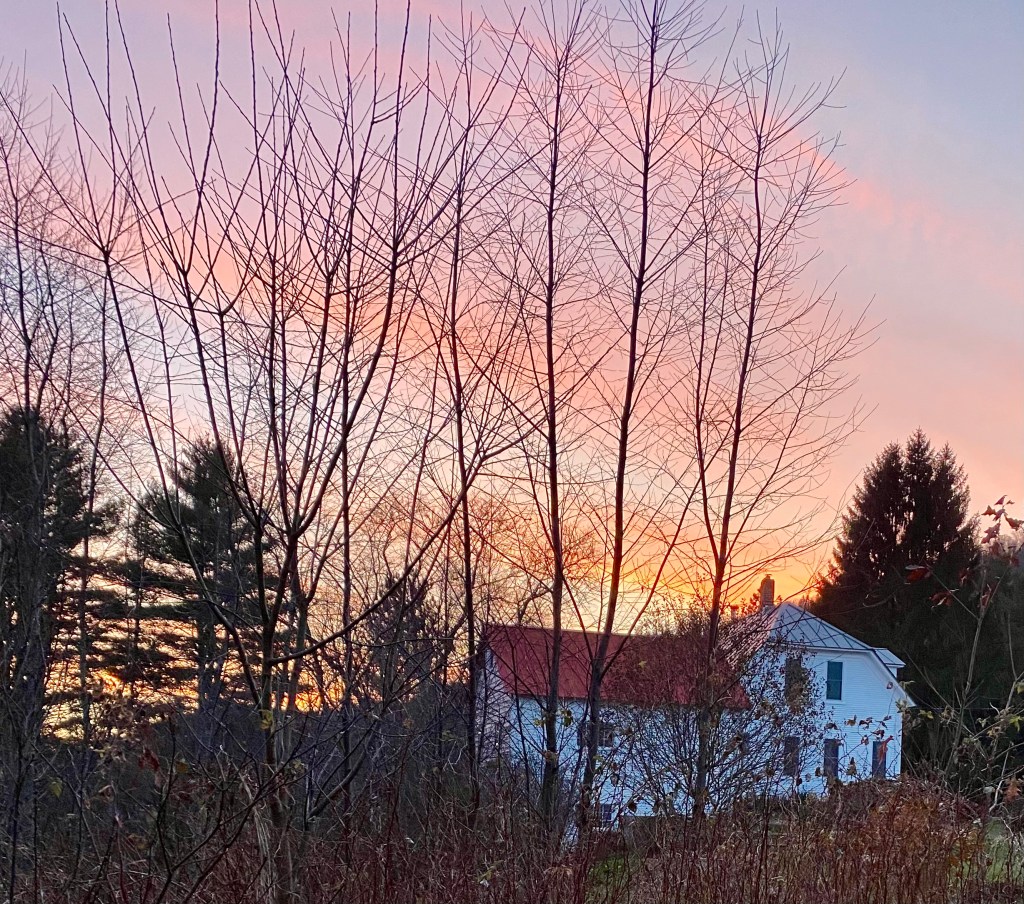
Later, I’m in the neighbors’ house who need some aid. As we stand talking in the well-lit rooms, I feel the house around us, the century-old vessel of wood and nails, a metal roof. Around us, the wind stirs through the evergreens. I walk back in the dark, my head bent against the cold channeling through the valley. All night, wind howls, the inexorable thrust of our world into winter.

While I read on the floor beside the wood stove, the cats keep me company, thinking their feline thoughts. Eventually, I turn off the lamp, and we three beings watch the fire’s flames through the stove’s glass door. Encompassing us, this profound darkness I will never comprehend. In it, our hearts beat on.

Here’s a few lines from David Truer’s “The Americas They Left Me” I read last night, in The Best American Essays, 2023.

This country is a terrible country, and this country is not…. There is a great ugliness on the land and also a great beauty. This country would and will do its worst at the same time it embodies the most nurturing habits our civilization has to offer. There is no reconciling these contradictions; they cannot be reduced or done away with. I must, we must, find a way to contain both.

The Might of Imagination.

Round Church, Richmond, Vermont

The geese fly overhead in great Vs, chattering in geese-speak as they align themselves, tugging their flock together. In my garden, I rip out the frost-blackened tithonia, the dry fronds of bachelor buttons.

The migratory geese are rhythm, nothing clichéd about their brassy calls. As I steadily work at my annual chores — burying more daffodil bulbs, the candy-like crocuses I’ll happily search for, months from now — I let my body do this work, my boots on the earth, a few spits of rain falling from the clouds, listening, listening.

In the town office where I work, stories surge through, as in any small town. Having lived through scads of my own drama, I know too well how the private seeps into the public, any truth strewn carelessly among chatter. For the most part, I endeavor to do my work and head out; yet, like anyone, I’m always listening, listening, wondering about motive and desire, curious about betrayal and courage, and the ineffable complexities of human behavior. In a conversation with a friend about a couple we jointly know, my friend said, For anyone who’s been following the story, this shouldn’t be a surprise… In a similar vein, I realize I’ve long been quietly following the story of the world where I live.

On my way to visit my daughter, I detour slightly and walk around Richmond’s round barn, shuttered up until dandelion season returns. The afternoon is especially balmy, sunlight bright even in the scarcity of November. I marvel at how mightily humans can create, mixing utility and beauty. How well we can do this.

“Sometimes it seems to me that, in the end, the only thing people have got going for them is imagination. At times of great darkness, everything around us becomes symbolic, poetic, archetypal.”

— Helen Garner

The Word Domestic, Depths.

Snowglobe snow falls in the late afternoon. November light: clear and sharp. Not much warmth here, not any season for sleeping rough and roofless, but sparkling as if our world has expanded. In an inexplicable way, the light seems washed full of hope.

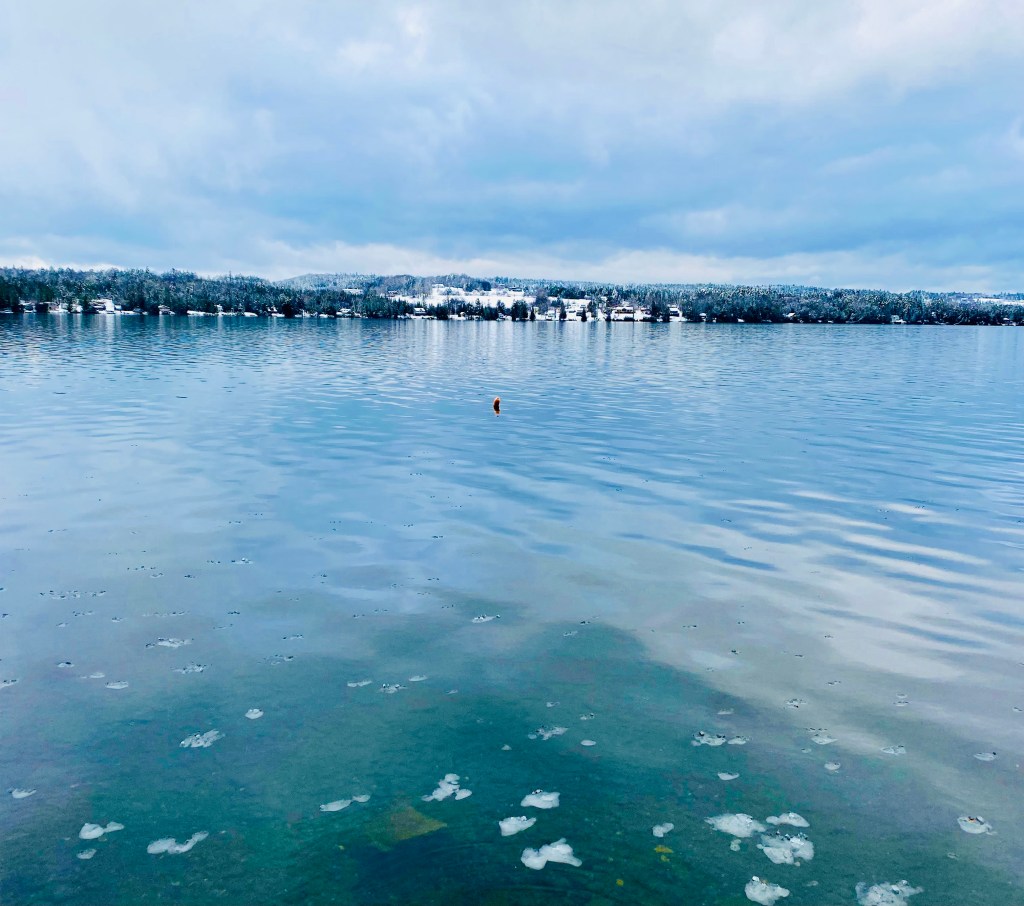
The summer folks have fled elsewhere, to Florida condos or back to city jobs. The gardeners and landscapers have put away their rakes and trowels. Around the lake where I walk at midday, only the builders persist in their bulky jackets and gloves. There’s so few of us in town that me wandering by is the chance to stop and remark about stick season. At the lake’s pebbled edge, I dip in my fingers. Before long, ice will rim the bank.

Stick season and the wood stove’s warmth make my cats deliriously joyful. Rumaan Alam (such an amazing novelist!) writes in his intro to Helen Garner’s The Children’s Bach:

Let’s agree to abandon forever the idea that the depiction of family life is the province of women artists, and therefore insubstantial. Let’s refuse to hear a sneer in the term domestic.

Fresh Lilacs, Late October.

My daughter sends me a photo of an apple blossom she discovered in Montpelier, Vermont, just this weekend, end of October. For anyone not a Vermonter, this is odd news that evokes suspicion and distrust. In New Englanders, distrust is a carefully curated character trait. Good lord, don’t be naïve. Naïve people don’t put on snow tires, and those people drive off roads.

Later that same afternoon, we walk through a pasture and then cut through a town cemetery. There, the lilac bushes are sticks, as you’d expect at this time of year. But at the very top of one bush, lavender flowers bloom. My daughter stands on her tiptoes and gently pulls down a branch. My house is surrounded on three sides by lilacs; late May is a joy. But this year, there were hardly any blossoms. Now: lilacs in late October in northern Vermont? Any sane person would look at this askance.

Nonetheless, I stand on tiptoes, too, and breathe in that ineffable scent of fresh lilacs.

Here’s a few lines from poet Amy Lowell:

Even the iris bends

When a butterfly lights upon it.

The Power of Maples.

This year, my extended world includes widows, including women mentors I looked to when I was a young mother. These women are all somewhat older than me, with long marriages. It wasn’t that long ago I was in the world of the new babies, the swapping of baby clothes, the intent to get the low-down about cloth diapers versus disposable.

There’s a line from one of my most favorite novels, Red Sky at Morning by Richard Bradford, about a woman widowed in World War II. Like a teacup, she would crack, but not break. Same.

Rain’s washed our world last night, and the sun is radiant this morning. While hanging out the laundry, I think of an acquaintance who says he’s still trying to figure out his life. But aren’t we all as grownup now as we’re ever going to get? The birds and squirrels scavenge in my flower garden, gathering for their families.

Here’s “The Power of Maples” by Gerald Stern which seems apt on myriad levels today:

If you want to live in the country
you have to understand the power of maples.
You have to see them sink their teeth
into the roots of the old locusts.
You have to see them force the sycamores to gasp for air.
You have to see them move their thick hairs into the cellar.
And when you cut your great green shad pole
you have to be ready for it to start sprouting in your hands;
you have to stick it in the ground like a piece of willow;
you have to place your table under its leaves and begin eating.

Impossible Zen.

There was a time in my life where I didn’t yet know about the tamaracks. It’s an odd thing to think about: there was a time in my life when I hadn’t yet met my daughters, either, when I hadn’t read a novel, kissed a boy, slept under the constellations.

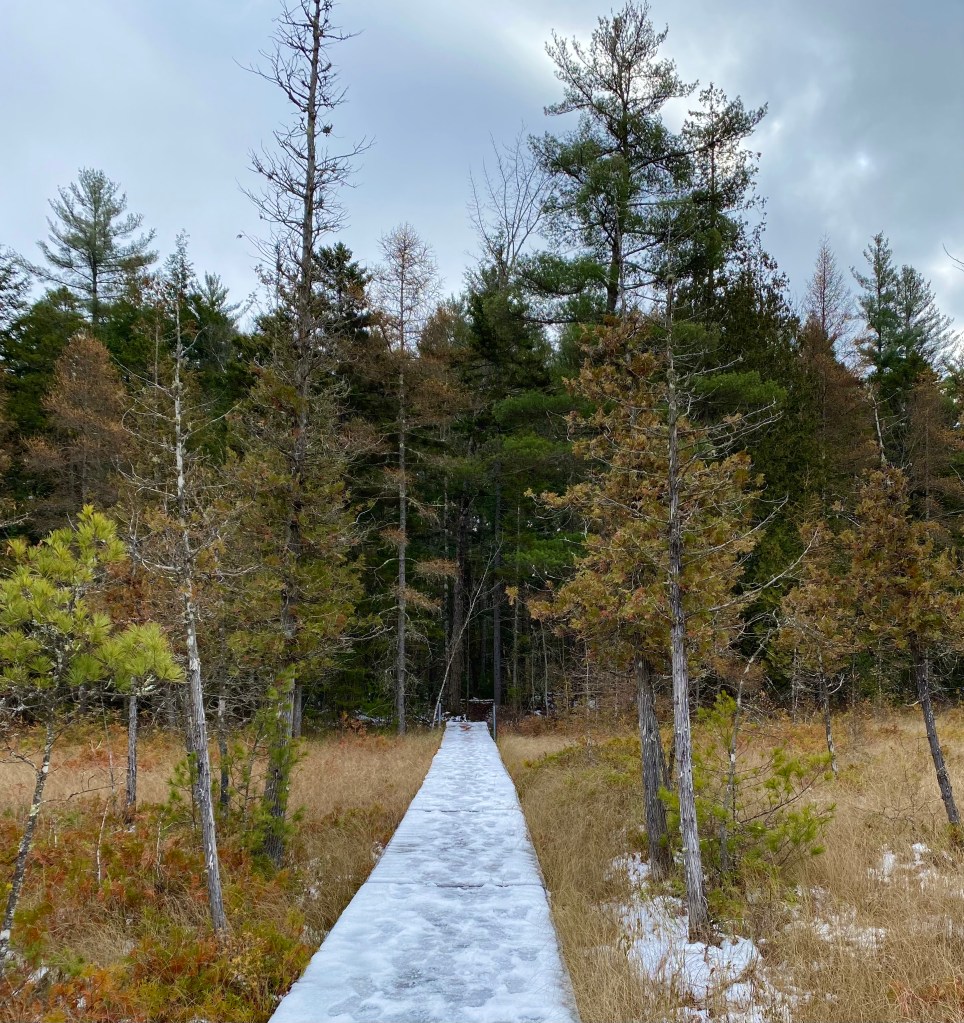
I head up through the woods to the tamaracks’ marshy place where I’ve never seen anyone else, a swampy patch off a road. In the gray afternoon gloaming, I wander off the path. I’ve forgotten my boots. I trip on a rock and fall on one knee. The twilight settles in silently.

On my way home, I stop in at the co-op. The co-op’s not really a co-op any longer, the handwritten baby announcements and politics scrubbed out in this new business model. In the produce area, an acquaintance is buying peppers. We stand at the wall of produce, kicking around a few thoughts. We agree, this has been a year of unbelievable things; there’s no need to list. I offer my micro philosophy I’ve mulling around, very Zen. As I’m talking, I remember the whole problem with Zen, anyway, is its impossibility.

At the register, the cashier can’t figure out a bag of greens. But what is it? he asks. The man in front of me says he liked the sunflower sprouts, so he’s trying the radish ones now. Micro greens?

Through the wide windows, I realize I’ve been out for much longer than I realized. Darkness is falling quickly now, car headlights sweeping through the village. The man lifts his bag of slender greens, crimson roots, and turns it around and around.

Good luck, I offer.

He nods, and then disappears into the night.