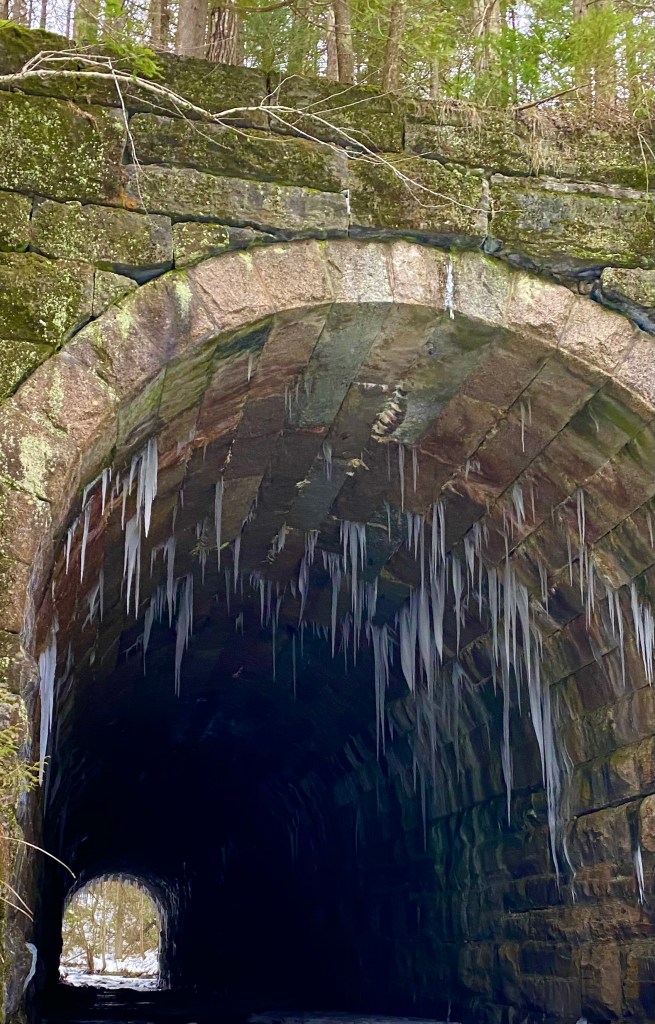
The sound of wind.

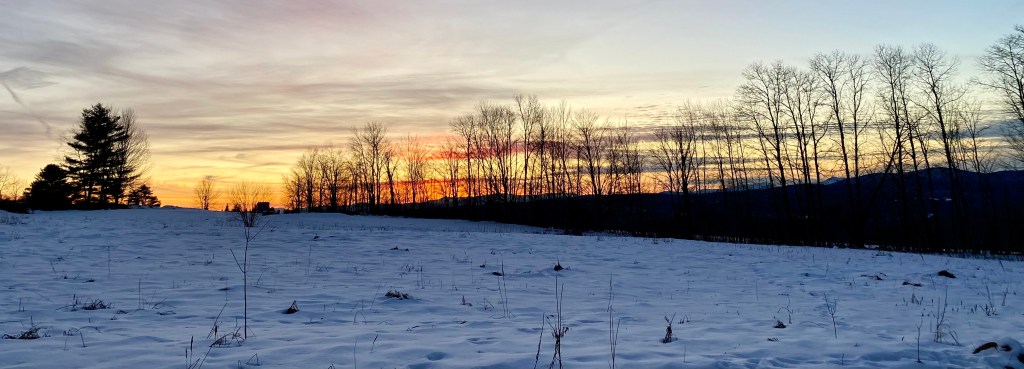
Seems a little early, pre-solstice and all, to be citing winter haiku, but the thing is, winter haiku is just so darn good. In so many ways, winter brings out the New Englander in each of us, as we ramble on about previous winters (the year back in the mid-90s when antifreeze froze, or the year school was cancelled was for three days straight). Or how to survive with savviness: long quilted coat, chop wood, frying pan on the sheets. When a few strands of sun tumbled out of the clouds this afternoon, I dashed outside to fill my eyes with light. Hope the weather’s keeping you more interested than inconvenienced…..

Winter solitude—

In a world of one color

The sound of wind.

— Bashō

I believe in good gloves.

At the Vermont Almanac‘s celebration of volume four, I talk with people I haven’t seen in years — my daughter’s beloved elementary school teacher, a couple who bought a house down the road from where I once lived. As the staff from the center where the celebration was held clean up, ready to head home themselves, I walk out with my former neighbors. We stand for a few moments by a fire burning in a pit, talking about sugaring and our daughters and Vermont dirt roads. Through the wide windows, I watch people wrapping up the remains of cheese and dried sausage. In my house, I am still eating the remains of Thanksgiving’s cheese, the sharp cheddar I used in my friend’s birthday sandwich.

Overhead, stars strained again the clouds.

I’d been asked to read a poem, “Dear Day in Late September,” for poet Kerrin McCadden, who couldn’t attend. I consider this poem a love letter in the tenor of love letters I admire most — elegantly stripped down, mindful of life’s deep sadness and the beauty of our world fat with bees.

On my way home, I think of the line “I believe in good gloves.” As a former sugar maker, I’ve used up countless gloves. With my small hands, I’ve never had a pair of gloves that fit. At Thanksgiving, in a shop looking for boots, my daughter handed me a pair of petite gloves. I nearly laid them to the side (thrift, thrift), but I bought them. Yesterday, wearing these gloves to bring in wood, I realized the gloves fit me perfectly, downy on the inside. Warm, strong, practical. What do you know.

…. I want to tell you I am

thinking about closing up shop for the winter. I am settling

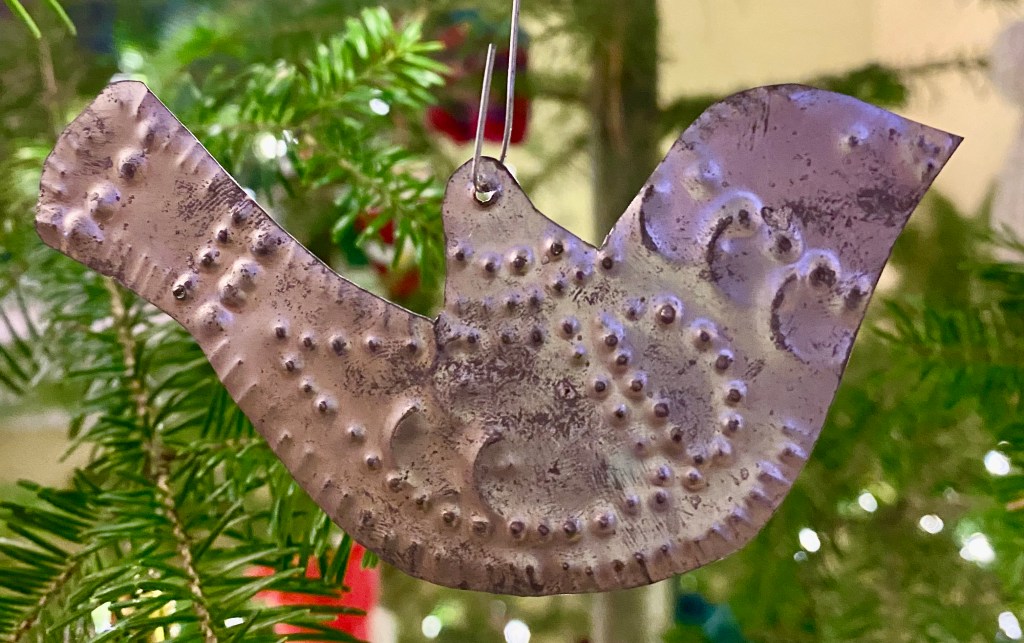
my accounts. Enclosed, please find a brace of birds,

which I hope you will accept as payment against last winter’s

oil bills. There is much to do. Up in the barn, I have spelled

out the name of the man I love with crabapples. It is one way

to know a man’s heart. I believe in his name, though,

like I believe in good gloves. Oh, how we fight the cold

with everything we have.

Kerrin McCadden

Vermont Almanac.

My copy of the fourth Vermont Almanac arrives in my mailbox. Remember real mail? I remember exchanging long letters with friends for years. Email is fine and dandy, but email has no smell. I open the book in my kitchen and breathe in the scent of ink and paper. I was fortunate to write and edit a bit for this issue.

These days, on my moonlit evening walks, living in Vermont is often on my mind. So much has happened in my own life and in this dear state: a summer of rain and wildfire smoke, a flood, beloved Montpelier drowned, a rise in violent crime. And yet, I’m tugged more deeply into this state I’ve called home nearly all my adult life. Reading this hefty book, I’m reminded, again, of how yankee ingenuity is so often yankee generosity, too. While our nation (and much of the globe) as a whole is navigating unsettled and often stormy waters, I’m heartened by Vermonters’ ruggedness, tenderness, and, so often, outright humor. Who could imagine a world without these fine things?

Hope is no mere aspiration that things will turn out well. Hope instead takes our hand, shines a light ahead, and pushes us onward into the messiness and uncertainties of life.

Bryan Pfeiffer, Vermont Almanac, Volume IV

Pocket Treasures.

On this Sunday afternoon, my guest departs in the falling snow. When I head out for a walk, the cold has sunk in, deep enough that tendrils of snow cling to the grass and trees branches. The snow bends down last summer’s sunflowers in the garden. I leave my woodbox full, the cats sleeping, plates on the table. I intend only to return a handful of library books, but I head up the hill and around the high school and into the woods where the snow lies deeply and slows me down.

It’s December. Snow circles down, lovely and miraculous, this silent transformation.

Here’s a few lines for winter:

“Treasure what you find
already in your pocket, friend.”
― Ted Kooser

Stitching, in Friends & Wool.

December, and by five o’clock, the dark has hammered in for the night. A friend and I walk to the post office, talking about work and family, laughing as we avoid icy patches glowing beneath the streetlamps. We meet a neighbor walking home with her two children from the afterschool program. The boys have glowing strips wrapped around their wrists, red and green, that draw lines through the darkness as they pinwheel their arms.

We return to my dead-end street where the light glows on my back porch. At the silhouette of mountains across the valley, an immense column of amber light illuminates the night sky. Moonrise. It’s not particularly cold. We linger and watch the stars and planets rub on against the darkness, one by one, and keep talking about those complicated stories of family, of how history bends back upon itself and what this might mean for our children who are in the time of their youth.

Above, stitches of a sweater I knitted for a faraway friend, something I created with pleasure and gratitude, that I’ll box up and mail away. Who knows when I’ll see these friends again. But it’s the only way forward that lends any illumination for me: stitch. When need be, unravel and begin again.

“The products of science and technology may be new, and some of them are quite horrid, but knitting? In knitting there are ancient possibilities; the earth is enriched with the dust of the millions of knitters who have held wool and needles since the beginning of sheep. Seamless sweaters and one-row buttonholes; knitted hems and phoney seams – it is unthinkable that these have, in mankind’s history, remained undiscovered and unknitted. One likes to believe that there is memory in the fingers; memory undeveloped, but still alive.”

Elizabeth Zimmermann

Vermont.

VTDigger‘s reporting about Burlington, Vermont.

Everything Is Made Of Labor 

The inchworm’s trajectory: 

pulse of impulse. The worm 

is tender. It won’t live 

long. Its green glows. 

It found a place to go. 

Arrange us with meaning,

the words plead. Find the thread 

through the dark.

Farnaz Fatemi