And Grace….

When I attended Sunday School briefly as a child, I remember reading about the Resurrection in a paper booklet and studying an illustration of Christ standing in a white robe beside a boulder, his clean hands outstretched to a gape-mouthed Mary, his hair neatly brushed. What the heck was that about?

The presentation was like reading Macbeth on Disney character flash cards. How would this be possible? Why would it even be desirable?

Hallmark’s proliferation of bunnies and tulips to the contrary, this holiday is a mystery, bloody and ethereal within a span of days, a profoundly condensed version of human life.

More than anything else what I resent about that sanitized illustration is the belying that the crucifixion is also the story of nearly unbelievable persistence, of a man who endured physical torture, an extreme crisis of faith, and phenomenal resilience against the human tendency to flee when the going gets tough. Over and over, I’ve met that Joseph Campbell line “you must be wiling to give up the life you’ve planned in order to have the life that is waiting for you.” On this Easter morning, I’m reminded again that the price of grace is fiercely earned, and, yet, eternally possible.

…modern people have seen too many chemicals and are ready to go back to eating dirt.

– Mark Kurlansky, Salt: A World History

FullSizeRender

library book reading…

Oh, Joy!

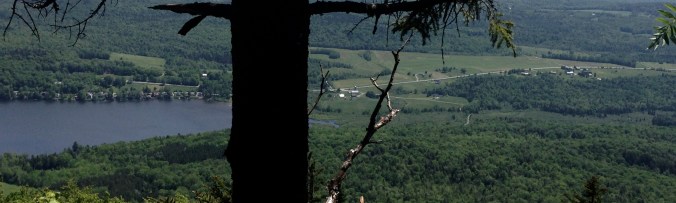
Coltsfoot sighting today: a whole wide hillside of the gorgeous tiny blossoms. This Good Friday emanates the radiance of these persistent blossoms. In Montpelier, everyone is smiling. I buy too much Easter candy, chatting with the proprietor at Delish about taxes.

On the street, I see young mothers everywhere, babes cradled in arms, or kicking their tiny heels in strollers. A young man intently mows the State House lawn. I stand on the wide porch of The Pavilion, a warm wind tugging hair into my mouth, as I plot changes in my life.

An old woman walks down the street with two shirtless teenage boys. All three lick ice cream cones.

Collective good will. Collective promise of spring in all her tender green beauty.

The old man
cutting barley–
bent like a sickle.

– Yosa Buson

FullSizeRender.jpg

Little Bits

A child gave me a tiny quartz pebble.

Thinking the pebble must have caused some injury to the child’s bare foot, I asked why I had been given the small thing.

The child said one sentence: I found it, and apparently believed that was enough, as she walked away.

I’ve put the pebble on my library desk, along with pipe cleaner creations, a crocheted pumpkin, broken pens – springs, bodies, screw-on caps – the children intend to repair.

Our upstate April
is cold and gray.
Nevertheless

yesterday I found
up in our old
woods on the littered

ground dogtooth violets
standing around
and blooming

wisely….

Hayden Carruth, from “Springtime, 1998”

FullSizeRender

Frivolity

My friend of mine mentioned his young baby had begun crying more. Hey, I casually mentioned, babies change. 

Isn’t Robert Frost’s line the one real piece of family advice – Life goes on – both through sorrow but also embracing sheer curiosity and joy? For a few years, we held Easter egg hunts at our house, usually pulled together at the last moment, in the sleep-deprived somewhere of sugaring season. This year, the younger daughter decided to flip the hunt around and have the grownups search for treasure, instead.

The kids are taking mastery of the terrain.

Spring fever imbues all of us. Children after school at my library yesterday were giddy and light-hearted. Round, mellifluous Lady Moon rose over the peaked roof of our house last night, shining over the diminishing snowbanks and running streams, the leaf-covered garden beds pushing up through the tenacious crust of what snow remains. The girls and I stood on the balcony in the balmy night breeze. Peepers are not long off.

Plenty of damp and drear will fill April Vermont days; it always does. But the mystery and miracle of spring has arrived. Our landscape changes.

How long does it take to see something, to know someone? If you put in years, you realize how little you grasped at the start, even when you thought you knew. We move through life mostly not seeing what is around us, not knowing who is around us, not understanding the forces at play, not understanding ourselves.

Rebeca Solnit, The Mother of All Questions FullSizeRender


Launching, Laughing (and Learning)

Stronger than espresso, spring roars into Vermont this Sunday afternoon.

Busy, busy, those singing robins building their nests. Busy me, emptying ash buckets and raising mud-soaked pallets from a wood pile burned to cinders back in January.

But it’s the kids who are most fiercely passionate about their work: it’s the opening of the Trampoline Season, requiring a search under the basement stairs for a missing spring, socks with gripping marks dug from a drawer, a stepladder precariously sunk in a snowbank as a launching pad for jumping.

The kids intend to grow six inches taller this year. They have work to do. And they are out there, doing what needs to be done in the realm of childhood. Finally: spring is on board with their plans.

Here’s a few lines from my late-night reading:

Questions about happiness generally assume that we know what a happy life looks like. Happiness is often described as the result of having a great many ducks in a row – spouse, offspring, private property, erotic experiences – even though a millisecond of reflection will bring to mind countless people who have all those things and are still miserable.

– Rebecca Solnit, The Mother of All Questions


FullSizeRender

Vermont Libraries

Yesterday, on my way to a state library conference, I exited I-89 and took a short-cut, trading an urban confluence along the Connecticut River for a winding dirt road.

Library conference? Ho-hum, you’d think. Instead, Vermont’s department of libraries is staffed with witty and super-smart people, full of insight and generosity. The second-in-command I ate lunch with offered to attend my trustee meeting.

Vermont has its large libraries, but the room yesterday was filled with many “library directors” like myself – primarily female – heading up tiny often one-room libraries, doing everything from chatting with kids about graphic novels and puppies to submitting data and vacuuming the carpet.

Zeal is a word I rarely use, but, quirky as librarians often are, they embody the best of democratic principals, ruggedly determined to preserve not only individual liberty and privacy but also the freedom to think, read, write, create.

Couple this with a reading last night of two writers at my library, packed full with appreciative townspeople. Antidote is the word I held in mind last night.

Two inches of fresh snow this morning. Temperatures in the seventies predicted next week…..

I wondered what on earth this Mencken had done to call down upon him the scorn of the South….

Now, how could I find out about this Mencken? There was a huge library near the riverfront, but I knew that Negroes were not allowed to patronize its shelves any more than they were the parks and playgrounds of the city. I had gone into the library several times to get books for the white men on the job. Which of them would now help me to get books? And how could I read them without causing concern to the white men with whom I worked? I had so far been successful in hiding my thoughts and feelings from them, but I knew that I would create hostility if I went about the business of reading in a clumsy way.

Richard Wright, from Black Boy, 1944

FullSizeRender