Teenagers Recite Poems

Reluctantly, my daughter drags herself to a required high school poetry recitation.

While I chat with parents I haven’t seen in ages, I see her laughing with a boy she’s known since third grade.

Adolescents and poetry — how fun! One boy gives a comedic performance of “Stopping by Woods on a Snowy Evening,” beginning by asking the prompter, Where am I stopping now?

Another boy’s fingers tremble as he reads a particularly beautiful poem. A shy girl comes alive.

Afterwards, talking in the dark on the short drive home from the theater, my daughter tells me about each student, how they chose their two poems, and what their voice was like. My daughter’s second poem was Frost’s Two roads diverged in a narrow road, so familiar, such a beloved poem. Nervous for her first poem, Emily Dickinson, she gained her voice with the second, her eyes on the upper balcony, her voice clear, melodious, utterly her.

Tonight the bear
comes to the orchard and, balancing
on her hind legs, dances under the apple trees,
hanging onto their boughs,
dragging their branches down to earth.
From ‘The Bear” by Susan Mitchell
IMG_7193

Kid Tracks

Tuesday, I’m at the Vermont Department of Libraries for an all-day workshop in the enormous, former high school — the loveliest of buildings in Barre. Built on a hill with a view of the town, every time I walk through the doors I wonder when we thought it was wiser to educate kids in ugly brick and nearly-windowless buildings instead of spacious and high-ceilinged rooms, with a sweeping staircase and polished woodwork.

How the world changes. The building is largely quiet now.

Midday, I walk on slushy sidewalks around a nearby park, a perfect square fronted by enormous ornate Victorian houses. On a snowbank, I see where a child’s mittened hand pressed ripples into the fresh white. The waves are low, and so I imagine a small child walking along in a snowsuit, thinking of not much at all but the pleasure of pressing fingertips into snow. The bank ends, and there’s no more sign of the child.

Here’s one more poem from Buhner’s book…..

People possess four things
that are no good at sea:
rudder, anchor, oars
and the fear of going down.

— Machado

IMG_4798

Photo by Gabriela. Hazen trails, Hardwick.

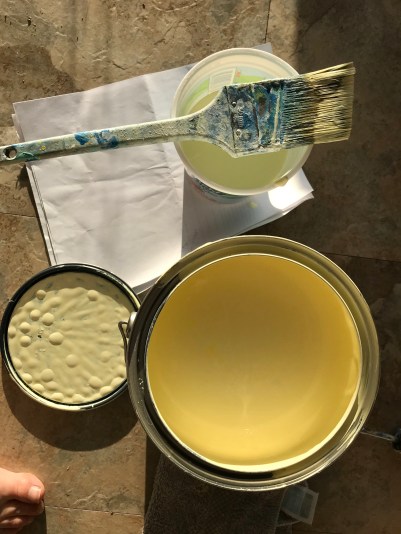
Painting the Kitchen the Color of Cake Batter

In the sub-zero cold, my daughter’s car cranks over after a long hesitation. Start, or not? Oh, February. So much effort.

The girls are gone skiing while I’m painting the kitchen. The cats move around from stepladder to drop cloth. Meanwhile, I listen to Dolly Parton’s America podcast. I had no idea Nelson Mandela was a fan of Parton.

The girls return with their cheeks bright red, cold and hungry.

Here’s a poem from Ensouling Language.

It is good knowing that glasses
are to drink from;
the bad thing
is not to know what thirst is for.

— Antonio Machado

IMG_7180IMG_7188

Stories From the Past and Present

At just a little over zero degrees — the sun shining beautifully — my daughter and I went ice skating at the town’s rink. Set behind the elementary school, in an out-of-the-way field where burdock grow in the summer, the rink is the vision of one woman, coupled with 2″x6″s and a plastic liner and a lot of help.

I slipped off my mittens to pour a cup of hot chocolate. My hands nearly froze.

Small town life is generally cozy. We see each other’s kids grow up. By and large, we look out for each other. But every now and then, the underside, the other, deeper side of small town life appears. That same day, two different people appeared in my life from a long-ago part of my life. One was a woman. She and I exchanged stories. The other was a man who stole from me and my daughters.

My daughter with her red cheeks and I were on our way home. A friend leaned close to me and asked who was the stranger. I whispered to her, and then we left.

Long ago, I crossed out of any Pollyanna view of New England village life and into the realm of Sherwood Anderson and Ray Carver. I’m nearly finished Ensouling Language — a book that unexpectedly arrived in my post office box. I’d never heard of the author, Stephen Harrod Buhner, although the book from its opening lines writes in my familiar world, particularly of Lorca’s duende, of traveling in the wilderness, of baptism with dark waters.

As a woman writer, particularly, I often find myself pushing back against this cultural insistence to “make nice” and pretty things up. We live in an enchanting world, but the world’s waters are often dark, too, populated by saints and by thieves.

My daughter and I took our skates home, hung them up, and ate dinner.

A thousand thanks and more for this book.

Love is nice… but writing is too hard for love alone. Love is crucial for many reasons but it is not enough to get through [writing] the book. And whether you call it hate, or rage, or anger, or irritation, it is all some form of the same thing. You must have this hate, this rage to be a writer for this is one of the hardest professions on the planet and without rage you will never survive it. You will always run out of steam about page 60.

IMG_9189

Photo by Molly S.

Somewhere in Vermont’s February…

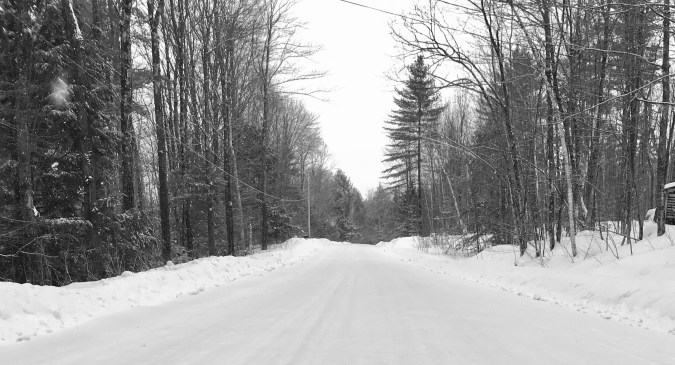
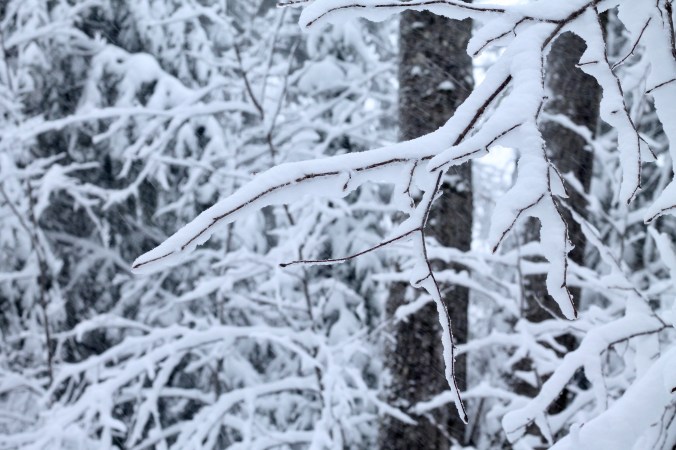
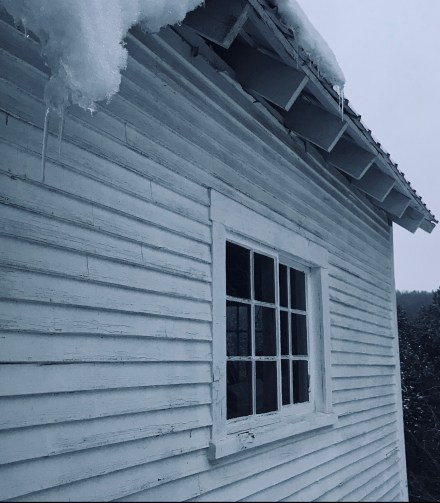
Summers, the dawn is raucous with songbirds. In February, I stand outside in the dark, the cold swirling around my hands and head, hungry, hungry, it seems for my warmth. The icy snow makes the lightest tap against the kitchen window. We’re socked in by sleet and ice and snow in Vermont, the winter wrapping around us. When my daughters were little, how I chafed against those endless winter days. Now, I’m glad to be awake and working while the household sleeps. The cats have wandered downstairs for their breakfast, and curled up for their post-breakfast rest. Our house is warm; the daughters are well; the bills are paid; I have work.

Let the snow pile up. Among those many motherhood lessons is a solid carpe diem — and to log in a few more hours of work before the day drifts along….

Winter solitude—
In a world of one color
The sound of wind.

— Basho

IMG_7170

Vermont Commune Story

Writing about summer camp — in February — makes me pause over photographs. How green and gorgeous is Vermont’s summer. The profusion of hydrangeas. The luxury of lying in green grass.

I spent a few hours last week speaking with Peter Gould of Shakespeare Camp fame. But Shakespeare Camp is just an iceberg tip of his fame. A few years back, I heard him read the title story from his collection Horse-Drawn Yogurt at the Galaxy Bookshop in Hardwick. The bookstore was packed. The evening may or may not have been snowing, but I remember the night as snowy, because the story, set in winter, is so evocative.

I’ve shared a few lines from this story below. The story is one of the very best stories I’ve read about the countercultural life in Vermont — the energy and enthusiasm and love of Vermont and the sadness, too.

The farm would remain. People would leave. Some would stay, working in town but making their home there, connected to the mythic past but not to the daily work of a farm. New folks would come, with new goals. Soon no one would remember most of what had already been tried, what this antique tool was for, what dream that pile of rotting lumber in the lower pasture represented. We would always plant a little organic garden, but that would not be our excuse for being. We could live off the economy better than we could live off the land.

— Peter Gould, Horse-Drawn Yogurt: Stories from Total Loss Farm

IMG_7148