No Fear

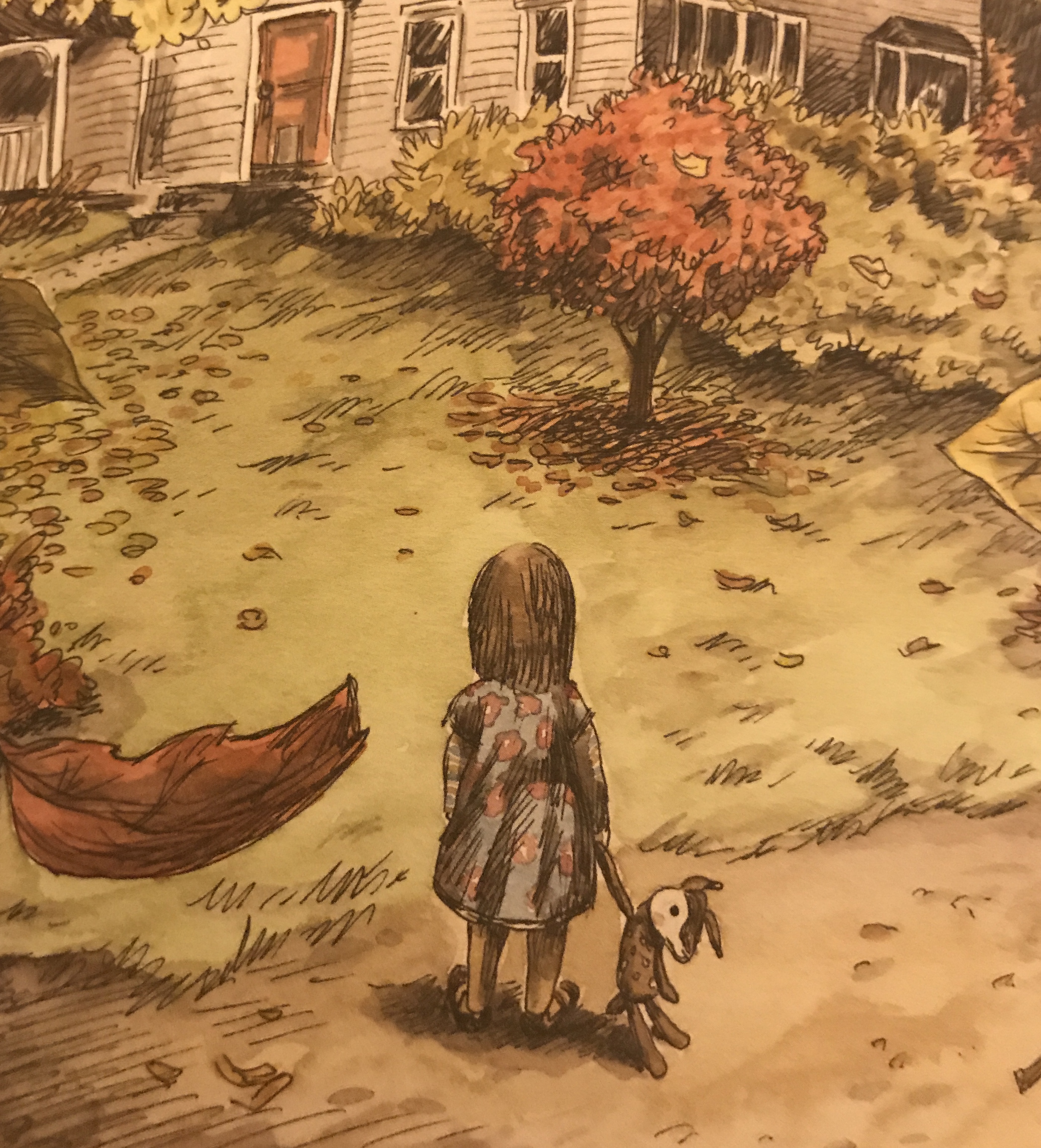
I’ve heard authors read work from mesmerizing poetry to an essay about a colonics session – but the Argentinian cartoonist I just met likely ranks at the very top. Incredibly famous outside the verdant realm of Vermont, the cartoonist sat on the floor with the kids and told stories and made the little ones laugh, and assured them they could all draw, too.

Even after the adults tried to close the hour, he kept on answering the kids’ questions, saying, This is an important question. This is good.

At the very end, a boy asked how he could become a cartoonist. The cartoonist said, Like this. Tell your parents you will need a book without these things – and here the cartoonist drew four parallel lines on a piece of paper – those are not helpful. You will need a black marker. And then you are on your way.

Great rule of thumb: when in doubt, get rid of the lines.

In my opinion, childhood is one of the most intriguing phases in life… For instance, when they (kids) draw, they do it with such freedom…! We adults can’t ever experience that level of freedom again, simply because we are scared of looking ridiculous or failing or making mistakes. When they draw, my kids have no fear. And that’s the hardest trick for an artist.

Liniers


Emerald Blossom

A little girl, about the height of my hip, leans against me in the library, seeking gum. My stash melted in the freak heat wave. She looks at me, forlorn.

The adult I’m speaking with suggests they walk outside and pick a leaf of kale.

Later, when I’m outside, too, I see the little girl with a dark green leaf tucked in her fist. She clutches this edible bouquet, watching the big girls swing. Then she leans against my leg, still facing away, a kind of forgiveness. She eats the entire leaf.

How much I desire!
Inside my little satchel,
the moon, and flowers.

– Basho

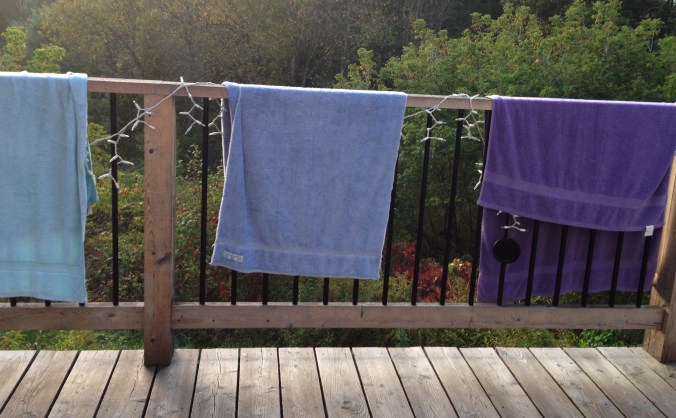
FullSizeRender.jpg

From the season’s last swim….

On the Footpath

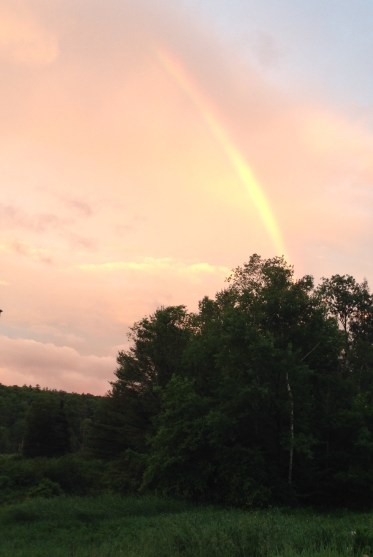
Rain last night – cold rain in July. What about a sultry summer sunset?

At my parents’ urging, my 12-year-old and I watched Lion last night, and driving to work this morning I thought about how this is a story about home – about longing for home and what that means – a story that unfolds with secret after secret, all the way until the very last line.

Lion is a journey story, too. My daughters and I have taken so many journeys in these last few years, literal and metaphorical, that I might almost be tempted to lay down the journey fascination if traveling weren’t at the very heart of human life.

As my daughters grow up, now long past the toddler or little kid age, that cuddling, hand-holding phase, the journeys we each take get longer, deeper, more intricately complex. At the crux of our journeys, like everyone else on the planet our travels are inherently about ourselves and our loved (and sometimes unloved) ones. Same household, same parents: but each of my daughters travels a uniquely bending path, which at least has the benefit of keeping domestic life lively.

Here’s a few lines from my early morning reading, from Dave Eggers’ Heroes of the Frontier.

That only having left could she and her children achieve something like sublimity, that without movement there is no struggle, and without struggle there is no purpose, and without purpose there is nothing at all. She wanted to tell every mother, every father: There is meaning in motion.

FullSizeRender

Where we live now, Hardwick, Vermont

The Adult Contingent

The summer I was 19, I worked in a nursing home in Brattleboro, swing shift from 3 to 11pm, arriving at the hot and busy part of the day and leaving in the generally cool and always quiet night. Being 19 and filled with endless energy, I often worked a double shift, and left at 7 am when just about everyone else in Brattleboro was heading to work.

A few young residents lived in that nursing home – a woman crippled with arthritis, a young man irreparably injured by a drunk driver – but the older residents were there either because they had dementia or suffered an illness, or were simply old and had nowhere else to go.

One evening, my favorite little old woman rang her bell. I remember she had a small bedside lamp and a handmade quilt. When I appeared, she was polite, but she said clearly, Honey, I want a grownup.

I hurried to get the charge nurse, even though it was my job and maybe I should have stayed. I was very young, and the woman was very old – a territory wholly unfamiliar to me.

Early last Sunday, in the last push of moving, I desperately wanted the adults to arrive. I love kids and teenagers dearly, but there’s a time for adults, too. The adults arrived in force, moved us and stayed, and put our house together again, too. They ferried us down the mountain and over the river and up a hill, and took the younger daughter swimming, too.

Eternal thanks.

A camellia
dropped down into
still waters
Of a deep dark well

– Buson

FullSizeRender

Classic Reprint


By chance, I’ve discovered a reprint of The Farm in the Green Mountains by Alice Herdan-Zuckmayer, published originally in 1968, about a German family who sought succor in my state during the terrible years of World War II. Herdan-Zuckmayer’s writing flows clear as water, pragmatic and thoughtful. How I wished she lived down my road today, and I might ask her to take a walk.

Among the states they (Vermonters) are a relatively poor state, but they are not afraid of their poverty; they don’t love wealth, they have little to gain and not much to lose. This modesty and moderation give them an independence from uncertain times and arm them with pride and fearlessness.

FullSizeRender

Soil Writing Exercise

In a writing workshop I attended years ago, a professor grilled another student about a field she had recently driven by. What emotion did the field evoke in you? Older than me and not a close friend, the student was a woman I admired. A single mother, she was simultaneously brassy, insecure, funny.

The professor kept asking questions: Any moon or starlight? Rock piles? Did a river or trees border any edge?

The woman paused and finally said one word: sad. The emptiness of the harrowed up field evoked a sense of waste. The conversation might have ended there, but the professor pushed a little further, probing, and the woman said she thought the sorrowful emptiness was just one long snapshot of the field’s story.

That evening, we were not in our usual seminar room, clumped awkwardly instead in a half circle of chairs with writing desks attached. The overhead fluorescent lights made the windowless room uglier than it needed to be.

Every now and then, I find myself wondering what happened to this woman, and which way her story bent.

In the end you should probably know your characters as well as you know yourself. Not only what they had for breakfast this morning, but what they wanted to have for breakfast.

– Colum McCann

thumbnail_FullSizeRender-3