Cracking Open the Door on Deafness

In my twenties, I was a typist for a novelist who not only had the misfortune to suffer from severe carpel tunnel, but was also profoundly deaf. The deafness had contributed to her divorce, and she holed in up in her parents’ summer house in rural Vermont. Once a professional musician, she cleaned houses before landing a teaching job and turning to writing children’s literature to make a living.

Sitting side by side with me, she dictated her novel.

One morning, an unfamiliar alarm rang out in her study, so piercingly loud I instinctively bent over. I heard nothing but that sound. Fearing it was a fire alarm, I stood up, panicked. Then I saw the novelist, sitting in her chair, was mystified by my actions. She was entirely oblivious to the noise. To her, that alarm didn’t exist.

A red flashing light on her computer power surge system warned that the power had gone out. I shut down her computer. I explained what had happened. Then I stood there, rattled — both from the physical shock and from my glimpse into her immense silence.

Here’s a line from Susan Orlean’s The Library Book:

… oh my God… do you think there are any conservative librarians?

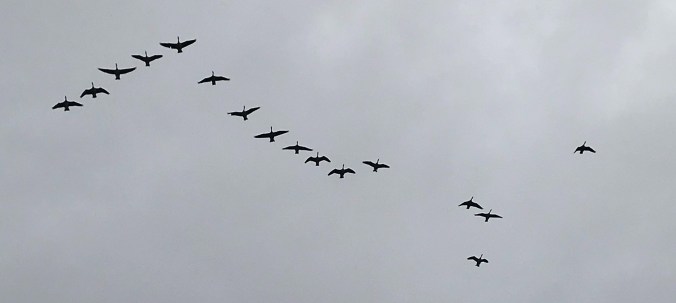
IMG_3980.jpg

Lyndon, Vermont

My Long-Ago Mentor

The children’s librarian in the town where I grew up — Goffstown, New Hampshire — not only offered me first dibs on brand-new books (I began reading Judy Blume’s Deenie while walking home), she also came to my wedding. Every summer, I fill the glass purple vase she gave me for a wedding present.

So, when we were talking about the Giving Back issue at Kids VT — the magazine where I’m on staff — I wanted to write about Betsy Elliott. We aspired to write particularly about a few of the many people who give so generously, so meaningfully, without any expectation of return — maybe a kind of antidote to our troubled world. Here’s my short essay.


uyw

The Moral Arc

The fall after I graduated from Marlboro College, I was living in Brattleboro and working at Omega Optical where I crafted tiny round glass disks used as high-tech light filters — a strange and short-lived job for me.

That fall, David Souter was nominated for the Supreme Court, and on NPR we listened to every word of the hearings. A bachelor, Souter lived in Weare (pronounced where), New Hampshire, not far from where I grew up, a little town I knew well. Brilliant and witty, Souter made New Hampshire proud.

That fall, young as I was and newly in love, I rightly considered myself an adult. I walked to the company’s enormous building, not far from where I lived, and whose back doors opened to the weed-flanked railroad tracks, just above the wide Connecticut River. Before the winter, I knew I was unsuited that job and moved on. By the next spring, I was living in a tipi, and then my boyfriend and I packed up our old diesel Rabbit and a rusty Saab and moved west to graduate school.

I was glad to join adulthood, even though, as any young person, I had no idea how difficult that would be, how piercing a price the world would extract for my share of wrongdoings. My teenage daughter once urged me not to take our arguments personally — terrific advice. Step back; breathe. Justice isn’t personal to me, or anyone else, either. Watching her sister’s soccer game yesterday, in a row of women talking about Kavanaugh’s confirmation, I’m still astounded that she’s now one of us, more grownup than teenager, with all that means.

My fury about people is based precisely on the fact that I consider them to be responsible, moral creatures who so often do not act that way.

— James Baldwin

IMG_1005

Photo by Molly S.

Gathering Kindling

My daughters and I watch New York Times clips of Dr. Ford, my 13-year-old’s eyes wide, her hand paused over her algebra homework at the kitchen table. My 19-year-old and I talk and talk, and then she replays Kavanaugh’s testimony. The 13-year-old says, in wonder, Someone is lying. She ponders this, then says, Why would someone lie?

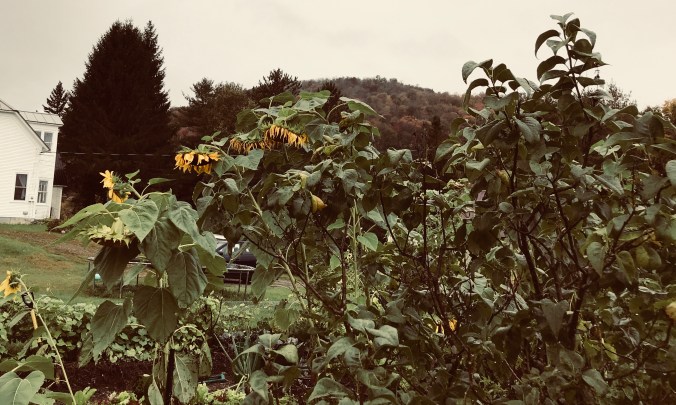
Tomato vine by cauliflower plant, I empty the garden, exposing black earth, finishing the final coat of white paint on a few patches of clapboards, eyeing the porch windows and gauging when I’ll plastic those for the winter’s duration.

In the dark this morning, my daughter and I talk briefly in her room, rain beating on the roof. Cold October rain illuminates foliage colors, tugs out the very best. I mention I’m going to paint the dining room a sunflower color this weekend, the window trim Santa Fe blue. Cool beans, she says.

What concerns me even more, though, is the loss of those values the (communal) fire precipitates and reinforces… How will the affirmation by others of one’s own necessity in the world be validated? What will be the opportunities for profound courtesy and for ceremony, of which there is such a dearth in the modern world?

We can lose the communal hearth and survive, but survival without the values of the hearth… seems a brutish prospect, a retreat into intolerance.

From Barry Lopez in Hearth: A Global Conversation on Community, Identity, and Place

IMG_3523.jpg

Z39.50

On a rainy day, I’m at a cataloging class at the state library. Through the open window, rain pours from the roof. I admire the library world for its insistence on precision and order, its intensely democratic approach, the unapologetic quest for knowledge and creativity.

In Vermont, numerous tiny one-woman libraries like my own hold the same democratic importance as the large city libraries. Such a complicated network laces this system together — like Z39.50, the mysterious (for me) way library systems speak to each other and exchange information.

Later in the morning, the rain stills. Through the open window, robin sing. The teacher pauses, says, Spring’s here, and waits for just a moment, a subtle acknowledgment of the beauty of communication.

The only thing that you absolutely have to know, is the location of the library.

— Albert Einstein

IMG_1677.jpg


Imagination

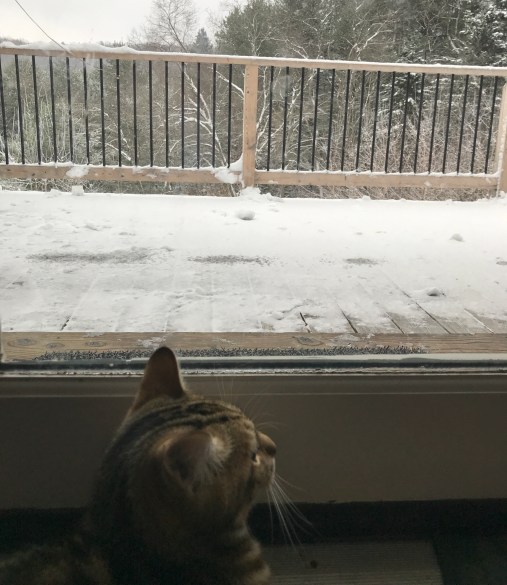
My brother is standing on a ladder shoveling off our back porch roof when a sheet of snow from the house roof creaks loose and cascades over him. With my daughter’s help, he empties little chunks of ice and powdery snow from his pockets. Rain falls a little.

After we clear the snow, the three of us stand on the back porch — scene of summer hanging out — and I mention the sweet William that grew last summer, and will presumably again this summer, in the wild patch below the railings. I can imagine the tiny, frilly flowers in three hues of pink, laced with white.

All around us, the world is painted in hues of green pine, brown bark, and all that snow, on branches, over the garden, the trampoline frame nearly buried. It takes imagination to envision the lushness of spring — singing frogs, mating birds, tender green, and all those wildflowers, unstoppably unfolding from the earth — but we imagine it. February.

‘This is Just to Say’

I have eaten
the plums
that were in
the icebox

and which
you were probably
saving
for breakfast

Forgive me
they were delicious
so sweet
and so cold

— William Carlos Williams

IMG_1115.jpg