Unexpected Phone Call. Driving.

My friend who has no cell phone (yes, indeed) phones me from someone else’s phone when she needs a ride, due to being “in a pickle.” I don’t get the message, as I’m on the phone with a hard-working journalist who’s graciously writing about my book.

Since it’s my lousy cell phone, I get the message about 20 minutes later, as messages are conveyed to my cell phone via carrier pigeon. I phone the stranger, who’s no help at all, but really darn nice.

I get in my car and go search for my friend, listening to a replay of Vermont Public Radio’s Brave Little State about the housing crisis. I pull into Montpelier and get out to look for my friend right around the time the podcast delves into interest rates and their role in this actual Real Life problem.

My friend is fine and home by then, and I sit on the steps of a closed restaurant and talk to her for a good long while. It’s dark, but not late, and the air is warm. I’m in this tiny little city that smells deliciously of something spicy, not sweet like cinnamon, but spicy like hot chili oil. I’m across from my beloved public library, closed up now, where I worked so many lovely long days, pre-pandemic, with never a thought that those days might cease for me. Since I have no real place to be, and my friend is ebullient to be home and safe, I tell her about the night so many years ago when I stood with my baby just down the street and contemplated renting a room in the inn and never going home. I’ve thought about that night and those crossroads in my life for years now, but when I tell my friend this story now, I imagine that long ago night lifting on little dove wings and fluttering over the roof tops.

I turn off my phone and drive home under the starlight.
Snowfall.

We’ve had so little snow this winter in Vermont that this morning’s deep snowfall comes almost as a kind of surprise. The day before, a cold rain fell all morning. As I bent into work, I kept glancing through the windows, glad of the indoor work that morning.

This snow is the classic, pillowy powder of the most magical childhood memories. Sure, spring is far in the offing on a day like this, but the billows and mounds embody winter’s profound silent beauty.

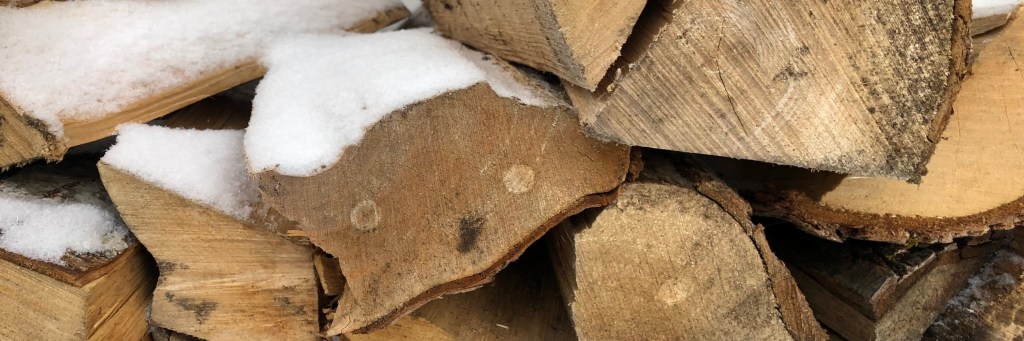
A decade ago in my life, this kind of storm would have whooshed in with a number of worries — will the sugarhouse collapse before the roof is raked? How long can I endure cooped-upness with small children? Will our firewood hold out? These days, my worries are different, as my life is in another place. But I’ve changed, too. We’ll do what needs to be done. What doesn’t get done, perhaps doesn’t need to be done. And some sun is in the forecast for this weekend, too.

[The 1800s opium epidemic in China] was once widely interpreted as a story of a once noble society destroyed by a powerful drug, but more recent scholarship has argued that this simplistic explanation overlooks the turmoil, poverty, and widespread dislocation caused by the wars themselves which in turn exacerbated the epidemic.

Carl Erick Fisher, The Urge

Sugar. Salt. Stars.

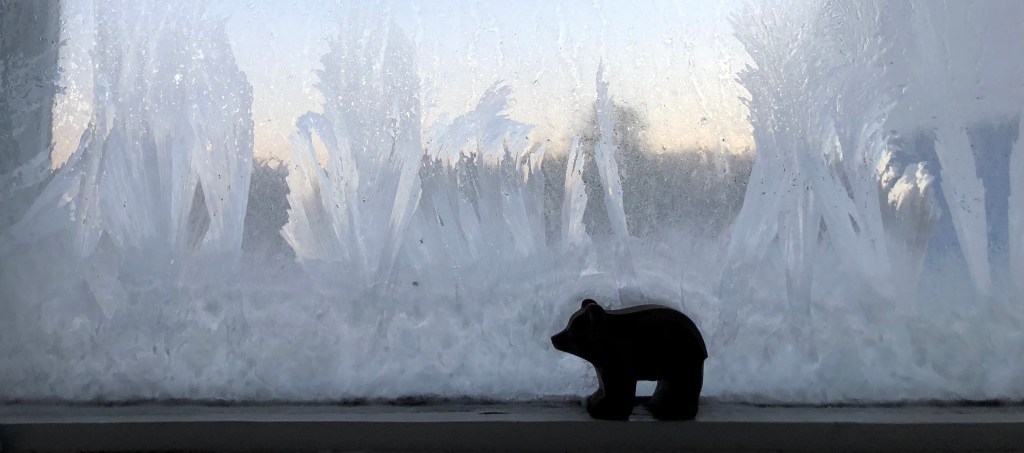
The air has turned this morning when I step outside in the dark with my bucket of hot stove ashes. Even without my coat, I’m not immediately shivering, and the cold doesn’t come at me with daggers on my face.

Beneath the starry sky, I gazed up at Ursa Major, a single gauzy cloud suspended overhead, as if in water. I’m reminded of frog’s eggs, those cushiony pillows I sought with my daughters when they were little. Every spring, we found clusters in ponds and in the ditches along our dirt road. We’d visit these clusters every day on our wanders. Sometimes the eggs hatched. Sometimes the clustered disappeared.

On this early February morning, beneath the stars, I stood for a few more quiet moments, thinking about stars and frogs’ eggs. Snow’s expected to move in soon, too.

As water given sugar sweetens, given salt grows salty, 

we become our choices.

~ Jane Hirshfield

Book Rec.

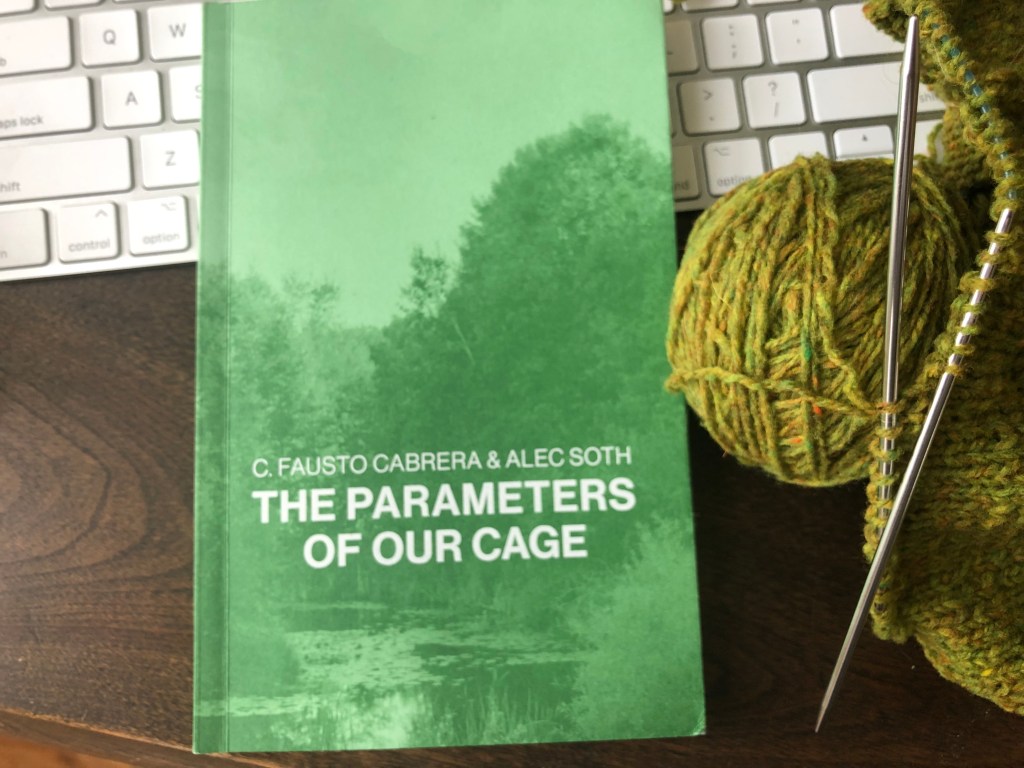
By chance, I start reading a book of letters exchanged between a photographer and a prisoner, an exchange in 2020 that opens a view into these two men, into our country, and into art. I devour the book. The book’s title is The Parameters of Our Cage, and I keep thinking about the cages culture constructs and we construct in our own lives. It’s a question I’ve returned to, over and over in my life. So much of my life’s hours have been devoted, in one way or another, to writing. As the pandemic has created higher walls and sturdier cages, writing, art, human imagination, are increasingly powerful. Utterly necessary.

I wake to a perfect zero degrees this morning. Our house is thankfully warm and pleasant, but the cold is ever present. There’s immense snow south of here, but again the storm has sheered off to sea.

The most profound art is generated out of the depths of a personal place, then becomes an entity in its own right thus developing a different layer of function that requires a social aspect or nature.

C. Fausto Cabrera

January Dreaming.

The cats and I write in the mornings, ski in the late afternoons. In the middle part of the day, on these cold weekends, I paint the downstairs walls yellow. The yellow approximates the hue and consistently of vanilla cake batter. If this is my way of keeping sane in a pandemic winter, I suppose it’s holding firm enough.

While I paint, I listen to stories about Sidney Poitier, about the teachers’ union strike in Chicago, about Ginni Thomas — spouse of Clarence Thomas. If nothing else, the words remind me that the world goes on. The first room I ever painted by myself was a room I rented in a house on High Street in Brattleboro, Vermont. I was 21. It was July, and the windows were open. I was drinking gin and tonics. Now, water has replaced the G&Ts. I have two daughters, two books, and I’m imagining a little orchard I’m going to plant this spring. Maybe it’s just the yellow paint (or the fumes) but more and more, I dig down into my imagination, into its deep reserves.

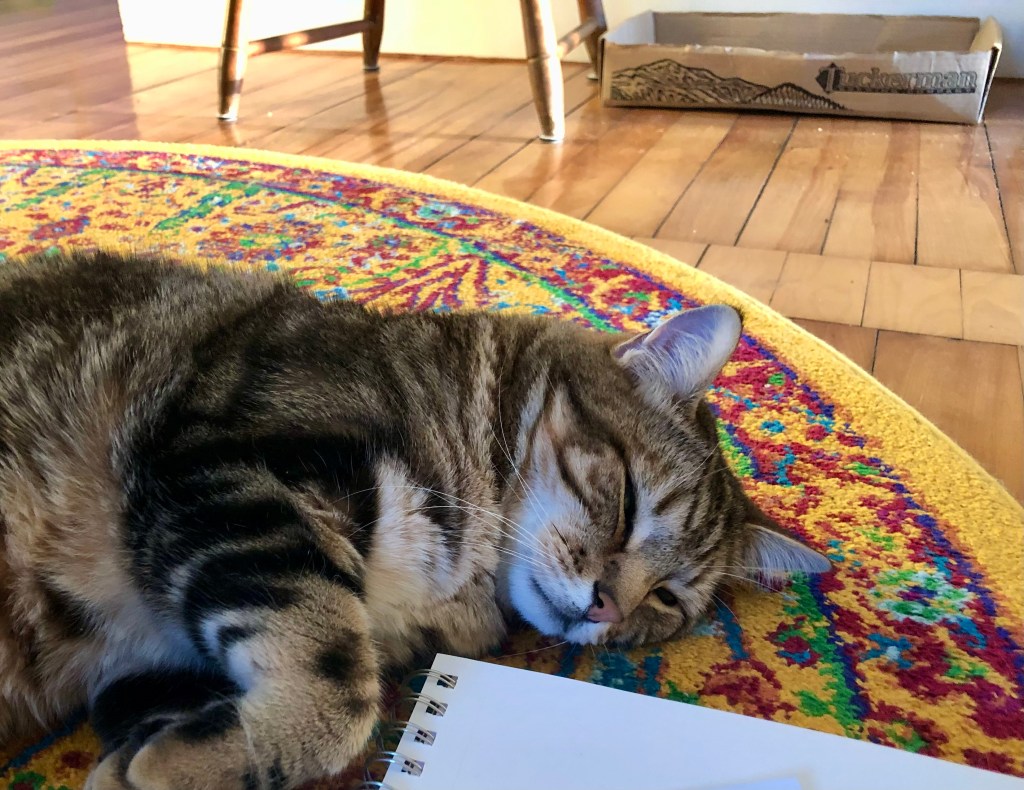
Our cats dream of good cat things: cardinals and tuna on a little flowered plates and sunlight before the wood stove. A loving hand on their furry heads.

Words from Thich Nhat Hanh:

“We have the tendency to run away from suffering and to look for happiness. But, in fact, if you have not suffered, you have no chance to experience real happiness.”

Soul’s Migration.

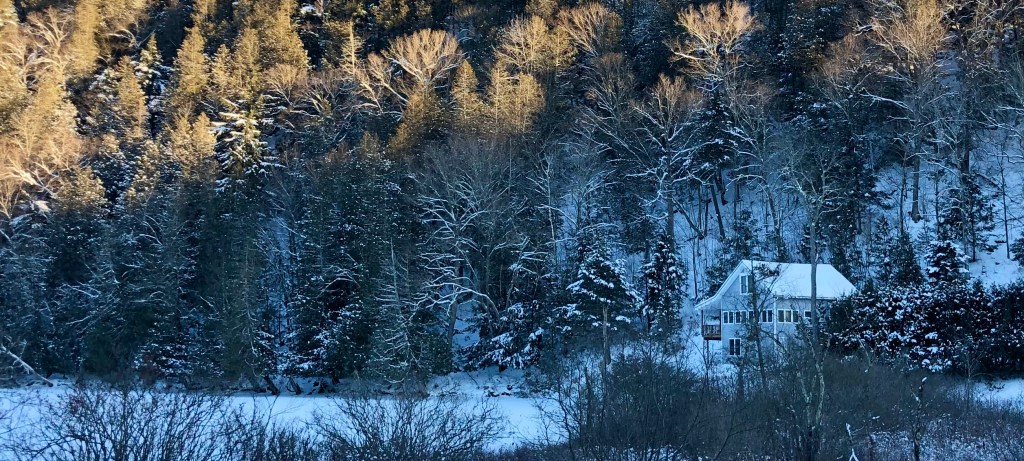
Lake Eligo, Vermont

At the end of the afternoon, I’m out with my skis, insufficiently dressed against the zero degree temps, hoping the movement will warm me even as I caution my youngest every day — bring enough clothes.

I warm.

I ski on the former railroad bed, behind a daycare. Earlier this winter, a new playground was built for the kids, of wood and ramps, and I wonder if some of the federal coronavirus money made its way here. The daycare itself is in the basement of an old building, and so the playground has a kind of bittersweetness, too, a bandaid of a much larger problem.

On the bridge over the river, I pause. Snowmobiles and a groomer have driven through here, and so the skiing is easy. Animal tracks mark the snow down the center of the frozen river. On the bank I ate wild grapes in the late fall. For now, it’s just me and the fresh snow and the sunlight while it lasts, the woodland creatures, the river flowing deep beneath that ice.

Birds migrate and caribou circle the cold top of the world. Perhaps we migrate between love and suffering, making our wounded-joyous cries: alone, then together, alone, then together. Oh praise the soul’s migration.

Mark Nepro