Picking at the salty remains of roast beef…

Shortly before the November election, I’d heard word of a friend’s illness, and I determined to fly West and see this couple. At that time, I thought I was poisoned by mold and struggling myself, but I really wanted to visit. I decided to hold off buying the ticket for a few days until just after the election, because, well, what if? What if the grid crashed or something? I’ve lost money on airline tickets before.

What happened, instead, is I ended up in the ER the night before the election and discovered the mold was a red herring. I had cancer — although I hold, yet, that the mold was an element of a complicated equation that may, or may not, have added to turning on that cancer gene. By then, flying was impossible for me. Now, news comes to me of her final passage from this life. My friend has lived a long, loving — a good, very good — life, and yet…

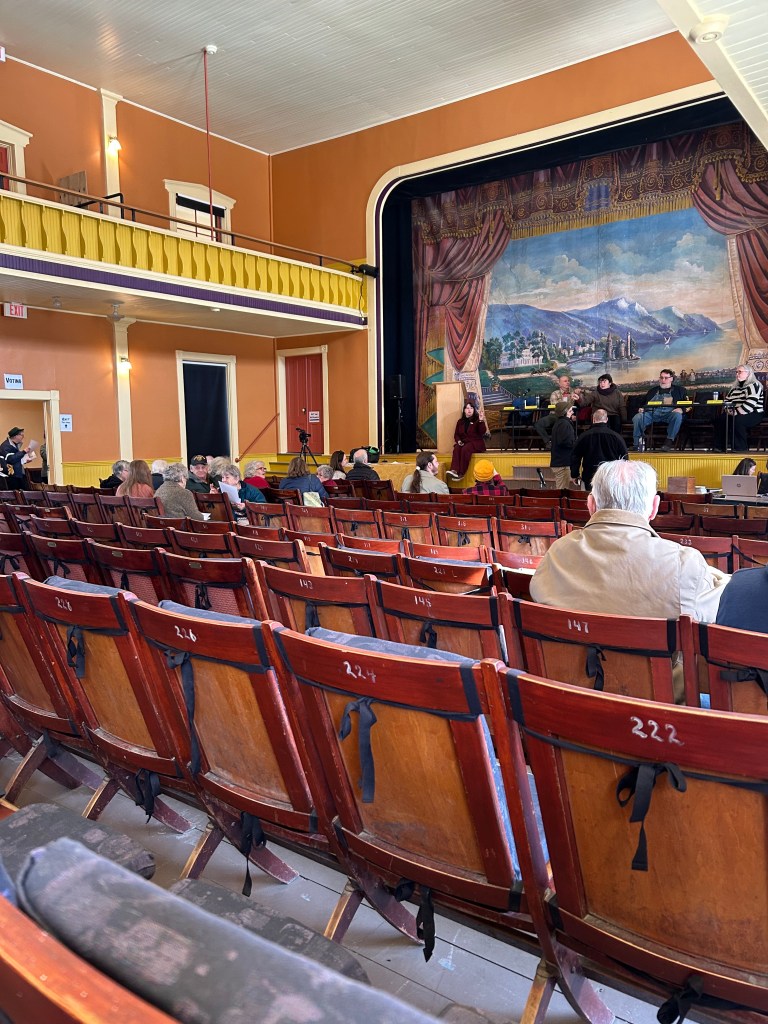
All afternoon, another friend and I text back and forth. Remember the nights we ate in their dining room where the walls were painted light blue above a cream headboard? On the wall thermometer, we watched the January temps dip to 20, 21, 25 below zero, laughing at what would be a cold drive home. We never wanted to leave early. Instead, we kept drinking wine, eating chocolate cake, picking at the salty remains of roast beef.

Sorrowful, indeed. We are all now far enough along in life to know that no one dodges the Reaper, that the cut of illness or injury might fall swiftly at any moment. That, in the end, we leave as we entered. While my daughter drove me home the other twilight, I watched the stars ignite in the burnished blue along the horizon, one by one, these ancient untouchable illuminations. She followed the highway home; my eyes fastened on those seed pearls, the slender thread that thickened just the merest width as the night flushed in.

Here’s a line from Niall Williams that, by stroke of coincidence, I read today.

“… you could stop at, not all, but most of the moments of your life, stop for one heartbeat and, no matter what the state of your head or heart, say This is happiness, because of the simple truth that you were alive to say it.”

Pre-Election, Pause.

In the late afternoon, I walk down to the post office and empty my box of election flyers, adding to the recycling boxes in the lobby. The lobby’s a shabby space, with a metal Christmas tree strung with pink lights for Breast Cancer Awareness month and a box on a counter for respectful flag disposal. A few summers ago, the postmaster planted a garden in the strip of soil outside the squat brick building. In a weird kind of way, this seems like a micro collage of this country. That midmorning, when I arrived at the town clerk’s office, she’d received FBI warnings about election security, so many concerns about the grid going down.

The season’s first snow layers in among the remains of frost-killed summer. The light now is late fall — unfiltered by leaves, without the warmth of summer, but clear, penetrating. One of the autumn’s beauties are lingering twilights, the slow unfolding of the day into night.

Recovering, bit by bit, from a summer mold toxicity, I walk home the longer way, through the neighborhoods where kids have decorated houses with orange lights and ghosts on broomsticks. I pass the Legion and the gun store, and then walk along the river for a bit. I stop to talk with a dog walker about the declination of light. Do people do this in other parts of the world? Surely they must. We muse about the summer and fall — like a rare gift this season has been, suffused with growth and sunlight, as if in defiance of the human world.

And a relevant line from Ben Shattuck’s The History of Sound: “History is personal, even when it isn’t.”

This precise moment… Now.

My daughter and I drink coffee at the kitchen table and talk about the election. Sun pours in through the glass doors. A cat lies on the table between us, purring, utterly blissful.

At 19, it’s her first presidential ballot. At 19, I was a different kind of young woman, holed up in a far-off-the-path cabin with a boyfriend, determined to forge my future in “the smithy of my soul….” My daughter’s generation was shaped in the smithy of the pandemic. Last week, I tore off the New Yorker cover and clipped the illustration of Harris to our kitchen calendar, a white star gleaming on her earlobe. My daughter and I wonder, if Harris, then what? If not, then what? There’s no answers, yet, to any of this, the future yet to be revealed. We fry eggs, butter toast, brew more coffee.

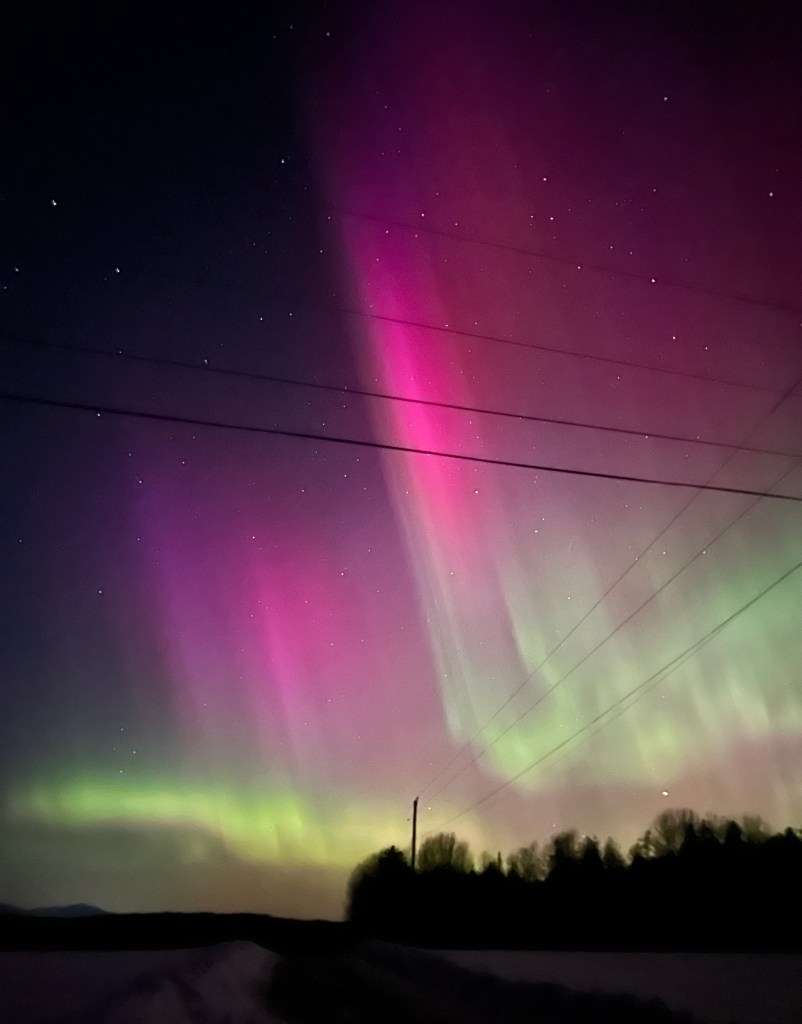
Later, in the night, I’m out in my fat wool sweater and Danskos, holding a cup of hot honey tea, looking for the northern lights. The stars are crystalline, swirled through with white. The wind soughs through the white pines in the ravine behind my house, and a creamy half-moon, like a luscious unworldly melon slice — so tantalizing I’d like to hold it with both hands — hangs over my house.

I’m at the edge of my garden, that familiar place where, if I smoked cigarettes or drank scotch, I’d linger, contemplating the sunflower stalks and the village lights below. The night pretties up the village, wraps it up, so I can see how small this place really is. In the night, my heart opens toward the village; in the daylight, not so much.

The light from my house illuminates stray leaves sailing through the darkness, the great shift of autumn. Like so many of my friends, I’m at that place in life, kids growing and grown, where creative possibilities unfurl. I’m doing the things I’ve done nearly all my life: drinking tea, staring up at the wonder of the night firmament, contemplating which way I’ll jump. In the meantime, I’ve been housekeeping: edge away from that negative snarl, lean into what and who I know is true, the wind and the stars, the moving moon, this swallow of tea, this precise moment. Now.

“Problems that remain persistently insoluble should always be suspected as questions asked in the wrong way.”

— Alan Watts

We are every experience we’ve ever had…

A sunny morning, I’m at a place I’ve never been before, a sizable post-and-beam gallery at the end of a road. A fenced vegetable and flower garden shines orange and gold. A marble bust smiles mysteriously.

I love this about Vermont: these unexpected pockets of mighty talent. The woman’s house is built around the gallery — a beauty of wood and stone and glass. We talk for a while, and we discover that her artist parents were from the same midwest area as my father — Detroit — and then she opens the gallery and takes me in. Let me say here: I’ve been around the block a few times, seen my share of museums and art; I’m also feeling this sunny morning like the dirt road my Subaru tires pounded into, driving uphill.

The gallery ceiling soars in a peak. The wooden space holds the owner’s and her deceased parents’ work. She allows me walk through the metal sculptures wordlessly. Then I stand beside an oil portrait of a woman wearing a black and red dress that reminds me of a velvet blouse I bought for a friend, many years ago, when she graduated from college. The woman in the painting rests her chin on her fist.

The owner looks at me. “It’s always the females who are drawn to her.”

“She’s me.” Woman of a thousand and one sleepless nights, bread baker, hearth tender, the woman who swam under the luscious full harvest moon. Woman hard as these back roads, fragile as coreopsis.

We walk upstairs and finish the tour. Before I leave, though, I stand again before this portrait, a long soulful moment. “Gracious,” I say, “gracious.”

“…we are everything, every experience we’ve ever had, and in some of us, a lot of it translates and makes patterns, poems. But, my God, we don’t even began to touch upon it. There’s an enormous amount, but we can touch such a little.” – Ruth Stone

Hard, Sweet Pears.

The couple who owned this house before me planted two pear trees in the front yard. The runt leans into the lilac hedge, as if hiding its crown. The taller has expanded into a pear tree version of pirouetting ballerina. Late afternoon, after pulling out withered lily leaves from the flowerbeds, I pluck two hard sweet pears and head over to the neighbor.

She’s created an unusual little garden with little pools of running water, so the delight is for your ears, too. I hadn’t realized it was the anniversary of her husband’s passing. We sit in her garden while the sun sinks down, talking about random things — work and the school board and gardens. The little boys across the street bike into her driveway. She’s parked as far back as possible to give the children a little more space on our tiny street.

When chilly shadows cover the garden, I stand, throw my pear core into her weeds, say goodnight. The boys have been called in for the night. As the cold edges in, mist thickens in the valley below. I watch how those cloud layers drift, cushioning the village, layered work just for the night. Then I pick another pear for breakfast.

Some days I find myself wondering how I’ve landed in this town, what random circumstances drove me here. There’s that trite old phase that the only constant is change, but of course that’s not true, either. All around us flow the steadiness of children, of loss, of those ripening pears.

September: such a pretty, sweet month.

Blackberry Eating

By Galway Kinnell

I love to go out in late September
among the fat, overripe, icy, black blackberries
to eat blackberries for breakfast,
the stalks very prickly, a penalty
they earn for knowing the black art
of blackberry-making; and as I stand among them
lifting the stalks to my mouth, the ripest berries
fall almost unbidden to my tongue,
as words sometimes do, certain peculiar words
like strengths or squinched,
many-lettered, one-syllabled lumps,
which I squeeze, squinch open, and splurge well
in the silent, startled, icy, black language
of blackberry-eating in late September.

Crash, smash, end of summer….

Sure, it’s hot again, but it’s a day without swimming. I’m in the nether in-between place where the youngest is headed back to college, and my life inevitably tips towards the not-so-fun adult things I’ve kicked down the proverbial road. Borrow a spark plug wrench and fix the lawn mower, walk down the hill and ask the young carpenter what to do about that stucco that crumbled from the house foundation, just behind the rose bushes that we sliced away last weekend, tearing away the moss to keep the moisture, moisture from my house.

We are inside and outside all day long, hanging up laundry and sweeping the porch, loading a car… The cats are confused. The kitchen floor is sandy. I think of this day and the next and the few following until I might meet my friend for dinner, exchange our mothering stories, ask what’s happening? what now? what next? This year, I have officially crossed over into the population of the dead mothers club. In a strange kind of way, I find this like membership in the new parents club: once you’re a parent, you’re in, a lifer, whichever way you’re going to take that ride. As for me — and maybe it’s really my suspicion I’ve been poisoned by mold at work — but I turned with an anathema against cattiness and pretense, as if my own death perches on my back just like my daughter now heading back to college classes who hung on my back not that many years ago, her miniature fingers curious against my ears, reaching for wild blackberries. Evenings, the August she was one, I walked her sleep every night as the twilight sank and then laid her, sodden with dreams, on our bed.

So it goes, this rich wild life.

On a whim, I buy a copy of Pearl by Siân Hughes in Montpelier. Oh, novel of my heart:

Had I stopped to think for a minute that the fracture in my family, the rift opened in my own heart, would be passed down to the next generation, through my own damage if nothing else? No, I hadn’t. It never crossed my mind….