Pandemic Pause

When I was a young newlywed, I read Green Mountain Farm by Elliot Merrick — a nonfiction account of a Quaker family. At the very end, Merrick ends with a short section saying that World War II changed their lives, as it changed so many lives.

Last evening, after supper and dishes, I was outside, moving stacks of library books from one car to another, waiting for my daughters. Although it wasn’t late, the stars were already spread across the sky. I was waiting for my daughters to come out and join me for a walk.

Finished, I leaned against my car, waiting, remembering how I had walked around this house before I bought it. I had wanted to see how bright the stars were, and if the property had a good view of the moonrise.

My daughters came out. Lit by the porch light, I saw they were both wearing black jackets and scarves. Watching them, I realized my oldest daughter was all grown up. And my youngest? Rapidly heading there.

Tuesday

… one can either choose to live, or not. We have to tell ourselves a story that makes living possible.

— Katherine E. Standefer, Lightning Flowers: My Journey to Uncover the Cost of Saving a Life

And so we go on, telling our stories. My daughter returns from her one high school class on Monday morning, and tells me so many teachers were out.

I head to work, leaving her in front of the wood stove with her chrome book, the cats sprawled on either side of her.

At the library, a teen comes in and tells me he thinks the school will close soon. The teen lives on a back road and can’t drive yet. He’s a voracious reader. In the spring, he told me, he read everything in the house, then everything again and again, and finally resorted to Netflix. I tell him to take as many books as he wants. He fills a bag. When he leaves, I wonder when I’ll see him again. Maybe Wednesday. Maybe not.

And so we go on. I name our little wood stove Jenny.

Okay, my daughter says. She is part of our family.

Stay well.

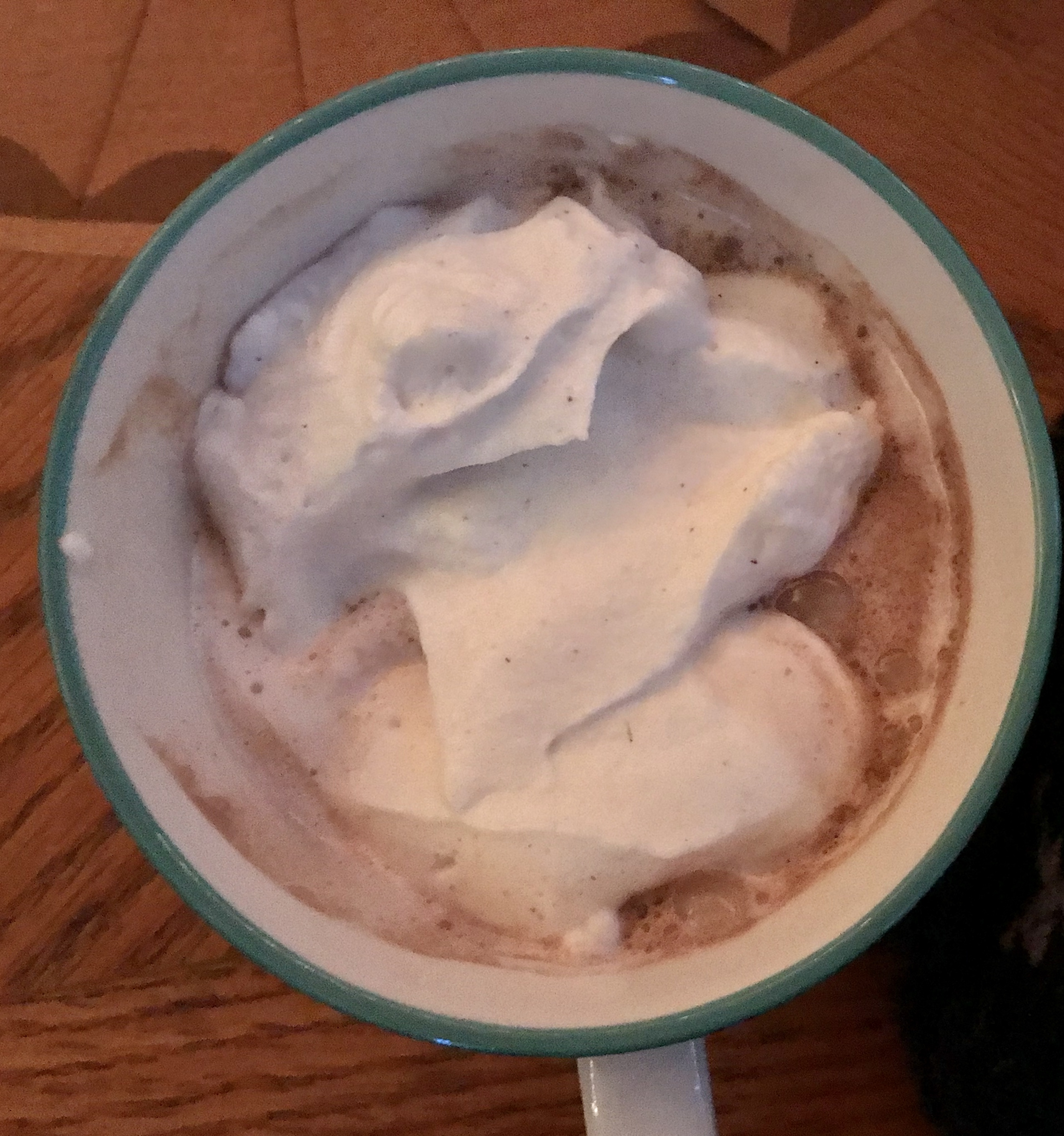
Warmth

When I return home from work in the evening, one cat is stretched on the rug before the wood stove, the other lies on the coffee table, front paws draped over the table’s edge. It’s a scene of utter cat joy.

My daughters are laughing on the couch about something foreign to me — some kind of iPhone. I pull over a chair and sit down with a bowl of potatoes and vegetables and meat.

While they share a story about their negotiations over dinner dishes and compost and wood chores, I soak in the warmth of our living room.

All around us rages the virus, a rising irritability, utter uncertainty over the future. For years, I’ve relied on my ability to figure out a plan. Listening to my girls, I decide this is the heart of my plan: be like the cats. Drink in where we are now. Let that nourish us. And, for God’s sake, laugh at the jokes the kids tell.

“Perhaps home is not a place but simply an irrevocable condition.” 

— James Baldwin

Sticky Notes

A week of chaos, a jumble of days.

By yesterday afternoon, my desk was littered with multiple sizes and colors of sticky notes, scrawled in my lousy handwriting. Before I headed home, I stood staring at this mosaic and considered chucking the lot in the recycling bin.

Instead, I decided to let that wait until next week.

Despite all this, we’re headed to the state championships for a soccer game — socially distanced, with masks, in the brilliant sunlight. At the beginning of soccer season, in September, my daughter’s high school team wasn’t even sure they would be able to play a game, but it was enough to practice together. Then they lost the first five games. Now, apparently beating bad odds, they’ve progressed to the state championships.

In this midst of utter adult chaos, what a pleasure to see radiant teen joy. Here’s hoping that joy is a harbinger of better days, all around, for all of us.

Eagle and Loon

I’m at the edge of a pristine lake crouched under an enormous white pine at the place where the owners want to build a boathouse. On the way down, I waved to the carpentry crew working on the house; they’re the hired help as I, a town employee, am a version of hired help, too.

I’m writing a few notes when I hear a rush of wings. A bald eagle swoops out of the white pine so near to me I see its shockingly white tail feathers. The creature is so large its wings are almost oversized, flapping mightily as it turns and heads over the lake, apparently in no particular rush but moving rapidly as its wings bend through the air.

At the same time, as if on cue, a loon calls on the glassy lake. For that moment — in a day I’ve jammed with too much — I’m in no rush to go anywhere. Still crouching, I watch that eagle head across the lake, admiring its enormous wings, while I listen to the loon’s echoing calls.

My daughters and I have been swimming on this lake when loons didn’t nest here. All spring and summer we’ve seen eagles. The wild world — with its greater, wiser plan.

The loon dives and disappears. I wander to the lakeshore and dip my fingers into the cold, clear water. Gray sky, fallen leaves in the water, stones, my boots — and so much more.

A few words

In the middle of a rainy morning, I was at the muddy dead-end of a road, listening to a passionate young man who’s taken over the family farm, as he explained an argument he’s had with the road crew and plowing.

Over his shoulder, I stared at a line of tamaracks, their feathery branches ignited autumn gold.

What? he asked, seeing I wasn’t listening.

Tamaracks, I nodded.

He glanced over his shoulder for a moment, and then kept on with his explanation.

Let this be the silent word of the day: tamaracks, and their silent gold.

It should not be denied… that being footloose has always exhilarated us. It is associated in our minds with escape from history and oppression and law and irksome obligations, with absolute freedom…
― Wallace Stegner

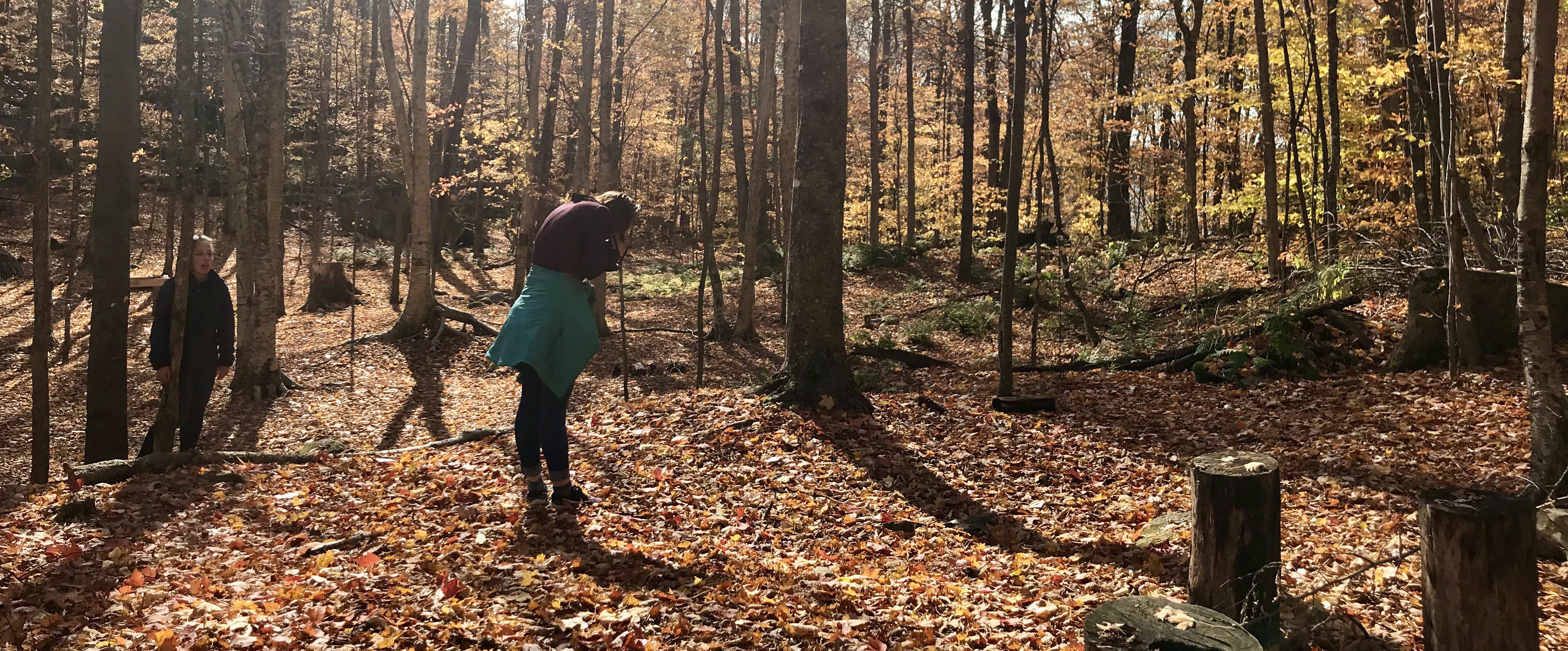
Maple and ash, old quarry site, Woodbury, Vermont