Vermont Stony Soil

Excerpt from Hidden View:

Abruptly, the clouds rent apart, sprinkling the house with fresh-washed sunlight, and I stood there, marveling at the sudden unveiling of beauty. In a shaft of sunlight, the old farmhouse with all its crumbling paint and spreading rot appeared burnished bright, flawless, amazingly just built. The cornfield so glossy green held twinkling jewels of water in the myriad golden manes of tassels. Overhead, the ample sky spread its colors of roseate and sapphire and pearl. I had thought building the house and farm on this knoll a foolhardy vision, but I wondered keenly now what hands and eyes, what laughing voices and rampart lovemaking, had begun this farm.

Through the truck’s rain-smeared window, I saw my little daughter sleeping, the tip of her tongue kittycat-ish between her garnet lips. The cold and wet had rubbed a rosy sheen over her round cheeks. If I left, got back in that truck and high-tailed my way down the road, I feared I would never cease fleeing. Tumbled behind me, irredeemably attached to my heels, perpetually dogging me, would gnaw my own festering failures, a shackle I would never be able to cleave apart. Somehow, I had fomented a conviction this iridescent beauty demanded a stony soil, rank offal, the misery of illness: that to pretend otherwise was a foolhardy and misguided notion. I could not flee toward a world of rainbows and sparkly unicorns. I believed, crude-formed as I knew my thinking was, that we had sown the seeds of our daughter Tansy and Hidden View Farm, and now, in the midst of cultivation’s hard haul, I had to grit my teeth and suffer through the trials of evolving growth. Howling in my young body, over the rolling flux of seasons, of dying autumn and bleak winter and joyous summer, rang the experience that this farm was earned with far more than a requisite pound of flesh. I believed Hal and I would come back to each other, this rift between us a rainy season that would, eventually, disperse and clear. I believed we would grow old together, that we would come to know the sharp lines around our eyes, the aged quiver of our hands, the thinness of spotted skin over knuckles as our hands gradually slowed. I believed to get to there, I had to endure through here. All things in due course. Hands to the shovel. Lean into your work. Persevere.
DSCF9890

Photo by Molly S.

Wanderlust

Last Saturday when I arrived to open the bookshop, a high school girl was waiting outside.  I unlocked and let her in, and she knew immediately where she was heading.  She had been waiting, that warm summer morning, for me and my key to arrive, to buy a copy of On the Road.  Her English teacher had recommended the book.  She bought the copy and stood outside, reading.

Later that day, another young woman, who said she was twenty-one, bought a Rand McNally Atlas.  She had relinquished her apartment and her job, but not her car.  I asked where she was headed, and she smiled and said, I don’t know.  Somewhere.

Those two sales alone made my day at the bookshop a pleasure.  Youth, wanderlust, reading material.

My parents always loved to pack the car and head out on the highway, the map wedged somewhere in the front seat.  As I’m buying another car shortly, I suggested to my girls we pack up, hit the road, and not mind sleeping in a field or two along the way.  Dew on your cheeks in the morning is a terrific beginning.

Then, reading the end of HARRIET THE SPY with my daughter tonight, I read:  There was a cold wind off the water, but the day was one of those bright, brilliant, shining days that made her feel the world was beautiful, would always be, would always sing, could hold no disappointments.

My young daughter had that kind day of today, her eyes joyful tonight, laughing.

Maybe we won’t be hitting the road this weekend.  I have a deskful of work; the garden needs tending; and the children (at this moment) are satisfied.  But I could hardly restrain myself from asking of those young women, Send me a postcard.  Tell me your stories…….

DSCF0010

Rot and Raging Beauty

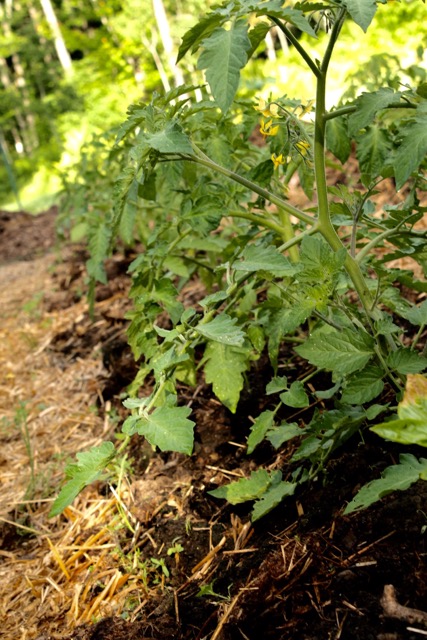
My garden is not yet wholly in, and already the brassicas are riddled with root maggots, that old pest from last year raging up again.  Ignore it, ignore it, I foolishly did last summer, and the maggots have returned in force.  I’ll yank the plants, unable to see their slow wither and rot, these former beauties I seeded and tended.

But the tomatoes flourish.

MY LITTLE CHERRY TOMATO PLANT

You will grow my little ones
You will rise my tiny ones
Into a bush then a tree
And to the sky, you will be free!

You will be ever green and spark
You will be tallest than the sea’s shark
Your tomatoes with the green leaves
Like Christmas decorations on Christmas Eve

You will be sweet my little plant
I love you always I shall grant
So rest my fellow, breath fresh air
Sleep now, rest and grow ever Fair!

–– Maya Took

IMG_6607

Words, Words, Words

Driving back from an education meeting tonight, I rounded a bend, and suddenly there was the sunset, crimson and azure and black at the edges.

The Poet wrote, Words, words, words, summing up this evening.  So many adult words, so much smokescreen, and underneath all that, the schoolhouse without children, the laughing — sometimes crying — heart of the building.  All those words, so precisely and precariously constructed, will lead to more words, and yet more words.

Reveal or obscure?  At the end of the day, will your words lead you to the sky eternally above your head, or to your own shallow and flimsy self?

My daughter’s friend walked into this adult-packed room and bee-lined for the strawberries.  This child knows what is what.

DSCF9976

The 10,000 Things Bloom

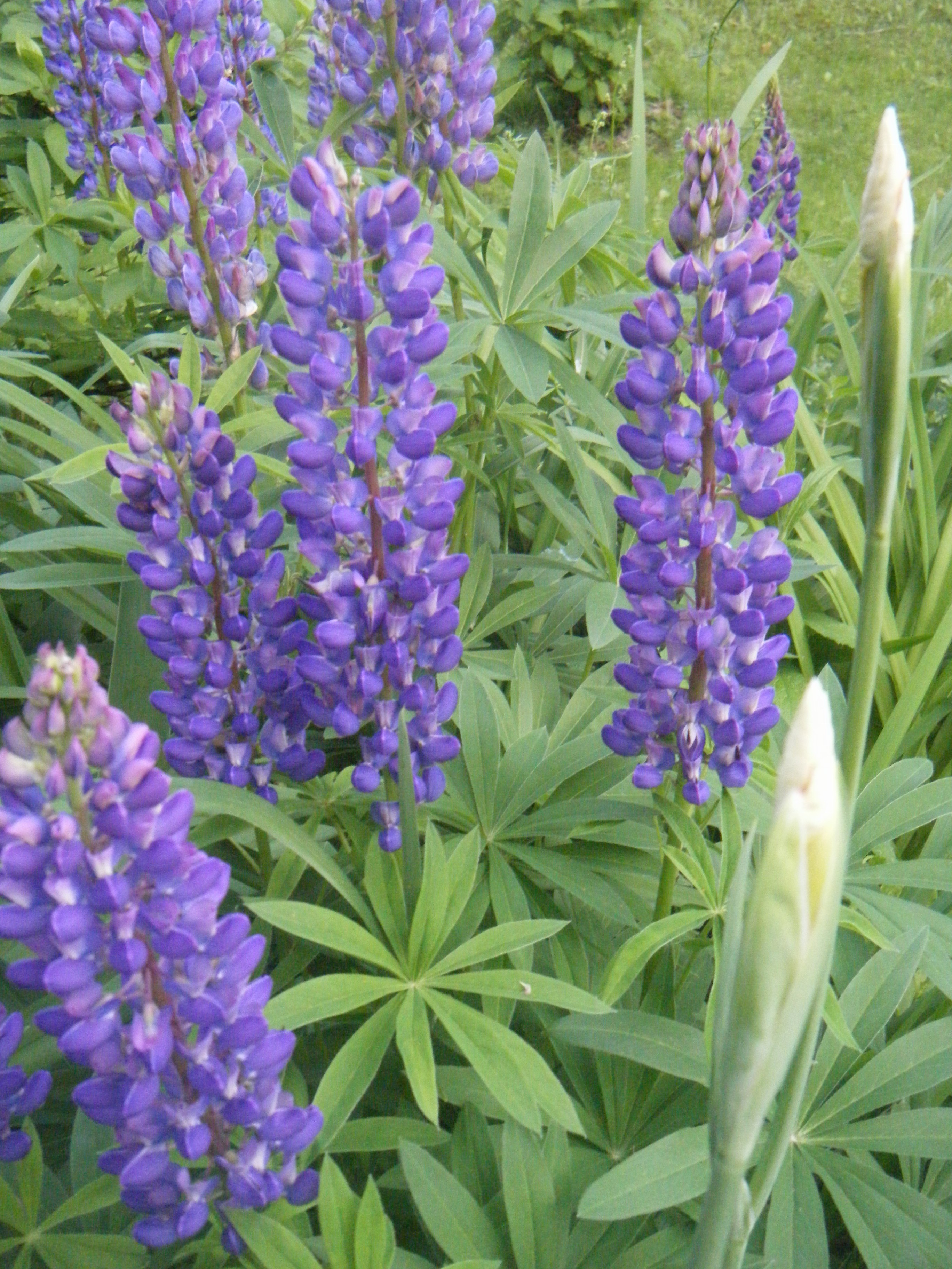
Vermont’s June surges in a melody of the ten thousand things madly growing .  In this fine evening, walking along my dirt road, the landscape hums with life.  On this road, I’ve also been sleeted and hailed upon.  Rain in every imaginable form — from the merest brush of mist to buckshot — has fallen on me.  Snow, of course, snow, snow, snow, in all its myriad Vermont shapes, has graced my shoulders.  But today, this very evening, right now, the air is redolent with wild roses blooming.  This is the season of lupines and iris, of daisies and forget-me-nots, and I intend to savor June in its moist and delectable sweetness.

With another Vermont novelist today, Sheila Post, we discussed landscape in Vermont writing, and this evening I am suffused with landscape, the sheer loveliness of this summer evening, this place and this time, already fleeting.

QUESTION AND ANSWER
after Li Po

You ask me
why I live on
this green mountain.

I smile: no answer.

Come.
Live here
forty years.

You’ll see.

– David Budbill


DSCF9994


Rosebush

This afternoon, between the end of school and the beginning of work, I went running, my little girl ahead on her bike.  Down the dirt road we went, and then she circled back to me as we approached a small camp where a man stood in the road.  My child was afraid of the dog there, and she rode closely beside me.

I stopped running and said I was sorry to hear about his wife.

He told me they had celebrated their nineteenth wedding anniversary on the first, and then last week, they ate dinner together and fell asleep.  He told me he woke in the morning and washed dishes, and when he checked on her, still in her recliner, she had passed.

The couple hasn’t lived in that camp for years.  They moved down to the bottom of our road, in an old farmhouse wrapped with plastic to the keep the wind out, painted pink in one section, green in another.  The acres have substantial mounds of cowshit, junked vehicles in piles, all manner of debris with all kinds of people coming and going.  He considered his occupation “junking,” and had told me in 2008 his occupation had gone all to hell.  In the spring, their pasture is verdant long before anywhere else.

The camp, on its footprint of property, has had a revolving door for years with a series of single men and one winter a woman with two young children.  With no water or plumbing, the cabin is surrounded by piles of exactly what we’re never sure.  Large things like soiled mattresses and campers, a shower stall, salvage windows, and piles and piles of human food garbage.  Built in a dank hollow, the camp has always exuded to me the desperateness of hard-up and hardscrabble people, on the fringe, looking to stay away from the law.  Who in this extended family owns what property, or if it’s even owned or rented, has always been unclear to me.

This neighbor and I have never been on poor terms.  He recalled, today, talking to me years ago, when the road often held only myself and my daughter in her stroller.  When she was three or so, she asked me how he could eat corn-on-the-cob, as he had only one front tooth.

Today, he watched his grandson mow a patch of tangled weeds, telling his story, his eyes tearing.  Tomorrow, he’ll plant a rosebush and bury her ashes.

I said what little I could, that she hadn’t suffered at least.

He shook his head just once and said, I don’t  know.  It was in the night, you know, and no one thought that was going to happen, you see.

The little girl and I continued down the road.  When I returned, I lifted my hand and waved, running, and he hollered to me, These weeds can some grow!

O my neighbor, may your rosebush bloom beautifully.

And did you get what
you wanted from this life, even so?
I did.
And what did you want?
To call myself beloved, to feel myself
beloved on the earth.

– Raymond Carver

DSCF9978