Joy of Synonyms

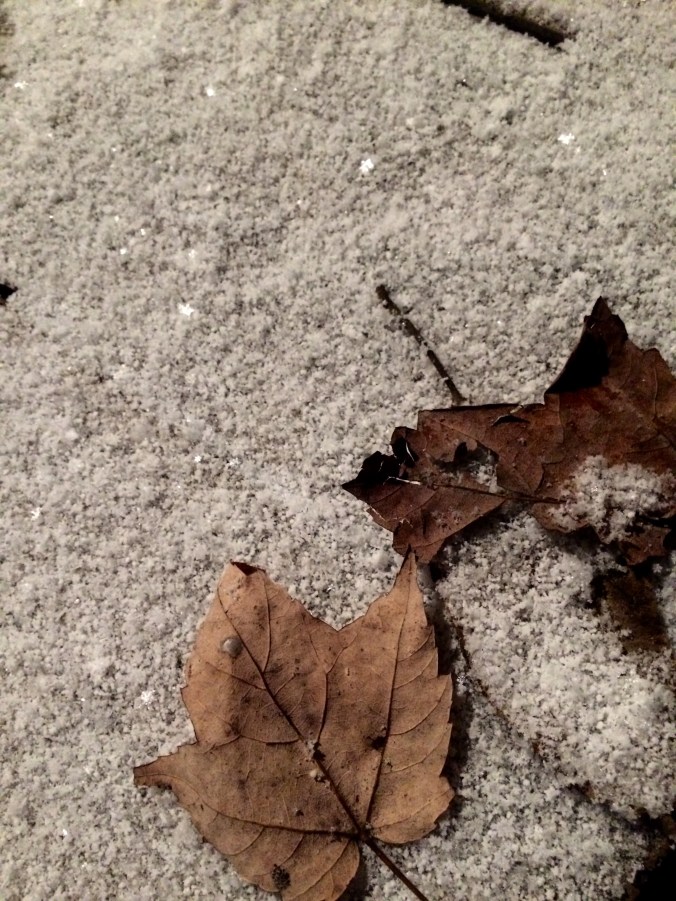
My writing-for-paycheck involves synonym work, which may seem tedious, but the thing about synonyms is they’re fun. This morning, picking up broken glass from a shattered window, I sliced my finger. Bright crimson fell on unmarked snow. Gory? Sanguine? The snow cover is so scattered yet the blood drops disappeared in hoarfrost: the opened sod beginning to freeze for the winter. The earth? The ground? The soil?

Like a snowflake, each word is singular, reflecting meaning in different hues.

penstla         the idea of snow
mortla          snow mounded on dead bodies 
ylaipi          tomorrow's snow
nylaipin        the snows of yesteryear ("neiges d'antan") 
pritla          our children's snow
nootlin         snow that doesn't stick 
rotlana         quickly accumulating snow
skriniya        snow that never reaches the ground
bluwid          snow that's shaken down from objects in the wind 

–– From the Inuit 100 Words for Snow
FullSizeRender

Photo by Molly S.

Thanks and All That

Here’s one (not particularly recommended) way to approach a holiday meal: a couple of years ago, I had a harvest lunch/Thanksgiving meal at my daughter’s nice elementary school. Afterward, an older student read a story aloud about, naturally, the original Thanksgiving. At the end, the child read the last page, an addendum likely tacked on, of historic American dates. That’s when I should have just quietly walked out. From there on, as the girl read in her clear, sweet voice, in that sunny  room filled with such decent and well-meaning people, I sat there brooding, History is a brutal business.

And yet.

Last night, the too-warm winds of this too-warm November blowing grit in our eyes and mouths, my daughters and brother and I stood beneath the full moon in her radiant splendor. The moonlight flowed so rich and bright that it pooled in reflections around the house: in a pile of windows, a car’s hubcap, the neighbors’ house distantly through the leafless forest.

At times, I remind myself to assess my strengths, get a read on my bearings. There’s no quibbling history is a nasty and bloody story, but this same ethereal moon outdistances the human saga, this heavenly body present for those famous Pilgrims, and long, long, long before that, too.

Leave the door open for the unknown, the door into the dark. That’s where the most important things come from, where you yourself came from, and where you will go.

– Rebecca Solnit

FullSizeRender

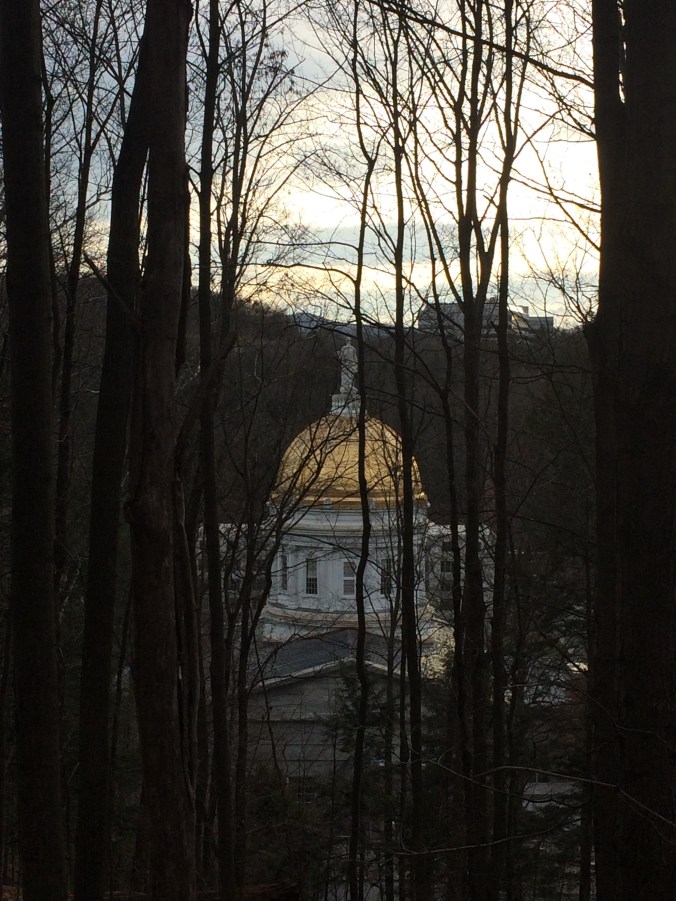
Montpelier, Vermont/photo by Molly S.

Deja Vu

My younger daughter told me a story last night of a dream she had years ago where a stranger appeared. Months later, she was studying someone she had just met, and she realized that man was the stranger. How was that? she asked. My dream was the past and the future….. She was mesmerized.

Today, the first of the snow, just a sprinkle, like a white variation of the cinnamon I spilled over my sweater at the co-op this afternoon. The first of the snow signals the settling in of the long, long season, and yet, the first flakes are always breathtaking, always brief and fleeting, and always stunningly lovely. It’s that same deja vu, back in the beginning of winter again, the days dim and short, the children bickering or not bickering, the hearth glowing….

The boy and the dog
Stand in stillness on the waiting road.
Night’s embrace cloaks them in darkness
no less than invisibility.
They face north
And feel the first cobweb kiss of snowflakes
Borne on feathered air.
He will always remember this;
The boy, with his dog,
Standing there.

Nomad Omnia
FullSizeRender

Photo by Molly S.


Earthworks

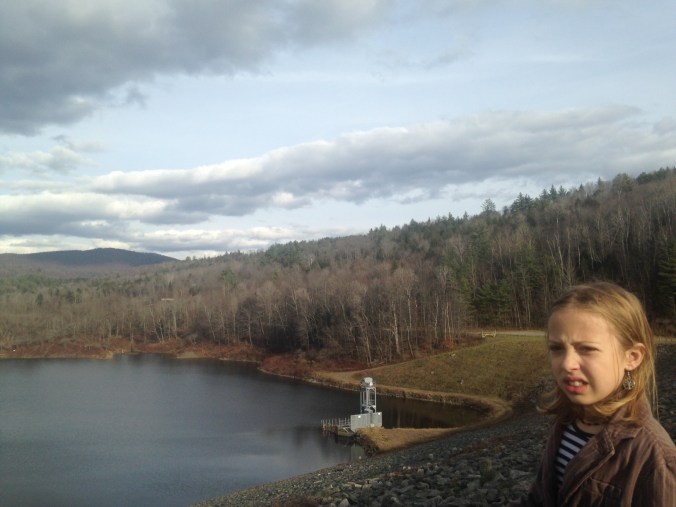
Venturing into unfamiliar territory today, the girls and I unexpectedly found ourselves on Horn of the Moon Road, and then crossed the dam at Wrightsville Reservoir. One of the beauties of living in Vermont is there’s often no one else around, so we simply stopped, abandoned the car, and walked along the narrow road, each side sloping steeply, covered with rocks.

My older daughter and I reminisced about when the reservoir had been nearly drained empty, and, conversely, when the water level had risen so high that trash lingered in the treetops for months.

On this giant earthwork, we were amazed at the work man’s hands have done, so much sod and rock moving, the immense depths of concrete and steel. What a different view of water today. All summer, my daughters and I have swam and canoed in clear lakes and remote ponds, and then today: the rugged vision of men enacted on the land. Tonight, reading van Gogh’s inimitable letters, I remembered how much van Gogh taught me as  a writer: to look, and look, and not to be afraid to take in everything. More pieces of the evolving puzzle.


It is looking at things for a long time that ripens you and gives you a deeper meaning.

— Vincent van Gogh

IMG_0330

Montpelier, Vermont

Tool, Weapon, Daily Bread

How lucky I was to have a houseful of girls tonight, laughing and eating, with just so much chat-chat-chatting. They have questions and their own contrived theories – could this be true? This? Would life be different with a houseful of sons? Somehow, I think so.

Driving to the movies, in this dark November night, I listened to their talk braiding around each other, and I realized these girls know each other through language. Too often, I’ve thought of my own use of language as either tool or weapon. A few years back, I wrote an essay about industrial wind in VTDigger, intentionally using language as weapon. Now, in the bits of journalism I do for paid work, it’s a serviceable tool. But these girls remind me, again, of simple loveliness of speaking, and that the deepest profundity is often what’s right at hand.

…If you can read and understand this poem
send something back: a burning strand of hair
a still-warm, still-liquid drop of blood
a shell
thickened from being battered year on year
send something back

— Adrienne Rich

FullSizeRender

Woodbury, Vermont

Unfolding Fern

I’m reading tonight at the Hartland Pubic Library, in Hartland, Vermont. Here’s a paragraph from my essay about writing this novel:

From the opening sentence, the book arcs as a metaphorical unfolding of a fiddlehead, from youth’s smallness to the generous flourish of a mature woman. Fenollosa writes, “A true noun, an isolated thing, does not exist in nature…. Neither can a pure verb, an abstract motion, be possible in nature. The eye sees noun and verb as one: things in motion, motion in things….” (10) In Hidden View’s opening lines, late winter sunlight glints harshly over icy snow, and cowshit tracked by boots erodes the pure white. A mixture of shit and beauty winds all through this book; opposites, as the yinyang symbol reminds us, do not exist as discrete entities in nature. The conundrum of how our fairest aspects are equally suffused with our foulest elements rises to the forefront as the novel climaxes. I imagined my characters as ascending, grappling birds. As they fought with each other – husband and wife – brother and brother – their interior natures battled, too: would decency and kindness prevail, or fear and its loathsome clutches? How would it settle out for Fern? For her husband? How would her love affair with her husband’s brother resolve?….

IMG_9476 (1)

Photo by Molly S.