Transit

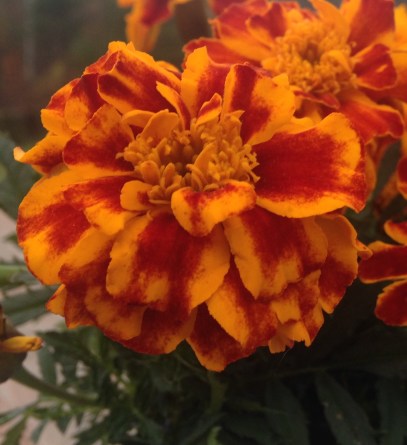
Despite the snow, marigolds are blooming in my cobbled-together greenhouse, their scent still a sharp tang. I carried a handful with me this afternoon to my Woodbury library job. With the light ending early this days, it’s the Vermont reading season.

My bookseller friends at the Galaxy scored me an Advance Copy of Rachel Cusk’s new book, Transit, a novel title I love: what else is our lives but transitioning from one moment to another, so constant, perhaps, we’re hardly aware of the unbroken undulation and flux of our lives. Transit, transit. Going about my day, I murmur that word.

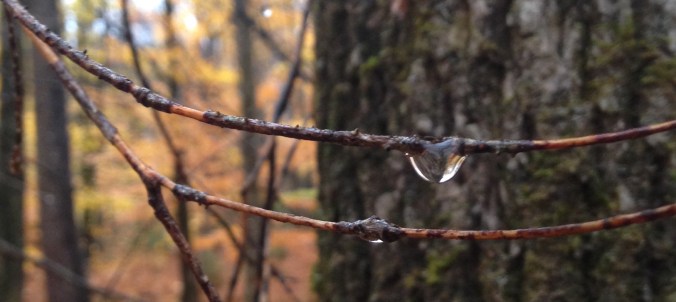
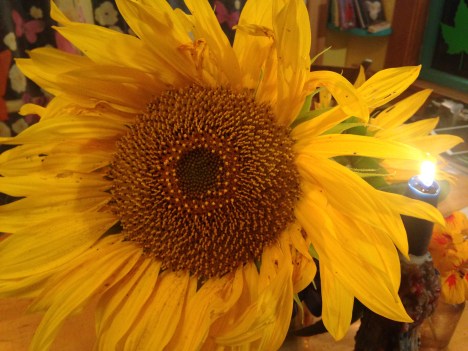
Around me, the natural world mirrors this movement: golden leaves shower from trees, the sunflowers have laid down and pressed their wide faces into the ground, the river is slate gray, cooling down and readying itself for the coming of ice.

I said it seemed to me that most marriages worked in the same way that stories are said to do, through the suspension of disbelief. It wasn’t, in other words, perfection that sustained them so much as the avoidance of certain realities.

– Rachel Cusk, Transit
fullsizerender

October, Woodbury, Vermont

Family Life

One of the more revealing titles of my recent reading is Akhil Sharma’s Family Life,  a novel hardly of the slick parenting magazine fare I leaf through in that dentist office I so frequently visit these days. A slim, fierce, terrific book.

This morning, reading another book about family life – Margot Livesey’s Mercury  – this line jumps out at me: “The human brain often juxtaposes the sublime and the trivial.”

The line encapsulates the book, true, but also domestic life.

Parenting often seems an endless routine of gathering twisted toddler socks from beneath the kitchen table. When my girls were teeny-tiny, I often muttered to myself during unbroken days a line from Shirley Jackson: “All day long, I go around picking up things.” The tooth-brushing trivial.

And yet, embedded like gems in the midst of sandbox squabbling, there’s marvelous moments: braiding my daughter’s hair, inhaling the familiar, salty scent of her scalp, listening to her stories.

The blue vase on the sideboard was from the Song dynasty, eleventh or early twelfth century. How had it survived nearly eight hundred years when I could barely survive forty? I was in that state between waking and sleeping, neither fully inhabiting my body nor entirely absent, when I heard footsteps. The mattress dipped.

– Margot Livesey, Mercuryfullsizerender


Books, Given and Taken

As a teenager, I raided my father’s bookshelves, skipping over that dull-looking Leviathan for the far more tantalizing Huckleberry Finn, Henry Miller, and Alan Watts. Looking back now, I think, What better could I have read?

Recently, my daughter opened an envelope with a book my father mailed me, Zen Art for Meditation. She looked at this little book, and asked if I was really, truly going to read it.

I answered, With great pleasure, and, with almost a crazy kind of happiness I’m reading this slim volume in these early, autumn mornings. Mystified, my child asks what’s in the book. Mountains, I answer. RiversThings we love. But the book is also full of Huck Finn’s raft, Miller’s restlessness, and Watts’ cloud-wreathed peaks. In haiku’s odd sense of timelessness, I might be a teenager again, reading these lines, rather than a grown woman, or, perhaps, simultaneously both. And I didn’t even have to steal this book.

The salt of the sea is in our blood; the calcium of the rocks is in our bones; the genes of ten thousand generations of stalwart progenitors are in our cells. The sun shines and we smile. The winds rage and we bend before them. The blossoms open and we rejoice. Earth is our long home.

– Stewart Holmes and Chimyo Horioka, Zen Art for Meditation

fullsizerender

Hardwick, Vermont

Revision in Yarn

I learned to knit from my daughter when she was an 8-year-0ld Waldorf student, and I really wanted to knit. Then a friend taught me more, and I read books, stopped in at the local yarn store for free advice, and turned hand-knit sweaters and hats inside out to discover the wherefores of how they were put together.

The pattern of this most recent sweater is a skeleton – a skeleton minus a few bones. When I arrived at joining the sleeves, the pattern was curiously empty. By experience and guesswork, I’ve put this sweater together in a semi-decent fashion. But I did take apart that first sleeve a half dozen times.

Unlike life, that’s the beauty of knitting: take it apart, again, again, and again. I suppose that’s not entirely true. All those revisions made this creation; I intend to wear it happily, with only myself in the true knowing.

One has to be just a little crazy to write a great novel. One must be capable of allowing the darkest, most ancient and shrewd parts of one’s being to take over the work from time to time. Or be capable of cracking the door now and then to the deep craziness of life itself—as when in Anna Karenina, Levin proposes to Kitty in the same weird way Tolstoy himself proposed to his wife. Strangeness is the one quality in fiction that cannot be faked.

John Gardner, On Becoming a Novelist

fullsizerender

West Woodbury,  Vermont, Wednesday

Young Chimney Sweeps

Megan Mayhew Bergman begins her story “Housewifely Arts” with “I am my own housewife, my own breadwinner.” To that, add the line: “I am my own chimney sweep,” and why not? Sunday afternoon, in this balmy autumn, my teenage daughter props a ladder against the kitchen and asks her sister to hold it steady. I warn the kids this is a dirty job.

Our upper (and lower)  windows are desperately in need of paint; sections of the roof are down to tar paper; the cedar is cracked and splintery. In short, work needs to be done. But it is ours, free and clear, and the children love their house.

While our house breathes through its myriad cracks, its real lungs are the chimney. With a long pole, my teenager shoves down the wire brush, over and over, while I descend to the basement and shovel out fallen chips of creosote. It’s foul-smelling, black work. In the living room, I clean out the wood stove, scrub the pipe free of soot, vacuum the vents and ready the hearth for winter. While it’s the kind of work I find tedious and filthy, my teenager attacks with gusto; in her room, the younger girl tugs her bunk bed from one end of her bedroom to the other, rearranging.

My girls: not housewives – house women.

I am my own housewife, my own breadwinner. I make lunches and change lightbulbs. I kiss bruises and kill copperheads from the backyard creek with a steel hoe. I change sheets and the oil in my car. I can make a piecrust and exterminate humpback crickets in the crawl space with a homemade glue board, though not at the same time. I like to compliment myself on these things, because there’s no one else around to do it.

– Megan Mayhew Bergman, Birds of a Lesser Paradise

img_2540

Dinner table, Woodbury, Vermont


Imagine This

The other misty autumn afternoon I was standing in front of the Woodbury general store recreating the library’s sign when an acquaintance came out of the store with a gallon of milk and two quarts of Ben & Jerry’s. Naturally, I offered to relieve him of the weight of that ice cream. With the foliage burning an orange hue in the clouds, he and I talked about kids and our own childhoods, and how mightily imagination can work through a life, propelling people in all kinds of different ways – or not, if imagination is lacking.

I thought of a short piece I’d written for Kids VT about a 9-year-old boy who, hanging out in his dad’s East L.A. auto parts store with time on his hands, no kid companions, and piles of empty boxes, constructed an elaborate arcade from cardboard. By chance, filmmaker Nirvan Mullick appeared to buy a door handle for his Toyota corolla, and this short flick and a greater story evolved from their meeting. Caine is a smart and inherently likable kid, but the filmmaker equally interested me – in a story behind the story kind of way. Who was this adult who took such an interest in this lonely boy? Doubtlessly, the story widens….

Lovers and madmen have such seething brains,
Such shaping fantasies, that apprehend
More than cool reason ever comprehends.
The lunatic, the lover and the poet
Are of imagination all compact…

– William Shakespeare, A Midsummer Night’s Dream

fullsizerender

Greensboro, Vermont