Between

Standing in our open kitchen doorway this morning, waiting for coffee to brew, I watched a turkey vulture sweep silently over the barn, wings outstretched, so near I saw its feathertips fluttering in the air currents. Hours before, walking in the evening’s mist-soaked gloaming, my 12-year-old daughter counted 40 vultures dropping and ascending over an empty ballfield. Gradually, their drifting and layered circles widened, so we appeared to be in the center of their vortex.

Carrion eaters.

I looked at my daughter, wondering if she was afraid. The vultures – black against a gray sky – dipped especially low, reminding me of Andrew Wyeth’s stunning painting of a single vulture. I had seen it for the first time in a museum’s basement room, beautiful and ominous, imbued with human emotion. But my daughter kept walking beneath these circling birds, face tipped up, curious.

Under our feet, earthworms, grubs, centipedes, work in the soil in my evolving garden, in the forest behind our house, beneath the stream hidden in the thickets of August’s greenery. Between the earth and the sky, human life unspools busily all day, sometimes into the night in our small town. Then, these birds. Silent, skilled. How could she not admire them, as I was again, this early morning?

I light
a small fire in the rain.

– Galway Kinnell, from “Under the Maud Moon”
FullSizeRender.jpg

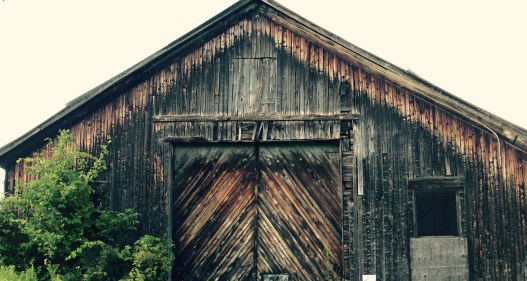
Abandoned granite shed. Hardwick, Vermont.
Navigating Sans I-Phone

Before I bought this house in June, I’d spent a number of winter and spring evenings wandering around its exterior. The house was uninhabited then, and I very much wanted to know where the moon rose on this piece of land. Would the moon be concealed by trees or streetlights, or would Lady Moon sail up in her luminescent beauty?

Nearly twenty years ago, I became a sugarmaker about the same time I became a new mother – the work of both often accomplished in the wee night hours. In those years, I began to know Lady Moon in all her phases – round and crescent, gibbous, waxing and lessening. This house I began to love, in part, because of the rising moon view.

Last night, late, the moon was my companion as I read a book I’d found in the library stacks, Juliane Koepcke’s story of surviving a plane crash in the Amazon when she was 17. Her parents, an ornithologist and biologist, had taught her to know and love the jungle – and Koepcke credits both knowledge and love with her ten-day trek out of the jungle and into survival.

In the moonlight, I lay awake thinking of Koepcke, and how her story, in an odd way, mirrors that of the poor woodcutter who gave his children bread. Hansel and Gretel crumbled the bread behind them, in a vain attempt to find their way out of the forest and away from the wicked witch. Metaphorically, there it is again: the jungle or forest all around us. So many times, I’ve wondered what I’m giving my children to find their way home, when my daughters will be lost. I’m too much of a pragmatist to know they won’t be mired in thickets, in their time. (Just not too thorny, please. Just not too darkly.)

Foolishly, I’d never considered love a navigation tool.

I open my eyes, and it’s immediately clear to me what has happened: I was in a plane crash and am now in the middle of the jungle. I will never forget the image I saw when I opened my eyes: the crowns of the jungle giants suffused with golden light, which makes everything glow green in many shades…. This sight will remain burned into my memory for all time, like a painting…. I don’t feel fear, but a boundless feeling abandonment.

– Juliane Kopecke, When I Fell From the Sky 

IMG_1499.JPG

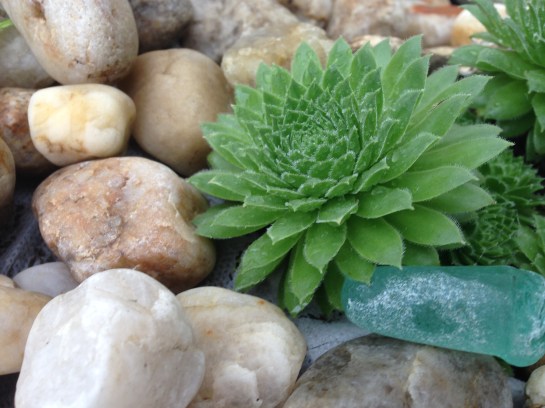
Gabriela’s rock garden, created on a summery day


Where Are Those Bracelets?

When I was a kid, my aunt from New York City gave my sister and me bracelets she had bought at the Metropolitan Museum of Art’s gift shop that had been handmade in Africa with unique and somewhat mysterious beads. Each bracelet was different. One had a milky glass bead. Another a tiny pale green elephant.

This week, with my kids and my sister’s kids together again, busy in their childhood world of trampoline and croquet, biking and baking, I remembered again how that bracelet sums up childhood for me: filled with mystery and marvel.

So it was fitting, perhaps, when I snapped this photo in the Hardwick community gardens. What else should we be nurturing but the soil, this green grassy and stony and muddy earth beneath our children’s running bare feet?

Childhood is not from birth to a certain age and at a certain age.

– Edna St. Vincent Millay

FullSizeRender

Atkins Field, Hardwick, Vermont

Two Decades Ago

I haven’t lived in a town in what to me is a very long time – over twenty years – and in those twenty years, I went from newly married, to raising two daughters, maple sugaring on a scale that become way oversized for two adults, and wrote a book. I did a few other things, too.

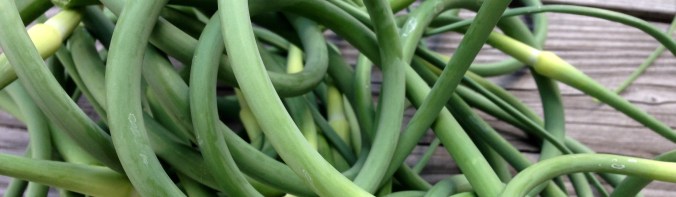
Oddly, living in a small town again, I’ve been given a glimpse back into my female self I might not have gotten before. What’s different from when I was twenty is that I’m a mother now, a writer, a woman who knows her way around a garden and what to do with garlic scapes. Useful things.

I have wrinkles and a great tangle of gray, but I’m no longer afraid of the dark. In an odd way, what I once thought would be so difficult – uprooting – has evolved into one of the easier phases of my life. Or maybe it’s just July, and the greenery is mellifluous. Then again, maybe this is one of the easier parts, and the children aren’t bickering now.

You got to understand: here
Winter stays six months a year—
Mean, mean winters and too long.
Ninety days is what we get, just

Ninety days of frost free weather….

From David Budbill’s “Summer Blues”

FullSizeRender.jpg


Long Childhood Summers

In this room is a photo of my daughters I took a few years back, maybe ages 3 and 9, a summertime shot, the girls’ heads tipped together. Both girls smile, radiant. The oldest daughter’s arm is wrapped around her sister, in the unabashed ownership she has claimed over her sister since the youngest’s infancy. The littler girl is snuggled to her sister, eyes closed in bliss, knowing her most rightful place is with her sister.

At 18 and 12, the oldest is still preening her sister, asking (and sometimes not asking) to brush her hair, trim and paint her nails, for your own good.

This week marks the youngest girl’s first week of overnight camp. Reaching into a spill of moonlight on the porch tonight, I wondered how the moon flows over my girl, this pure light. How gritty is that sleeping bag? What stories will you tell us?

Sure, I embrace this opening of my growing girls’ worlds and my own release from near-constant mothering, while remembering the incomparable sweetness of an infant sleeping, cheeks milk-flushed rosy, along my forearm. Lady Moon shining over all of us: familiar friend.

Summer Kitchen

In June’s high light she stood at the sink
With a glass of wine,
And listened for the bobolink,
And crushed garlic in late sunshine.

I watched her cooking, from my chair.
She pressed her lips
Together, reached for kitchenware,
And tasted sauce from her fingertips.

“It’s ready now. Come on,” she said.
“You light the candle.”
We ate, and talked, and went to bed,
And slept. It was a miracle.

– Donald Hall

FullSizeRender

Teenagers

As a mother of a teenager, I do actually listen to her music, and I’ve noticed it’s pretty much the same old American story: the good times are on their way. Be a little more daring, and the guy will come your way; work harder and happiness will rain down; vote for Trump, and the country will be great again.

AKA: that theme I remember from high school history of Manifest Destiny, sailing in.

Could anything be less Zen? What is it with this linear thinking, the view that happiness is a plateau that might be scaled, somewhere off across a desert?

Sip your soda, girl; be here now. I might as well throw that advice back at myself: enjoy parenting the teenager, unique as this may be.

It’s only when caterpillarness is done that one becomes a butterfly. That again is part of this paradox. You cannot rip away caterpillarness. The whole trip occurs in an unfolding process of which we have no control.

– Ram Dass

IMG_1827

West Woodbury, Vermont