Small Find

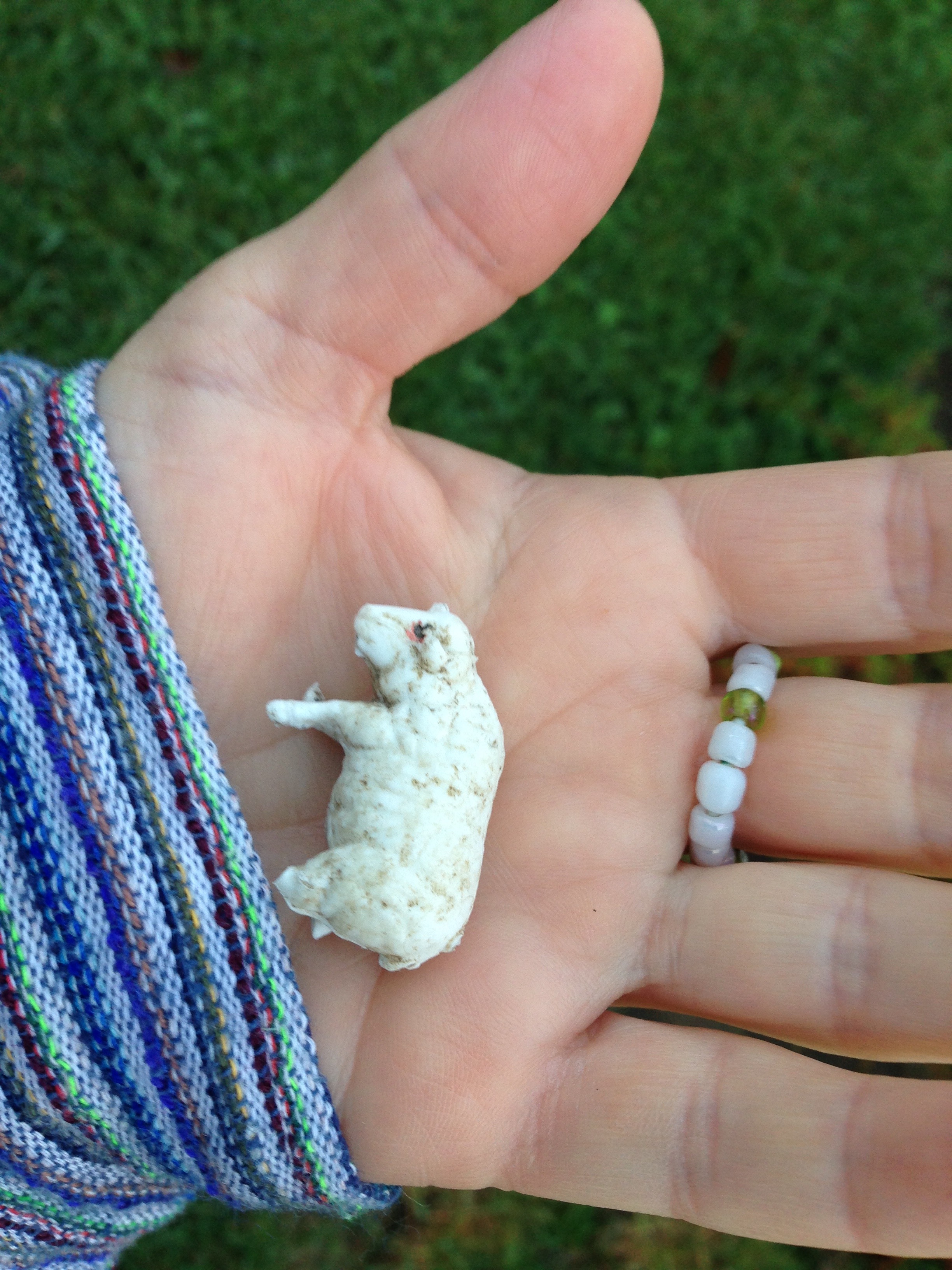
Rain unearthed a tiny toy from the cotoneaster’s soil I planted a few weeks ago – a plastic white ram smaller than the length of my thumb.

The soil’s sandy here, loamier on the house’s southern side where an immense mock orange stretches nearly to the second-floor bedroom windows.

My archeological find, near the barn’s ramp, is good child’s play area, near the house but not too near, cool in grass in the summer, with the cement a fine place to spread out small toys. Orange tiger lilies and silver-lavender allium spread tenaciously along the barn’s side, and I’d like to think some small child knelt in the grass there, happy to be home from school, entranced in the roaming world of her or his ram and animal companions. I’d prefer to think this creature, its back legs gnawed or worn at its hooves, wasn’t discarded carelessly.

I gave the animal to my daughter, youngest at the house now. Folded in her hand, she carried it on a walk all through town, then laid it on the windowsill beside a geranium, in the sun.

Somewhere, Heidegger says we are constantly tumbling towards death, and every once in a while we get a clear glimpse of this fact. We must then adjust our minds to accommodate the new knowledge. It makes us sadder, but also more urgent in our living, more aware that lives are fragile, ephemeral, not to be wished away. It make us, it should make us, humble.

From my recent interlibrary loan, Pitiful Criminals, by Greg Bottoms

October 1

I’ve seen fall foliage seasons where walking down our road was like wandering through a 3-D painting – so stunningly gorgeous the colors were nearly unbelievable. When my daughter was one, we spent a morning along our nearly empty road, me piling fallen red and gold leaves into her lap, while she lifted them with her tiny fingers and cooed.

The season may not have that radiant flame this year.

And yet, it’s fall, the season that reminds me perpetually of childhood, of staring through my third-grade classroom windows at the woods just beyond the playground and longing to play outside, of walking home in too-hot knee socks, with a sweater tied around my waist.

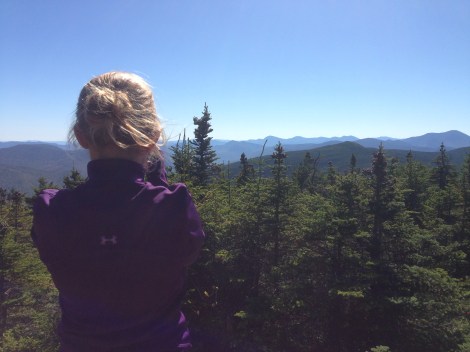
Hiking in the White Mountains this afternoon, then stretched out on a rocky peak, I remarked on the sweetness of fall apples.

Nothing like them, my brother said.

O hushed October morning mild,
Begin the hours of this day slow.
Make the day seem to us less brief.
From Robert Frost’s “October”
IMG_2094.JPG

Dinner Prep

Just before the twin towers were destroyed in New York City, we moved into a new kitchen we had built on one side of our house. Our old kitchen had a single window. The new kitchen was its own ell, with three walls of windows, the true gem of that house.

I remember washing Red Russian kale leaves in a white enamel sink we had scavenged from somewhere, mesmerized by the sunlight over my hands, and how the kale spines flashed silvery like minnows under the water. I was listening to NPR and staring at my garden’s kale as if I had never seen it before.

Soil in that garden later became contaminated with clubfoot, and I ceased planting brassica. Transplanted healthy plants miserably withered and died within a few weeks, and none of my remedies worked. Now, miles away in this new garden patch, snipping my first kale leaves, I thought of that afternoon so many years ago, with my toddler daughter tricycling around the kitchen, surrounded by sunlight streaming over freshly stained pine, the only adult in the house listening to the radio, wondering what would happen.

The thief left it behind:
the moon
at my window.

– Ryokan

IMG_1920.JPG

Art? Why?

Yesterday, while the 12-year-old girls swam in Greensboro’s perfectly clear Lake Caspian, I read on the beach, just me and a few gulls, a pair of kayakers pushing off. An older woman wandered down and waded into the water and said only kids could swim in that water, and then left, too. The girls had swam out and were experimenting with laughing underwater.

Later, we went to Bread and Puppet’s outdoor theater, sprawled in the hot sun. Coming home, the girls swam again, while I eavesdropped on a pleasant conversation between our former pediatrician, his wife, and friends.

I kept thinking, What does art matter, anyway?, all this barefoot and Blundstone-shod performance in the field? What does poetry, fiction, song, mean, anyway? The more I thought, I wondered if my question was wrong, if the answer lay in who was listening, like myself listening to those 12-year-old girls. Maybe art is like that a cappella hymn, voices raised in harmony and confidence, to the variated audience, the shape of the earth, the enormous pine trees, and all that sky, blue and shifting with clouds, over field and forest, highways and water, on and on, and on.

Maybe my question, like a koan, holds the answer.

A painter should begin every canvas with a wash of black, because all things in nature are dark except where exposed by the light.

– Leonardo da Vinci

IMG_1758

Crossing Open Water

My canoeing experience, while somewhat lengthy, has always been confined to summery, pleasurable afternoons, on Vermont’s still lakes and ponds, often with swimming and almost always with kids. Only once, on my honeymoon, did I worry our canoe might flip.

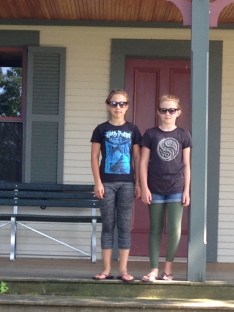
Oddly, I found myself on nearly those same waters in Lake Champlain this weekend, worrying again if I might roll the canoe. While the two cheerful and sunglasses-wearing 12-year-old girls waited for the ferry, I headed out to an island with a canoe loaded low with camping gear, not looking closely at the lake – a very large lake – rough with wind, torn up with the furled wakes of motorboats.

After I spun around, I gave myself a rapid crash course in reading the water washing near the low sides of my canoe, keeping my prow headed into the waves – those long curls might have delighted me swimming near the shore but frightened me with all this water around. The silver ferry passed by with my smiling girls, waving merrily in the sunlight.

On the return leg of the journey, after a few days of bicycling and card playing on an island magical with fiery sumac and twining vines, the water lay invitingly still, just me and the ducks and few gulls cavorting overhead.

It was then, on that crossing, that I remembered the children’s father and I had paddled in a rainstorm to this same stretch of beach, from an island further out, in a canoe we had borrowed from his parents that had no lifejackets. In a different version of my life story, I would have taken the ferry with the girls and he would have rowed the canoe – much stronger than myself and far savvier at reading wind. He would not have gotten stuck on the far side of the island as I did, and struggled against the current to round the rocky edge.

As I rowed, the lake lifted against my old red fiberglass boat, all that deep blue water, stretching far further than I could imagine, filled with darting fish and frond-waving plants, the shale-splintery islands, boats with white sparkling sails, sunlight profuse, with sunken ships and ancient fossils. I had been reading David Hinton’s The Wilds of Poetry, filled with narrative and a collection of stunning poems, from Rexroth to Robinson Jeffers, a stonemason apprentice who built his house at Carmel-by-the-Sea, all about motion and change. Kismet reading for sleeping on an island. I imagined how the gulls might see me, a small woman with a braid and a wooden oar with a broken handle, rowing home with a basket of dirty clothes, crumbles of crackers, softening cheese, a coffee pot and an unfinished sweater on knitting needles. I could not have wished to be anywhere else than there.

On the mainland again, I unloaded the canoe and walked along the high bluffs, waiting for the ferry. The wind was picking up then, and the day, the first of August, was bright with promise. The grass could not have been greener. I read the heartbreaking memorial marked for the boys who had died in the Second World War and then leaned against a bent cedar tree, one small woman in a landscape beyond time, myself just one living piece of its infinity.

When I met the ferry, its captain asked if the two girls alone were mine. Yes, indeed, I said and walked onto the rattling gangplank to greet them.

I have tried to write Paradise

Do not move
Let the wind speak
that is paradise.

Ezra Pound, from Cantos in Hinton’s The Wilds of Poetry: Adventures in Mind and Landscapes
IMG_1490

Memorable Days

27 years ago, my oldest nephew was born. I was visiting his great-grandparents on that day. I had recently entered that family, and I was on my very best, most sparkling, ready-to-please behavior. His great-grandfather walked me around his property, pointing with pride to the peach trees. Elderly and ill, a minister by trade, he remarked he wouldn’t be around long to savor that fruit, but someone else would.

I was 22 then, fresh out of college, naive and deeply in love. I’ve thought back often over these years to his comment about those peach trees, and how much those words summed up that man’s life. Even then, hardly beyond childhood myself, I wanted that equanimity.

A few years later, after his death, and his wife was moved to Vermont to live nearer her two daughters, someone else bought the house and cut down those fruit trees. That, I suppose, is a whole different philosophy. It’s not mine to suppose what he would have made of that action, but it’s a question I’ve pondered, whose answer I’ll never receive.

A little girl under a peach tree,
Whose blossoms fall into the entrails
Of the earth.

– Basho

FullSizeRender.jpg