Still Here, Hardwick, Vermont

I’m reading Ruth Stone in bed when my daughter comes up the stairs in her jacket and says I must go with her to look at the moon. It’s nearly eleven. We leave the younger sister sleeping with the cats, cross over the snow above my sleeping garlic, and leap the fence into the cemetery.

The moon shines like an enormous drop of cream, nearly round but not quite, waning. The two of us stand in the granite stones, over the sleeping dead, gazing up at the constellations sprawled over the dark sky, and the village below us, cupped in night-black mountains.

While my daughter sits on the ground with her camera, we talk about the landscape around us, and our family landscape. She’s so grownup now, so fully a young woman, that the terrain between us — always intimate, close — has opened like this starry sky.

On our way back, I’m tired, it’s true, and I carelessly place my Sorel boot sole on the jagged wire cresting the fence and not on the smooth bar. Carelessly, my eyes blinded with night, I ignore my own cautious worries about breaking a wrist and jeopardizing our slender livelihood. The wire snags my sole, and I fall to the cold ground at my daughter’s feet, my bare fingers in the snow. For a brief moment, the world turns upside-down, and I lie there in the beloved, beautiful moonlight, completely still.

And then life goes on. Isn’t that lesson enough? Life goes on.

Now snow falls again in ragged, loose flakes, and spring won’t hurry with my exhortations, but arrive when it will.

You have to take comfort where you can — in the nuthatches coming to the feeder, in the warmth of the wood stove, in the voices of your lovely grandchildren. You have to allow yourself to take joy.

— Ruth Stone
IMG_1457.jpg


Hardwick, VT, Sign of Spring #6

…. kid skis on snow and field.

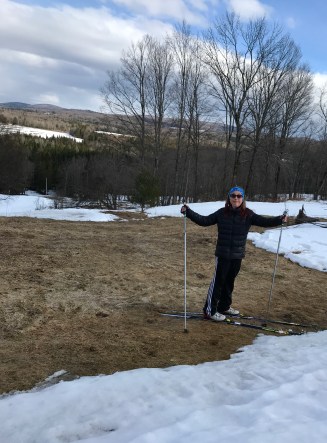
Easter afternoon, we skied on snow slushy in open areas, in the woods icy and pine-needle-strewn, pausing to breathe after the vigorous workout. Little streams ran along the trail. My friend remarked on the understory greening as our skis scraped along.

At the top of Elinor’s Hill, we stood for a moment, deciding which way to travel, and I remembered the winter our friend skiing alone fell on this long hill, breaking his leg, and lay on the snow, waiting. Now, in the warmth, we skied without gloves, my daughters sillily lying in the middle of the trail, dramatically waving their skis over their heads. Easter, and no one else was around, save for a few stray folks.

Later, I spoke with these friends, two thousand long miles away, and I realized they must have called us when we stood in the snow and open field at the top of that field, remarking, Remember when….?

The snow still claims more than it doesn’t. Later that night, under a nearly full moon, my daughter returned from a moonlight walk, exclaiming at the cold.

Buying leeks
and walking home
under the bare trees.

— Buson

IMG_1463.jpg

Craftsbury, Vermont


Hardwick, VT, Sign of Spring #5

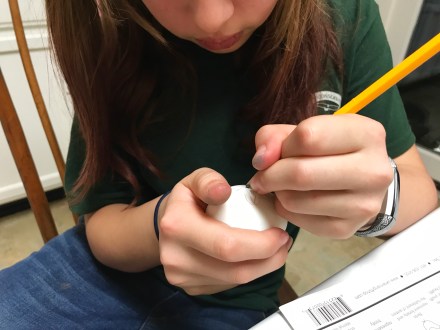
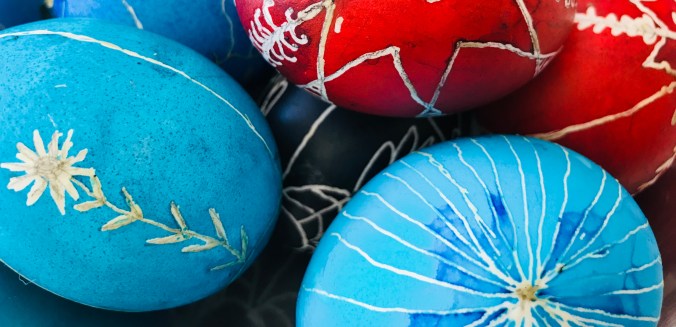
Hope: the odd collection of dyed eggs, the resurrection, glimmers of green clovers in yet-brown fields, birdsong.

Cold and warm rains, wiggling earthworms, rivulets of melting snow, winter bud on lilacs.

“Hope” is the thing with feathers –
That perches in the soul –
And sings the tune without the words –
And never stops – at all –
And sweetest – in the Gale – is heard –
And sore must be the storm –
That could abash the little Bird
That kept so many warm –
I’ve heard it in the chillest land –
And on the strangest Sea –
Yet – never – in Extremity,
It asked a crumb – of me.
— Emily Dickinson

IMG_1449.jpg

Hardwick Sign of Spring #3

A dozen turkey vultures circled overhead, spiraling on wind currents, silently following us on a walk. They’re back, my daughter noted.

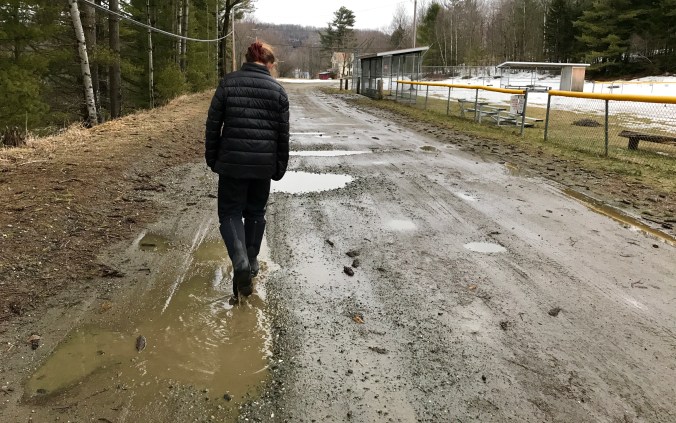
A day of serious wet: cold rain, rivers running high with melt-off, black mud thawing.

We walked in no particular hurry, talking, my daughter awkward in her sister’s too-large boots, pausing to study the vultures circling low, their wing feathers black against the clouds. As our path turned, the circling birds followed us.

I’m fascinated by the landscape around us of junco and robin, hawk and vulture, vegetable garden and cemetery. My daughter zipped her jacket against the raw spring. Those vultures are following us, she said. Creepy.

To pretend that all is right with the world when it is not, to use art as a pair of rose-colored glasses to distort the reality of the world, to paint over the agonies of our time, is to misuse art. Any light and life, joy and ecstasy we can derive from art in our time must be paid for with the admission that this joy and goodness comes to us out of the barbarous darkness all around us.

— David Budbill in Yvonne Daley, Vermont Writers: a State of Mind

IMG_1437.jpg

Hardwick, VT, Sign of Spring #2

A sign of spring, I suppose, is small-talking with the other parents on a slushy soccer field, watching our kids in a nordic ski relay. Sure, that’s spring in Vermont, borne with the usual good-humor of nordic ski families, and well compensated by an eclectic and unbelievably delicious potluck. At how many potlucks do you find a wedge of homemade sheep’s milk blue cheese?

But a more heartening sign is breaking out the lawn chairs for afternoon in plein air studying. Note snow.

Stop acting so small. You are the universe in ecstatic motion.

— Rumi

IMG_1429

Barre, VT, Courthouse

A retired Barre police officer sat beside me while I was waiting outside a courtroom in the Washington County Criminal Court, and he mentioned he thought he knew my former husband. He suggested that clearly I didn’t know my former husband all that well, and he told me some wrongdoings he knew my former spouse had committed. I protested that the man he referred to wasn’t my former husband.

The officer persisted. Listening, I began to wonder how much I knew about anyone, really, in the end. In my bag, I had a copy of Janet Malcolm’s biography of Sylvia Path, The Silent Woman, which I had read with enormous interest many years ago, right before I was married. In this book, Ted Hughes is quoted as writing, “I hope each of us owns the facts of her or his own life.”

I knew when I entered that courtroom, again, as I had before, that I would need to relinquish some of the darkest facts of my life. Just the facts, ma’am, and yet the facts seem so much. The reality is, of course, none of us own the facts of our lives. We’re hardly discrete entities, spreading into each others’ lives messily as we do.

Just the facts. Granite photos, the trio of a judicial panel, bailiff, what must be an endless of stream of adults coming and going through the security at the door. Outside, robins sang in the maples behind the courthouse. I’d been there so frequently, I knew the way out of the one-way streets.

IMG_1406.jpg