Ancient Arts

Oh, Vermont community! Young and older women came out on a cold morning to my library for knitting lessons, with bags of yarn, needles, questions, and a lot of desire. At the end, a young woman who had capably learned the three key skills – cast-on, knit, purl – smiled and said she hadn’t believed she could ever learn to knit. But I so wanted to, she said.

One of the things I love most about knitting is its communal aspect. Begin knitting and the world of knitters will come to you, drawn to the creation your fingers are spinning from yarn. Write a book, and you remain in your own solitary interior world, but cast on some stitches, brew a pot of coffee, work and chat. Creative counterbalance.

One likes to believe that there is memory in the fingers; memory undeveloped, but still alive.

– Elizabeth Zimmerman


FullSizeRender.jpg

My 11-year-old daughter’s life skills

Winter Sky

Last evening, I stopped by Lake Elmore, summertime sacred scene of popsicles, barefoot children running over immense lawns, swimming and more swimming. My daughter’s happy birthday parties, the little girls in their flowered dresses.

8 degrees Fahrenheit under a half moon and scattered stars, Orion’s belt hung over the snow-covered lake, hoarfrost creeping up the crumpled remainders of weeds. Scraps of clouds passed quickly over the moon. After too many meetings and too much talking, I gulped the cold eagerly, my boot heels on the sand-scattered road the only scuffling sounds. Ancient, great-horned Taurus, the bull in the spinning constellations, hung above me, familiar and dear as the oldest of lovers.

… There was a woman
I made love to and I remembered how, holding
her small shoulders in my hands sometimes,
I felt a violent wonder at her presence
like a thirst for salt, for my childhood river
with its island willows, silly music from the pleasure boat,
muddy places where we caught the little orange-silver fish
called pumpkinseed….

Robert Hass, “Meditation at Lagunitas”

fullsizerender

A sunshiny bit of my world….

Stitch by Stitch

When my younger daughter was two, my friend Jessica taught me to knit, which revolutionized my world. A life with little ones underfoot is improved by creativity which may be picked up or put down at any time. Unlike time (say, 2016), yarn can easily be unraveled, and the work improved.

Since my first knit, purl stitches, I’ve knit in numerous houses and meetings, across country on a train, in the ER, the endodontist’s office, at concerts, under trees, in the sugarhouse, in my bed.

With innumerable strangers, I’ve handed my knitting and their knitting back and forth, admiring and discussing. In despair, occasionally, I’ve thrown out knitting gone badly awry. My best knitting was a pair of mittens I knit my daughter for her 15th birthday, blue and white, compass pattern. Now I’m on a pattern a little too difficult, with yarn overs that are trouble to drop, with a pattern I am, stitch by stitch, accomplishing; it’s beautiful.

When my girls and I were talking about wishes for the new year, I thought work hard, but perhaps what I really meant was love well.

The products of science and technology may be new, and some of them are quite horrid, but knitting? In knitting there are ancient possibilities; the earth is enriched with the dust of the millions of knitters who have held wool and needles since the beginning of sheep. Seamless sweaters and one-row buttonholes; knitted hems and phoney seams – it is unthinkable that these have, in mankind’s history, remained undiscovered and unknitted. One likes to believe that there is memory in the fingers; memory undeveloped, but still alive.

Elizabeth Zimmerman (who else?), The Knitter’s Almanac


Snowed In…. and more

My brother borrowed my daughter’s car and returned it with the back door dinged in, which made us laugh. That’s all? 2016 has thrown a lot more at us. But here’s the thing: at the very beginning of my novel’s draft, I have that classic line from Dante: In the middle of the journey of our life I came to myself within a dark wood where the straight way was lost.

In my forties, the straight way is concealed, undoubtedly. But what I’d missed in that line until today is the coming to yourself gem buried within that sentence. Earlier this fall, I had a conversation with someone who described this phase of life as not solved by geography; this is an interior journey of the heart.

So, for a moment here, what better way to end a long year than with laughter? Big and little kids went sliding on the ice today – no sleds required; our kitchen is well-stocked; the snow falls – lovely as I remember from childhood; and my first novel hit the Galaxy Bookshop‘s 2016 bestseller list. Satisfaction.

Do not be afraid; our fate
Cannot be taken from us; it is a gift.

Dante Alighieri, Inferno

FullSizeRender.jpg

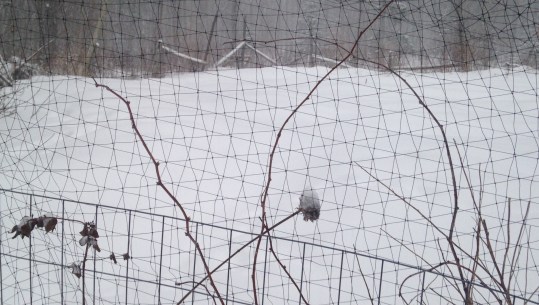
My garden in winter.

My Brother’s Handgun

My 11-year-old daughter wants to be an FBI agent when she grows up. I wish I could say I have no idea where that desire derives from, but a rawer truth is that choice illuminates a great deal about her young life – and equally about mine.

When I was a young mother, I focussed so much on what I could give my children – homegrown organic squash, stacks of library books, sand castle building – that I pretty much entirely discounted all the influences that would equally affect my daughters, unintended or not: in short, the great wide world we live in.

A first-time mother, I just took everything so personally, as if feeding my kid a potato chip would amount to heresy. I had this very naive idea that if I pushed the image of the Earth Mama hard enough, I could hold off from my children the equally real awfulness of this world.

Over and over, one strand emerges in my writing: that our choices and actions determine who we are; that while our heads may be filled with the finest of intentions and profoundest of ideas, only action and how those actions affect others determines, ultimately, the mark of who we are. Which perhaps is why I’ve ragged on that Hallmark card notion of love. In my experience, love is the nursing mother’s arms around her baby, but also the ragged fierceness to step forward when the seas go swirly and the sharks surface to feed.

Whether I like it or not, children grow up, one little bit at a time, not simply with a birthday, or turning eighteen, and, having seen plenty of ignorance (my own and others’), I’d far rather my daughters make their decisions knowingly.

So…. when my brother taught my younger daughter to shoot his Glock, his hands over hers, I let them be.

Here’s a New Yorker parenting article, on resilience.
fullsizerender

Woodbury Library

Clutter

With a gift of fudge, my teenager and I stopped by the new neighbors’ house yesterday. The boys and their father had disappeared outside, while the mother was reading a slender book on feminism she had given her husband for a Christmas present. She had determined the book was required reading for her high school student, while the 10-year-old was given a temporary pass.

Owned by a large Connecticut family, the house has been vacant for years. One night this fall, another friend was sorely in need of acorns for a photo shoot (these are the kinds of friends I have), and the girls and I drove down in the dark and searched under that property’s oak trees with flashlights for what my children once called “oak nuts.”

Now, the house is literally spewing belongings: mismatched ski boots, a basketball stand on its side in the snow, Christmas lights on a hedge so haphazard my older daughter laughingly said the lights appeared to have been tossed out a bedroom window. Family life in all its raging clutter. Coincidentally reading Shirley Jackson’s phenomenally useful and entertaining essays on writing fiction and craft, I realize how interested I am in their half-opened door, the painting already hung in the entry hall, and I wonder how our own messy family appears.

 It seems to me that in our present great drive—fiction-wise—toward the spare, clean, direct kind of story, we are somehow leaving behind the most useful tools of the writer, the small devices that separate fiction from reporting, the work of the imagination from the everyday account.

Shirley Jackson, “Garlic In Fiction”

fullsizerender