End of July, Postcard From Hardwick, VT

Until she was 18, my older daughter lived on a dead-end dirt road, surrounded by mixed hardwood forest, dense conifers along the house’s northern boundary. Walk ten minutes from our house now — all right, maybe six minutes — and we’re deep in the woods again. Every evening, hermit thrush sing behind our house.

While July is stunningly beautiful across Vermont, I see how quickly July varies from home to home. Where do the pollinators flock? Just a few miles from our former house, we see cardinals. Here, the water is nearby, and the mornings are misty.

Yet another boon to Vermont summer — walk just a little in sandals and the wildness surrounds you.

“There’s always a sunrise and always a sunset and it’s up to you to choose to be there for it,” said my mother. “Put yourself in the way of beauty.”

— Cheryl Strayed, Wild

IMG_2903.jpg

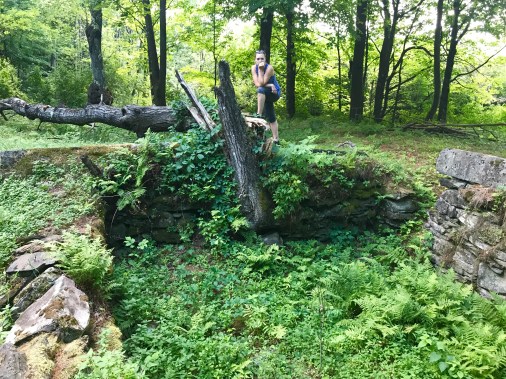
Site of former pest house, Hardwick, VT

Last Sunday in this July

Early Sunday morning, the cat wakes me by biting my toes. Get up! Get up!

Camping on a lake, my younger daughter wrote us news of the loons calling crazily all night long. I think of her listening to those ghostly, ineffably beautiful songs, how years from now she’ll hear loons calling and think of sleeping on that lake shore.

At an art opening recently, a friend and I heard the artist speak. The artist said sometimes you see life more clearly, with precision, and other times through a mist or fog.

This morning, fog has already melted from garden. On my list of clear-thinking things to do — bake a pie with my 19-year-old. Swim.

We don’t read and write poetry because it’s cute. We read and write poetry because we are members of the human race. And the human race is filled with passion.

— Walt Whitman, Song of Myself

IMG_2885 2.jpg


We’re All Authors

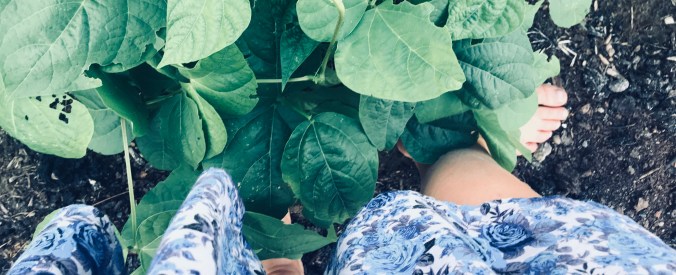
Yesterday, while my 19-year-old fried beef for dinner yesterday, I kept handing her vegetables to chop — onions and garlic I just pulled, some leek thinnings, a few leaves of kale.

She chopped and stirred and talked. She gives me the story of her life, daily. Tempestuous and brave and loyal by nature, her life is chock-full. When I was that age, I drove an old VW bug I bought for $200 with waitressing cash. A boyfriend taught me to adjust the valves. I was shy, so terribly shy. When I tell my younger daughter just how shy I was, she doesn’t believe me. Last summer, a woman hollered out her car window at me for jaywalking in downtown Hardwick, I walked over to her, and — while she was marooned in construction traffic — I offered her an earful about driving too fast and why I jaywalk. Understandably, my daughter was mortified. Good lord, woman of that car, if you ever read this, I apologize.

Stories change. All our stories change, through grief and sadness, but through wonderfully fantastic things, too. I see my tall, lovely young-woman daughter pondering this — where do I want to steer my life? Interspersed with vegetable washing, I’m glad to be the listener, offering an occasional Socratic, What do you think you should do?

Anyone who listens to Steve Almond and Cheryl Strayed’s Dear Sugars podcast might want to check out Almond’s new book, Bad Stories: What the Hell Just Happened to our Country? 

Almond writes:

I’ve placed my faith in stories because I believe them to be the basic unit of human consciousness. The stories we tell, and the ones we absorb, are what allow us to pluck meaning from the rush of experience. Only through patient interrogation of these stories can we begin to understand where we are and how we got here.

IMG_2865.jpg

Snippet

For dinner last night, my daughter fried beef for enchiladas. From the garden, I brought in a basket and began washing vegetables. Here, throw in slender leeks, sweet red peppers, onions with their fat greens. I filled a salad bowl with mesclun, radishes, sun gold tomatoes.

Do people talk about the weather as much as Vermonters do? What a summer, we say.

Yesterday: muggy heat, steady rain, a perfect evening. We swam in the nearby pond again, a little chillier after the rain. Then we gathered up our towels and went home.

More from that stack of donated books:

Our story is never written in isolation. We do not act in a one-man play. We can do nothing that does not affect other people, no matter how loudly we say, “It’s my own business.

— Madeleine L’Engle, Walking on Water: Reflections on Faith and Art

IMG_2658.jpg

Girls camping, Lake Champlain: water, rocks, sky, and s’mores

After Midnight

Rain falls in the night. The cats press at the window screen, curious, wakeful in their quiet way.

In this post-midnight hour, I close my library book about Trump and deceit — how language is both truth and weapon. From the stack of books donated to my library, I pull a collection of essays.

While the rain continues to fall lightly — and I think of my thirsty garden drinking, drinking, the trees with their copious roots and the innumerable blades of grass — a domestic black-and-white-and-coffee-colored tiger curls at my feet while I read about a liver transplant.

We are made of the dust of old stars, our grade-school teacher told us; we are made of lives and sediment and the mulch of life. But I was also made of something rescued from the graveyard…. you can’t quite forget the how it felt to lie in the close darkness of that grave; you can’t forget the acrid smell of the earth or the stink of the moldering grave clothes, especially now that you know, as you never did before, that you’re headed back to the grave again, as is everyone, and you know this with a clarity you cherish and despise.

— Richard McCann, The Resurrectionist

IMG_2832.jpg


Early July A.M.

Midsummer, we’re at the numberless place in July where we might commence to take swimming at dusk as a given, to be exasperated by heat, to seek solace in a cool living room from the day’s sharp light.

As summer might unwind forever.

Green was the silence, wet was the light,
the month of June trembled like a butterfly.

— Pablo Neruda

IMG_2754.jpg

Brattleboro, Vermont