No Restitution.

As a child, I went rarely to a physician: once for strep throat, secondly when I was eighteen for a required physical to enroll in college. I had a smallpox vaccine in sunny Santa Fe, surely one of the last in this country as my younger brother skipped this one. My mother brought her three kids to elementary school clinics for DPT and polio vaccines in gloomy Manchester, New Hampshire. We were healthy kids, and my mother, an RN, believed firmly in keeping healthy kids out of the medical system.

As a 21st century cancer patient and now survivor, I inhabit a different world. Through the Dartmouth-Hitchcock portal, I message my oncologist (my oncologist? this pairing of words still makes me cringe), who kindly replies. My recent bloodwork results are “unrevealing.” I’m reading Geraldine Brooks’ Caleb’s Crossing, a gift from a friend, set in the 1600s, and I study that “unrevealing” word, pondering its roots. I have a slightly-above-average vocabulary, and yet this disease has shoved me against so many words I’d never encountered. For instance, salpingectomy: removal of a fallopian tube.

Among much else, I’ve observed how my oncologist (again, that wincing) uses language: use words precisely for what is known and what is not known. The precision of oncologist and surgery saved my life; yet, I was never given the illusion that all is known. For now, on this cold morning, crossover between a full moon already waning and the rising sun barely quickening the horizon, I’m well. Which arrows to the heart of the human condition. The nascent day stretches long, an infinity of possibilities.

“There is no restitution for people like us, no return to days when our bodies were unscathed, our innocence intact. Recovery isn’t a gentle self-care spree that restores you to a pre-illness state. Though the word may suggest otherwise, recovery is not about salvaging the old at all. It’s about accepting that you must forsake a familiar self forever, in favor of one that is being newly born. It is an act of brute, terrifying discovery.”
― Suleika Jaouad (in all her awesomeness….)

Making Effort

Under the waxing full moon, January’s hungry Wolf Moon, I hurry along in the few degrees above zero. I’ve forgotten my scarf, so when I turn and lean into the wind, I cover my cheeks and lips with my mittens and breathe in the scent of wool. It’s too cold for wetness, yet my mittens are redolent with sheep.

The wide sky and the fierce cold winnow me to shivering bones. Nonetheless, I walk further than I’d planned, thinking through a piece of writing, and then, so cold, words abandon me for images, then those, too, vanish, and it’s me in my boots and that good down jacket and the mittens just beneath my fluttering eyelashes, and intermittent pickups passing, their drivers lifting their hands silently.

My life flickers as a candle flame in my curved ribs. What great fortune to be walking along the earth’s curve as the planet bends into twilight, the ancient moon electrifying the new snow. By the time I return to the village, it’s not long after five and the darkness has settled in for the long go of the night. Nonetheless, it seems to me these wintry days are gradually lengthening. I mail a letter at the post office and then talk with an acquaintance for a few minutes in the co-op, a waxed bag of curry power in one mitten, an onion in the other. At the last moment, I remember to buy milk for the morning’s coffee.

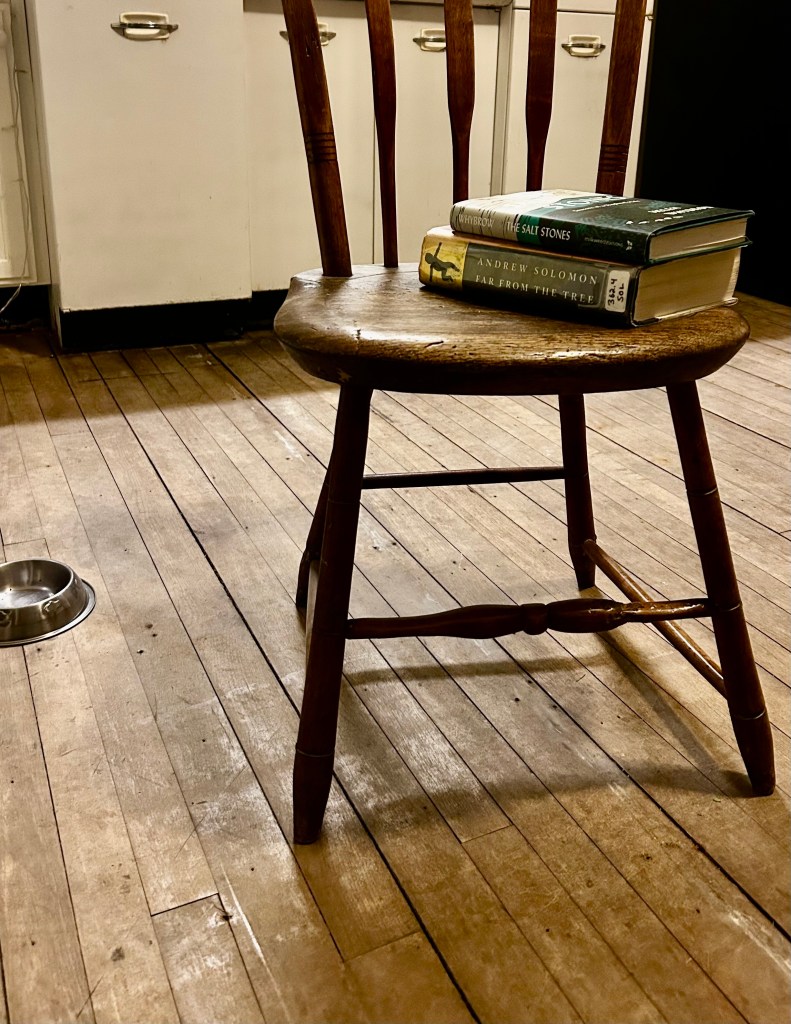
Winter. This starkly elegant season, straight-forward, no fussing around. A librarian friend passed me Andrew Miller’s The Land in Winter, a novel I’d longed to hold and read. A book of my soul. My cat Acer, eight-years-old, has discovered the pleasure of purring. We lie stacked on the couch—me, this tabby, library book—content. Who knew this was possible, my slow learner cat, my slow learner self?

“And though he was not much given to thinking about love, did not much care for the word… it struck him that in the end it might just mean a willingness to imagine another’s life. To do that. To make the effort.”
― Andrew Miller

“beyond the face of fear”

I’m at the dentist for an X-ray of a front tooth that’s gone sour three times before — two failed root canals and one beastly apico — which also equals pain, more pain, and so many dollars. We compare the X-ray to the one taken six years ago, just before the pandemic, around the time when my brother and I were marveling at drone footage of empty cities in China. The tooth looks pretty darn fine. I explain that I recently endured chemo, and I’m off every which way. I no longer seem to know this body. Plus, the added layer of paranoia.

He says simply, Chemo will do that. He offers me antibiotics. I’ve had enough antibiotics in the past year to reasonably heal a village, or at least a hamlet, and I pass.

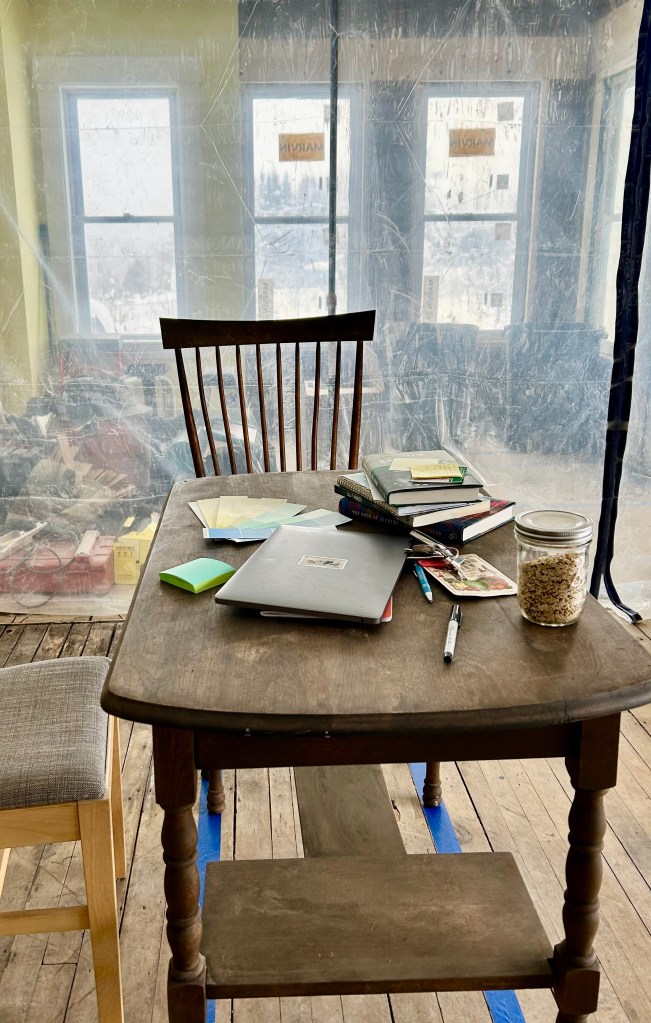
The very last day of December, the day is cold and sparklingly sunny. I work at my kitchen table for a bit, and when the sun shifts around, I drive to a nearby town to return library books. It’s the holiday season yet, and the library is nearly empty and quiet. The librarian and I have known each other for years now. We were once farmers market colleagues. Eventually, I buckle down and work hard for a good long while. When I leave, twilight is just beginning to settle in. The library is warm, and the staff is setting up chairs and cushions. Parents and little kids troupe in, their cheeks glowing with the afternoon cold.

On my way home, I drive up to the ridgeline and take the walk I learned from my poet friend Mary. The cold sinks its teeth into me as I hurry along. The gibbous moon appears and vanishes in the scrim of clouds. All summer and far into the autumn I felt surrounded by a holy veil, a phosphorescence, trial by devastating disease and the violence of chemo and surgery, a trial I survived. I counted each moment as a lucky gem. Slowly, my pockets began to fill with the world’s detritus, with those nagging financial fears, the inevitable disappointment of relationships, the ever-present terror of relapse a knife against my gullet. In plain words, the stuff of living.

Walking, I studied the horizon as the blue deepened, pure ineffable winter, and the night cloaked me. I passed a few farmhouses with little twinkling lights. I was so cold and yet I did not turn back. Instead, the winter night flooded into my heart. My whole adult life I’ve been a crepuscular woman, seeking the radiant edge of sunrise and sunset, reveling in twilight, the majesty of the starry heavens. I’ve transformed grit and solitude into books. Enduring lymphoma made me wary of those recesses in my soul. I relied on others for sustenance and heat, for clean clothes, for glasses of water, in the way of very young children. Both my beloveds and strangers kept me alive. But slowly I’m beginning to admit that the coarser and rougher shades in my soul kept my body alive, too.

All of this is to say that a heartfelt seemingly casual chat and a walk into the cold night quelled my uncertainty, steadied me again. At home, I’d let my woodstove fire burn dead so I could unscrew the back plate and clean the ash-choked metal filters. My ruined hands could not hold the wrench. So I shoveled out the coals, set a match to birchbark, and lit a fire. Good enough for now. Soon, I’ll summon the energy to ask for stronger hands…..

Last and certainly not least, you readers have poured such love towards me this year. I’ve been sparse in writing here as I struggle to find footing in my changed world. Thank you for your patience. Thank you for reading. And may this new year shine joy for all of us, in the universe’s mighty and myriad ways.

A dear poem from Lucille Clifton:

blessing the boats

may the tide

that is entering even now

the lip of our understanding

carry you out

beyond the face of fear

may you kiss

the wind then turn from it

certain that it will

love your back     may you

open your eyes to water

water waving forever

and may you in your innocence

sail through this to that

Another Plot Point.

A friend inquires if my summer’s adrenaline, the post-chemo and post-surgery and cancer-remission wave of energy has waned, and, indeed, that has, the winter and cold and what’s called fatigue but is actually a lifeless bleak plain setting up quarters in my household.

Winter is a reckoning time. In a strange kind of way I begin to see the pieces of my life jostle into a pattern — childhood and college years and those years in my twenties when I ran back and forth across the country and then to northern Vermont, how I built a marriage and house, the young mothering years of children and friends, how we taught ourselves to sugar and run a business and I taught myself to write. Then I broke that life apart and took the children, created a new life, kept writing books, learned to view the world askance to keep danger from our door. Danger slunk in anyway. The world, indeed, is cause and effect, not a linear straight-shot but a dense sphere. Surely the human story is the same for you and me, with its endlessly profound and terrible and awesome variations.

This morning, the harsh cold has relented, just the slightest, snow sifting down, the blue dawn pushing away the night’s darkness.

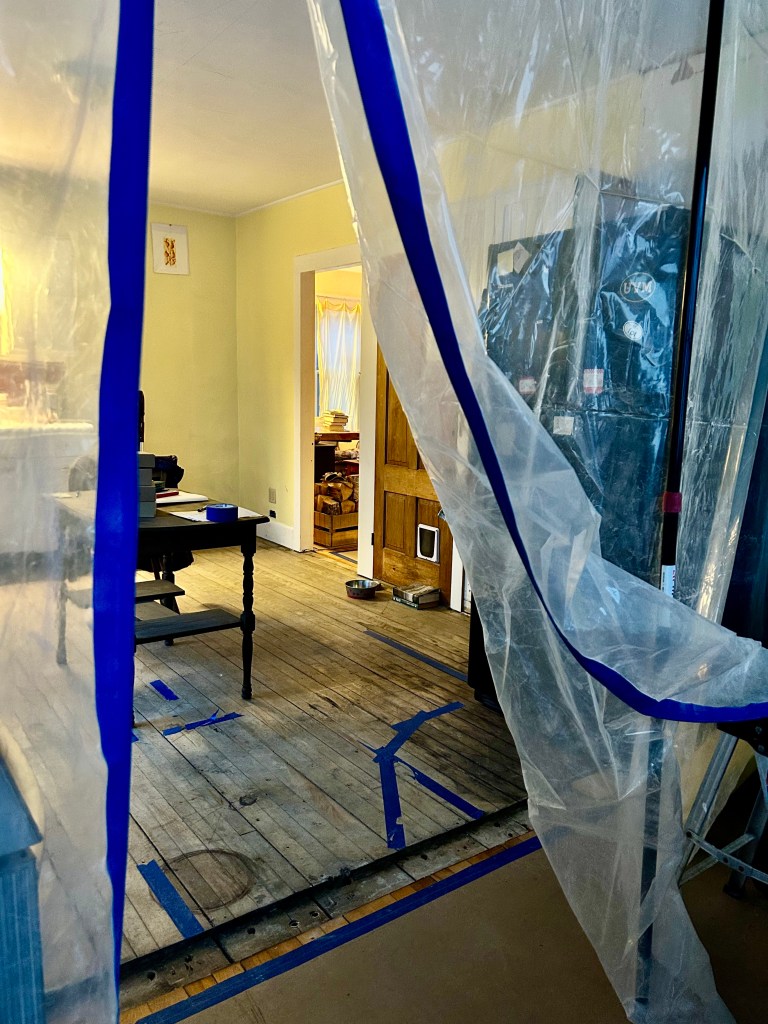
I’m encouraged to seek “protective factors” which I glean as my daughters’ merriment, a purring cat on my chest as a I read by the woodstove, a walk with a friend on a snowy road. My heart longs for the season of those #10 Pond swims, with friends or without, the sun hot on my bare knees. Spectator to the loon world. Not iced coffee but hot coffee. Now, these days of small light. In a considered burst of optimism, I mail a carpenter a check in a card with snowy evergreens and seal our agreement. Come when the weather splits and put two more windows in my house. Open the view of the valley and the village. Another plot point.

What would people look like

if we could see them as they are,

soaked in honey, stung and swollen,

reckless, pinned against time? — Ellen Bass

To Know the Dark.

This is the season of scant light, the day’s heart sooty at best.

Oh, the darkness, keeper of so many secrets. My garden’s soil where rough-edged chard and calendula seeds germinate, where tree roots clench and foxes den. In the summer, the night sounds sing of lust and procreation, hunger and scavenging. The night is the realm of star and moonlight, of the mysteries of creation and romance. And more—in all those hospital nights I endured this past winter, I often woke drenched in nightmares, disoriented. Gasping, I whispered that I was still here, still part of this world. A hospital at night is a ship full of humans, listing its way through uncharted territory.

This morning, crossing over gradually into the days of longer light, into this winter that has barely begun to breathe its life, I carry my glowing ash bucket outside and stand in the cold. Below me, the village lights sprinkle through the valley. My neighbors, early risers, too, have not yet snapped on their kitchen lamp. The wind stirs, and I shiver, barefoot in my Danskos, my hearth divided between stove and bucket, inside and outside, a small thing to consider. I keep standing, keep shivering, my blood running hot.

To go in the dark with a light is to know the light.
To know the dark, go dark. Go without sight,
and find that the dark, too, blooms and sings,
and is traveled by dark feet and dark wings. ~ Wendell Berry (of course)

Keep Reaching.

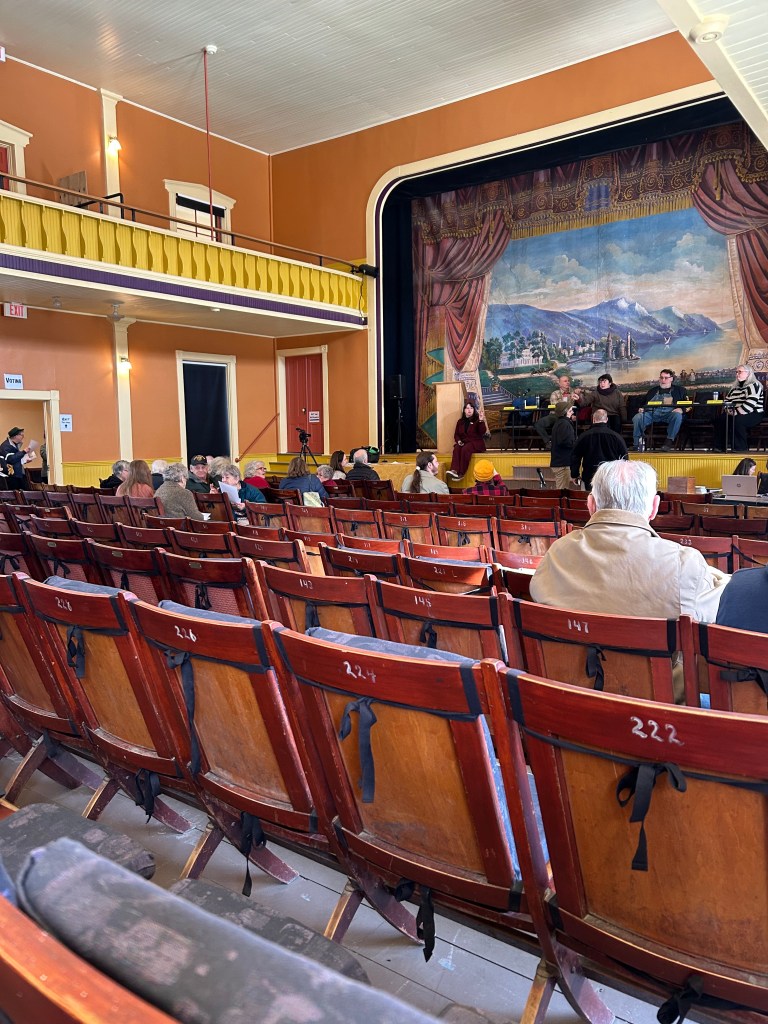
Dark as a pocket or the inner chambers of my heart — so goes these December nights. The nights descend earlier, more afternoon than evening. I randomly meet friends on Main Street with the darkness kicking around my ankles. We step into a community center, pulling off our coats and hats and talking about random things — the price of gas, the upcoming holidays. For those who don’t live in a northern climate, a public building in Vermont sometimes has a curtain just the inside the door to stave off winter’s wind and snow. I push aside the curtain, and we step into a well-lit room.

It’s a simple/not simple thing. We eat bowls of hot soup and chunks of fresh bread at a long narrow table. A couple I’ve never met sits beside me with a brand-new infant, gustily sucking. I refrain from bending my head and breathing in the child’s milky scent.

Darkness presses against the windows as we talk and keep talking, and eventually the three of us are all leaning our elbows on the table, our heads propped on hands, spent. People appear, say hello, offer a hug, disappear, and still we’re talking about what might happen with the schools and our old parents and the persistence of memory from early childhood. How do we reconcile our stories? Escape or rewrite our stories?

Eventually, sodden with sleepiness, I pull on my boots and step out. The weather has turned, and the sidewalk is slick. I head out of the village. The wet air is not so much clean but fresh, a mystery of fomenting things both lovely and fearsome. But for now at least, I carry these gems of companionship in my heart. A pleasure, a warm joy.

…. and a poem from a friend….

Keep Reaching

The trick is to keep reaching

for the light you will never touch,

and to be nourished by the stretch

toward impossible things.

The trick is to bloom where you are,

not calling it a failure because

you wanted a different outcome.

Live each day devoted to awe, 

so that when a monarch lands 

on the tip of a coneflower, seeming 

to swell with that sudden infusion 

of sweetness, you don’t miss it. 

So that, while you watch, a pair 

of hard-won wings seems to open 

and close, and open again in you.~ James Crews