Happenstance or synchronicity? A remarkable thing happens: early afternoon, I’m walking around the 100-year-old building where I work, former schoolhouse, now town offices and a few random other activities. The building reflects a segment of rural Vermont: once built with pride, now crumbling, badly in need of care.
A balmy afternoon, I’m walking around the dusty parking lot. An impending cold is burrowing into my bones in the way of my post-chemo life, and I’m pushing back as I do, determined to finish this afternoon’s work. Someone I’ve met occasionally appears. It’s an exceptionally fine November afternoon, and I linger, talking, eating an apple. The conversation veers towards writing, and I mention I’m a cancer survivor. What do you know? Turns out, he worked on one of the drugs that saved my life. I repeat the drug’s name; he repeats it back to me.
I had a horrific reaction to this drug. Administered via IV, almost immediately a fist clenched my lungs and heart. The nurse cut it off instantly. For what felt like time-out-of-mind, I gasped, shook so hard the bed smashed into the wall, the nurses took my grown daughter of the room. The room was crammed with doctors and nurses who were bustling. I was so new to the cancer (just a few weeks before, I had been at work), that I begged not to have the drug. I’d taken all the other chemo drugs. Wasn’t that enough? It was explained, succinctly and clearly, that not one of these drugs was gratuitous. I know plenty of people who, for multiple reasons, distrust modern medicine. This was not my experience. Through the better part of a year at Dartmouth Hitchcock, the staff endeavored to make the treatment the most bearable for me, to keep me on the thin precipice between dying from cancer or perishing from complications.
Where I want to take this short writing is not back to the misery of enduring illness, but to the brilliance and goodness of people that lymphoma revealed to me. I survived, thus far, this disease because of the persistence of untold people who devoted their lives to medicine and the suffering of countless patients before me. I am also a woman who’s witnessed and written about the immoral and demonic actions of Big Pharma, particularly the Sackler family. This is all true. But in a nation driven to either/or, to the reductionism of labels and categories, this election offers the opportunity to pause, embrace again the better aspects of humanity, recalibrate ourselves to work that heals, rather than destroys.
We talked a little about Viktor Frankl. Then I thanked him, tossed my apple core into the forest, and headed back to work.
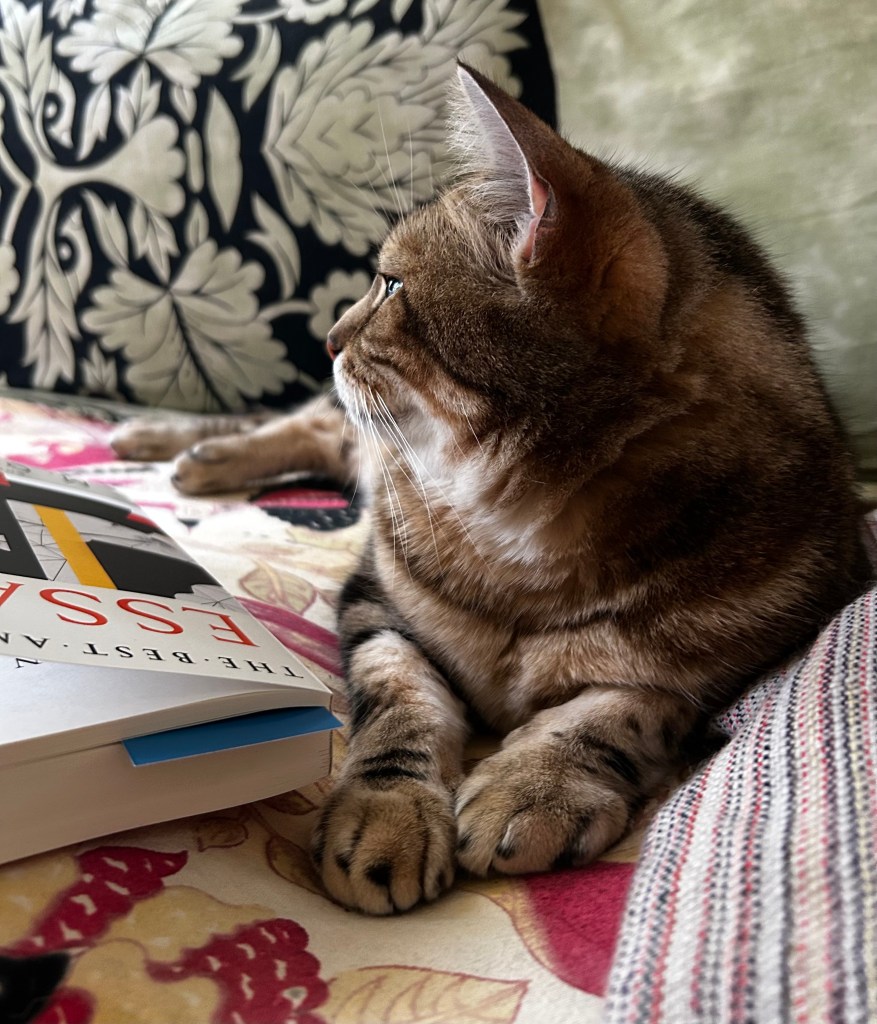
From Taffy Brodesser-Akner’s heartrending essay in The Best American Essays 2026.
How am I supposed to live? That’s my real question, maybe my only one. Am I supposed to enjoy the freedom that your survival and my grandparents’ survival has afforded me? Was I supposed to have more than these two children in response to the Holocaust, to replace myself and my husband and then replenish the supply of Jewish souls on this earth because the six million stories that were burned in ovens are real and more recent than I realized? … Was I supposed to do more than walk around unafraid and think to stop sometimes and tilt my head up toward the sun?

