Watering Down Deep

When I was a kid in the backseat of our green Jeep while my parents drove back to New Hampshire from our trips to Toledo and then often west of the Mississippi, Vermont was the final stretch on a very long journey home, and my mother claimed it was always raining in Vermont. It sure can rain in Vermont.

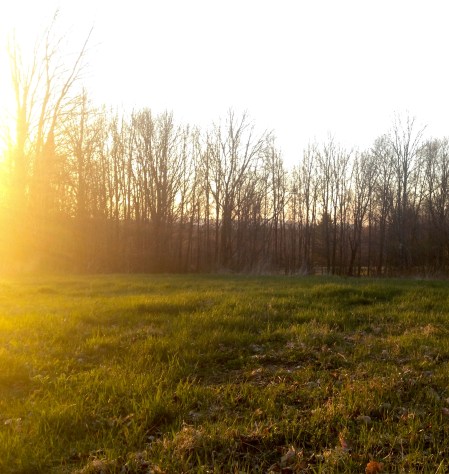
This morning, mist waters broccoli starts I planted yesterday, spinach and lettuce sowed for fall consumption. Even as a kid, I was fascinated by Vermont, with its infinitely promising green depths – what’s in all those woods? We stopped at a sugarhouse, and I was lifted up to peer into an enormous pan steaming with boiling maple sap, where we tasted hot syrup from tiny paper cups.

Later, as a young adult, I lived for years not far from that very stretch of highway, Route 9, all tangles and bends, some of which the department of transportation straightened out since then, some which will always reflect the jagged steepness of those mountains. I later possessed a giant sap pan myself, and served countless cups of hot syrup to children.

What does a kid remember from a childhood, anyway? While my parents were fighting exhaustion and worn-out windshield wipers, bending the atlas, their younger daughter was in the backseat, sowing the seeds of her adulthood.

In retrospect: could have been worse. What’s going on in my backseat, while I’m reading the map?

Raising children was not about perfecting them or preparing them for job placement. What a hollow goal! Twenty-two years of struggles for what – your child sits inside at an Ikea table staring into a screen while outside the sky changes, the sun rises and falls, hawks float like zeppelins.

Dave Eggers, Heroes of the Frontier
 

Raw Hearts

Like so many other New Yorker readers, I’m glad to check out what my favorite writers have produced, and early this morning I was drinking coffee while reading Adam Gopnik‘s piece on the 1971 Attica uprising. A terrible story, to be sure, suffused with bloodshed and out-and-out misery, a graphic illustration of this country’s inability to confront profound racial history, separation, and hatred – a story so presently alive today it’s painful.

More and more, I understand the human saga as overspilling with a pulsing heartbeat of fear, real as veritable night armies of marauders, drunken and desperate for satiation. Yet, in the morass of this story, a few clear voices rise ringing with the truth, courageous precisely at the time when courage matters most.

Gopnik raises that difficult question I return to over and over again: when to act and when to hold back? When is the time to speak forth, and when is restraint the wiser course? When is patience the most courageous and beneficial course, and when does patience bleed over into the waters of cowardice? There may be few times in our lives when great courage is demanded, like Warhol’s 15 minutes of fame. At what cost, perhaps, that courage may come.

There are sins of omission but there are also virtues of patience. Many of the wisest things we do, in life and in politics, are the things we don’t. Affairs not started, advice not given, distant lands left uninvaded—the null class of non-events is often more blessed than the enumerated class of actions, though less dramatic….

At moments of crisis, the integrity of our institutions turns out to depend, to an alarming degree, on the fragile integrity of individuals.

– Adam Gopnik

FullSizeRender

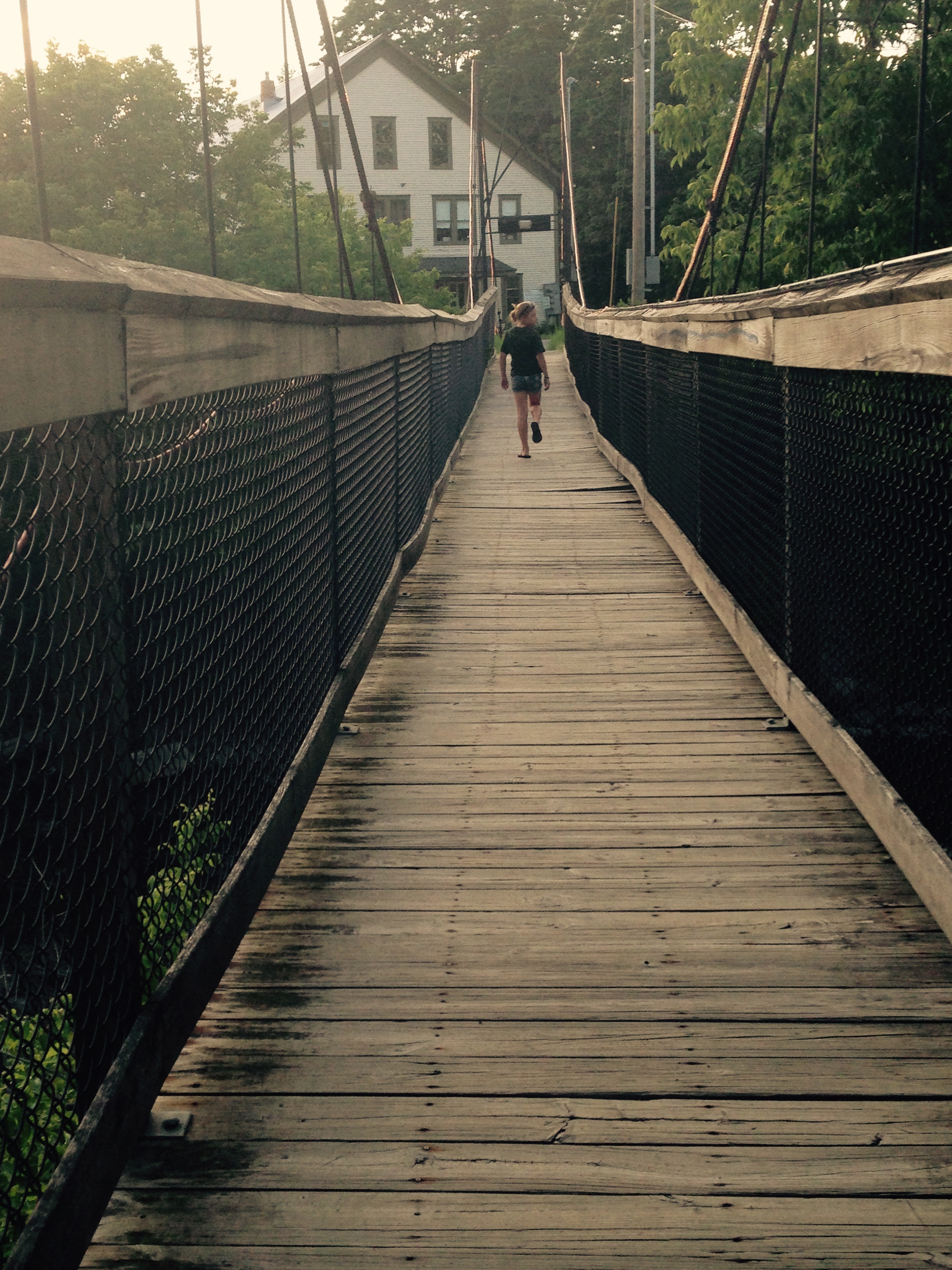
Montpelier, Vermont

Commune Scene

Green, green, green! Last night, reading about Vermont’s commune scene in the 1970s, I had to laugh about hippies coming to Vermont in the glory of summer, and then finding winter a different reality altogether. In a Vermont spring, every day, the black earth yields violet, buttery gold, emerald green.

Working in the garden in the late afternoon, I can fully imagine the hippie joy at this green paradise. Come the snowy season, though, and the idealism must have quickly faded. Having written a book about Vermont and youthful idealism, having given my own blood to this black and sometimes cold earth, on a day like today, Vermont is well worth enduring the stay. Today, I can pass on the Huck Finn advice.

(The back-to-the-landers of the 1970s) were acting, in part, on a characteristically American assumption that if things get bad where we are – too hectic, too dangerous, too messy – we can simply decamp to a new frontier and start again, that all we need to begin a new venture or even create a new society is a new piece of land.

– Kate Daloz, We Are As Gods: Back to the Land in the 1970s on the Quest for a New America

FullSizeRender.jpg

Woodbury, Vermont