Bright Spot

There’s nothing like a carful of laughing girls to whisk away despair. While the girls skied, I walked down to Big Hosmer Lake and sunk my hand in its cold water, thinking of my older daughter at 12 and how much she loved the rope swing on this lake. With an hour left, I sat in the touring center and sunk into my work.

Bringing in the cold and snow, the rosy-cheeked girls found me, chattering, hungry for the crackers in the car. All the way down the narrow valley from Craftsbury to Hardwick, I watched the remnants of daylight dwindle into pale rose, so glad we were headed to our warm house and leftover posole and the cats who would be mewling for their dinner.

12-year-old girls, laughing about falling on skis, listening to Christmas carols, exuberantly happy. I drove, listening, the girls’ merriment like a cloak around us, keeping night terrors away.
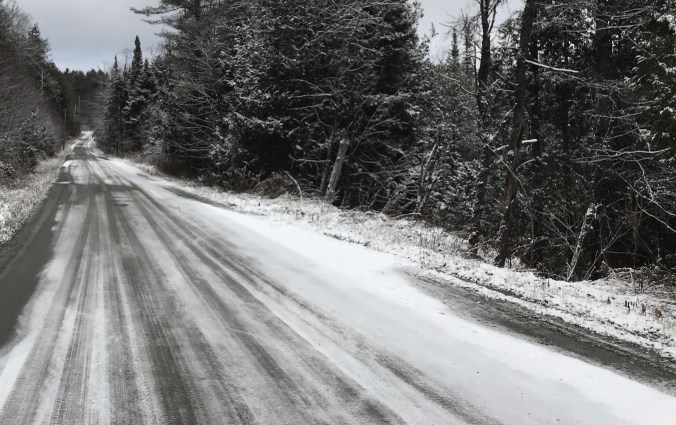
IMG_0414.jpg

Some Hard-Core Adolescence Advice

Here’s a great thing about living with a teenager: after making (and consuming) wontons, you linger at the table and discover your daughter is searching for a penguin.

A penguin?

Apparently, a mate for life, although the last I’d read some penguins are seasonally monogamous. Apparently, that’s a technical point.

I offered advice, which, as my daughter pointed out, might actually be useful, as I’ve messed up my penguin quest.

I rattled off the general look-for list – respectful, responsible, disciplined, generally decent and humorous – and finally said, Think about what he fills his life with, and what you fill yours with. Does he pursue money? Sports? Video games? Career? Will what he pursues bear out, decades later?

We ate the second batch of wontons. I mentioned what drove her father and I apart, in the end, was what we each love most. We kept talking, around and around, about little bits. She offered me the last wonton.

Here’s a few lines from an incredible essay my father emailed me. If you read nothing else this September, read this.

In the day-to-day trenches of adult life, there is actually no such thing as atheism. There is no such thing as not worshipping. Everybody worships. The only choice we get is what to worship. And an outstanding reason for choosing some sort of God or spiritual-type thing to worship — be it J.C. or Allah, be it Yahweh or the Wiccan mother-goddess or the Four Noble Truths or some infrangible set of ethical principles — is that pretty much anything else you worship will eat you alive.

– David Foster Wallace

FullSizeRender


Library Book Find

These early August morning, mist nestles around the house. Laundry left overnight on the line wets again. I’m reminded of the first three days I lived in Vermont – 18-years-old, in unbroken mist, concealing this new landscape. I had no idea where I had arrived.

Reading Knausgaard is akin to entering fog – uncharted, mesmerizing. Years ago, on a long expedition with my girls, I insisted we would take only what we could carry. At one repacking stage, my older daughter lifted a heavy hardcover book from my backpack and demanded, What’s this?

Knausgaard. Here’s a few lines from his latest:

What makes life worth living?

No child asks itself that question. To children life is self-evident. Life goes without saying: whether it is good or bad makes no difference. This is because children don’t see the world, don’t observe the world, don’t contemplate the world, but are so deeply immersed in the world that they don’t distinguish between it and their own selves. Not until that happens, until a distance appears between what they are and what the world is, does the question arise: what makes life worth living?

Karl Ove Knausgaard, Autumn

image2

Photo by Molly S.


Postcards from Charlottesville

My daughter and her friend dug into boxes of records and gleaned out The Beatles, set up the stereo and record player in our barn, and cranked up The White Album. They hung up the hammock, strung lights around the walls, and then – needing a disco ball – smashed a mirror and hot-glued shards on a soccer ball.

While I wander around the edges, moving from chore to chore – nothing egregiously awful, but edgy and dissatisfied, preoccupied with I’m thinking – the girls are in the barn, creatively busy, smiling, wanting only a break to go swimming and eat ice cream sundaes.

Later, in the dark, I go for a walk in the adjoining cemetery, familiar enough with these paths that I can walk both by the scant light and my memory. The crescent moon rises in the black sky, over the mountain ridge and our house, where I see the girls’ string of Christmas lights shining. I pause, noting the moon’s hue. Tinged amber? Faintly orange?

Then I wise up and just stand there, shivering a little in my sweater, admiring this slice of moon, autumn creeping near.

… I have been there all along and this, I suddenly and certainly know, is motherhood; this mere sufficiency, this presence. With every cry she has tutored me, in what is plain and hard: that my affection, my silly entertainments, my doting hours, the particular self I tried to bring to my care of her, have been as superfluous as my fury and despair. All that is required is for me to be there….

– Rachel Cusk, A Life’s Work: On Becoming a Mother

My sister, Tanya Stanciu, who lives in Charlottesville sent these photos.

IMG_3048IMG_3049IMG_3051IMG_3052

Sunday Evening

Every year at at this point in the summer – just about at the end – I have an almost insatiable desire to lie down and take a nap. Between work, kids home from school, and trying to cram in as much warm weather happiness as possible (like an evening swim), the days arc all the way through dusk, and the nights, so long in winter, are still brief.

I’m not complaining; black winter nights will press in soon enough, and we’re still in the rowdy cricket circus.

Today, visiting High Mowing Seeds, my daughter and I walked through fields of all-sized sunflowers, happy marigolds, delicately fragrant sweet peas in shades from pale pink to nearly black. This is Vermont’s summer apex: parents worn out, surrounded by unsurpassable beauty.

You got to understand: here
Winter stays six months a year—
Mean, mean winters and too long.
Ninety days is what we get, just

Ninety days of frost free weather….

From David Budbill’s “Summer Blues”
FullSizeRender.jpg

Strong Wings

My neighbor stops by while I’m weeding my kale seedlings, asking what’s this? and this? and then stands where mulched blueberry plants edge up against a wild spread of field, heading down the back hill. Bind weed, ripped relentlessly from my garden beds, twines around milkweed.

Monarch banquet, I answer.

Through our domestic life – a teenager in and out of love, trampoline jumping – these ancient migrations make their way around us, munching, fluttering, procreating, moving on.

What it takes on this planet,
to make love to each other in peace….

– Pablo Neruda