Zen. Broken Sink Drain. A Meaningful Life.

back porch view

I’m lying on the couch reading Sigrid Rausing’s Mayhem when my daughter calls from the kitchen, ‘Mom, you’re not going to like this!’

The sink drain has split apart again and gray water floods the kitchen floor. For a moment, I think, whatever, and then ask her to get an old towel.

I have now repaired this drain three times, each time in nothing but sheer annoyance and impatience.

The problem, naturally, has something to do with PVC and epoxy, but more to do with me. My ex-husband put in this drain, in his trademark cob-job way, fitting together scraps of plastic pipe. I’m irritated at my own ineptness, my unwillingness to devote real time to YouTubing a solution, the scantness of my nonworking hours.

I’d rather paint a wall than repair a drain.

After we mop up the water and pile the unwashed dishes on the sink drainboard, we put on our boots and take a walk in the falling snow. It’s the first snowfall of the year. Snow is our old friend, falling silently, sparkling in house and streetlights. This first bit will melt today and return again soon.

Sunday morning. Put the house in order. Take the broken pieces to the hardware store. Ask for advice.

True recovery is a profoundly ethical journey, finding meaning and dignity through solidarity and restitution. Without that, there may be a cessation of drinking or substance use, but there is no real recovery.”

— Sigrid Lausing
Light a Candle. Keep It Alive.

Mt. Mansfield, Vermont

My daughters’ preschools had a sweet November festival called the Lantern Walk. The little kids each made their own lantern, from a mason jar or metal or wax, and strung it through with a wire. On a dark November evening, always right about now, the families arrived, and everyone took a walk through the woods with these candlelit lanterns, singing. The metaphor was, and is, immensely appealing.

In all my daughters’ lantern walks, the route often changed. One year, the teacher led the families down a steep hill. Rural Vermont is dark, dark, dark, on these November nights. The parents whispered to each other, fence here, and watch the big root.

These November days and nights, the wood stove is again glowing in our house and the wind blows over our hillside. Like Shakespeare’s play within a play, I remember those walks as Lantern Walk within a Long Lantern Walk.

On another note, State 14 ran an excerpt of Unstitched. It’s always such a pleasure to appear in this Vermont publication.

Late Fall Mud.

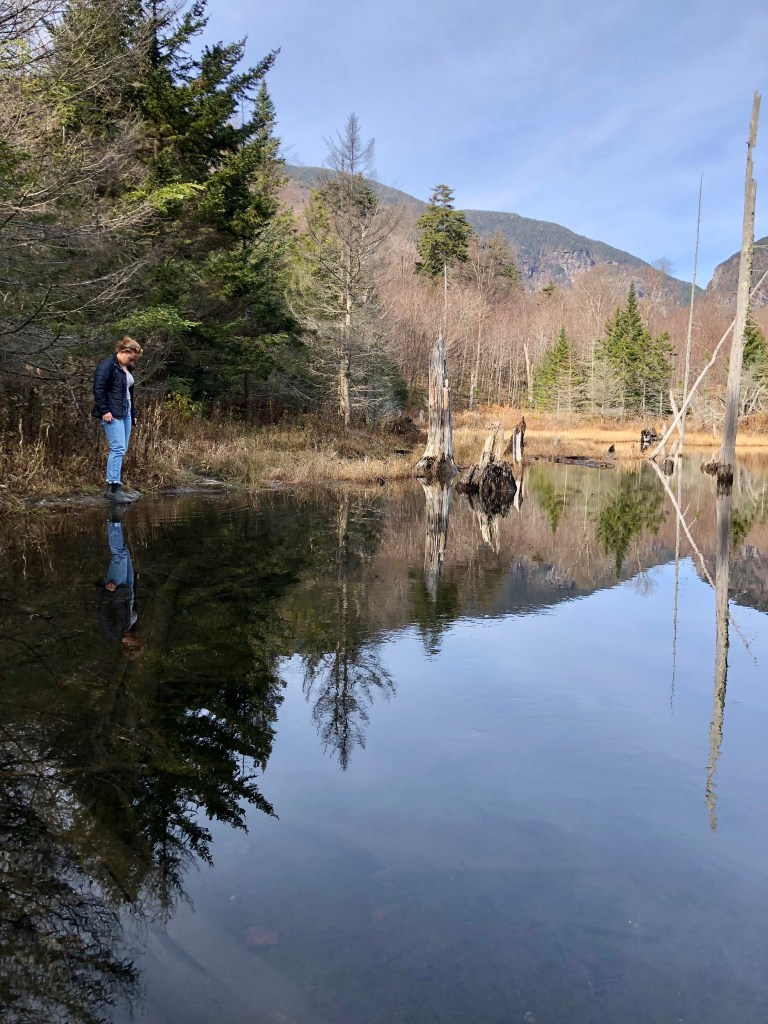
This photo sums up November — little remainders of green, intermittent mud, and a long road ahead. It’s not all bad news, for sure. November twilights are the loveliest — pale blue and blood red.

On Anne Sexton’s birthday, a line from this poet: “Put your ear down close to your soul and listen hard.” 

What could be better advice for November?

Frost Slivers.

Hardwick, Vermont

Vermont November is the month of introspection.

Beloved friends from long ago stop by for coffee and conversation on their way from here to there. We’d last seen them when we first moved in this house, less five years ago.

We take that figure of five years and turn it around and around — so much has happened in those five years. As with everyone I meet from afar these days, I ask what’s happening where they live. The conversation has a strange, almost wartime sentiment, as we compare notes.

In mid-afternoon, I bury daffodil bulbs. The soil has already begun to freezing. My bare fingers burrow through silvers of white frost, the teeth of winter beginning to grow. Finished, I brush off my hands on my jeans and stow my shovel in the barn.

Planting Bulbs…

On this frosty November morning, a few lines from Rebecca Solnit’s newest book:

To garden is to make whole again what has been shattered: the relationships in which you are both producer and consumer, in which you reap the bounty of the earth directly, in which you understand fully how something came into being. It may not be significant in scale, but even if it’s a windowsill geranium high above a city street, it can be significant in meaning.”

Woodbury, Vermont

Brief Pause. Sunrise.

Driving into Greensboro this morning, I pull over at the lake. The mist is suffused with crimson from the rising sun. I have the odd sensation I’m walking in an Impressionist painting, shot-through with sunlight and wet, rising dew. A pink bird dips into the water, and I hurry along the frozen shore, wondering at this odd creature.

The bird is a common, ordinary seagull, floating along in this morning, just like me. Thursday morning.

The bottoms of my shoes

are clean

from walking in the rain.”

— Jack Kerouac