Ordinary Mystery.

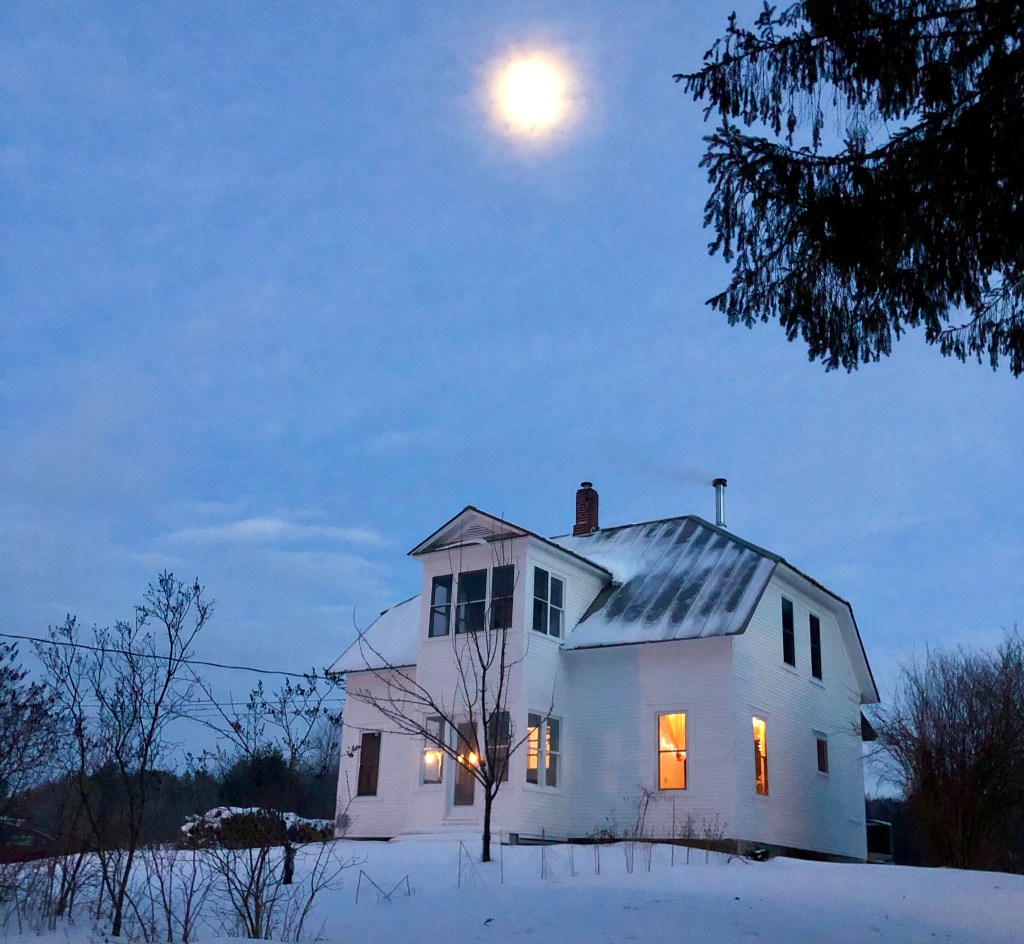
The moon shines brilliantly tonight as I walk down the street to the co-op for cheese and cauliflower. Lady Moon: round as a dime and luminescent like no earthly thing.

In the best of times, January can rage like a shrieking stranger, a visitor who’s arrived with too many needs.

This year, time has slowed to incomprehensible. We wake; we do our things. Work and email. I paint a room. I endeavor to write another book. I keep Unstitched moving along.

The ordinary happens: snow falls. All day and into the night. When I wake in the morning, there’s inches and inches of fresh, sparkling snow. It’s not a blizzard, not feet upon feet. I have little trouble finding my Subaru in the morning. But the snow sugars our world for this day in utter beauty.

The rest of everything is still there — the pandemic, the crumbling American Empire, the chaos of human relationships in my house and all around — but walking home, the cold is so sharp that the snow squeaks beneath my boots. For a moment, I’m a child again, mystified that fluffy snow can yield a squeak. But there you go. A mystery incarnate.

Here’s an interesting essay emailed in by a reader about growing saffron in Vermont — yes, saffron & Vermont.

Eh, Winter.

18 below zero this morning.

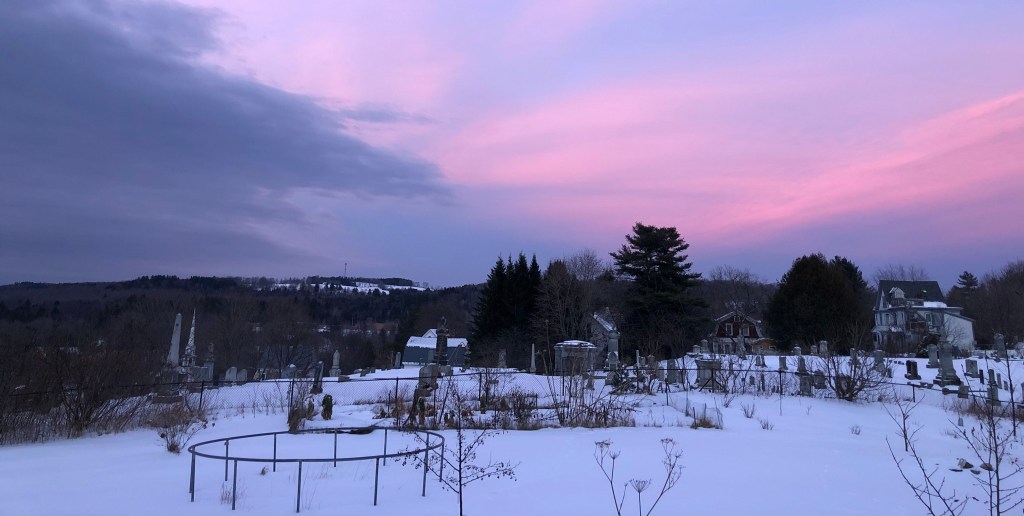
The cold comes at my face like a knife when I take out the wood stove ashes. The early morning is perfectly still, full of sunlight. This is not the songbird season.

I’ve now lived through a few dozen Vermont Januaries, beginning as a young woman when I spent so many January nights walking around beneath the winter sky, amazed at all those stars in the deep country dark. Januaries of nursing babies, of a long driving commute, of sledding and baking bread, and enduring the beginnings of cabin fever’s madness.

Always, there’s the cold that reminds us immediately of our own fragile mortality and an inevitable thaw. By the end of the month, daylight returns in a rush. In these chopped-up days of uncertainty, I remind myself of these constants.

We forget about the spaciousness
above the clouds

but it’s up there. The sun’s up there too.

~Naomi Shihab Nye

‘Ask Me.’

Twilight drags out again — not a sign of spring by any means but a hopeful sign. The light’s returning to us. After work, I rush through my outside chores, then keep walking and walking. I’ve somehow slightly twinged my knee, and so I walk with the faintest of limps, which amuses my athletic daughter no end. Why wouldn’t your body hurt? she asks me.

We live in such a crazy, mixed-up time. Some of this is just us — a high school student, a grown daughter, four jobs between us, an EMT class, a recently published book and another I’m writing, an absent father, my single motherless — and then a world where the Expected Everydayness is suddenly flipped inside out. The rules have all changed, or at least it’s worth rethinking all the rules.

No phones, ever, at dinner. But then my youngest asks why? and we call my brother. He’s working at his brewery and steps into a quiet place. My daughter and I eat calzones and talk skiing and Covid. We talk bread making. And that is really darn nice.

“’Ask Me’

Some time when the river is ice ask me
mistakes I have made. Ask me whether
what I have done is my life. Others
have come in their slow way into
my thought, and some have tried to help
or to hurt: ask me what difference
their strongest love or hate has made.

I will listen to what you say.
You and I can turn and look
at the silent river and wait. We know
the current is there, hidden; and there
are comings and goings from miles away
that hold the stillness exactly before us.
What the river says, that is what I say.” 

— William Stafford

Kindling.

Kitchen table, Hardwick, Vermont

In below zero temps, I stop by the library on my way home from work to pick up an interlibrary loan book. My friend in her mask runs down from her balcony office, and we huddle against the library’s 100-year-old radiator.

She tells me about the death of a person in town, from Covid. My friend is wearing a sweater from yarn she spun and dyed, from goldenrod blossoms she gathered. The sweetness of early fall is a long, long way from us. I’d been thinking that someday these days will be but a remembrance to us, and here I’m hearing word of family who will never forget these bitter January days.

I finish the afternoon chores I’ve set out to do — buy cheese at the co-op, get the mail at the post office, stop by the superintendent’s office to sign the high school budget warning we voted on last night. At home, I feed the wood stove and the cats and set pizza dough to rise.

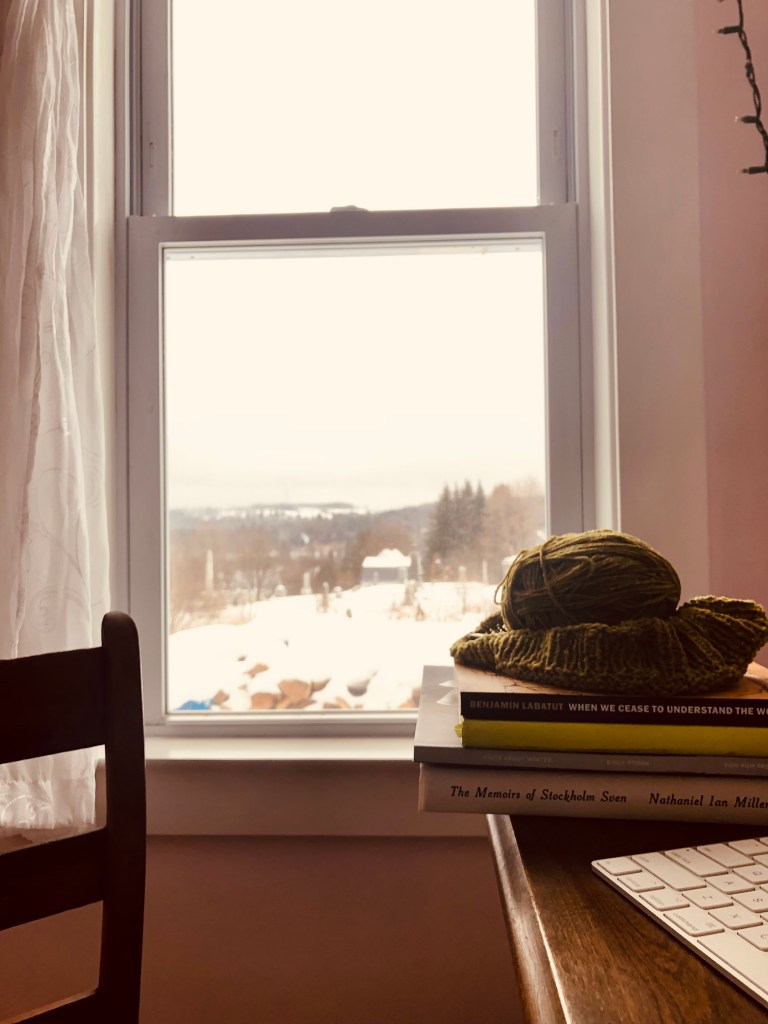
Then I do my final outside chore — I gather bits of bark and kindling from the barn floor and a few dry sticks into a cardboard box. In the early, dark morning, I’m up first, and this kindling box is my easy way to begin the day. I think of it as a little gift to myself.

The cold is fierce around me. I stand in the barn, holding that box in my leather gloves, thinking of nothing at all. Just standing there.

Onion Skins. Monday Morning.

In Vermont, winter has begun in earnest. My daughters ski in snow-and-freezing rain, then return home to sprawl around the wood stove with hot chocolate and homework. The red tulip bulbs I planted last autumn seem like a dream.

I carry the compost out, and a cold wind rushes over my potato patch.

My daughter makes toast this morning before heading to work in the bitter dark. I remember the winter she was four, and I baked a red velvet cake with her, to brighten our world. Little things, I remind her, are the stuff of our bigger lives. Day by day, towards spring ephemerals.

…. you who want to grasp the heart

Of things, hungry to know where meaning

Lies. Taste what you hold in your hands: onion-juice….

— Suji Kwock Kim, Monologue for an Onion

Order. Gratitude. And Other Things.

Sunrise, Hardwick, Vermont

January — the time of year when ash from the wood stove has settled into the crannies of our house — beneath the couches and along the woodwork. I listen to The Daily about FBI files released about the insurrection a year ago and take a soapy rag to my house.

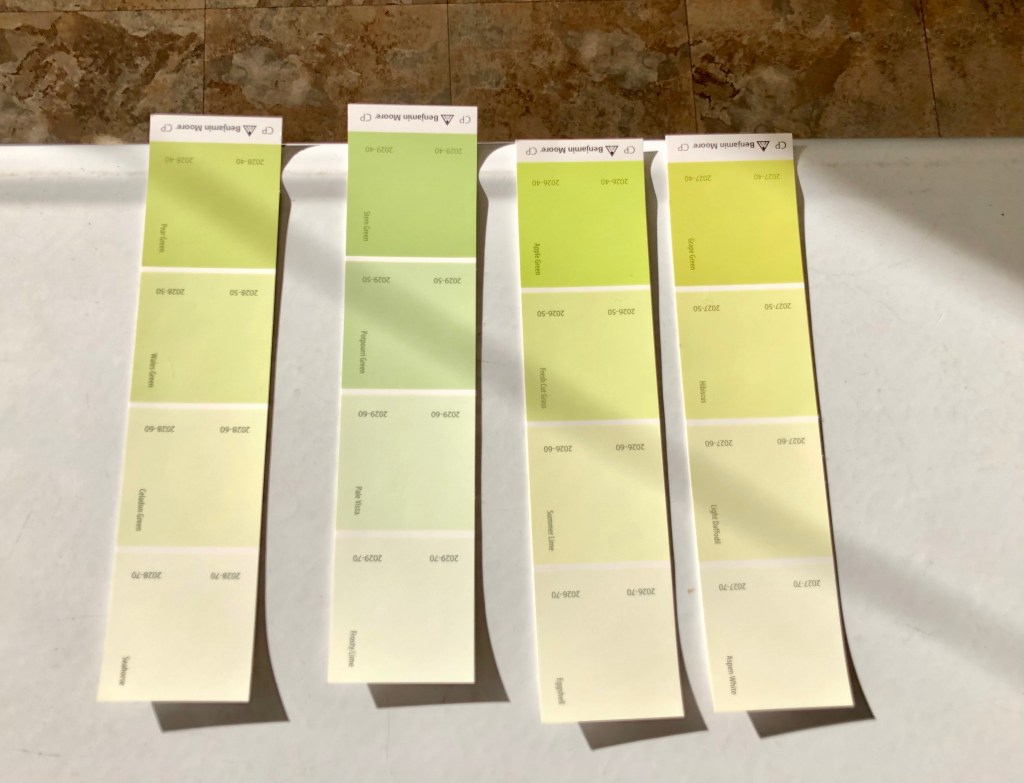
I tell my daughters I’ll paint the walls of the upstairs hall spring grass green and stencil dandelions around the doors. What are you doing? they ask.

Some people are drawn to chaos. I crave order, a schedule, neatly pencilled lists to guide me through my days. To write, I travel to hard places, and I want to return to order. All around us now, chaos streams in, as the pandemic turns our world inside out. In the midst of this, I rearrange my woodpile. In the evening, while my daughter writes a school paper, I take the compost out to the bin. A light snow falls, sparkling in the light through our house windows. There’s no one out, and I keep walking. I head down the road and stand on the sidewalk. These neighbors have fully decked out their crab apple trees with twinkling colored lights. In my younger years, I would have scoffed at the use of electricity, much as I once hated paper plates.

Now, in the dazzling bits of snowflakes, I stand there for the longest time, thinking of nothing at all, just taking it in.

On a different note, Dr. Mark Levine, Vermont State Health Commissioner, read and blurbed Unstitched. I am among the many, many Vermonters who look to Dr. Levine as a beacon of calm, rationality, hope, and decency, as he’s guided our state through two years of a pandemic. In the mist of this, he took the time to read my book and called it a “tour de force.” Endless thanks, Dr. Levine.

Unstitched “…is both a page-turner and a primer in understanding the many complex dimensions of the opioid crisis in a rural state, where the reader accompanies the author in her own recovery and process of discovery. Ultimately, it is impossible for any of us to be totally disconnected from the impact opioid use disorder has on our communities, and it is through reading Stanciu’s skillful, compassionate and thoughtful rendering of personal stories that we can all gain valuable insight, diminish harmful stigma, and foster true healing.” — Dr. Mark Levine, Vermont State Health Commissioner