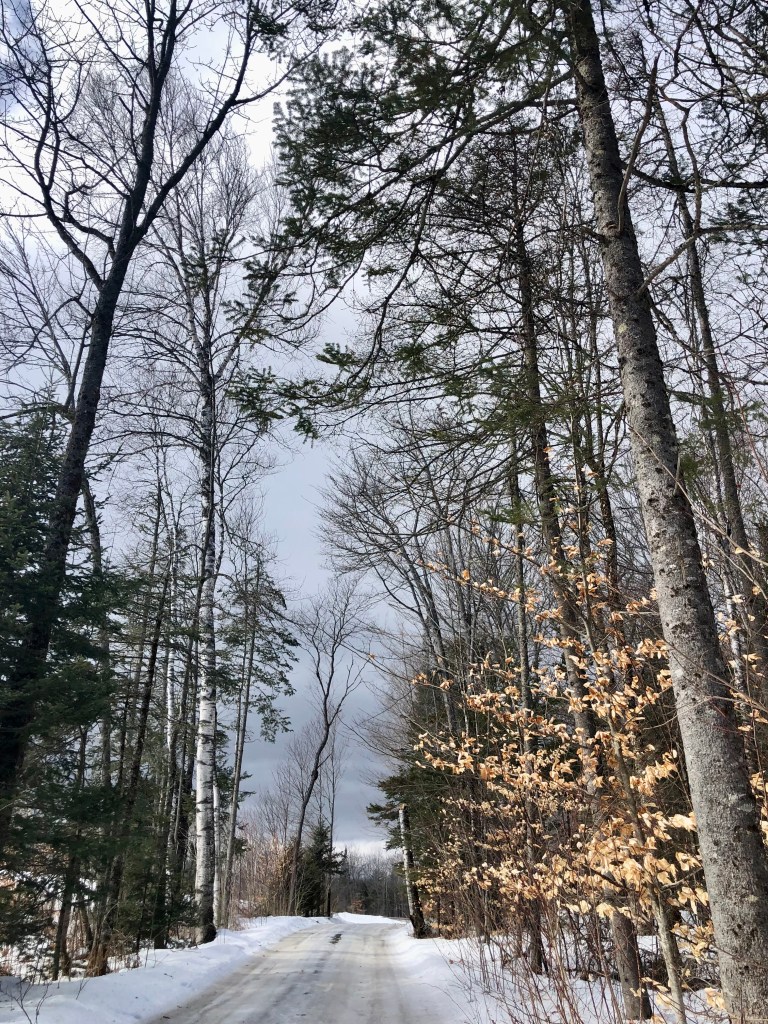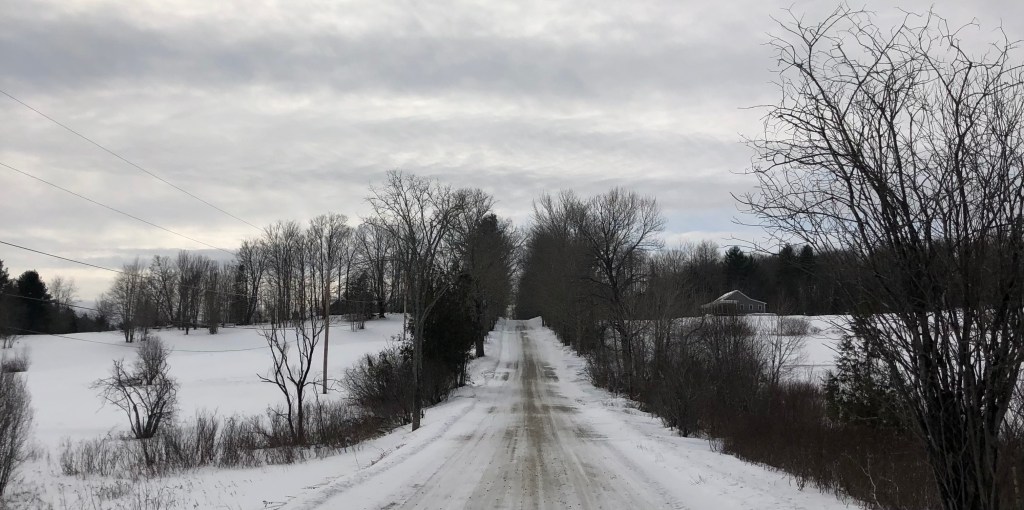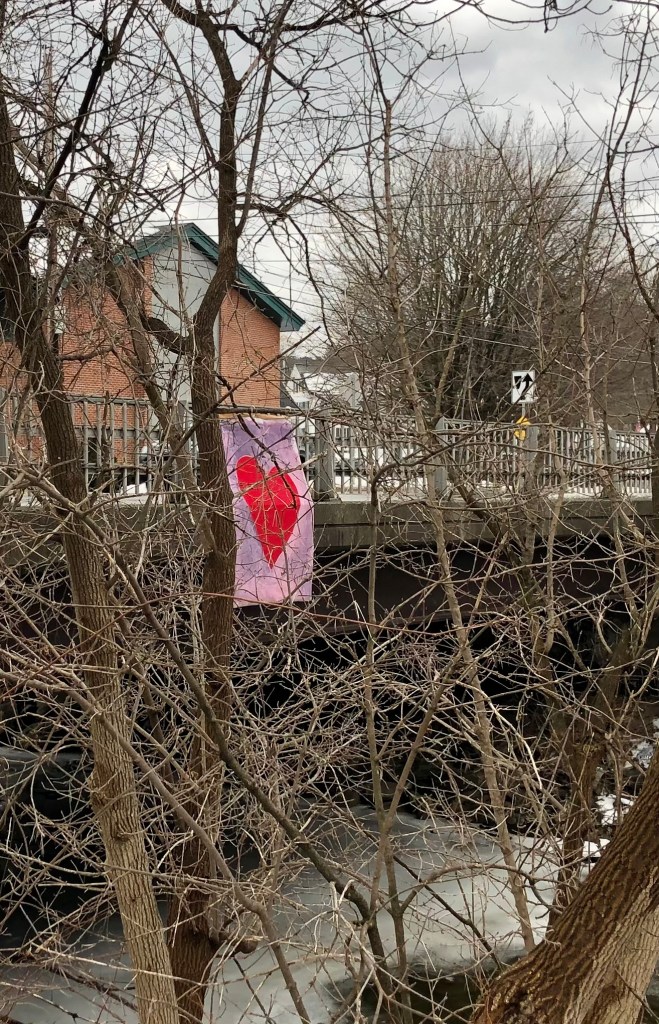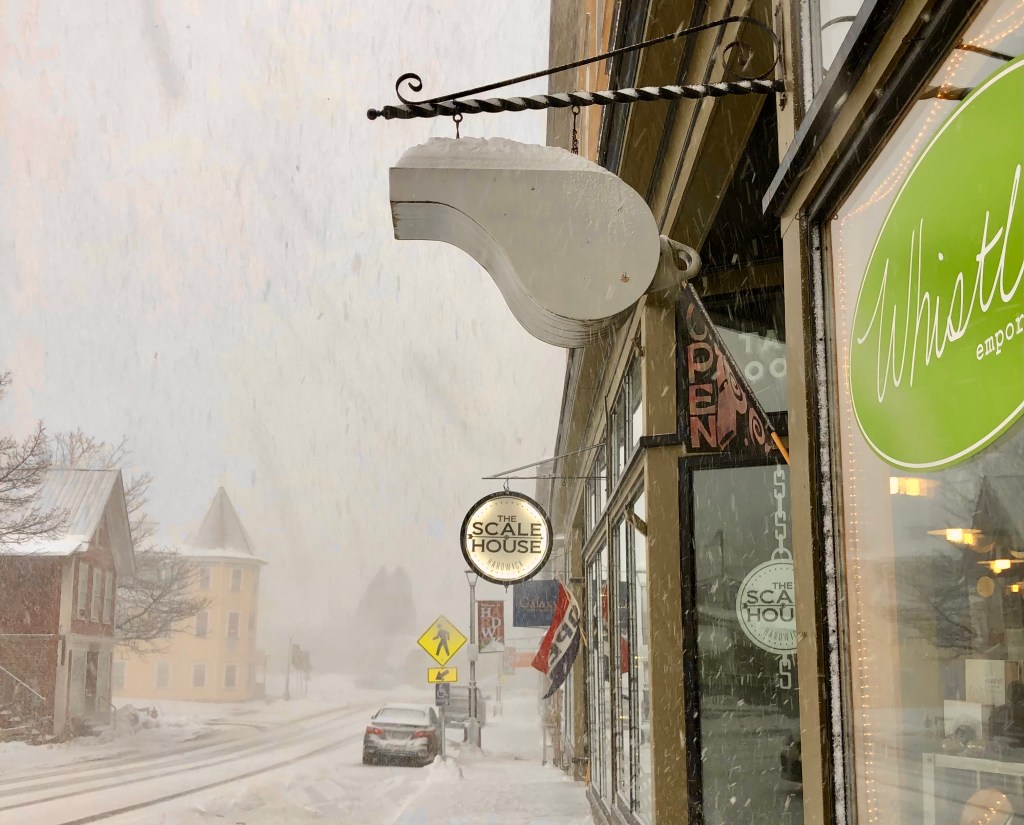
Squall. Blindness.

Hardwick, Vermont

Right before the pandemic shut down the world two years ago, I drove with my youngest daughter to the New Hampshire village when I had spent ten years of my childhood. My family no longer lives there. An old high school flame had contacted me around that time, and I was half-thinking I might look him up some day. My daughter and I parked at the end of the street where I had walked with my siblings countless times, and then past the house where we lived and into the library when I had spent so many hours, dreaming of my life to come.

In a strange, almost sepia-toned kind of way, I felt I had been able to step into that past and see again the sweetness of it — something that seems so often lost in memory.

There’s that famous line from Tom Wolfe that you can’t ever go home again, but these days I’m wondering if that’s because you can’t ever really leave your home. I read that novel in high school, in that beloved library, a great big novel that I devoured with such enthusiasm.

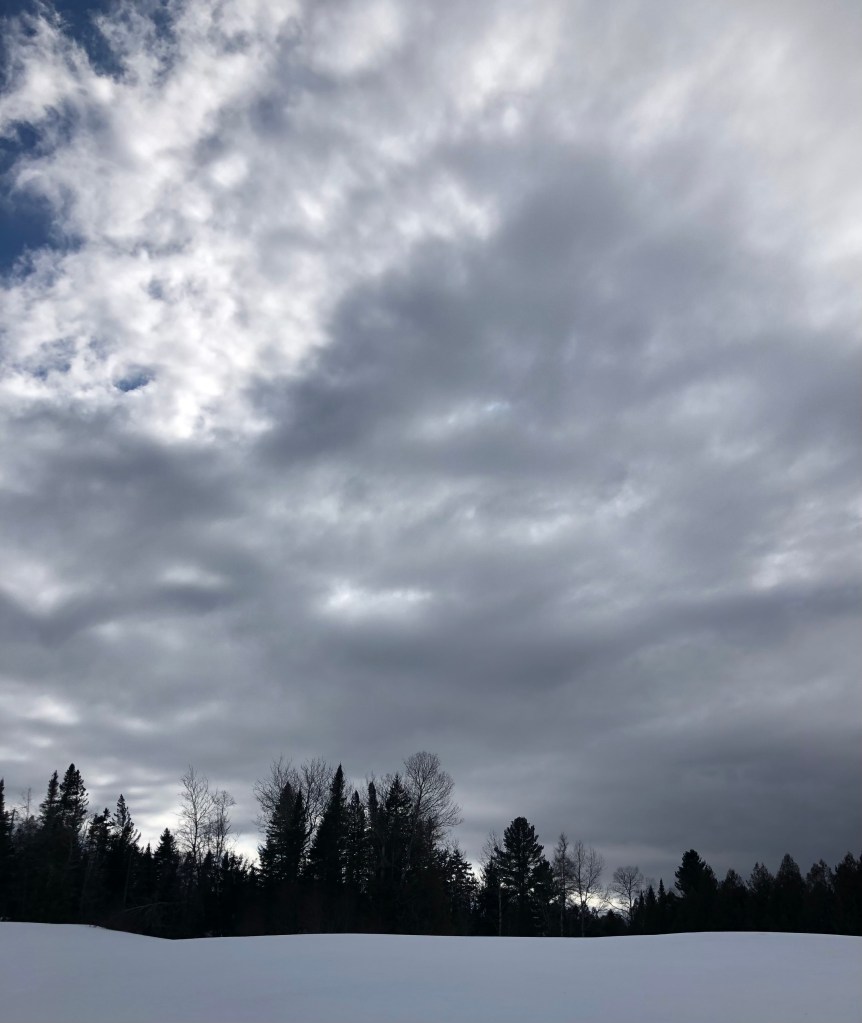
Twenty-five years ago, a young woman driving a Subaru Justy ran into my VW Rabbit in a sudden snow squall, just like the one above. I wasn’t wearing a seatbelt, and somehow miraculously survived wholly intact. The young woman sat in her car, crying, in the middle of the highway, and I stood outside her car, begging her to get out. “I’ve killed you,” she wept. I kept insisting I was fine. I was wearing a blue sweater my mother had knit me, and I spread my arms out wide. “I’m alive.”

Her insurance company gave me three thousand dollars, which my husband and I used to start a sugaring business. Much later, I sold pieces of that business and bought a house in the village. I’m still carrying that squall and that woman with me. I never saw her again. I hope she’s well.
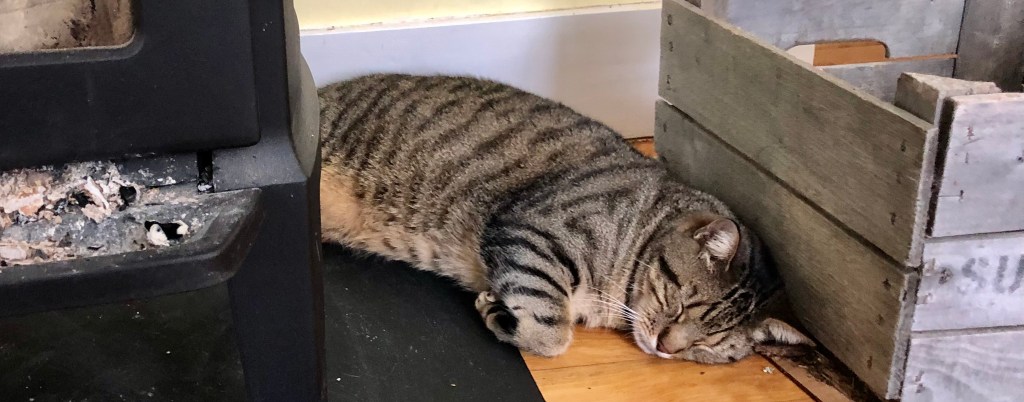
Wild Honey.

In what could be called Yet Another Phase of Life, I meet my oldest daughter at her apartment, and we take the dog for a walk up a dirt road where I’ve never been. It’s rural Vermont, and the road bends away from the river valley and winds steeply up a hillside. It’s sunny and cold, and there’s absolutely zero traffic on the road. The weather had turned warm a few days ago, rutted up in a foretaste of mud season, and now is frozen in deep ruts.

The trees end at a stone wall and a sprawl of farm fields, with an incredible four-story 19th century barn. Whoever lives here appears to be hosting a kids’ sledding party. The homeowner appears on the road, with his black dog, who coincidentally shares the same name as my daughter’s dog. We speak pleasantly for a few moments, and it’s clear not many strangers wander up this road.

My daughter snaps a photo of a dripping icicle from one of the little outbuildings.

The kids’ party slowly heads back to SUVs and station wagons, the kids red-checked, in snowsuits, carrying small white paper bags. The adults wave and smile at us.

A little later, I drive home through that river valley I’ve driven countless times now, alone or with kids or sometimes with friends. The road switchbacks through the shadowy Woodbury gulf, and shortly after that, I’m home again, feeding the wood stove and cats, then on the couch with my laptop and work, listening to the litany of reporting from the Ukraine. I remember clearly when I was 23, too, living in Vermont, and it seemed utterly normal to have strangers ask, out of curiosity and nothing more, where do you live and what’s your story?

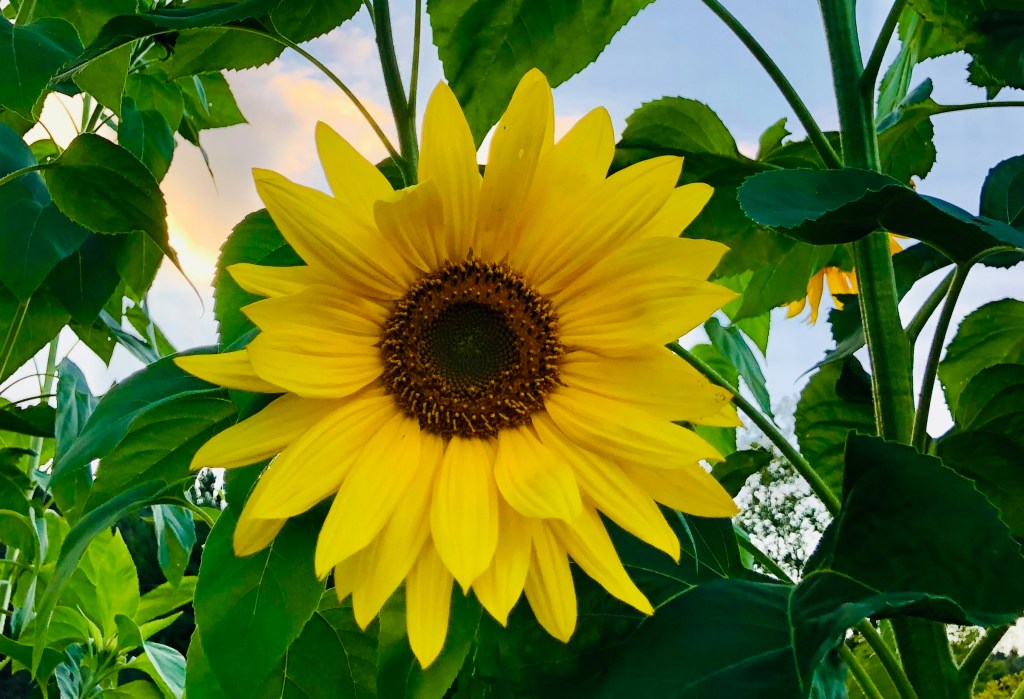
I sweep up the stove ashes and bring in more wood. The night promises more cold. How much I’d love to put my hands on sun-warmed soil and plant a garden of sunflowers.

Wild honey smells of freedom 

The dust – of sunlight 

The mouth of a young girl, like a violet

But gold – smells of nothing.

― Anna Akhmatova

Psalm for the Ordinary.

Ordinary Life, by Barbara Crooker

This was a day when nothing happened, 
the children went off to school
without a murmur, remembering
their books, lunches, gloves. 
All morning, the baby and I built block stacks
in the squares of light on the floor. 
And lunch blended into naptime, 
I cleaned out kitchen cupboards, 
one of those jobs that never gets done, 
then sat in a circle of sunlight
and drank ginger tea, 
watched the birds at the feeder
jostle over lunch’s little scraps. 
A pheasant strutted from the hedgerow, 
preened and flashed his jeweled head. 
Now a chicken roasts in the pan, 
and the children return, 
the murmur of their stories dappling the air. 
I peel carrots and potatoes without paring my thumb. 
We listen together for your wheels on the drive. 
Grace before bread. 
And at the table, actual conversation, 
no bickering or pokes. 
And then, the drift into homework. 
The baby goes to his cars, drives them
along the sofa’s ridges and hills. 
Leaning by the counter, we steal a long slow kiss, 
tasting of coffee and cream. 
The chicken’s diminished to skin & skeleton, 
the moon to a comma, a sliver of white, 
but this has been a day of grace
in the dead of winter, 
the hard cold knuckle of the year, 
a day that unwrapped itself
like an unexpected gift, 
and the stars turn on, 
order themselves
into the winter night.

Breezy Walk. A Stranger.

March in February — the fields are beginning to open, at least for this afternoon, for this particular moment. I park by the side of the road and take the long way where I’m going, by foot, my hat off, jacket unzipped, letting the wind pull at my hair.

I’m snapping a photo of a field and the sky when a car pulls over at the side of the road. There’s no one else around, and for a moment I wonder if he’s a landowner, angry or just curious what I’m doing. Wednesday afternoon, and no one is around.

He gets out of his mud-splattered white car, laughing, and asks for directions back to a paved road. He was visiting someone and took “the other way.” I laugh back, and we joke about where the other way in Vermont leads someone.

We stand there, joking, the dirt road both melting and already beginning to freeze again as we speak.

When he gets in his car and disappears down the road, I stand for a moment longer. I’d wanted nothing more than wind in my eyes, sunlight on my face. Fait accompli. Then it’s back to civilization for me, too.

“I feel my life start up again, 

like a cutting when it grows

the first pale and tentative

root hair in a glass of water.” 

— Jane Kenyon

Somewhere in February. Dirt Road Land.

Kents Corners, Calais, Vermont

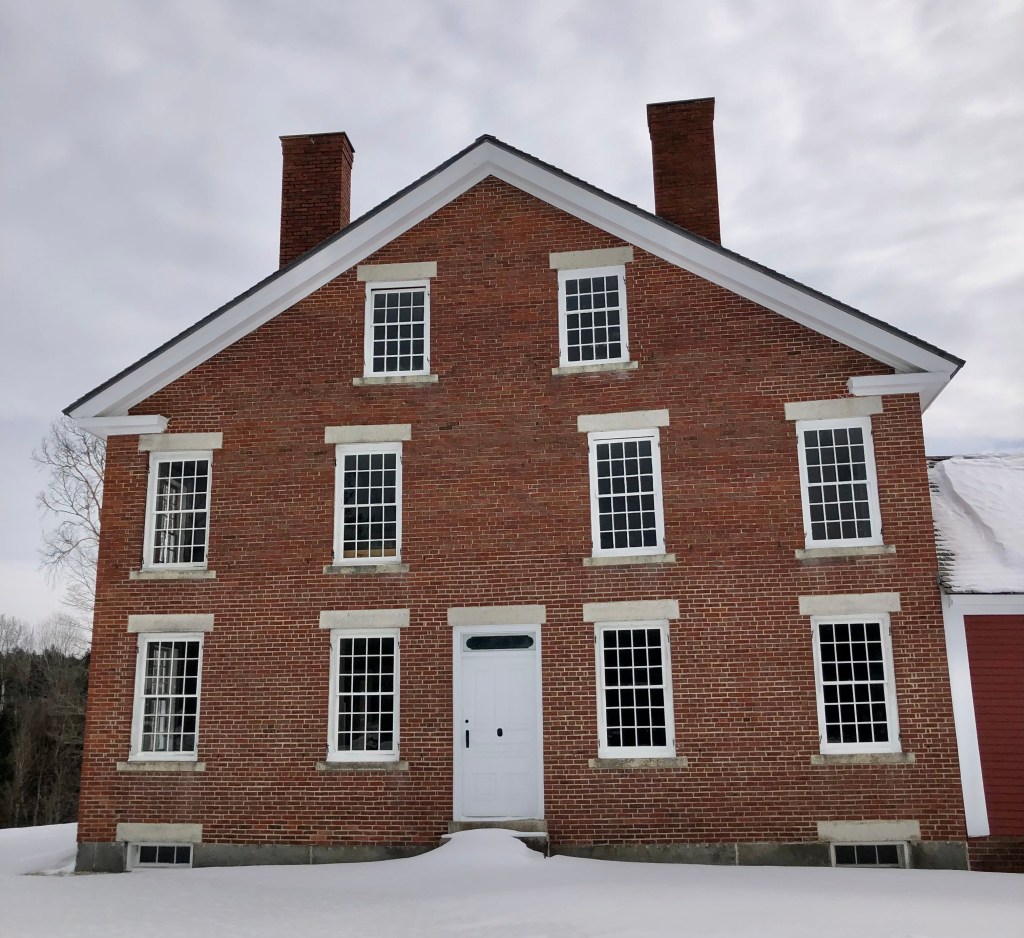
Every so often, a friend and I make plans to meet at a rural crossroads, at a brick inn that was once a stagecoach stop. I imagine in those days the crossroads was populated with chickens and horses, with people coming and going, not Priuses, but in wagons and on foot. My friend and I began this habit in the summer of 2020, and so the inn has been shuttered to the public all this time.

Walking, we pass a few other Sunday walkers bundled in coats and hats. But few people are out, and there’s scant traffic. In contrast, our conversation is packed — about raising kids and planning spring gardens, about relationships, about navigating the working world as a female in a patriarchy (why are these conversations still necessary, anyway??)

The thing about Vermont in midwinter is the stillness and what breaks that quiet. Icicles drip, freeze, and then thaw and drip again. Birds appear at our feeder in increasing numbers, then whisk away again. A rouge wind blows in a squall, soon chased away by the emerging sun.

Pandemic notwithstanding, robins return to our crabapple trees.

“Things are as they are. Looking out into the universe at night, we make no comparisons between right and wrong stars, nor between well and badly arranged constellations.” 

— Alan Watts

(And many thanks for Erika Nichols-Frazer for a review of Unstitched in the Valley Reporter.)

Holy Language.

Montpelier, Vermont

On a rainy day last week, I parked on a Montpelier side street and walked into town to attend an opioid summit as a writer.

The last time I had been in the conference space in the Plaza Hotel was nearly precisely two years ago, when I attended a conference as a journalist, charged by my editor to “make connections,” and spent most of it drinking coffee and eating sugar cookies and talking with a para-educator at my daughter’s high school about his experiences. Like darn near everyone else in Vermont, he has a side gig for income, and runs a seasonal bakery.

I sat at a table with people I admire who I’ve met through writing. For those few hours, I had the nearly heady experience of meeting new people; I had remember that deep pleasure. Years ago, I traveled on a train from Charlottesville, VA, to Chicago, and sat beside a man from West Virginia. We talked off and on for those hours. It’s been so long since I had that experience of just listening and talking with people.

For a few hours, I listened to stories about addiction and struggle, about suffering and redemption, about profound loss and grief. Listening, my heart grew full. Our stories and words, the act of telling and listening, of sharing the hard and the beautiful things in our lives, bound us together. The summit began and ended with singing. I’ve never been one for group activities, for open sharing, but at that moment, I utterly understood; I got it. The melody of our language and experiences pulled us together, acknowledging both the beautiful and the terrible about human life, and made our world shine brighter.

…. Grateful to have a terrific piece about Unstitched run in the Brattleboro Reformer and the Manchester Journal by Gena Mangiaratti. And The Rumpus included my essay about the backstory of Unstitched in their Voices On Addiction column this month.