Our World for this Moment.

In the Heidi book that I read over and over as a girl, Heidi’s invalid friend Clara visits the Swiss Mountains and becomes healed. These days, hiking in the New Mexico mountains, I keep thinking of this child’s book. In the high desert country, hiking through an aspen forest, I forget I’m in recovery, forget that scar on my abdomen, forget everything but the breeze against my cheeks, the desert sand and stone beneath my soles.

This is a family trip to see my aging father, with all the sweet and bittersweetness of family. Here’s hoping all of you are enjoying July wherever you might be. For me, too, these trips make the journey home happy.

“If you take a flower in your hand and really look at it, it’s your world for a moment.”
― Georgia O’Keefe

Keeping Company. Neighbors.

A friend mentions her mother has an art opening that evening in the sprawling building that was once the village inn. We’ve just returned from a walk and stand in a field where, 25 years ago, she sold homemade pies and I sold maple syrup. We each held a nursing baby, in those years.

Her mother lives beside me, so about eight o’clock, the time I’m usually brushing teeth or walking around the house putting water glasses and cat bowls in the kitchen sink, I pull on a sweater (hello, Vermont July) and walk downtown. Monday, hardly anyone is out this evening, as the sunset does its peach-and-rose watercolor magic along the mountains.

I’m amazed, again, at my neighbor’s talent, her unique vision a mixture of O’Keeffe and Cézanne. I stand holding her hand and talking, this woman who lived plenty of lives before I met her. When I weed my front yard garden, she’ll sometimes lean out of her door and holler, “Hello, neighbor!” her hair in plastic curlers.

I walk the long way home through neighborhoods where the children have been called in for the night. Stray teenagers are out; no one else. There’s no glimmer of moon, but the stars are winking into their nightly places. I take an extra loop, and the darkness folds around me.

I’m in this odd place where people I hardly know touch my shoulders, rub my growing-back hair, as if to confirm that, yes, I’m alive. Or I’m looked at silently, uncertainly. The cancer’s made me rougher and gentler. Disinterested in cattiness, willing to visit a neighbor when my body aches to lie down.

At home, I linger on the house steps, the tree frogs serenading. These summer days are long, long, with some hours of work. More than anything, I’m determined to finish a draft of this third novel, determined to sell this book, too. Stubborn my mother would tell me. You’re so stubborn. By now it’s dark, the scattered village lights cupped in the town’s narrow valley, the Milky Way a silent celestial river. My mother despised my stubbornness, this trait that mirrored her. Or maybe I’m completely wrong about that.

I water the hanging plants, and yet I’m not willing to go in for the night, lie down and read, sleep. Last November, I was sitting on these steps in the darkness, the news of having cancer fresh and raw. A different neighbor appeared and sat with me. We talked about opioids and THC. She told me about her husband’s death. In the chilly November, we sat in our coats, a quiet between us, she keeping me company.

“The purpose of poetry is to remind us
how difficult it is to remain just one person,
for our house is open, there are no keys in the doors, 
and invisible guests come in and out at will.”
― Czesław Miłosz

Blue Dress, Loving the Liminal.

I stopped by a friend’s house where I’d not been in over a year. A friend who visited on my worst days, the first hours after chemo when, drugged and miserable, I could barely voice a request, Please, pick up my library books to get me through these days. I leave with my heart full as a flower bouquet, thinking of her mixture of domestic gardens and where the wild slips in…

Now, midsummer, the days as long as anyone could wish for. The cats and I are up with the sun spilling over the horizon, for kibble and coffee and more coffee. My daughters and I meet to do humdrum things, buy cat food and toothpaste. Walking on Vermont Land Trust property where we’d never been, we discover a children’s garden and wander through tunnels of grapevines to a toddler-sized table where we kneel, surrounded by walls of mammoth sunflowers.

It’s an ordinary day. We eat lunch, and my oldest buys chocolate cake, and we keep talking about the things that are unique to Family Us and the things that aren’t, like the news of Stephen Colbert’s imminence disappearance and the mad mad world.

In the sunlight, moving neither quickly nor slowly, we wander into a thrift store. As we wander around, I remember that this is a place where, last fall, I thought I would never return, that these ordinary days that seem so inconsequential would cease with my life.

I buy a summer dress for six one-dollar bills and nod a thank you to the young clerk who wishes me Enjoy!

I hug my daughters, hug them again, and in my own town again I pick up my library books and lie on the couch reading Jane Hirshfield’s words about liminality and poetry. Liminal, liminal, echoes in my mind. I close the book and walk my four-mile route along the river, the water murky and yet sparkling with sunlight shards as the current bends through curves and around rocks. I keep pondering liminal, that threshold between two realms, how I’d been in that thrift store numberless times, sometimes cheery, others frustrated with how the world wears you down, through parenting and worrying and hardship.

Today, I left that store with a folded piece of blue and white cotton, my body and soul electrified as if I had quaffed sunlight. Liminal. My daughter reminded me recently of that long April day that I broke, the day I cried all day long in the Dartmouth emergency room, and she kept going outside to call her sister. In a windowless room, I was desperate for spring sunlight. Hirshfield writes, “The threshold brings its riches, but its barrenness contributes as well.” Liminal.

“On Climbing the Sierra Mountains again after 31 years”

Range after range of mountains
Year after year after year.
I am still in love.

~ Gary Synder

In the great [and holy] darkness.

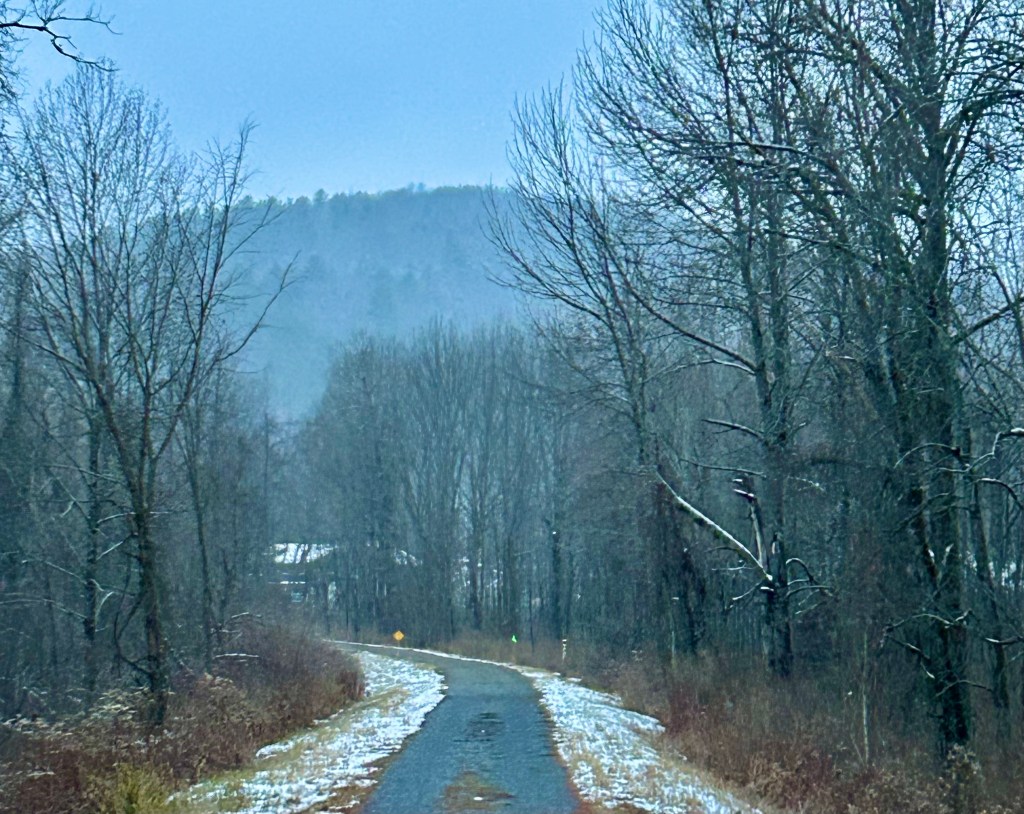
In these sultry July days which I love, I walk in the evenings. Wildfire smoke from Canada renders the sun bloody. In the heat, there’s few folks out. I often follow the trail along the river to the pastures where cows graze. The air, fat with humidity, is redolent with wet earth and cowshit. The smell reminds me of those childhood camping trips and those journeys in my twenties when we explored the West, driving around with Rand McNally and pitching a tent in a forest or farmer’s field.

The world indeed might be going mad, the planet hurtling into fire and heat. On these July evenings, though, it’s me and those cows and the wildflowers blooming rampantly. In the night, rain patters. I leave the cats sleeping in their hot fur and slip outside. It’s so far along in the night that this village is sleeping, too early yet for milk trucks, too late for teenagers. I sit on the steps in the tiny cool bits of raindrops, tree frogs and crickets chorusing.

I’ve posted this poem before, but Hayden Carruth is always worth reading again, and this remains one of my favorites.

The Cows at Night

The moon was like a full cup tonight,
too heavy, and sank in the mist
soon after dark, leaving for light

faint stars and the silver leaves
of milkweed beside the road,
gleaming before my car.

Yet I like driving at night
in summer and in Vermont:
the brown road through the mist

of mountain-dark, among farms
so quiet, and the roadside willows
opening out where I saw

the cows. Always a shock
to remember them there, those
great breathings close in the dark.

I stopped, and took my flashlight
to the pasture fence. They turned
to me where they lay, sad

and beautiful faces in the dark,
and I counted them–forty
near and far in the pasture,

turning to me, sad and beautiful
like girls very long ago
who were innocent, and sad

because they were innocent,
and beautiful because they were
sad. I switched off my light.

But I did not want to go,
not yet, nor knew what to do
if I should stay, for how

in that great darkness could I explain
anything, anything at all.
I stood by the fence. And then

very gently it began to rain.

… send what you will, I will listen.

This winter, I joined a Dartmouth Writing Circle for cancer patients. At that time, my waking hours were pretty much confined to the couch, endeavoring to stay alive, and I thought why not? I’ve kept on with this Circle. Compulsively, I keep writing about disease, but others write about aging parents, children and memories, picking strawberries — the necessary pieces of our everyday lives. Their poems and short essays amaze me. Maybe the lesson is this: suffer from a disease, pay attention, unfold your heart.

So yesterday, another trip to Dartmouth, but this time not to the door of the ER or 3K — the cancer center. My youngest daughter had signed up to walk in The Prouty, a weekend of fundraising. The four of us drove together, my daughters drinking coffee and laughing in the front seat, the boyfriend and I in the back. In the thousands of participants and volunteers, I met a few of my Writing friends as if kismet.

My family ate doughnuts and drank chocolate milk. We walked and ate watermelon and the sandwiches that appeared on tables as if by magic. At a long table, we lingered beneath a white tent, admiring babies and small dogs. It was at once a family event (my family, who pulled me through this winter) and a community embrace. When my daughter signed up (and a HUGE thanks to those who donated to her team), I didn’t, as I could hardly stand two months ago. Walk a few miles? Forget that. Now, my legs gaining muscle, my body healing, I walked between my daughters, so full of youth and quickness, of wit and curiosity. So profoundly of this world.

We live lives of forgetting, but I have not forgotten those long days in 3K’s infusion center, the chemo drugs dripping into my veins while I stared through the window at cardinals in the snow, or that night in the ER when the MDs in scrubs posed the possibility that I couldn’t finish the chemo treatment, that enough was enough for my body which was now, I noticed, described in my chart as frail. An adjective I immediately hated. Fuck frail. By that time, my flesh and my blood was suffused with zofran and dilaudid, lactated ringer’s, with the mighty rituximab…. But even though my bones and my flesh are my domain, my life is not. There’s a tendency in my circle of leftish rural Vermont to look at the medical world askance — an indulgence that immediately dried up for me when I first arrived in the ER. All along, I’ve asked for the data and facts; what am living through now and what might this mean? Beyond this, I was encouraged to embrace the mysterious complexity of disease, data, determination, the universe’s toss of the dice. When I said, go ahead, make me more frail, I’ll endure, the Good Doctor made that possible.

I have not forgotten that I am alive by the grace of medicine and strangers, by my family, by illusive fate itself. I carry this knowledge as all day long I go about my life of writing and working, of watering the flowering nasturtiums, eating peaches, reading novels and poetry and cancer research beneath the apple tree, as I walk through the sultry July twilights, that this will someday — this year, or 30 years from now — change for me, too, as it changes for everyone.

But for now, luscious watermelon. Later, a family dinner on the back porch, summer sweet.

From Ruth Stone:

… send what you will, I will listen.
All things come to an end.
No, they go on forever.

Living in the Edge.

As part of my heal-from-cancer and keep-the-cancer-from-returning approach, I borrow my daughter’s yoga map on Thursday mornings and walk through the cemetery and along Little League field to the village. The studio is above the town’s coffee shop. The windows frame the town’s main intersection of routes 14 and 15, the Lamoille River, flanked by July’s burgeoning green.

As I lie on the polished maple floor, the sound of the traffic comes and goes. This calmness reminds me of those years I lived in Brattleboro, pre-internet, when the main source of my twenties’ activities was walking to the public library or a favorite bar, hiking, or hanging out with my roommates in the house we rented, running our mouths about the state of the world. There was a lot of laughter, a whole lot of discussion about morals and relativity.

This particular Thursday is the anniversary of the floods in 2023 and 2024, exactly a year apart. The class leader repeats a theme of in the edge, that fertile and sticky place between terrains. I think of this summer’s profuse wildflowers – trefoil and asters and Canada lilies – that spread between the river and the fields. Afterwards, I spread out my notebooks and papers and laptop in the coffee shop, plunge into a hard piece of work. I’ve no illusions that yoga will set me floating down any peaceful river. The edge, that complicated habitat, has long been my domain. Friends appear and tell me they’ve sold their house, are pulling up stakes and heading overseas. Around me, people come and go, talking and eating, figuring out or not figuring out parts of their lives.

Later, at home, the catbirds screech. A robin perches on the porch railing and studies me. The woodchucks scurry under the steps from den to woodpile, or have they slowed to a who-gives-a-damn saunter?

Winter, the edge terrain is a cold beast. July, I’m all in…

“Not so much a game
as a sphere,
a mystery.
Held up to light,
a small hole
into another dimension.” ~ Ruth Stone