Travels into Other Time Zones.

Santa Fe, New Mexico

My seatmate on the flight from Burlington to Denver chats me up. He complains a bit about the travel time, and then we kick around a few thoughts about what travel by Conestoga wagon would have been like. He says, You don’t come back from that trip.

True. This cross country flight is now familiar to me in the strange way of airline travel — through different airports, with people I’ve never met, juggling the odd variables of cancelled flights, rerouted paths, and so much human energy and mass, compelled to travel for so many unique reasons.

Talking, he and I figure out that we know two people in common, well enough that we can name traits we like about these people. A few hours in, I find myself in the same scenario that I’ve been in on prior flights — he pulls out his phone and then we’re talking about the Air BNB he’s about to visit, the friends he’s meeting, and the story goes on from there. True, I’m a captive audience, sandwiched between him and a young woman planning her wedding on a white board. What the heck. I’ve nowhere else I can go, and I’m hardly adverse to a few hours of laughter.

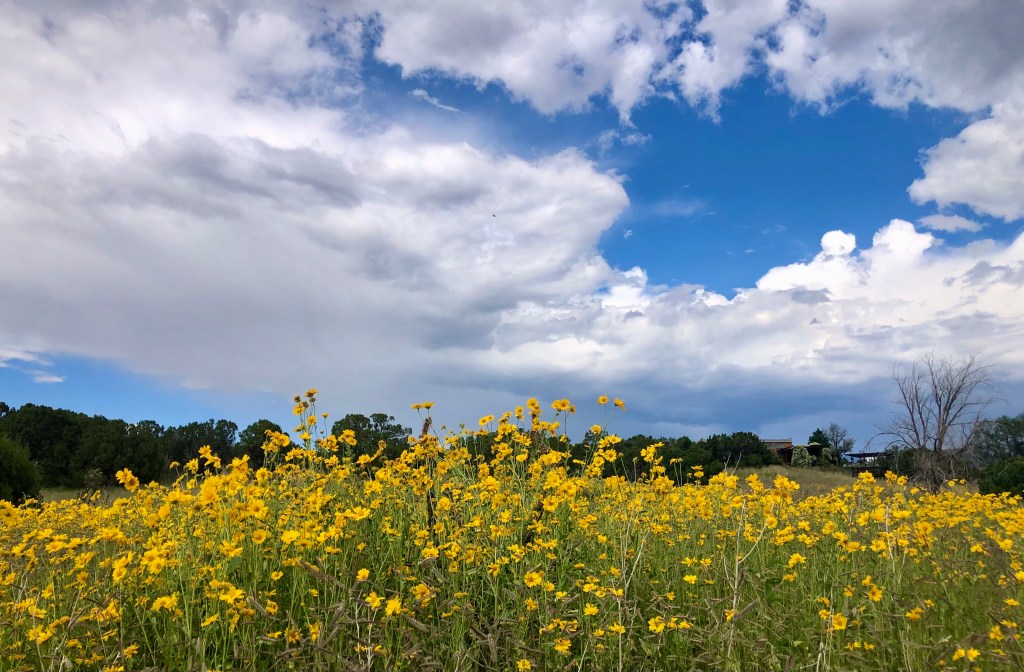
The moment I saw the brilliant, proud morning shine up over the deserts of Santa Fe, something stood still in my soul, and I started to attend. There was a certain magnificence in the high-up day, a certain eagle-like royalty, so different from the equally pure, equally pristine and lovely morning of Australia, which is so soft, so utterly pure in its softness, and betrayed by green parrot flying. But in the lovely morning of Australia one went into a dream. In the magnificent fierce morning of New Mexico one sprang awake, a new part of the soul woke up suddenly, and the old world gave way to a new.”

— D. H. Lawrence
Today. Yesterday. Tomorrow.

Sunday, we drive across the Connecticut River into New Hampshire. There, the mountains are much taller and rugged than Vermont’s shorn down ridges. I grew up (mostly) in New Hampshire, and granite in boulders and quarried slabs is as familiar to me as my kitchen knives.

I sit in the backseat, knitting, and all the way there and all the way back, I have the strangest sensation of a sewing needle linking these two states and the pieces of my life — girlhood and young motherhood and the cusp I’m on again as my fledglings head off gleefully into the wild. In New Hamsphire, we meet my brother for lunch in a leisurely way, nothing serious, batting around trips and ideas, family stories. We sit outside in the shade. As we leave, he tips back his head and says, What perfect weather.

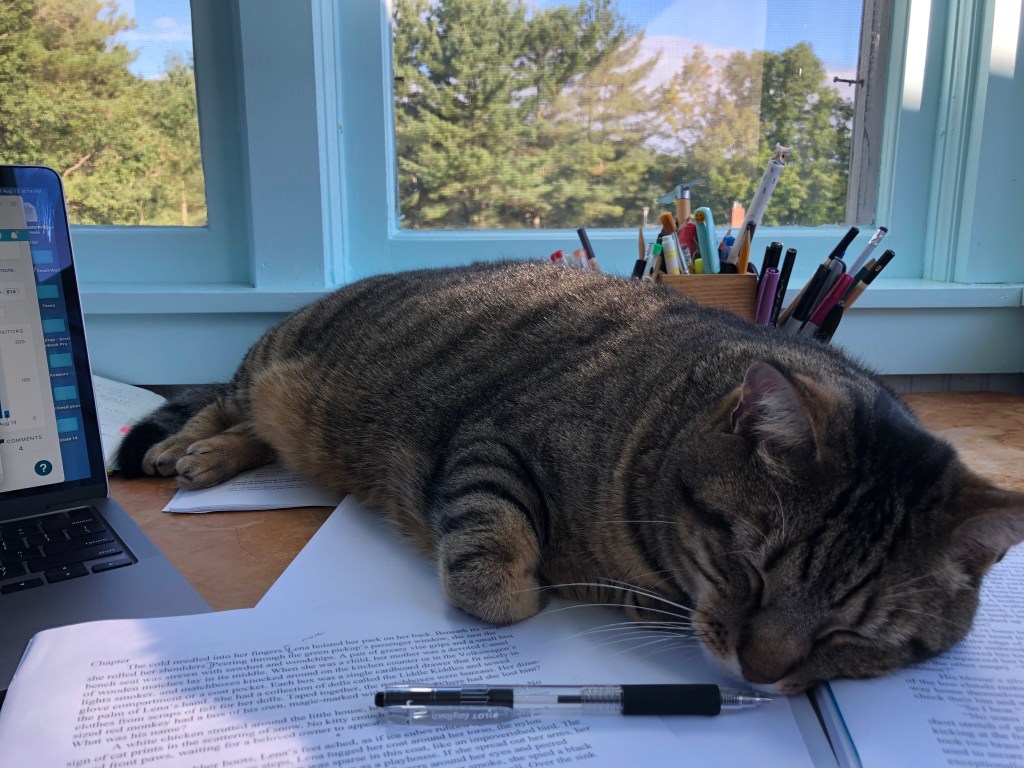
We return home with tiny cheesecakes in jars, a few groceries, a kind of sleepiness and fullness from the drive. We’re back in time to feed the hungry housecats their early dinner. In the garden, I pull up some gone-by marigolds and cucumber vines. Working, I think of all these little bits and pieces of our lives, how I often struggle to put these together. And yet, sometimes, how our lives are sewn together, as if miraculously. End of August. And now onto what I hope is a long sweet autumn.

Some things will never change. Some things will always be the same. Lean down your ear upon the earth and listen.

The voice of forest water in the night, a woman’s laughter in the dark, the clean, hard rattle of raked gravel, the cricketing stitch of midday in hot meadows, the delicate web of children’s voices in bright air–these things will never change.

— Thomas Wolfe

Kid Joy.

In a pouring rain, I pack up my car with recycling and trash. The empty cat food tins need to be out of my barn. My oldest stops by with her dog, and we stand in the open door of the barn. The barn’s inside is crammed with firewood in my fairly neat rows. Sometimes I imagine this space will be something else, but we moved here late enough in the childrearing years that the barn never became true kid headquarters.

The rain dumps. We stand drinking coffee and kicking around bits of this and that.

Truly, there are days when I wonder how the heck I’ve ended up at Alpine Heights in Hardwick, Vermont. I drive to the dump/recycling station. Years ago, when my oldest was in a carseat, the old man who ran the place took the time to talk with me. He told me to take my daughter swimming as much as I could, to enjoy summer, to savor her. He’s long dead now, passed on to the next world after a devastating accident. The dump/recycling world is run by savviness — plenty of things and money pass through here. The man asks what I’ve got and asks how I feel about eight dollars? I feel just fine about handing over eight singles.

My neighbors across the street had their water and sewer lines dug up and replaced this week. The contractor’s wife is someone I’ve known for years, off and on. Sometimes I meet her as she walks her tiny dog through town. When the contractor finished with the work, he gave the neighbors’ little boys a ride in his excavator. Such a simple thing, I think, and so much kid happiness.

Storywalk.

I often read other blogs filled with all kinds of interesting things and wonder. Where on the planet are you writing? So often, I begin a post with “The weather turns foul or cheers up, the leaves unfurl or fall off and die….” Weather is ever-present around here. And yes, we’re still swimming, but the days are already dimming.

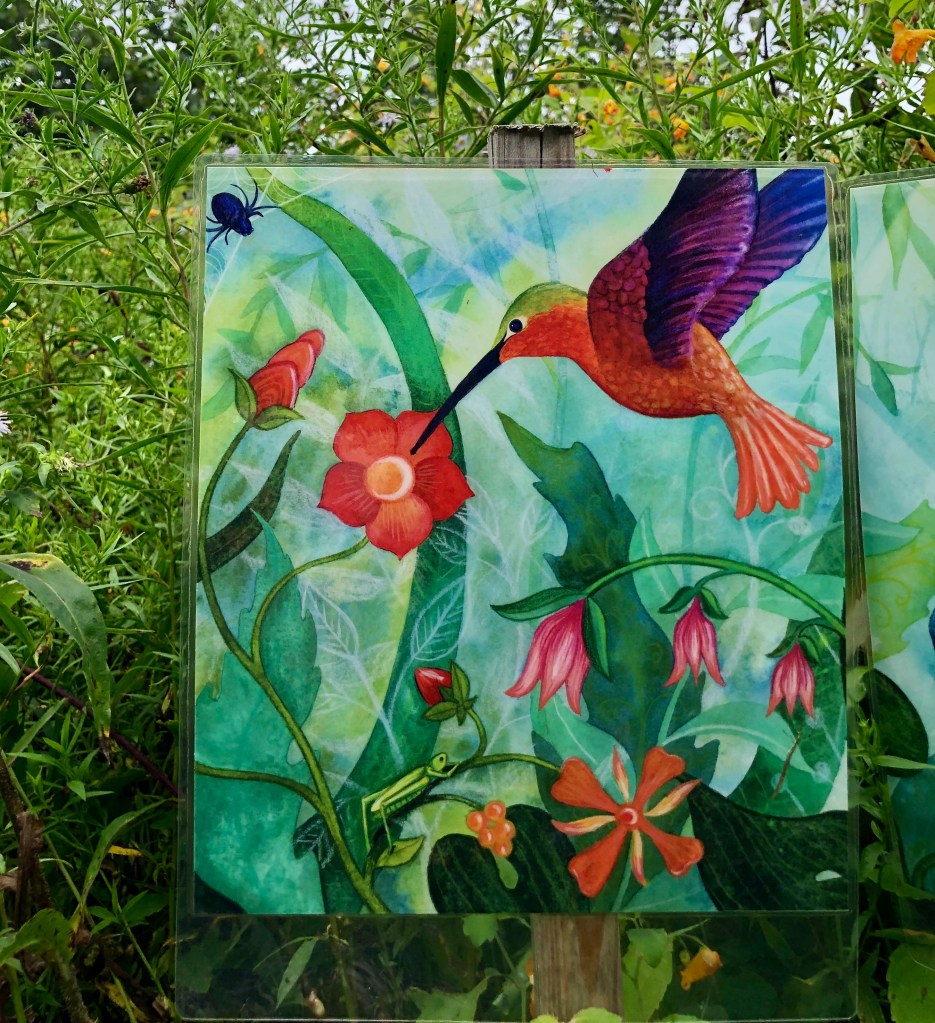
I found this lovely page from a children’s storybook along a path. The local children’s librarian put these on posts on a short path from the library to the lake. On my way into work this morning, I stopped at the lake and opened my lap. I worked intently for an hour, just me and three loons, and some woman who appeared with her two golden retrievers. The water lay flat and smooth, about as perfect as anything gets in this world.

Recently, I read over a few of Shirley Jackson’s terrific essays about writing. She writes, “The essence of the story is motion.” So, too, I wish we better understood this about life. That endless monologue running through my head… well, the walk through the woods is the essence of me.

Poem for Monday Morning.

Across the Street

By Austin Segrest

I ran across the street, I didn’t know any better.
Ran out in the street, I didn’t know no better.
I just knew a woman was there, though I’d never met her.

She sat me in her parlor, distracted me with trinkets,
milky glass birds and fish, distracting trinkets.
She said my mother would be fine, but did she think it?

The world was a blur of crystal wings and fins.
My tears were casked in crystal, wings and fins.
She was the first of many lady-friends.

The tree shadows shortened, she brought me a drink of water.
Morning matured, she brought me a glass of water.
I drank it so fast, she went and brought another.

I kept looking out the window, she didn’t ask me what for.
I watched out that window, she didn’t ask what for.
The seconds broke off and lay there on the floor.

I imagined my mother’s route, as far as I could.
Her long morning walk, followed as far as I could.
Nothing I could do would do any good.

Suffer the little children, and forbid them not.
Christ said suffer the little children, and forbid them not.
Said love thy neighbor, sometimes she’s all you got.

Washing Up.

Greensboro, Vermont

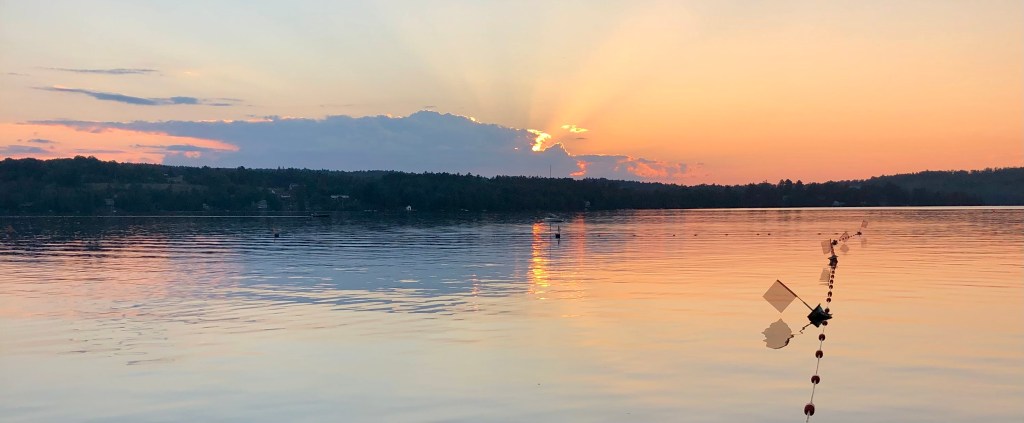
Late Friday afternoon, I swing by work for a few things and bring a friend. The day has cooled, and the evening is perfect in an August storybook way. Afterward, we stop by the beach where a few families are lingering with kids. The parents are clearly ready to head home. The children reluctantly leave the warm lake.

My friend and I sit on enormous pieces of donated granite that function as benches, admiring the spill of sunset over the serene lake, when an acquaintance drives up. He’s there for his daily swim. We kick around a few random exchanges, and somehow the conversation bends around to money. He tells us that his brother was a golf caddy in high school. Every night, he washed his tips in the sink and then ironed the bills.

We laugh and then swim. But later, driving home, I think about the teenage boy, decades ago, scrubbing up his tips, making them new. What was he thinking? And where did that take him?

Home again, the crickets sing mightily around my house. A moon hangs in the sky, and the constellations emerge. All that shadowy summer night, so much infinity.

A few lines from Brad Kessler’s novel North:

The Noonday Demon was invented at the monastery. You had to plumb the depths to reach the heights… Depression [at the monastery] is impossible to avoid; it’s where God enters — through the wound.

— Brad Kessler