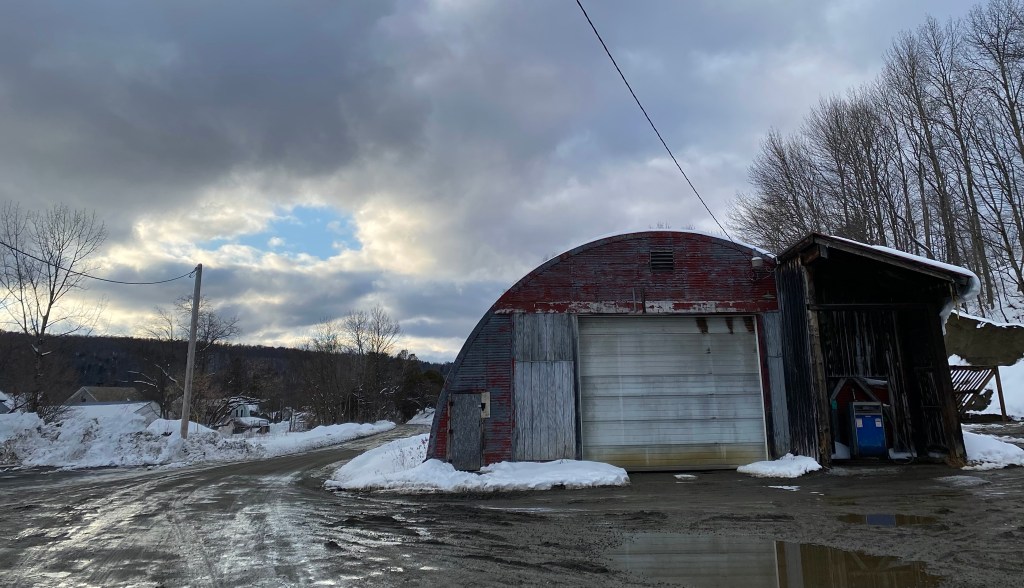
Pique.

Anyone who knows me knows that winter pulls out my mania for painting. In a fit of what I can only describe as sheer irritation, I bleach mold from the bathroom ceiling and then ask for primer advice at the hardware store.

The store is darn near empty, save for two clerks and a black cat who rolls on its back on the counter and flicks a pearl-tipped tail at me. A clerk walks back with me to the paint section. She and I have been on a first name basis for years. While my gallon of primer is on the shaker, she shares her bathroom ceiling painting experience, and I offer this small problem and ask her to solve it. We walk back slowly to the front counter. She’s been my height for years, but as we walk and talk, I realize she’s slipped down below my height, and my height is definitely (as my brother might claim) substandard.

A man in logger’s chaps pays for discounted Christmas tree lights and a Twix bar and grouses about the rain and the mud, and how can there be a January thaw when we’ve had no winter?

The clerk spreads my paint samples over the counter and asks if I’ve narrowed down any color choices. She lays one finger on the color named Sunshine. “This one,” she suggests.

I gather my primer, stir stick, the lightbulb for over the kitchen stove, and head out. Ahead of me lies an afternoon of careful work, of NPR and stories from around the world, so many places hemorrhaging in ways that far outstrip my tiny mold project. As I’ve always done, I join my head and hands in a creative project. My own imagination won’t heal the world, but surely it won’t harm.

Mapping, Metaphor, Motherhood.

I forget my map on my desk beside my eternal list (write thankyous, double check FAFSA submission, confirm E and J meeting….) and drive over the Canadian border shortly after sunrise. Luminous crimson stripes the clouds. Almost immediately, the land flattens from Vermont’s hard ridges to industrial ag fields, distantly studded with metal silos. Late December, and the terrain is more gray than white. I stop at a gas station and ask a woman who is emptying her car of fast food wrappers for directions. I don’t understand her accent, the slipperiness of French that eluded me all those high school French classes. She wants me to understand, repeating her directions, one hand waving a crumpled bag. I nod thank you, thank you, and turn back to my salt-crusted Subaru, miserable with my lack of agility with language. Aren’t I a writer?

At a crossroads, I have no idea which road to take, and the world opens up abruptly in dizzyingly wideness.

My intention is to drive to Montreal to meet my daughters. I hate driving the dullness of interstate and fear driving into cities, and I’ve made this infinitely worse by losing my map. For years with young children in carseats, I delivered maple syrup around Vermont, navigating by atlas and rivers, the sun and roadsigns, using my tools of snacks and a box of board books. I once pulled over and lifted a handful of pebbles from a roadside so my toddler could dump pebbles from one paper cup to another, satisfying her tired self.

Now: no map, no cell service, in a town whose name (ridiculously) I never learn, I pull a Streetcar Named Desire card ask strangers to point my way out. A teenager shrugs. An old man can’t hear me. Finally, an electrician in a truck gives me directions. We repeat his directions to each other three times, and then I roll out, my heart not full of faith, precisely, but enough warmth of optimism. May this new year bring out the generosity of strangers and of ourselves. Thank you all for your kindness and curiosity for reading.

You should keep on painting no matter how difficult it is, because this is all part of experience, and the more experience you have, the better it is… unless it kills you, and then you know you have gone too far.

— Alice Neel

Family Stories.

The cats eye the dog with disdain. The dog considers the cats a potential meal or simple annoyance; we don’t know. The dog sneaks into the kitchen and steals the bowl of chocolate covered stars which horrifies my daughters. In that tussle, the braver cat slinks behind the wood stove and regains his favored position.

My oldest has no heat in her apartment, worries about her houseplants, has heat and then again has no heat. She texts me before five in the morning, and then my brother and I lie awake and text each other through the bedroom wall. I write, looks rough in Buffalo. I make endless pots of coffee. My brother, the brewery owner, drinks beer. We play Concentration, Chinese Checkers, Wordle.

The bathroom needs painting, and we discuss paint options, how Steam might pair with Orange Juice like our father’s study. The remains could be used in our tiny dining room.

After he’s home, he sends me three photos. In one, my youngest as a tiny girl stands in a borrowed homemade dress with mud smeared to her elbows and daubed on her face. My oldest leans down from an apple tree, sunlight in the leaves over her head. My brother pedals a tricycle. I remember the summer day I took that photo of my youngest. We had stopped by a site where her father was building a house. So much mud, so much pleasure for this child. Years later, I saw that homeowner ice skating with his young daughter. How much I wanted to know if he still lived in that house. How well had it held up for him? Instead, we exchanged chit-chat about the ice, and I never learned his story.

In the dog’s absence, the cats retake their rug and wood stove territory, protagonists in their own cat-language drama.

Composite.

After the death of Ray McNeill, I scavenged a phone number for a woman who roomed in my freshman college dorm and phoned her. We hadn’t seen each other in years. She called me, years ago, after a mutual friend died unexpectedly from heart failure. Our conversation has no real point, no precise question I want answered. We agree we didn’t like each other, years ago, but can’t remember why. What was the contention and why did it matter so much?

Four degrees this morning. I’ve experienced forty below zero, but, good lord, four degrees is not compatible with prolonged human exposure. I carry the stove ashes out and stand for a moment, a few snowflakes drifting down from the darkness, illuminated in my kitchen window’s electric light. Below me in the valley, the scattered lights of the village glow: power still on here. All night, wind threw handfuls of icy snow at our windows. I lay awake listening and reading, my cat curled on my bed, wary of my visiting brother’s dog.

My youngest and I, as the initial rain set in, discovered a rainbow over the village. A fortuitous sign? All depends on how you read that, which way luck will run.

Soundtrack.

My oldest plays Noah Kahan as the soundtrack to her life, the young man who sings of loving Vermont in all its bareness and glory: I love Vermont, but it’s the season of the sticks

I pull over on the roadside. There’s no one around, not even a crow keeping me company. Solstice season, the precipice of one thing tipping into another, the darkest of the season tipping over into the real winter yet to begin. I am decades into my own love personal affair with Vermont.

Winter is the perfect season for a writer with its shocking beauty, the looming threat of frostbite, the profound metaphor of darkness and light, heat and cold, stillness and the edging-in resurrection of spring. On the deepest level, perhaps, winter reinforces the need for patience.

Noah Kahan sings: So I thought that if I piled something good on all my bad
That I could cancel out the darkness I inherited from dad…

How’s that for a variation of an Eugene O’Neill play?

Curious about this Kahan character? Check out Vermont Public Radio’s story.

The Present, the Forgotten.

Midday or so, I jam on my boots and head out for a walk down to the lake, leaving behind my desk with piles of hard questions. I’ve forgotten my mittens, so I walk with my hands in my pockets while the wind tears over the lake. The summer people are all long gone, houses boarded up against the elements and thieves. Ahead of me on the road, a stranger walks with a little dog who leaps in snowbanks.

The sunlight is clear, sparkling on the snow, the lake white-capped and simultaneously blue and gray and the green that copper turns after rain.

Last winter, the town began plowing the sidewalk that cuts through the old school’s green. A woman had snowshoed a labyrinth in the snowy lawn for years. The sidewalk divides that space. She protested. The plowing continued. I see she’s marked that labyrinth behind the church. Ahead of me, the little brown dog stops in the road that no one else but us is traveling, its head cocked to one side, staring at me. A gust of wind blinds me with snow for a moment, and then drops just as quickly.

As I walk up to the little dog, I bend down and say hello. The man explains that the dog has rules about people walking behind them — not allowed — and then the three of us walk together, the dog now happily flipping itself into snowbanks. “It’s a bit of an inconvenience,” the stranger tells me, “especially when I have work to do.” At the main paved road, traffic is sparse. A lone Subaru passes with salt-streaked windows.

We part ways. I walk along the short stretch of pavement and turn at the old maple tree that I begged the Selectboard not to cut last year, arguing that the breaking branches were falling only on the grass. “Give it one more year,” I asked, secretly hoping the tree-cutting plans would drift into forgotten things.

At the door, I stamp snow off my boots: a walk with a handful of immutable things.