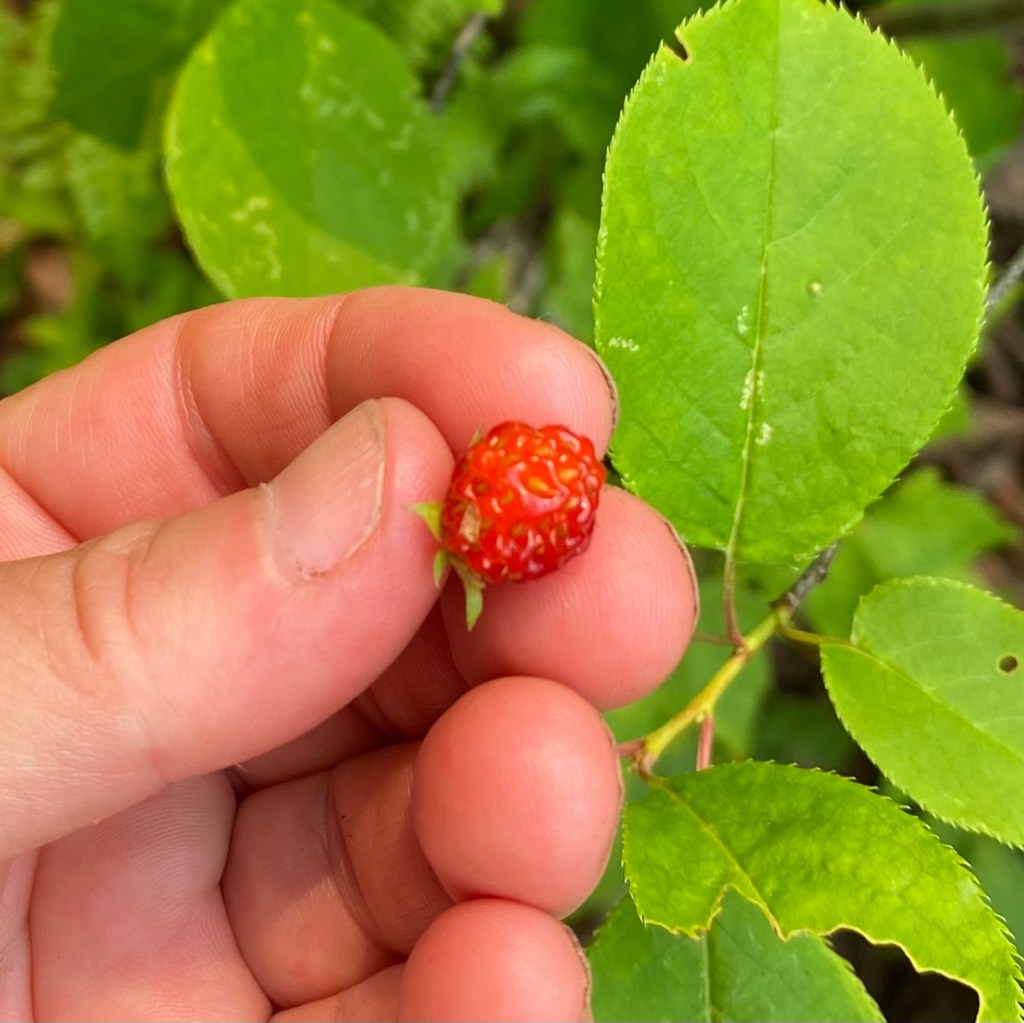
Wild Strawberries under Wildfire Smoke.

In Willey’s — the rambling general store where you can buy electrical supplies, French wine, local produce, bananas and darn near everything else except cigarettes — I turn a corner and find an old friend. She has a sunburn and I think: where have you been? We are both in some kind of rush that we talk, separate, and then knock up against each other again and again. The store is jammed to the ceiling with stuff, but it’s not that large. At the register and then out into the street, we keep talking. She’ll filled with such good energy I want to pocket some of her joy.

Every day, rain falls. Clotheslines droop. My feet are spongy in sandals. The Blundstones my daughter bought me a few years back split at the soles. It makes sense to wear these beloved shoes right down to wet scraps. I open and close the windows — is it hot? is it cold? The garden soaks up the water. The woods are lush and lovely, redolent with wet bark, the tanginess of split leaves.

The wild blackberries blossom profusely, the green berries now knotting. It’s nearly July, the season that means swimming and long lingering evenings watching the twilight drift down. Not so, this year. The pandemic made abundantly clear that we are connected to each other — both neighbors across the street and strangers around the globe — in ways that matter not one whit whether we like it, or not.

This summer breeds contemplation, more November than cusp of July. In that vein, here’s a few lines from the immortal T. S. Eliot in Four Quartets:

... The wild thyme unseen and the wild strawberry,
The laughter in the garden, echoed ecstasy
Not lost, but requiring, pointing to the agony
Of death and birth.

 You say I am repeating
Something I have said before.
 I shall say it again.

Shall I say it again? In order to arrive there,
To arrive where you are, to get from where you are not,
 You must go by a way wherein there is no ecstasy.

In order to arrive at what you do not know
 You must go by a way which is the way of ignorance.

In order to possess what you do not possess
 You must go by the way of dispossession.

In order to arrive at what you are not
 You must go through the way in which you are not.

And what you do not know is the only thing you know
And what you own is what you do not own
And where you are is where you are not...

Wildfire Smoke, Vermont.

Smoke from Canadian wildfires suffuses our world, the briefest intimation of so much happening so far away. Sunday afternoon, I crouch in my garden, weeding, while talking on the phone to my brother. When I stand, the sun is a pool, the hue of fresh blood.

Later, before twilight, we swim with a friend, the smoke like a mist. On our way home, my daughter and I drive up the hill across our town, to the hillside where we often walk and look for the sunset. It’s after eight, but these are the longest days of our Vermont year. The sun is utterly absent, swallowed up in smoke and humidity, the light meager as November.

This, she says, is not good.

The following morning, our air clears. At dinner on our porch, a light rain patters. We keep eating, talking a bit here and there, lacing together our days. As for the humidity, I keep thinking…. bring it on. The myriad leaves and blossoms reach out, sucking it up, summer in all its messy intensity.

Ordinary Contentment.

Standing on the street in Greensboro Village, a pickup truck with a trailer full of hay slowly passes by, creaking through the tight curve. In the sultry sunlight, I wait, a shower of chaff drifting over my face, blinding me for just a moment. As I close my eyes, I see one sunburned arm waving through the open pickup window at me.

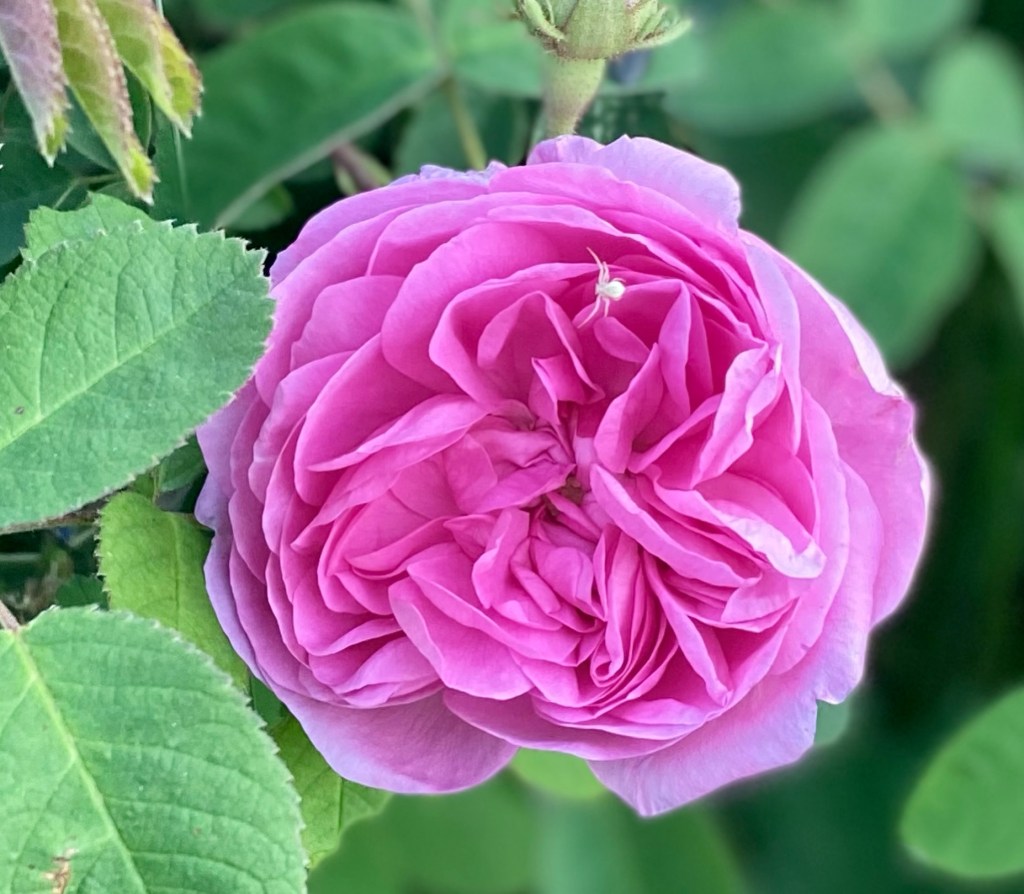
June. There’s plenty adversity that happens in this month, I’m sure, but the roses are blooming, the fields freshly shorn and growing again, the fledgling robins already swooping from the nest.

Some lines from the incomparable Jane Kenyon this Friday afternoon:

High on Nardil and June light 
I wake at four, 
waiting greedily for the first
note of the wood thrush. Easeful air 
presses through the screen 
with the wild, complex song 
of the bird, and I am overcome

by ordinary contentment. 
What hurt me so terribly 
all my life until this moment? 
How I love the small, swiftly 
beating heart of the bird 
singing in the great maples; 
its bright, unequivocal eye.

A Motorcycle is a Vehicle of Change…

On the cusp of the solstice, the evenings are chilly yet, mist pulling around our house.

I pull on a sweater — a wool sweater — as darkness falls and walk through the small stretch of woods into the cemetery. A stranger wearing a t-shirt and drinking a Fanta walks down. He looks at me as warily as I’m probably looking at him and then we exchange a mutual good evening and head each our own way, our mutual bit of our stories nothing but this.

Solstice — I’m hoping for sun and heat, for evening swims to stitch my summer together. I want to swim through pollen scattered on the still pond, glide through the ripples stirred by ducks, to have the mundane details of my life and my swimming companion’s life sewn together, swim by swim.

In the absence of swimming, I’ll sing the praises of those midday walks admiring the lupines and forget-me-nots, reading under the dwarf apple tree that’s long surpassed smallness, the fledgling robins clamoring for worms.

“A motorcycle is a vehicle of change, after all. It puts the wheels beneath a midlife crisis, or a coming-of-age saga, or even just the discovery of something new, something you didn’t realize was there. It provides the means to cross over, to transition, or to revitalize; motorcycles are self-discovery’s favorite vehicle.” 

— Lily Brooks-Dalton, Motorcycles I’ve Loved

Worms for the Body, Philosophy for the Soul.

A little light rain falls as I pull a few weeds from the Sweet William in my garden. I planted these flowers when I moved here, putting my shovel into this terrain, vying for flowers and vegetables versus lawn. At the moment, the flowers flourish. I’m thinking a little about a writers roundtable I participated in the morning before, how I urged writers to remember that cause and effect drive the world we live in. All the pretty and noble thoughts we have about ourselves are only illusions. Character lies in our actions, for good or ill, whether we chose to see this or not.

On this Father’s Day, I remember those conversations my siblings and I had with my father at our kitchen table, so many decades ago. This sense of the world comes from the Aristotle he had us read. It’s a lesson that I’ve been hammering out, over and over and over in my life, through garden (what truer way to learn cause and effect), through writing and childrearing, through work, divorce, friendship.

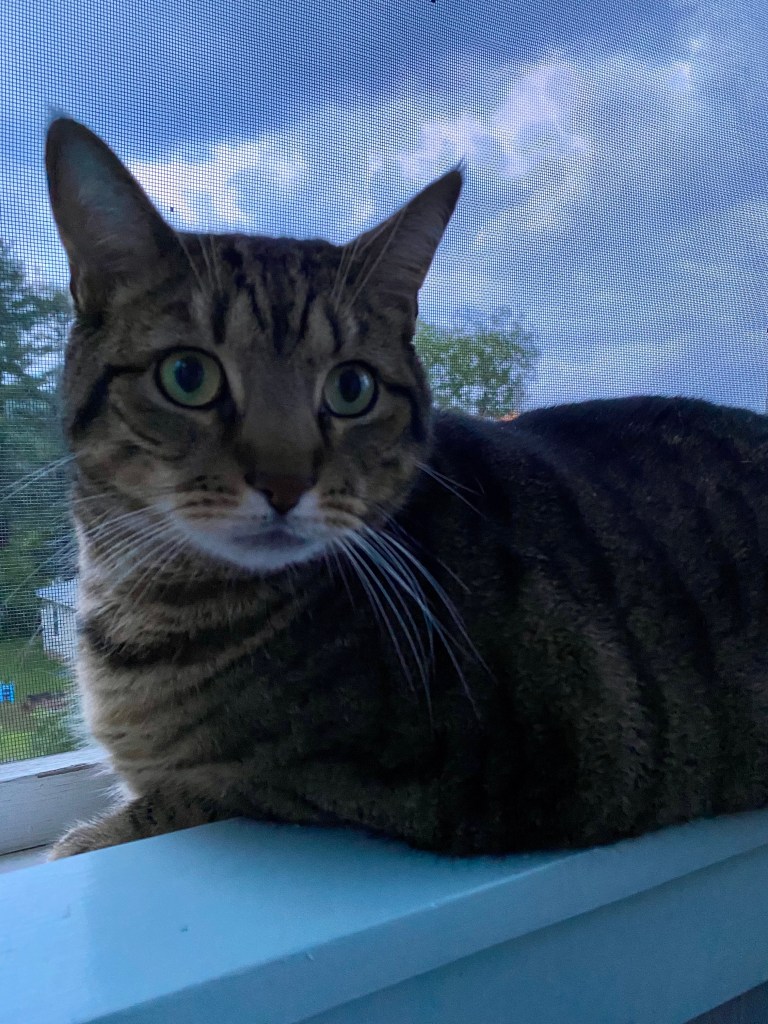
On my deck, the robins’ nest has open-beaked fledglings, tufted and mewling. All day, the parents fly in and out, worms draping from their beaks, feeding their young, this great Herculean parenting endeavor. My cat Acer lies on a kitchen chair, staring through the glass door, mesmerized. The robins, in their robin way, have taken a chance nesting just above my door. Will this pan out? Will the young survive?

Wendell Berry wrote that “Parenthood is not exact science.” Nor, by any means, is bird or human life. My father gave his three children worms and philosophy. He taught us to love bread for the body, wine for the soul.

Robin Survival?

This is now the sixth year we’ve lived in this house. I count these years by June 15th, the date I signed for the house, two days before my oldest graduated from high school, the date the sellers took us out to lunch and I stared through the diner window, wondering if buying this house was a good idea.

On this sixth year, a robin family has joined us, building what appears to be a well-made nest, strands of straw hanging from roof rafter. The nest is beneath the porch roof, covered from the weather. The nest is so close to our house that the mother robin flies away whenever we open the back door. My daughters and I wonder, Why not choose a rafter in the barn? A good old-fashioned tree limb?

The robins’ destiny is, of course, neither here nor there. We didn’t make the nest, and whether this family survives is largely beyond my purview. Certainly, my curious housecats will not harm these young ones. Yet I’m curious as my cats, wondering what drove this family to our porch.

June. We are surrounded by a hungry world that eats wee robins. I’m rooting for these young ones, hoping they’ll pull through. Come what may.