Pigeons.

On the train to Florence, we strike up a conversation with a couple from Australia who are traveling with both their mothers. He’s interested in American universities and chats with my daughter about dorms and loans and degrees. He’s in banking. His wife works from home and hasn’t gone into the office in two and a half years. Sometimes, she says, she stands in the backyard and talks to the birds for company.

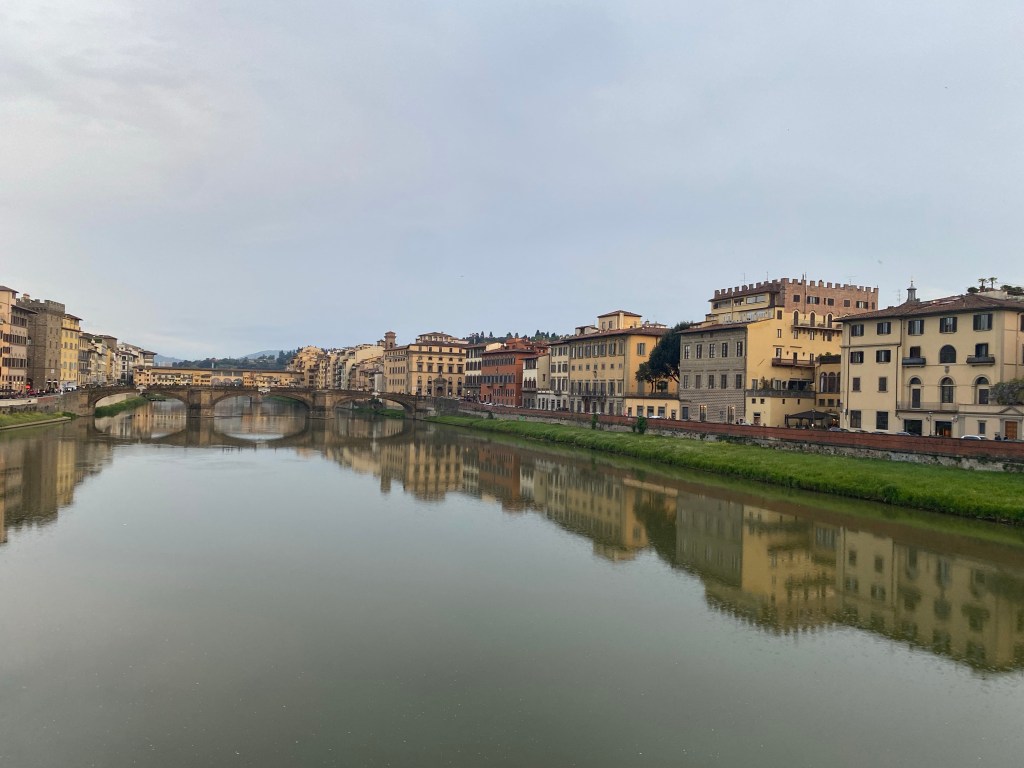
In Florence, our windows look over red roof tiles. Pigeons nestle in the ivy.

Cinque Terre, Italy

We leave our dear friends in Switzerland. That morning, we walked in the forest among mighty mountains with their cat.

In Italy, the trains are jammed. We enter the wrong car. In a mixture of languages, people pass luggage back and forth. Lemons bend down tree branches here. We eat creatures from the sea. Such a long way we have come, to this world of color and wisteria fragrance. Cats sun themselves on ancient stone walls.

Paris.

A very long way we have traveled, the youngest daughter and me, stocking up on new sights of very old places, and now headed to dear friends.

In this enchanting, beautiful city, we drink coffee and walk until our heels are bloodied. This enormous world. On a rooftop garden, we discover a snail in a rainbow of blossoms, watch a wedding.

On the Move.

My father’s physical therapist tells him to keep moving. No matter what, keep moving to keep alive. My dad, thankfully, keeps moving.

My youngest and I are about to be on the move, too. We’ve left our cats and our house with competent and caring people, and are headed out for a spell. I’ll send a few photos along the way.

On the precipice of young womanhood, she’s game. And me — I’m somewhere in the Dante dark woods of what I hope will be a long life yet to come. It’s been a long pandemic, a long haul, for me, and certainly for you — for all of you reading my words.

Keep moving, keep alive in body and soul. I’ll be home to plant a bed of spring flowers.

Cloud, Lake, Crackers.

Ever enthusiastic, my oldest buys a blow-up paddle board, and we set off on a Saturday afternoon. Her sister wonders if the lake will be frozen yet. In 70 degree temps — a strange April spike — ice seems impossible, until it’s not.

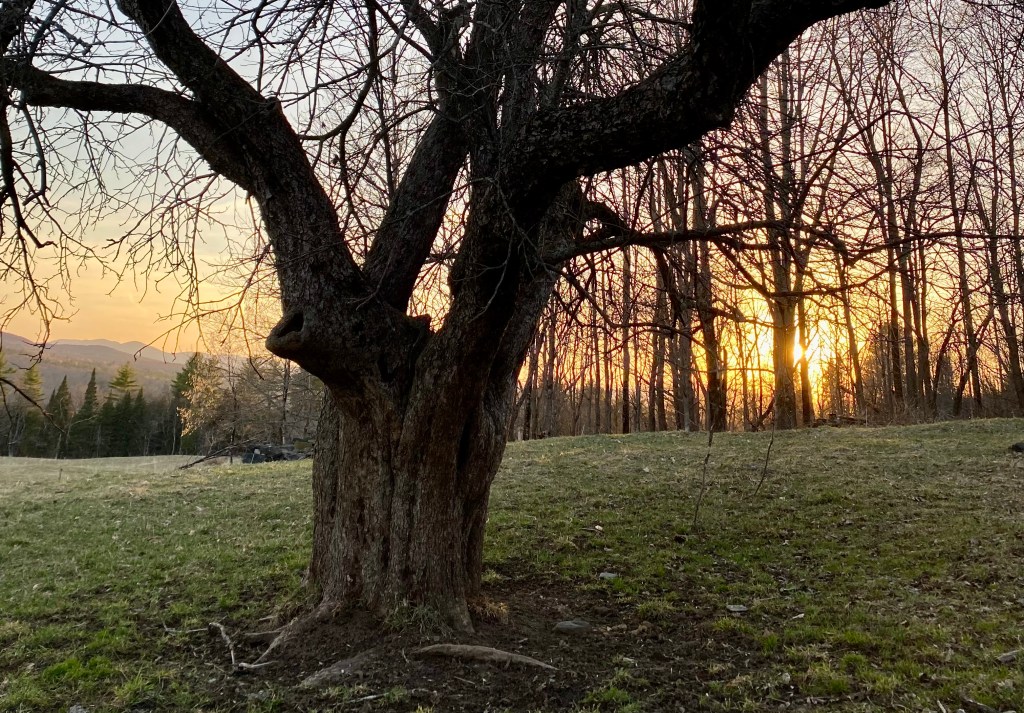
While she paddles in the patch of open water, her sister and I sit on the dock that isn’t yet pulled into the lake, either. We’re in a marshy area where the peepers are mightily going at what they do best, and redwing blackbirds yodel their throaty calls. Two ducks cruise by, intent on something else that entirely eludes us, too, the male with his emerald head trailing the brown female.

We’re in t-shirts and shorts, spring giddy, eating crackers and some of that cheese the lovely Cabot Library gifted me for a talk. When I returned home that night, my youngest opened the box of cheese with joy. The chionodoxa blue flowers are blooming.

Joy, on.

The Past, Rising, Falling.

The news here is that the peepers have returned. In the evening, I walk past the two ballfields where the little kids and then the big kids are playing baseball, and up the hill where pavement turns to dirt. Right at the edge of town, there’s a neighborhood where people are living rough. Along the roadside, I spy empty milk cartons and a clear plastic bag jammed with Christmas bows. There’s a swathe of hemlock and cedar, and then the fields and maples begin.

A few days before, I was writing in the local coffee shop when a woman I once knew fairly well stopped in. She sat down with her latte, and we talked for a little bit about the nursery school we once started and where our kids are now.

Then she turned the conversation and acknowledged that something lay between us. I closed my laptop and slid it in my backpack. We spoke about a fire, a burned construction site, a rekindling of the fire, and losses to both our families. It’s early morning yet. We’re in a corner by the window. The baristas are laughing at the counter, and no one can overhead our words. Quickly, we pair up our memories, and it’s shocking how our memories sync of that time. Until we diverge. We pause at the mention of the third family. I have about a 100 questions I want to ask. My shock appears mirrored in her eyes. She’s forgotten all about her coffee.

How do you ever understand the past? We’ve both divorced, moved houses and towns, raised children, created new working lives. And yet there it is, running like a subterranean stream, the past.

Her acquaintance walks in, and she stands up. I slip my notebook in my backpack, say goodbye, have a nice day to the barista, and walk down the sidewalk to the post office.