Worms for the Body, Philosophy for the Soul.

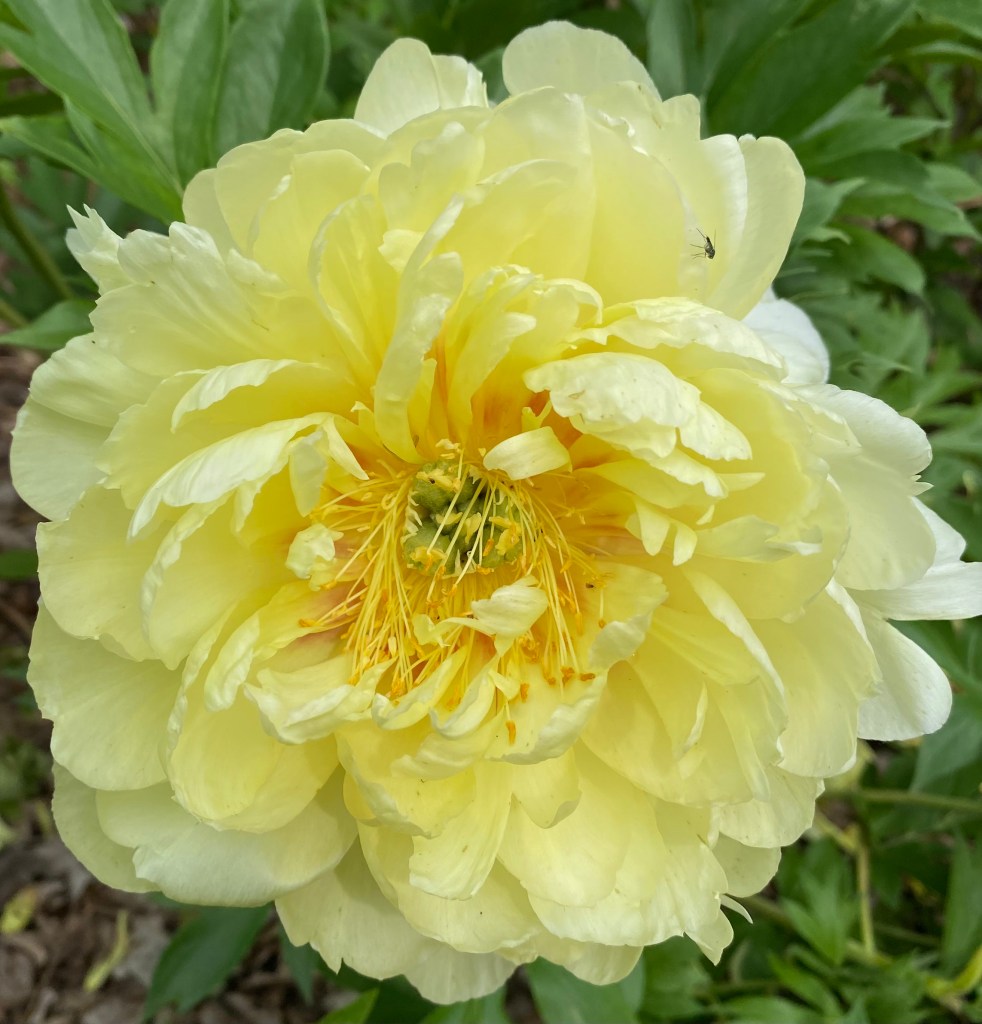
A little light rain falls as I pull a few weeds from the Sweet William in my garden. I planted these flowers when I moved here, putting my shovel into this terrain, vying for flowers and vegetables versus lawn. At the moment, the flowers flourish. I’m thinking a little about a writers roundtable I participated in the morning before, how I urged writers to remember that cause and effect drive the world we live in. All the pretty and noble thoughts we have about ourselves are only illusions. Character lies in our actions, for good or ill, whether we chose to see this or not.

On this Father’s Day, I remember those conversations my siblings and I had with my father at our kitchen table, so many decades ago. This sense of the world comes from the Aristotle he had us read. It’s a lesson that I’ve been hammering out, over and over and over in my life, through garden (what truer way to learn cause and effect), through writing and childrearing, through work, divorce, friendship.

On my deck, the robins’ nest has open-beaked fledglings, tufted and mewling. All day, the parents fly in and out, worms draping from their beaks, feeding their young, this great Herculean parenting endeavor. My cat Acer lies on a kitchen chair, staring through the glass door, mesmerized. The robins, in their robin way, have taken a chance nesting just above my door. Will this pan out? Will the young survive?

Wendell Berry wrote that “Parenthood is not exact science.” Nor, by any means, is bird or human life. My father gave his three children worms and philosophy. He taught us to love bread for the body, wine for the soul.

Robin Survival?

This is now the sixth year we’ve lived in this house. I count these years by June 15th, the date I signed for the house, two days before my oldest graduated from high school, the date the sellers took us out to lunch and I stared through the diner window, wondering if buying this house was a good idea.

On this sixth year, a robin family has joined us, building what appears to be a well-made nest, strands of straw hanging from roof rafter. The nest is beneath the porch roof, covered from the weather. The nest is so close to our house that the mother robin flies away whenever we open the back door. My daughters and I wonder, Why not choose a rafter in the barn? A good old-fashioned tree limb?

The robins’ destiny is, of course, neither here nor there. We didn’t make the nest, and whether this family survives is largely beyond my purview. Certainly, my curious housecats will not harm these young ones. Yet I’m curious as my cats, wondering what drove this family to our porch.

June. We are surrounded by a hungry world that eats wee robins. I’m rooting for these young ones, hoping they’ll pull through. Come what may.

The Pleasurable Stink of Wet Wool.

Rain begins spitting midday. I’m on a clearing-my-head walk through the forest, and the songbirds are crazily lovely, singing mightily away, simultaneously solo and in concert, and the flowers — my goodness — the flowers. The forget-me-nots trail me like loving, silent cats.

There’s a thousand things going on — that thickening rain, the myriad leaves in ovals and spikes, the blooms and the seed heads. I take the long walk back to civilization, emptying my mind as I go. When I return to the human threshold, there’s a little reluctance to head on back in… I stink of wet wool, the better for these minutes.

There is No Such Thing as Atheism.

One of my favorite parts of our house is the small glassed-in porch at the bottom of the stairs, just large enough for two small loveseats. In this high school graduation weekend, we’ve spent a lot of time hanging out, talking, talking, the weather alternately switching from cold rain to sparkling sun. The cats sequestered themselves on the stairs while my daughter’s dog lingers around her feet. The dog wants to play. The cats cherish their dignity. The humans hover around this heartfelt drama.

Graduation and its platitudes… and yet the moment is such a pivot point, a marker between childhood and what will (god willing) be a very long haul of adulthood. Unplanned, the day spans the present, old friends I haven’t seen in years, and ends with a chess game with my brother at the kitchen table. Graduation isn’t weekend to solve anything, fix out the phone bill or shore up the back deck.

On this graduation weekend… the best commencement speech I’ve ever read is David Foster Wallace’s “This is Water,” gritty, savvy, and full of heart….

Because here’s something else that’s weird but true: in the day-to day trenches of adult life, there is actually no such thing as atheism. There is no such thing as not worshipping. Everybody worships. The only choice we get is what to worship. And the compelling reason for maybe choosing some sort of god or spiritual-type thing to worship—be it JC or Allah, be it YHWH or the Wiccan Mother Goddess, or the Four Noble Truths, or some inviolable set of ethical principles—is that pretty much anything else you worship will eat you alive….

— David Foster Wallace

Fox Running Down the Road…

Midday, driving from here to there, a fox runs across a field towards me, its jaws clamped around what appears to be a yearling groundhog. I immediately slow my Subaru. The fox runs quickly, darting across the road. I pull over and jump out, watching the fox run along the shoulder. It’s backwoods Vermont, and no one’s around but me and this fox intent on carrying home its slain prey.

Surely the fox knows the road is empty of humans but for me, and I am no threat. Running, running, the fox disappears into the hayfield. In no great rush, I admire the lake through the trees. It may rain, or not. The hazy swimming weather has been usurped by cold, by the strange smoke from the Canadian wildfires so far from us. Here, this midday, it’s just me and the fox and the groundhog turning doubtlessly into fox kits.

Eventually, a pickup appears and stops. The driver’s an acquaintance, and he rolls down the window and asks what’s up. I lean against the door. He and I grouse for a bit about town business and human chaos. When he’s gone, I linger just a little longer, remembering the rushing fox, those moments of human and wild.

“It would have been better to come back at the same hour,” said the fox. “If, for example, you come at four o’clock in the afternoon, then at three o’clock I shall begin to be happy. I shall feel happier and happier as the hour advances. At four o’clock, I shall already be worrying and jumping about. I shall show you how happy I am! But if you come at just any time, I shall never know at what hour my heart is to be ready to greet you…” 

— Antoine de Saint-Exupéry, The Little Prince

Loons, Wiser Than Us.

Back when my girls were in the early sand bucket age, loons were a rare sight on the lake. The grownups would knock off whatever chat we had going when we spied those distinctive birds — spotted backs, red-eyed. I grew up in New Hampshire and never saw a loon as a girl.

But even now, those calls — how eerie, how utterly mesmerizing, how definitively not of the human world. This afternoon, before a planning commission meeting and just as a little light rain begins, I walk over to that beach where we drank so much coffee. There’s two cars in the parking lot, people staring at the lake and the sky that’s bruised with storm. The loons holler across the rippling water. Vacation in Vermont and you might think summer is all sweetness and ice cream — but here’s a slice of cold rain, those two black-necked beauties, and an infinity of sky.