Hello, Darkness, my old friend.

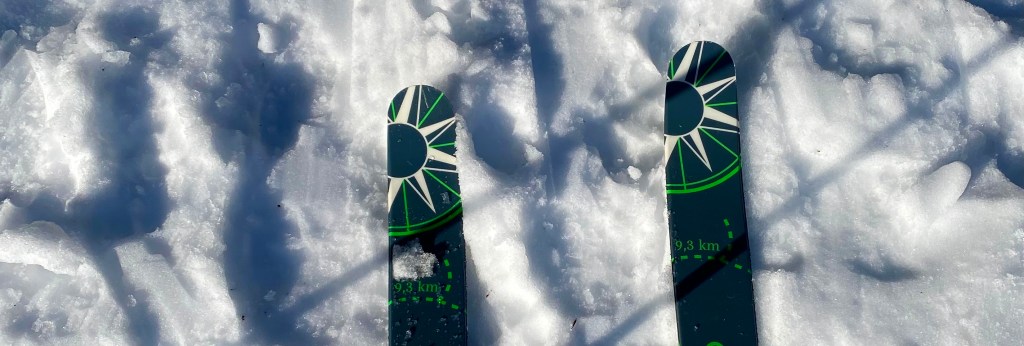
Heading towards the winter solstice, the days are cropped short. I ski in the woods. The next afternoon, after a spurt of warmth, I remove my skis to navigate around patches of tree roots, the exposed carpet of pine needles.

By 4:30, darkness envelopes us, velvety and broken only by our brief human endeavors of a line of twinkling holiday lights, streetlamps, parking lots lit up like precious jewels. Like a wild creature roused by these warm December nights, I prowl through the village and along the river.

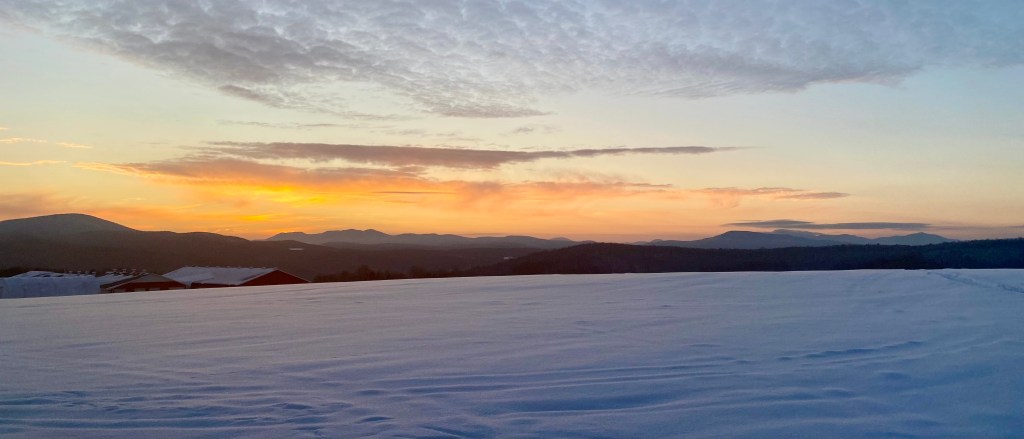
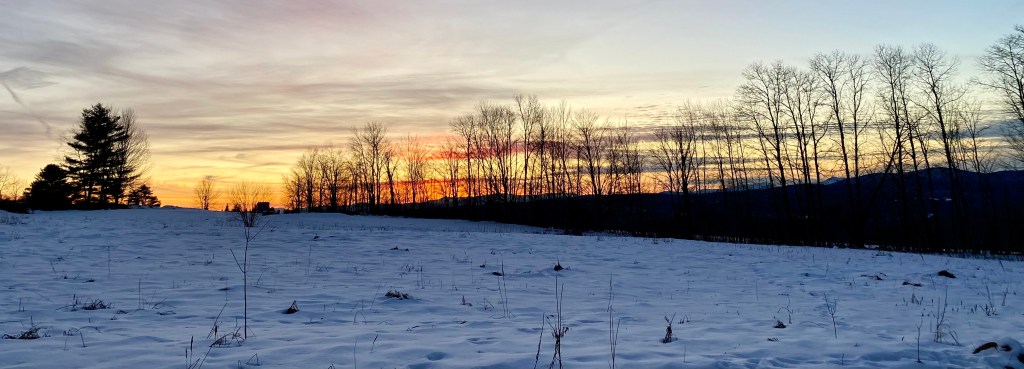
Returning home one late afternoon, I pause beside Woodbury Lake. A crescent moon illuminates the blue-black sky, the outline of its orb a faint round: a promise of January’s full wolf moon. Twilight’s but a few moments, molten gold rapidly consumed by the unstoppable night.

I remind myself that December is the time of descent, that the darkness I eyed so warily in October is now my mellifluous friend. I’ve been here before, in so many seasons of my life — dissatisfied and cracked, heart-full, my eyes attuned to starlight. Living into December and the solstice and the winter stretching ahead means stepping into the world’s great vessel, full of so much.

Here’s an article about the world’s first seed bank forwarded to me by a reader.
Your place in the world.

A rare mid-December day of sunlight, and the town seems festive, stirred by the truly false promise of spring. Not true, not true.

December’s a season of reckoning, of that inevitable look back across the months, to a year ago, to five, more. I’m old enough now that the seasons jumble into a Jacob’s Ladder of years: the Christmas of the hoar frost, the year a mouse drank from our Christmas tree stand, the 60 degree Christmas Eve my brother’s dog went swimming and gasped from the cold. The December snow fell every single day. That year, holed in the house with sick children, I wondered if I would go mad; I did not. All past, all somehow yet still with us. Heraclitus reminds us that the single constant in this life is change, and yet it’s still the same molecular stuff arranging and re-arranging, by the force of the universe and our sheer human will.

Oh December: you heartbreaker, you. Sleet and radiant sunlight in the span of a few days. Icicles drip. Chickadees whistle in the white pines. My wood chores finished, the compost bin dug out, I linger in the sun, leaning against the house, reading Paolo Cognetti:

You find your place in the world much less predictably than you’d imagine.

The sound of wind.

Seems a little early, pre-solstice and all, to be citing winter haiku, but the thing is, winter haiku is just so darn good. In so many ways, winter brings out the New Englander in each of us, as we ramble on about previous winters (the year back in the mid-90s when antifreeze froze, or the year school was cancelled was for three days straight). Or how to survive with savviness: long quilted coat, chop wood, frying pan on the sheets. When a few strands of sun tumbled out of the clouds this afternoon, I dashed outside to fill my eyes with light. Hope the weather’s keeping you more interested than inconvenienced…..

Winter solitude—

In a world of one color

The sound of wind.

— Bashō

I believe in good gloves.

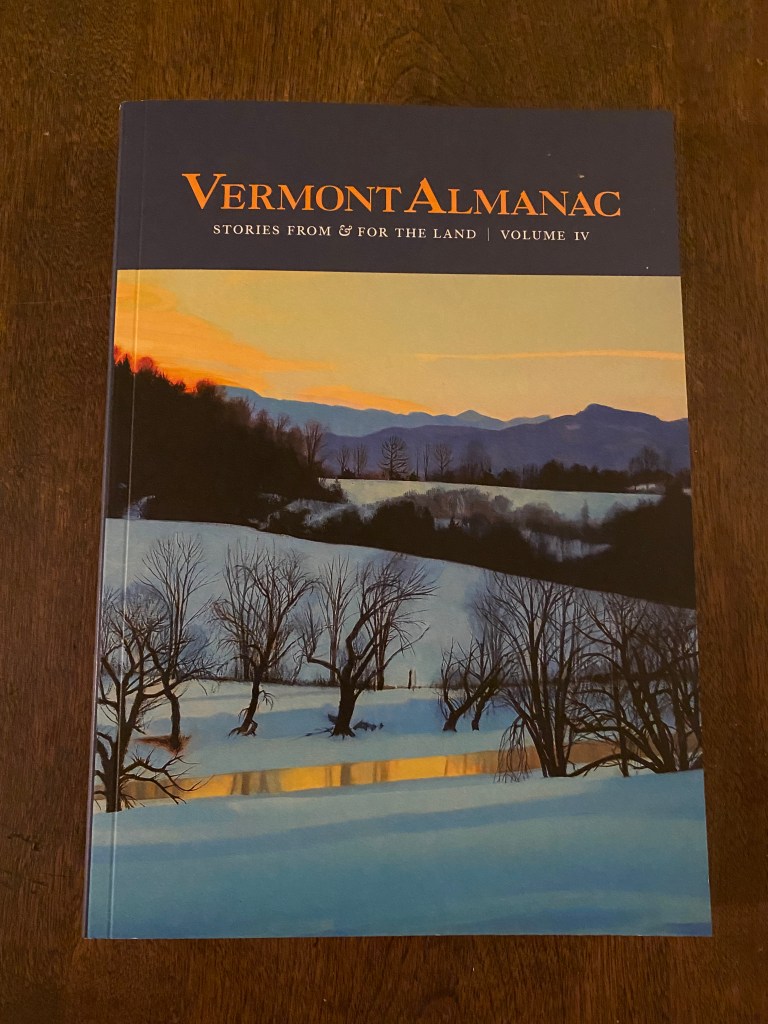
At the Vermont Almanac‘s celebration of volume four, I talk with people I haven’t seen in years — my daughter’s beloved elementary school teacher, a couple who bought a house down the road from where I once lived. As the staff from the center where the celebration was held clean up, ready to head home themselves, I walk out with my former neighbors. We stand for a few moments by a fire burning in a pit, talking about sugaring and our daughters and Vermont dirt roads. Through the wide windows, I watch people wrapping up the remains of cheese and dried sausage. In my house, I am still eating the remains of Thanksgiving’s cheese, the sharp cheddar I used in my friend’s birthday sandwich.

Overhead, stars strained again the clouds.

I’d been asked to read a poem, “Dear Day in Late September,” for poet Kerrin McCadden, who couldn’t attend. I consider this poem a love letter in the tenor of love letters I admire most — elegantly stripped down, mindful of life’s deep sadness and the beauty of our world fat with bees.

On my way home, I think of the line “I believe in good gloves.” As a former sugar maker, I’ve used up countless gloves. With my small hands, I’ve never had a pair of gloves that fit. At Thanksgiving, in a shop looking for boots, my daughter handed me a pair of petite gloves. I nearly laid them to the side (thrift, thrift), but I bought them. Yesterday, wearing these gloves to bring in wood, I realized the gloves fit me perfectly, downy on the inside. Warm, strong, practical. What do you know.

…. I want to tell you I am

thinking about closing up shop for the winter. I am settling

my accounts. Enclosed, please find a brace of birds,

which I hope you will accept as payment against last winter’s

oil bills. There is much to do. Up in the barn, I have spelled

out the name of the man I love with crabapples. It is one way

to know a man’s heart. I believe in his name, though,

like I believe in good gloves. Oh, how we fight the cold

with everything we have.

Kerrin McCadden

Vermont Almanac.

My copy of the fourth Vermont Almanac arrives in my mailbox. Remember real mail? I remember exchanging long letters with friends for years. Email is fine and dandy, but email has no smell. I open the book in my kitchen and breathe in the scent of ink and paper. I was fortunate to write and edit a bit for this issue.

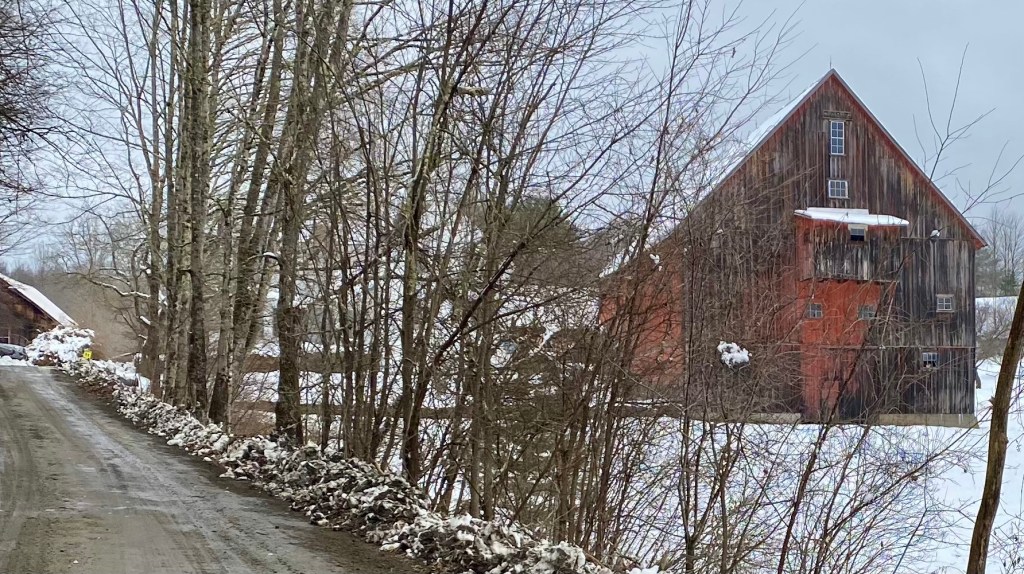
These days, on my moonlit evening walks, living in Vermont is often on my mind. So much has happened in my own life and in this dear state: a summer of rain and wildfire smoke, a flood, beloved Montpelier drowned, a rise in violent crime. And yet, I’m tugged more deeply into this state I’ve called home nearly all my adult life. Reading this hefty book, I’m reminded, again, of how yankee ingenuity is so often yankee generosity, too. While our nation (and much of the globe) as a whole is navigating unsettled and often stormy waters, I’m heartened by Vermonters’ ruggedness, tenderness, and, so often, outright humor. Who could imagine a world without these fine things?

Hope is no mere aspiration that things will turn out well. Hope instead takes our hand, shines a light ahead, and pushes us onward into the messiness and uncertainties of life.

Bryan Pfeiffer, Vermont Almanac, Volume IV

Pocket Treasures.

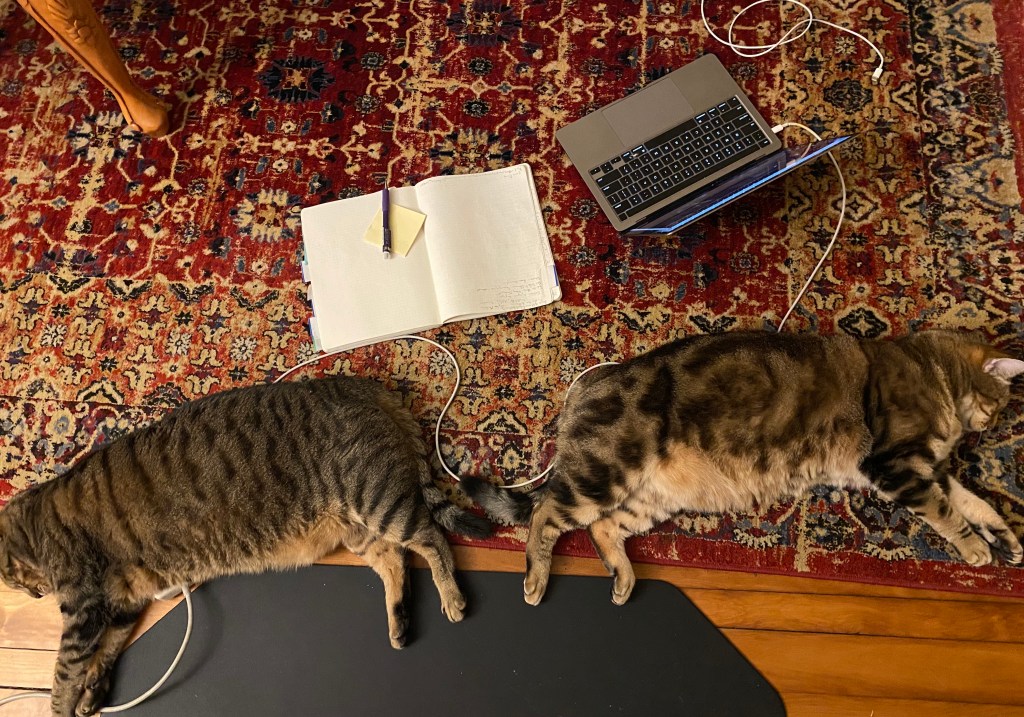
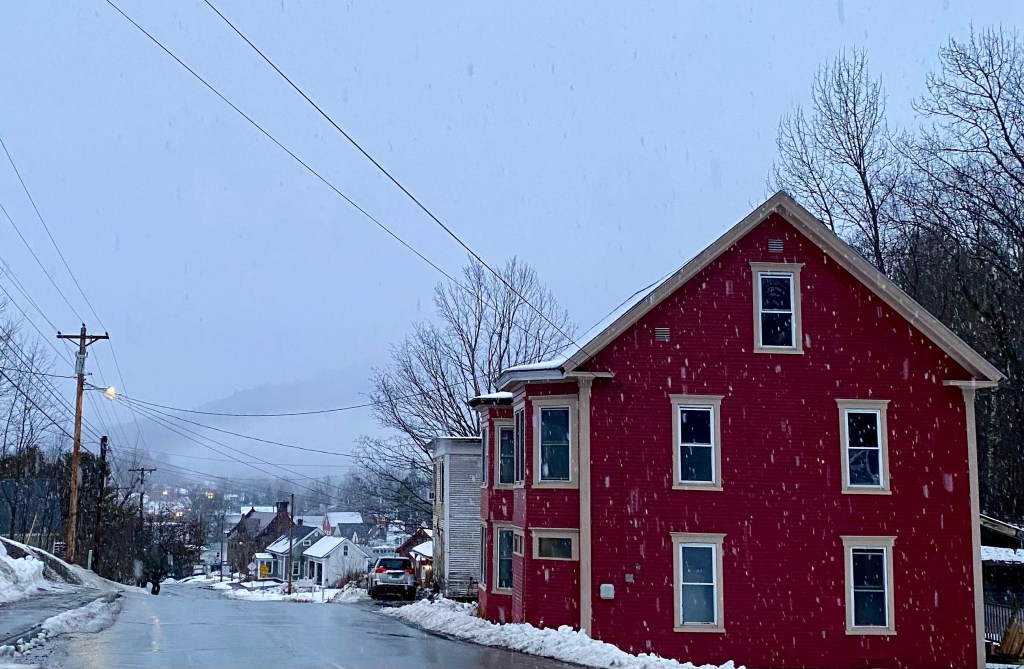
On this Sunday afternoon, my guest departs in the falling snow. When I head out for a walk, the cold has sunk in, deep enough that tendrils of snow cling to the grass and trees branches. The snow bends down last summer’s sunflowers in the garden. I leave my woodbox full, the cats sleeping, plates on the table. I intend only to return a handful of library books, but I head up the hill and around the high school and into the woods where the snow lies deeply and slows me down.

It’s December. Snow circles down, lovely and miraculous, this silent transformation.

Here’s a few lines for winter:

“Treasure what you find
already in your pocket, friend.”
― Ted Kooser