100 Daffodils.

In this balmy late autumn, I walk with new acquaintances in an oak forest where I’ve never wandered. Oaks are sparse in the woods where I generally walk, these lovely-leaved beauties, the ground beneath them strewn with acorns, some broken, their centers chewed out.

I’m with other women who are unwillingly on a journey similar to mine — cancer and chemo, the shock of our worlds slashed apart. Our conversation drifts to the kindness of friends and strangers, and the flip side of kindness — a kind of harshness: why can’t you get on with your life since the chemo is finished? (a raw impossibility) and didn’t you eat enough kale? For the record, when my daughters were young, I grew three kinds of kale in my garden, fifty plants to carry us through the winter, fenced from the foraging deer. All that kale, so carefully tended, and yet, here’s the luck of your draw: cancer.

It’s a rare kind of privilege to walk with these women, listening, offering snippets of my own story. On this cloudy afternoon, these woods are light-filled through the barren branches, the poplars and beeches still shimmering patches of gold. One woman ventures, “All nature has scars.”

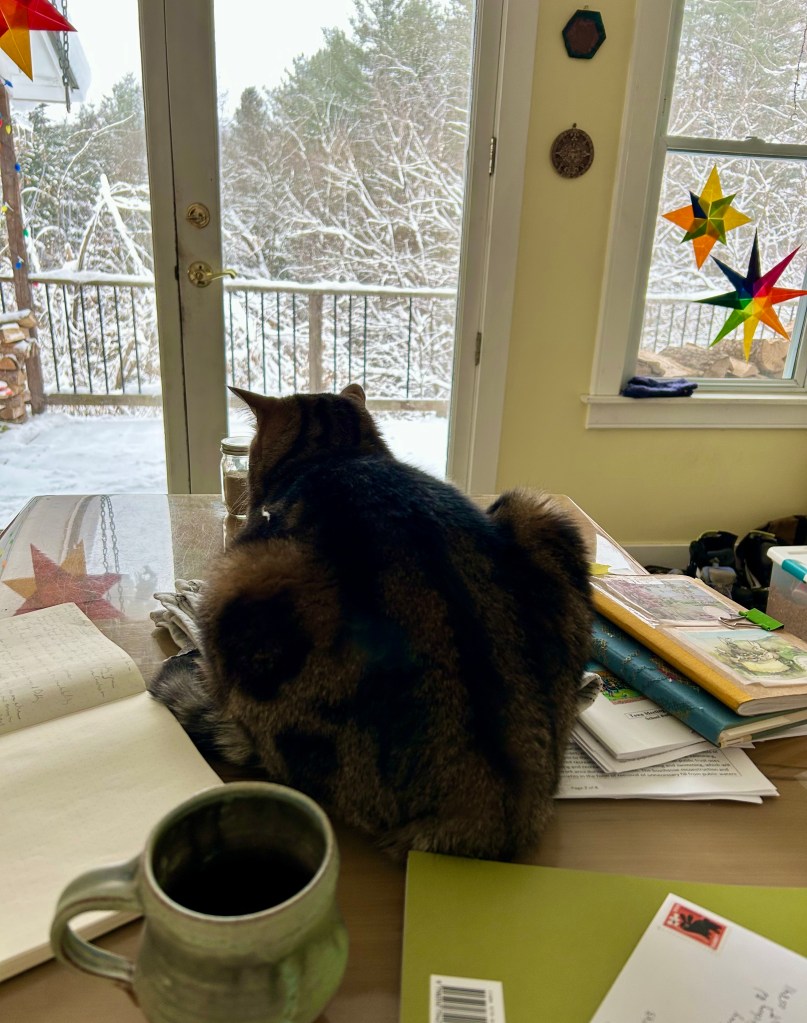
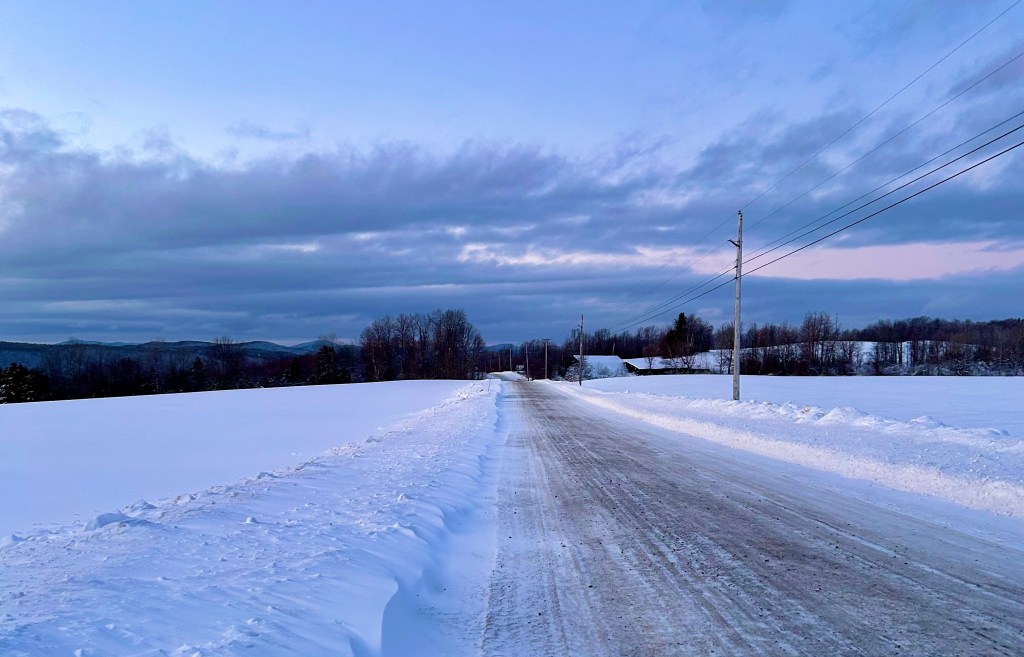
Every year, I dread this season of dwindling light, the creeping-in edgy cold, the giant fist of winter readying. And yet every late autumn, the falling leaves enchant, the wood stove’s warmth soothes, the moon gleams its crescent cut-out in the starry sky.

Writing this book about cancer has pushed me to read and gather facts and history, the scientific low-down. And yet, simultaneously, I appreciate more and more the great mystery of this universe. A friend counsels me that I can hold two things in one hand: knowledge and uncertainty. But these, too, are beyond numbers; this world’s mysteries are multitudes. My sister once remarked that cancer is the great leveler: it’s humbling. On a recent chilly morning, I planted one hundred daffodil bulbs: a meager offering to this sweet place where I live. The story behind these spring beauties will surely sink down and vanish into the sandy soil.

Auto Mirror

In the rear-view mirror suddenly
I saw the bulk of the Beauvais Cathedral;
great things dwell in small ones
for a moment.

Adam Zagajewski, translated from the Polish by Czeslaw Milosz and Robert Hass

Gifts at the Back Door.

I arrive home in the dark and find one of my red deck chairs at my kitchen door, a white container set on its seat. It’s not late but dark already. On my way home from work, I’d walked along the river and walked further than usual. When I’d returned to my car, darkness had fallen.

I’ve been living in or nearby this village for thirty years. I’ve seen a share of miserable things — from addiction and homicides to petty cattiness — and its goodness, too. How, in times of trouble, folks appear with aid. No questions, often very few words. My god, the grace of this.

Scorched earth is how I consider myself these days, not so many days post-chemo, post-surgery, leering up on a year’s anniversary since I learned I had cancer. See how I write this? Past tense. And yet, transmogrified is a word I used with a friend. How this disease has transmogrified my being.

In the dark, I unlock my door, set down my backpack, a pile of library books, a bag of apples. My cats mewl for their cat supper. The container has soup, barley and beef and spinach. The woodstove has gone cold, my jacket drips rain on the floor and my cats’ dense fur, darkness presses against the windows. And yet, serendipitous soup. I take a spoon from the drawer. As for figuring out the rest of my life, or this week, or even this evening — I let that go.

From my library book stash, Sally Mann:

“As for me, I see both beauty and the dark side of the things; the loveliness of cornfields and full sails, but the ruin as the well…. The Japanese have a phrase for this dual perception: mono no aware. It means “beauty tinged with sadness,” for there cannot be any real beauty without the indolic whiff of decay. For me, living is the same thing as dying, and loving is the same thing as losing, and this does not make me a madwoman; I believe it can make me better at living, and better at loving, and, just possibly, better at seeing.”

Such a World.

Late afternoon, walking with a friend on the town forest trails and talking all-things-grownup-and-fascinating, her little girl runs ahead of us, stops suddenly, raises her arms in a Y over her head, and exclaims to the woods, “I love this place!”

Relish this.

Slowly, the rain is returning, the streams beginning to flow again. Puddles muck the trails in a few low places. Meanwhile, people ask, “How’s your water holding up?” Word travels of dried up wells. This morning, I stand on my porch in the dark, listening to rainfall patter through the leaves that linger on the trees around my house. The crests of the apple trees hang onto their crowns of gold. We’re at that dipping point, the swing of seasons, the earth yet warm, redolent with this summer’s abundance.

Such a moon —

the thief

pauses to sing. — Yosa Buson

“…music despite everything…”

A woman stops me on the sidewalk and offers me a chair. I discover it’s a fine reading chair and bring it home, much to my cat’s delight. Friends track me the hermitess down in the coffee shop where I’ve spread the pieces of my manuscript over a table. We drink cappuccinos and eat jam bars and talk shop. I’m hurtling through the book I’ve called a cancer atlas — how to endure the intertwined suffering of cancer-and-chemo and then what? I tease, write the ending for me, will you? although I’m already there, stitching together mosquito bites and spring ephemerals and sleeping alone in a cold tent while the rain soaks through the tent fly and floor. We share kale soup recipes and marvel at this long dry autumn, the poplars yet holding their gold leaves.

Ever present in my mind is the question I asked the oncologist when I’d finished chemo, endured the surgery, limped my way back to his office. “What now?” And his answer, “Go and live your life,” the old existential question. A koan, a place of delight to be able to ask this question.

On this No Kings Day, while my cats sprawl contentedly before my woodstove, I’m reminded of the dearness of living a human life. That the asking of the question how to live is a many-sided privilege.

We must admit there will be music despite everything.
We stand at the prow again of a small ship
anchored late at night in the tiny port
looking over to the sleeping island: the waterfront
is three shuttered cafés and one naked light burning.
To hear the faint sound of oars in the silence as a rowboat
comes slowly out and then goes back is truly worth
all the years of sorrow that are to come. ~ Jack Gilbert

Wonder…

About a decade ago, when I was first navigating single parenting (so many unfun challenges!), I held to the notion that every time a door slammed in my face, I’d scramble through a window. In my novel that will be published next year, a character says Really? We’re taking life advice from The Sound of Music? But it’s a darn useful approach. Small and scrappy, I’ve been tumbling through windows for years, although admittedly wounding myself on broken glass sometimes.

These balmy autumn days, raking leaves over garden beds, I’ve had a whole sun-rich summer of remission, of cancer survivor, of figuring out how to walk and eat, work and sleep again, these simple things that often eluded me all winter. A summer of learning to live within the bounds of this alive-but-more-broken body. By chance, I meet an old friend who comments about my short hair, and I spill a snippet of my lymphoma which she had not heard. Our lives, connected through kids now grown up, have taken different paths. I’m on the edge of saying that I don’t know how I survived last winter, but I hold back.

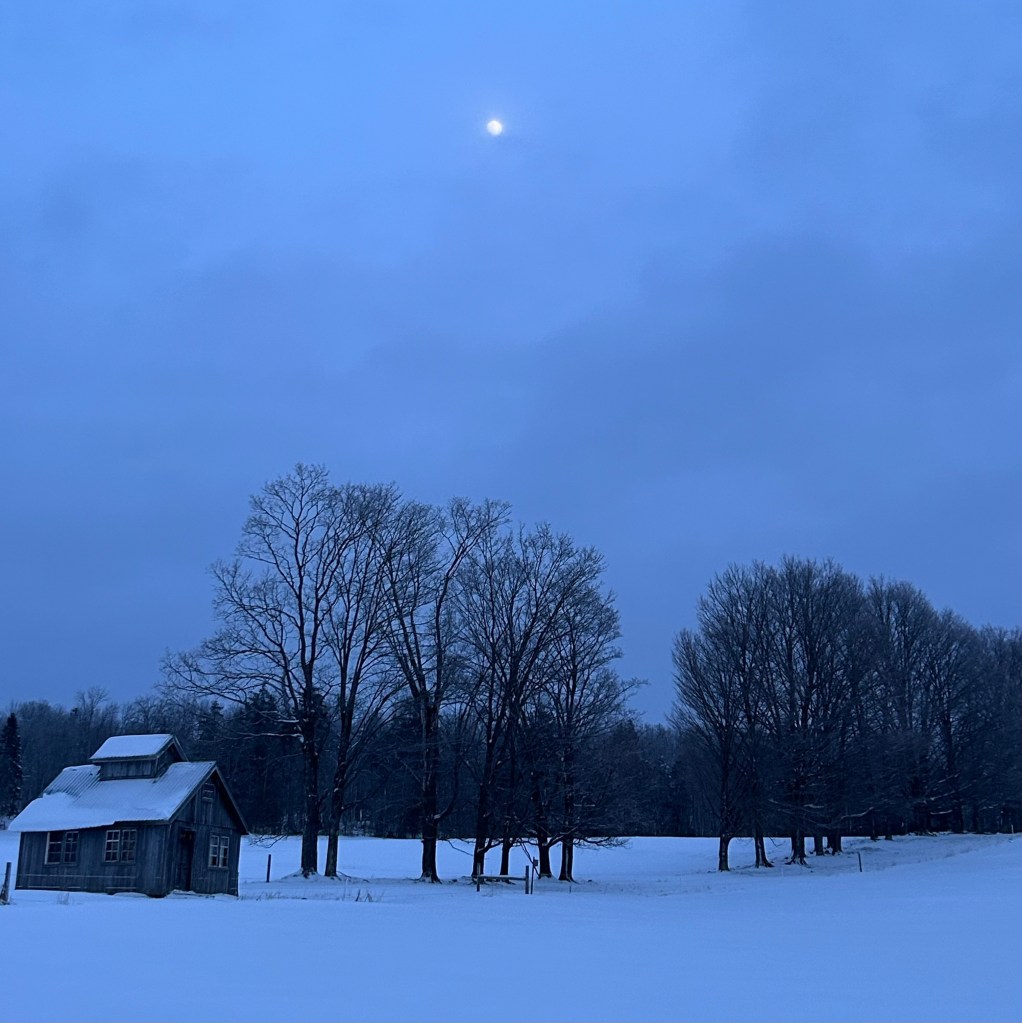
Last night, I stepped out of our warm house where the cats are again sprawled in their favorite place before a toasty wood stove and walked out to the nighttime garden to look at the half moon, hung in the sky among the constellations like a profound mystery, cream tinged with autumn’s gold, loveliness incarnate. The cold held me. One of my earliest small-child memories is looking through my father’s telescope at the pocked moon, wondering, wondering…

Mid-October, and the crickets are still singing. The elements for my survival include so many of you here, who sent me letters and cookies, books and cards; access to medical care (a great privilege); friends and colleagues and my dear family… and my own scrappiness, my fierce desire not to slip away from this world and this patch of acreage, the half-moon sailing silently over my frost-gnawed garden.

“You own everything that happened to you. Tell your stories.” ~ Anne Lamott

Put on a dress of flowers…

I spy a young fox on my front yard sniffing the trunk of the pear tree. Someone planted these two fruit trees long before I lived here. The smaller bends into the lilac hedge as if it’d prefer to be a lilac. This one, the taller, shoots high, its branches like an enormous hand raised in greeting.

The fox checks out the cohosh I planted this fall. Dawn is coloring up towards whatever day might emerge. I’m walking around my downstairs rooms, a dress in my hand, headed into work today, to sort out questions I both can and cannot answer, to talk with my office partner about town roads and FEMA, the drying up streams and lakes, about the merits of apple cider vinegar, and grownup kids. We’ll open the screen-less windows wide open in this 100-year-old former school, letting in the sunlight over the dusty sills. Hungry wasps fly in and out. An ordinary day of the things of this world, some humdrum, some irritating, some lovely as this balmy October weather. As for me, broken by cancer, limping back to whatever rude red health I can summon, I think, Put on a dress with flowers.

The fox crosses my neighbor’s pine-cone-strewn grass and disappears down our thin road. A fortuitous sign, I think, for this day.

Ode” by Zoe Higgins

Here’s to everything undone today:
laundry left damp in the machine,
the relatives unrung, the kitchen
drawer not sorted; here’s to jeans
unpatched and buttons missing,
the dirty dishes, the novel
not yet started. To Christmas
cards unsent in March, to emails
marked unread. To friends unmet
and deadlines unaddressed;
to every item not crossed off the list;
to everything still left, ignored, put off:
it is enough.