Plant a Tree With Daughters

Ernest Hemingway famously wrote that a man had to plant a tree, fight a bull, write a book, and have a son.  Taking one enormous giant step away from the feminists’ ranting about Hemingway and his often not poplar notions of manhood and women, I’d like to acknowledge that these four tenets of advice are pretty much as salt-of-the-earth as I could imagine.

As my older daughter and I planted a tree this afternoon, we talked about Hemingway and how that advice might differ for women.  Have a daughter, we immediately agreed.

Fight a lady bull? my younger daughter suggested.

No, I insisted.  Fight a bull.  I wrote a book — not a lady book by any means.  Fight the bull you encounter, horns or not.  Plant the tree you must, wherever your soil lies.

DSCF9833

Mapping

May, as opposed to November, brims with the joys of living in Vermont.  Oh, November’s okay, but May is exquisite — the apple blossom season — albeit a little fickle.  We’re not free of Jack Frost yet.

In school, my daughter was asked to envision a mental map of her world.  As maps — living with and without them — figure prominently in the novel I’m writing, this exercise set me thinking.  How would a mental map of the world for a Vermont ten-year-old differ from a child in Turkey?  Or say you are a Chilean miner?  Or a skydiver over Dubai?  How radically the topography (miles high or miles deep) of those worlds would differ.

The places we hold dear, a vernal pond or a child’s rope swing; the places we fear, the night’s blind country dark or the midnight territory of our own troubled heart; and the places we imagine and desire….. all these places are marked on our own unique maps in space, time, and memory.  November’s rainy days hold repetition, but these spring days are unfettered by similarity; the world’s busily growing.  These days, the map is not static.

Yet I like driving at night

in summer and in Vermont:

the brown road through the mist…

                                                                                 Hayden Carruth, The Cows at Night

DSCF9828

This Sweet Early Spring

Here’s some David Budbill lines on this spring evening:

… all this, this sweet

      early spring —

with no bugs at all, none, not a single one —

     this

clear, beautiful, and brief moment,

     this emptiness…

David more than generously read my novel a few years back, and he completely understood the book’s grittiness.  While he championed me, and did all he could to help me sell the book, he also insisted that I remain true to the book’s vision and in no way at all dilute the novel’s dark underbelly.  David Budbill seems to me a man who’s devoted his life to poetry, to pushing the depths and humor and sheer joy of poetry.

On this day, here’s my own handful of poetry, a few garden pebbles in my dirty palm.

DSCF9822

Wild Apple Tree

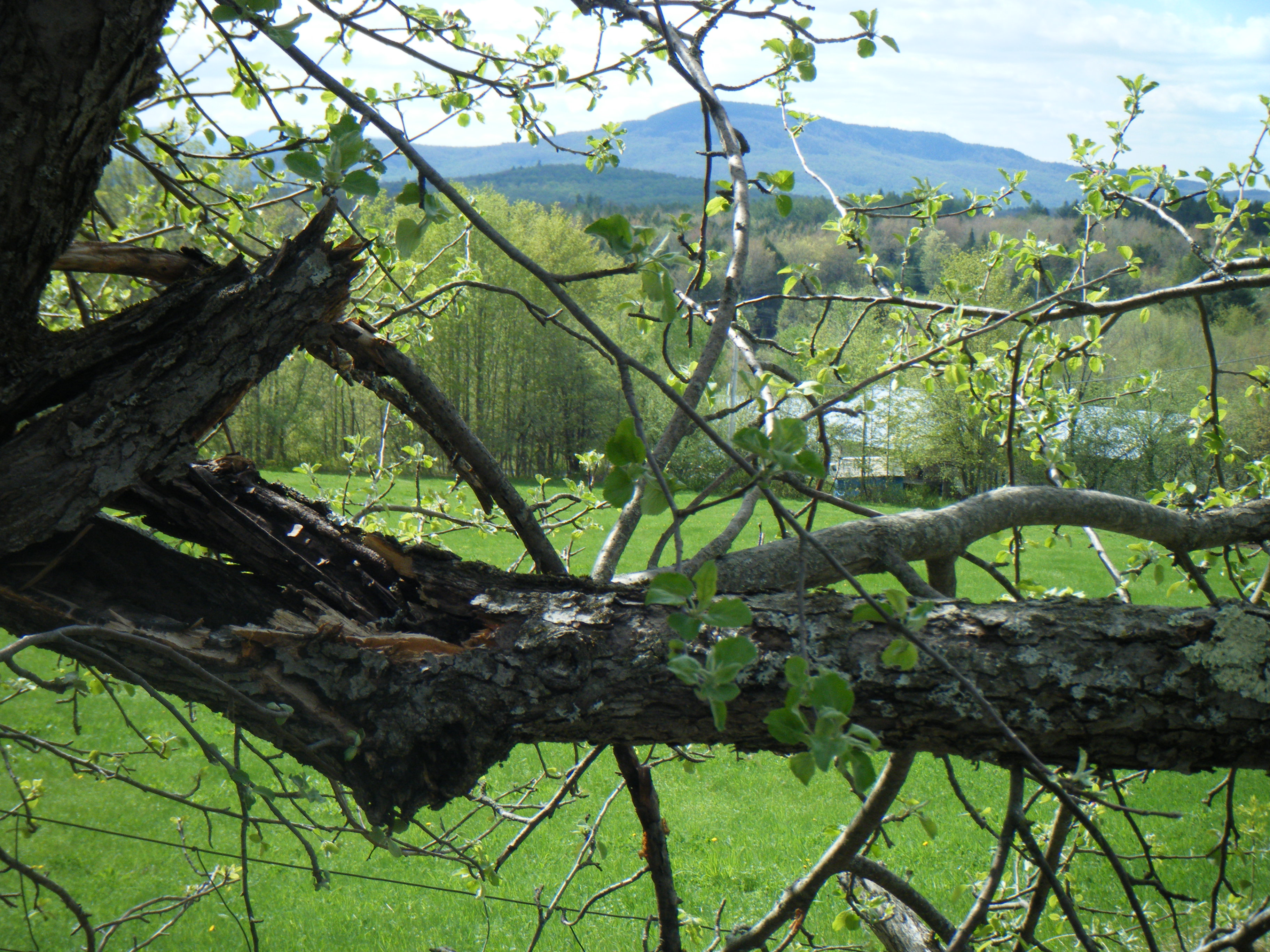
DSCF9820This apple tree lives along our road.  I pass it every day, along with the Vermont plethora of maples and ash and poplars, many more wild apple trees, blackberry brambles.  All winter long, this tree has been dormant, sleeping its hard and quiet sleep.  Then today, mid-May, I discover effusive green from a broken branch of all places.  Apple wood is dense, a good solid fuel for wood stoves (as Annie Proulx wrote), but the leaves are as tender as a child’s skin, and the delicate blossoms are not far behind.

Working on my second novel today, I thought of this apple branch, as I labored through a complex scene.  Then I thought:  Do something different.  Have a character do something I would never expect, or fly a bird through an open window and knock over a drinking glass.  Mix it up.  Sprout a whole leaf ensemble from a broken branch.  Use up all that sap.

Jane Kenyon’s poem February:  Thinking of Flowers has this lovely line.  “A single green sprouting thing would restore me….”  And here I am in May, in Vermont, in opulent beauty, and the black flies aren’t yet biting.

Let the Road Rise Up to Meet You

Spring in all its urgency:  the Vermont winter finally (at long last!) has been slayed by the face of the earth turning round to the sun.  Almost a few days ago, hard-edged filth-ridden glaciers of snow hunkered beneath the roof eaves on the house’s northern side.

Now the peepers sing in their insistent frog party.  The trilliums thrust away last fall’s dried leaves, pressing upwards with their burgundy blooms.  A cluster of spring beauties sprang up overnight in the forest behind our house.

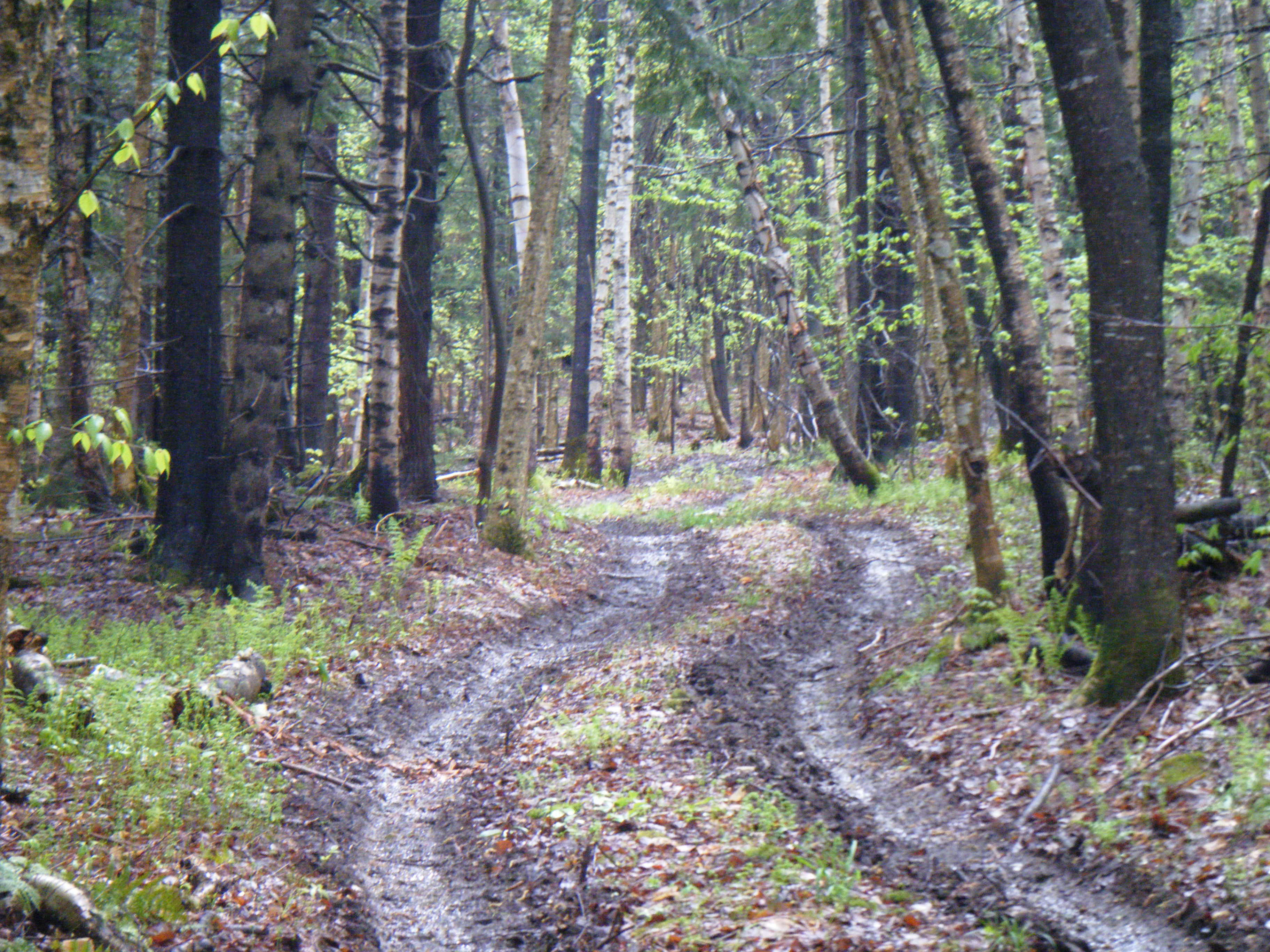
Polly Young-Eisendrath, in her exquisitely wise new book, The Present Heart, writes about our individual human journeys; how the road rises up in ways we’d never imagine to meet us along the way.  This muddy forest road, with the green literally surging in overnight, rises to me.  This afternoon, I knelt on one garden-soiled knee and pressed my face near to the scents of humus, of rot and renewal, of decay and growth:  of spring.

DSCF9817