Anti-Complexity

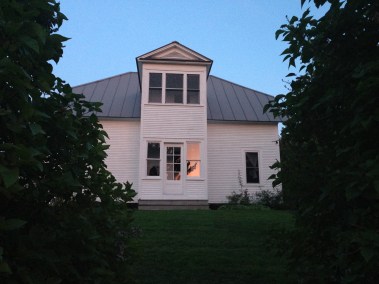
At a book discussion for Banned Books Week, a woman mentions Harry Potter was censored as “anti-family.” What does that mean? MacBeth offers no honeyed view of family. Should we not read Shakespeare? I walk home in the dark, the air balmy and the crickets singing, a crescent moon shining like yellow gold over our house’s metal roof, then listen to my daughters’ laughter floating on that oddly warm September air through the open screens in the living room.

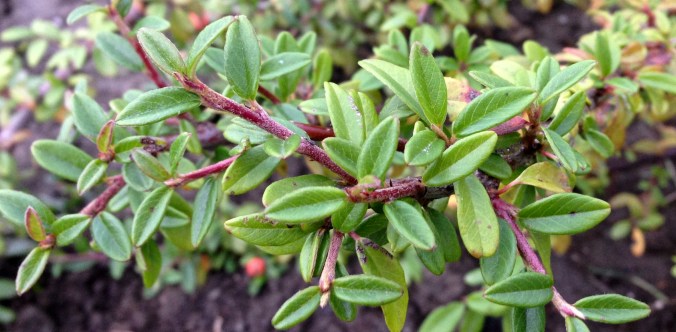
I slip off my sandals and stand on grass, still wet from where I watered the cotoneaster bush I planted a few weeks ago. Every evening in this dry weather, I water this bush. I planted it because the house I grew up in had a cotoneaster outside my father’s study window. My brother, when he learned to ride a bike, plowed through that bush, numerous times. I picked the berries and strung them on thread for necklaces. My sister and I fed them to our dolls. My mother admired the sprawling bush’s resilience.

I think of Harry Potter, the boy who longed for his dead parents. Anti-family? As if family has ever been simple.

We raise children and tell them other things about who they can be and what they are worth: to us, everything. We love each other fiercely, while we live and after we die. We survive; we are savages.

– Jessmyn Ward, Men We Reaped
FullSizeRender


One Large Step

The first tooth my daughter lost she threw into the woods. She had been eating a wild apple in our sugarhouse driveway, and the tooth pulled free into the fruit, frightening her. She spit the mouthful into the forest and threw the half-eaten apple, too. I actually spent some time looking for that tiny white tooth.

That milk tooth seemed so important to me then – as if with that tiny tooth I could hold her childhood in my hand.

Since last summer, my  younger daughter has wanted to leap from a bridge into Mackville Pond, near her friend’s house. Standing on the metal railing the other day, her friend and sister coached her, while I sat on the grassy shore, certain the girl wouldn’t jump.

She did; I nearly missed her leap. Swimming, laughing, confident:  I got this.

And so it goes.

It would be good to give much thought, before
you try to find words for something so lost,
for those long childhood afternoons you knew
that vanished so completely…

From “Childhood” by Rainer Maria Rilke

FullSizeRender

Autumn, Now

Talking to my brother while frying sausages with garden greens for dinner, I mention the girls and I have just gone swimming, with the temperature high in the 80s. He says, The climate isn’t changing; the days are just getting warmer. I immediately take the phase and turn it around to reflect something inane in my own life. We’re going to use that joke for years to come.

At a soccer game, another parent mentions he’s been watching Ken Burns’ Vietnam series, and he offers that his dad served a tour in Vietnam. I share my memories of my father watching Walter Cronkite every night and drinking bourbon, fiercely opposed to that war.

Collectively, as a parent group, we wonder what our kids will remember about these years; as adults now, we sense tension rising in our own rural Vermont. But these September days are balmy and beautiful. We cease talking and admire dragonflies nipping by, fat shafts of sunlight between us filled with dust. Even when the girls have hit the locker room, and then scamper around us, hungry, we keep on admiring, filled with the great good luck of being alive on such a day, mothers and fathers of healthy strong girls, at a leisurely, end-of-the-day soccer game.

The summer moon.
There are a lot of paper lanterns
On the street.

– Buson

IMG_2005

A Few Minutes

When my brother was learning how to ride a bike, he started at the neighbors’ cement step, leapt up on the banana seat that was too high for him, wavered across our scraggly lawn until he banged into the side of our house, and fell over. He hadn’t yet mastered turning, and so he repeated those steps – the vaulting ascent, the uneven pedaling, the thunk and crash – until he swerved left, up a slight hill, and kept going.

Washing dishes the other night, listening to the the increasingly grim NPR news, someone kept smashing the side of my house. My daughter was doing a handstand, kicking her heels against the clapboard – working as she said.

I thought of Dr. Spock’s Play is the work of babies – equally applicable to 12-year-olds. Laughing, my daughter demonstrated her ability to tuck her heels around her ears. She suggested I try that neat trick, but instead I lay on the grass and gazed at the clouds silently shifting over the sky’s expanse we can see behind our house. Shot through with sunset’s pink, the evening stretched around us, the cooling air nipping just the slightest on my cheeks and bare toes.

She lay on the grass beside me and said, There’s a snail just above us. See it?

I did.

Don’t worry, spiders,
I keep house
    casually.
– Issa

FullSizeRender.jpg

Neighbors

While my 12-year-old was turning cartwheels on the grass, I leaped over the fence last night into the cemetery and stepped between two enormous, fragrant hydrangeas, their blooms just beginning to brown and fade. My daughter followed me over the fence and turned a few cartwheels down the slope.

Spread over one of the highest points in the village, the cemetery’s view gazes down at the few streets of houses, the brook and river concealed in the foliage, and the rise of Buffalo Mountain across the way. From here, the village is small, cradled in the green-turning-to-gold-and-red forest which far outsizes the town.

All summer, we’ve begun to know the village’s patterns – how the traffic rises in the morning, ebbs off in the day, then rises again. How on warm evenings, certain porches fill with talking people or other folks simply sitting, watching the evening go down, phones glowing in their hands. Across the cemetery is a house often lit with the white twinkling lights like ours, and whoever lives there burns a campfire behind a fence of lilacs.

Late nights and early mornings, the darkness lies thickly through the slumbering town.

My daughter leaped back over the fence and stretched out her hand to hold the bouquet of blossoms I’d snatched, so I could jump over, too.

The home is the center of life. It is a refuge from the grind of work, the pressure of school, and the menace of the streets. We say that at home, we can “be ourselves.” Everywhere else, we are someone else. At home, we remove our masks.

– Matthew Desmond, Evicted: Poverty and Profit in the American City

FullSizeRender.jpg

front door

Home/Place

My our tiny place on the planet is reveling in summeresque weather; I write this, knowing days are not far off when our collective Vermont shoulders will brace against the polar vortex. Meanwhile, the sweet warm air brims with dragonflies and fluttering insect life galore.

If there’s one theme – for what that word may be worth – that might struggle up to the surface of my writing life, it’s likely interconnectedness. So many of the bad decisions I’ve made have stemmed from my own blind ignorance – not understanding how this led to that and why this other thing was a factor, too. Years ago, when I first started college, a professor very simply pointed out that some things we can see with our eyes, and some things we can’t, but that doesn’t make those unseen things any less real.

When my daughters and I talk about the hurricane season roaring in, far from us, or Trump’s public words about Charlottesville, I find myself saying I don’t know, surrounded by the vastness of these things. Begin with questions, I keep reminding my girls and myself. Questions are a real place, too.

Here’s one of the ending paragraphs from this fine book:

I wanted to try to write a book about poverty that didn’t focus exclusively on poor people or poor places. Poverty was a relationship, I thought, involving poor and rich people alike. To understand poverty, I needed to understand that relationship. This sent me searching for a process that bound poor and rich people together in mutual dependence and struggle. Eviction was such a process.

– Matthew Desmond, Evicted: Poverty and Profit in the American City

FullSizeRender.jpg

Where We Live, Hardwick, VT