Rules for Novelists — Rules for Living

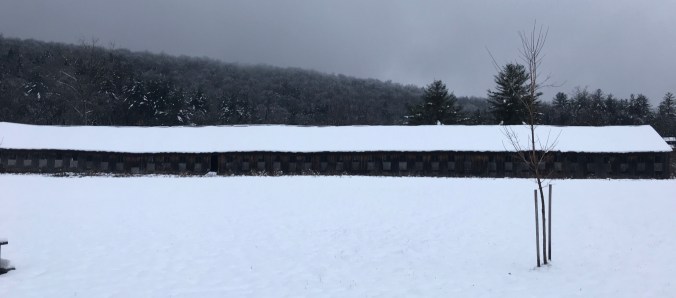
In Vermont, we’ve skipped from the Ides of November to the middle of January — just like that — and none of us have even eaten any Thanksgiving turkey.

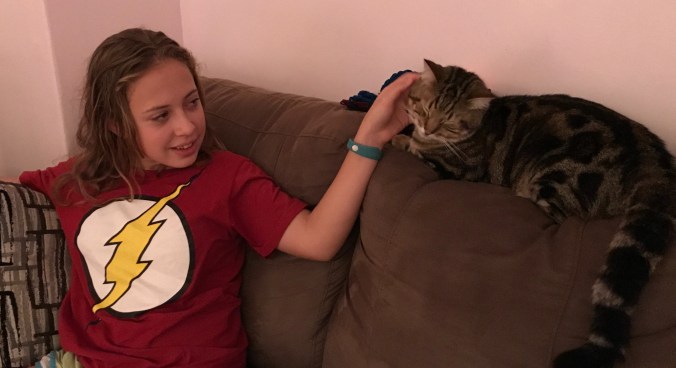
The 13-year-old, on her second snow day this week, calculates how long into June the school year already stretches. She’s up early anyway, curled on the couch with her cats and her library book, immersed in an imaginary fictive world. I leave her be. The snow shoveling can wait.

Here’s rules 1 and 10 from Jonathan Franzen’s “Ten Rules for the Novelist.” I’m darn sure I nail the relentless rule at least.

The reader is a friend, not an adversary, not a spectator…. You have to love before you can be relentless.

— Jonathan Franzen, The End of the End of the Earth
img_3969.jpg

Our November Rose

So long, arrivederci, to green grass.

Snow day for the school kids. My 13-year-old cut up paint swatches from the hardware store — a variety of rose and crimson and pink peony — and I had taped last week on the living room walls. We’re not a pink-oriented family, the three of us females, but somehow pink seemed just what that room — and maybe what the three of us — needed.

IMG_3957.jpg

IMG_3943

Capital Cup of Coffee

Sunday afternoon, the 13-year-old girls  watch a movie in Montpelier while I walk down the street to Capital Grounds. For two hours, my world is writing and a woman who sits beside me and eats a bowl of chili meditatively and the reflection in the storefront windows across the street of a flock of pigeons swooping in flight. I never actually see the pigeons — only their darting reflection.

At a table behind me, three men laugh. When they came in, one man had a walker, and I turned and asked if they needed me to move. He said no, and that the nice thing about this coffee shop is how everyone is on top of each other all the time, anyway. I remember visiting a different version of Capital Grounds years ago, in a winter when I was at home with a three-year-old. I caught myself reading a man’s newspaper over his shoulder.

When I leave, the November sunlight is thin, but it’s there. I take the long way back to the theater. Far overhead, the capital’s gold dome beams.

IMG_3899

Bog Trip

No school for 13-year-old, day off for 19-year-old, no snow yet, and November’s scant light: I fold up my laptop and, impromptu, declare we’ll visit Chickering Bog.

We follow a path through the woods, our boots brushing through fallen maple and ash and cherry leaves, then through a stand of tamarack where the dirt path is scattered with tiny gold needles. On the easy walk, the girls chattered, moving quickly against the damp, the three of them in their black down jackets and myself in turquoise. We’re not far from the world from houses and cars, yet the forest folds around us. I’ve been walking in various New England forests since I was a child, and although this particular path isn’t familiar, the woods are — filled with both that allure of what’s around that next bend or behind that glacial erratic? and, simply, the woods’ loveliness.

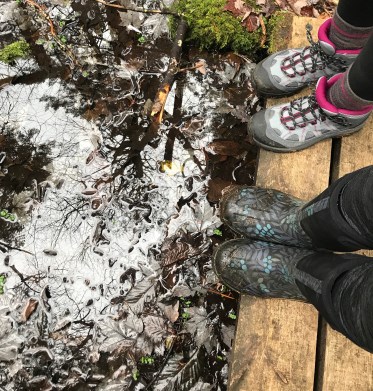
The path leads up to what’s more properly a fen. The boardwalk takes us near the middle where the girls find cranberry-red carnivorous pitcher plants. Beneath our boots lies the thousands-of-years-old mysteries of peat. And over our heads, all that sky.

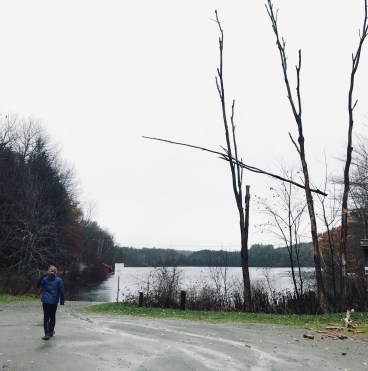
A lake is a landscape’s most beautiful and expressive feature. It is Earth’s eye; looking into which the Beholder measures the depth of his own nature.

— Henry David Thoreau, Walden

IMG_3897.jpg

Calais, Vermont

A Random Guest & A Snippet of Her Story

Yesterday, a woman came into my library with old photos and book donations. She arrived at a quiet time, and we sat and talked, our conversation winding around to her grandmother — a midwife who studied via a correspondence course while raising a brood of children.

In those days, the quarries in Woodbury were running at their peak, shipping marble and granite via rail all over the country. The midwife was called to the quarries’ terrible accidents — where men’s flesh and bones were mangled and crushed by stone.

Thin November sunlight flooded the library. I was in no particular rush to return to my work. A sugarmaker with her husband, she was glad of the pause from her work in the woods, too. She mentioned that now, as an adult, she has so many questions she’d like to ask her grandmother — what made you want to be a midwife? what did you see? She remembers her grandfather coming in from the morning milking and eating her grandmother’s maple cream by the spoonful.

Here’s a line from Elliot Ackerman’s novel Waiting for Eden, regarding training for overseas deployment:

Communication, we were told, would be our only defense against the stresses of isolation and confinement.

IMG_3824.jpg

Wild and Tame Creatures

On his favorite perch on the dining room windowsill, my daughter’s cat suddenly stiffens his back and presses his nose near the November-cool glass. Beside him, I’m typing, and I rub his back. He mews an inquiry, looking at me.

Through the window, I see eight wild turkeys, nosing through my young asparagus bed, planted just last spring. The turkey nearest us steps toward the window, raising its long odd legs. The cat and the bird stare at each other, the turkey’s head tipped slightly to one side, so its eye gazes at this little furry tiger cat.

The bird’s bigger than you, I murmur.

For the longest time, these two creatures stare at each other. Then the turkey goosesteps on its way, and the cat, true to his nature, curls up on the table beside my laptop and takes a nap.

Midterm elections, 2018.

I always feel the movement is a sort of mosaic. Each of us puts in one little stone, and then you get a great mosaic at the end.

— Suffragette Alice Paul

IMG_3839.jpg