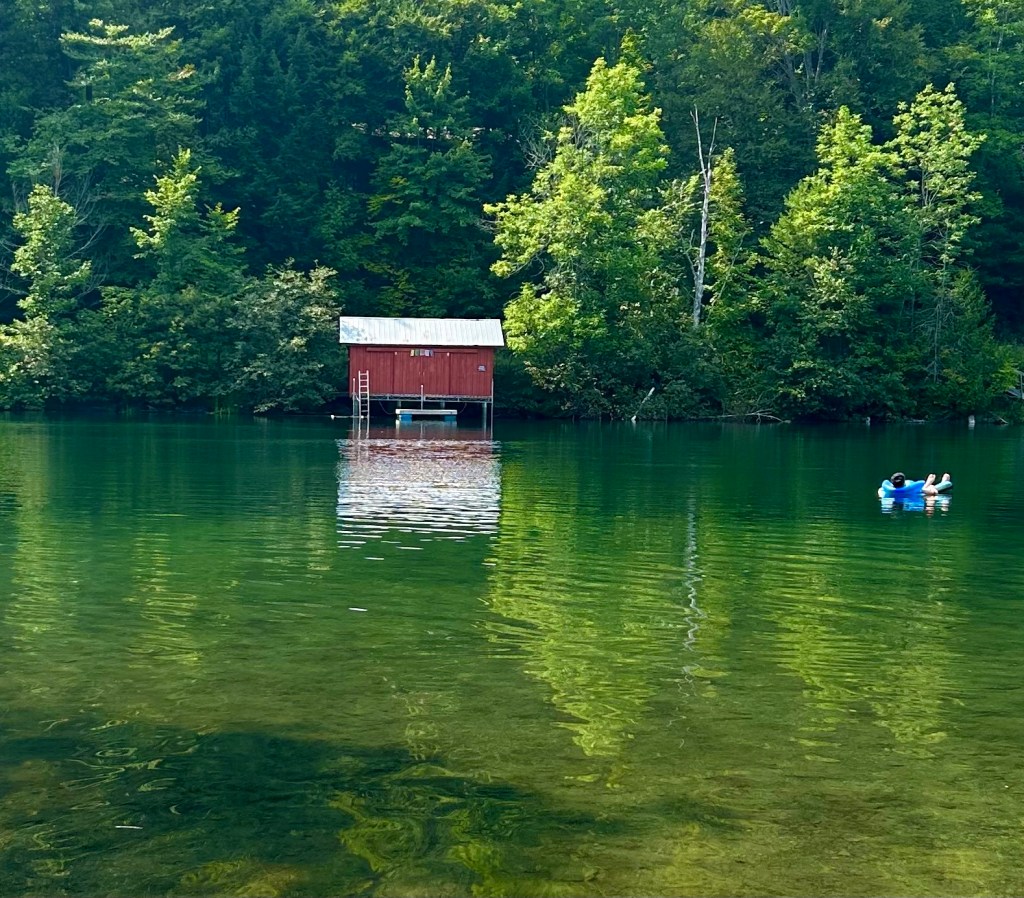
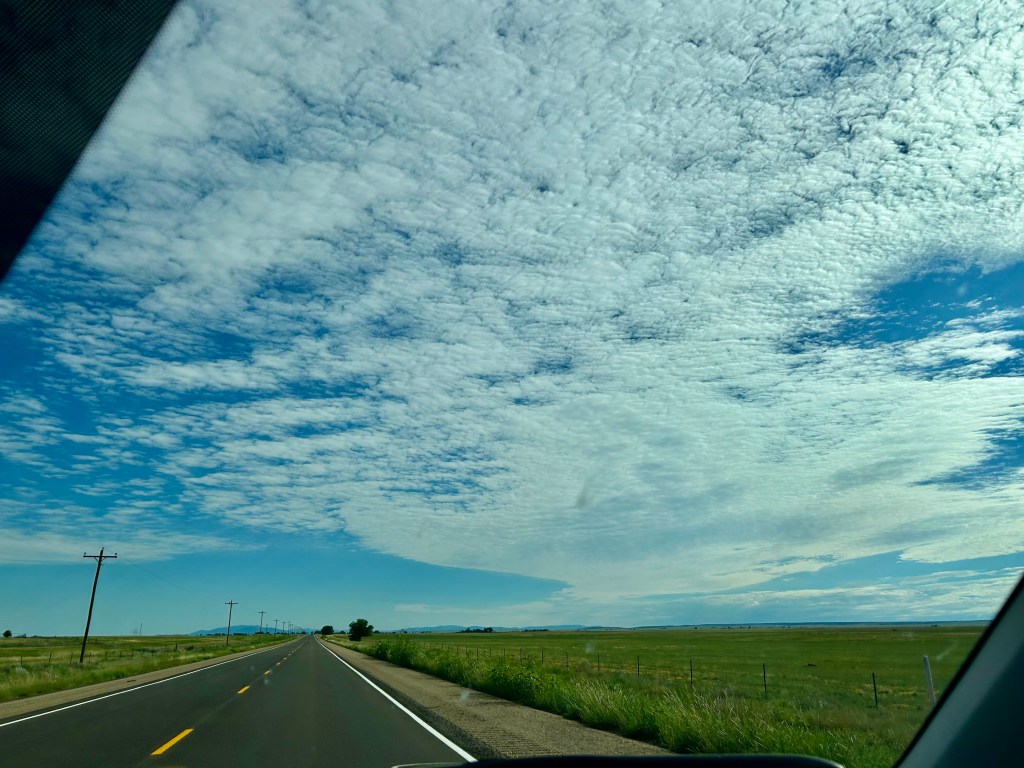
Spring, in all her variations.

In the dark, the robins chirp, their language weaving night to dawn to daylight. Imagine, a whole season of birdsongs ahead. Or, I remind myself, quit stretching into the future. Simply listen.

Word around northern Vermont is that the spring is stuck. Days with thin ribbons of chilly sunlight. Drizzle and damp. In my wool hat and sweater, leather boots, I pull out the broken branches beneath the mock orange. Last winter’s heavy snow slid from the roof and snapped the brittle branches that should have been trimmed, anyway, last year. Against the house’s southern foundation, a cluster of white violets blooms. Every morning, the green pushes forth. The Japanese lilac I planted last April brushes out. Red stalks of peonies emerge. The tulips hold their plump buds closed, teasing, tomorrow, tomorrow.

But in the realm of today, today, each day I feel the chemo less in my body. Yesterday afternoon, in my fifteen-minute house tidying, I suddenly realized that my body has been cycling through chemo for six months. Before that, I’d been (ignorantly) filled with rapidly growing cancer. Now, walking barefoot around the house, the cats lazily watching me from their perches on couch backs, I realized what was different was that my body felt like mine again, me, the way I’d forgotten as familiar.

In alignment with that strand of my good news (apparently in opposition to what’s happening with arts funding on the national level), here’s a line from Dostoyevsky’s Prince Myshkin I read this morning: “Do you know I don’t know how one can walk by a tree and not be happy at the sight of it?”

“…the strange idea of continuous living…”

A knock at my kitchen door wakes me. Midafternoon, home from a long morning at Dartmouth for routine things, nothing major, but a day that began in the dark after scant sleep. The week before, I’d left a message for a man who painted three sides of my house a few years ago to ask about an estimate for my barn and that fourth side that somehow I’d never painted. Last fall, sick and not knowing the (cancer) reason why, I’d managed to get out my sander, but that was about as far as that plan went.

The painter is a person my daughter and I know in our overlapping circles, so I’m not surprised when he says he’d heard of my illness. We talk for a bit in my kitchen. Then I grab my sweater, and we walk around the barn. A stunning sunlight makes me blink. Our conversation winds around primer and caulking and ladders. In the back, where the woodchucks claim domain, the painter turns the conversation towards politics and the word that’s so commonly used now — cutting. We talk about cancer research (which saved my life) and the bitch of enduring chemotherapy. A house finch perches in the honeysuckle in the wild tangles below my house. The honeysuckle’s bent branches are dotted with tiny fans of new leaves.

It’s been a day for me. I once had unbounded energy that I spent so easily with my garden shovel, my paintbrush, laptop, trowel, my two hands. I lean back against the barn’s peeling clapboards, beside last summer’s clematis vine that appears shriveled, used-up, no good. I have complete faith this beauty will bloom again this year. Listening to the painter, I wonder, why make any guesses about anyone or anything, really? What will happen will happen. Yet, I can’t help myself. I’m betting on the clematis and its purple flowers. The painter offers me his good will, and I take that, too.

Instructions on Not Giving Up

More than the fuchsia funnels breaking out
of the crabapple tree, more than the neighbor’s
almost obscene display of cherry limbs shoving
their cotton candy-colored blossoms to the slate
sky of Spring rains, it’s the greening of the trees
that really gets to me. When all the shock of white
and taffy, the world’s baubles and trinkets, leave
the pavement strewn with the confetti of aftermath,
the leaves come. Patient, plodding, a green skin
growing over whatever winter did to us, a return
to the strange idea of continuous living despite
the mess of us, the hurt, the empty. Fine then,
I’ll take it, the tree seems to say, a new slick leaf
unfurling like a fist to an open palm, I’ll take it all.

~ Ada Limón

Bare soil.

Midnight, I’m sitting outside the local hospital in the balmy night, a few mosquitoes drifting in the streetlights. There’s no one around, save for the young woman in reception poking her phone, the peepers chattering in the wetland down the road. The night is so warm I’m reminded of summer’s open-ended days and nights, the pleasure I’ve taken these last few years sitting outside in the dark, listening to the nightsounds of rustlings and callings, human and wild.

The person who drew my blood just a few hours ago told my sister and me about the local library in nearby Johnson, Vermont. This evening, the library will be moved from where it was built and recently flooded to safer and higher ground near the elementary school. The town will shut down as the brick building is wheeled down Main Street and over a bridge spanning the Lamoille River. In the velvety darkness, I imagine the scene: the floodlights, the crews, the townspeople who will come out to admire and cheer. A small but certainly mighty miracle.

Around the building, I hear the rattle of my Subaru’s loosening heat shield. Then my sister appears in the driver’s seat. Along empty roads, she drives us home. In Wolcott village, I spy a fox rushing across the road. The animal pauses at the weedy edge, head turned towards us, perhaps wondering what we’re up to, too, this creature, like us, in no rush at all. Home again, the cats press against the kitchen glass doors, as if expecting a reckoning from me, an accounting of my absence.

What can I say to these tabbies? When a nurse apologized for dropping a plastic cap on my shoulder, I mused aloud that it wasn’t heavy — and isn’t that a line from Phish? Things are falling down on me, Heavy things I could not see… The nurse knew these lines, too. The heavy falling things are taking a pause, perhaps, in spring, as the earth reorients herself, through peeper song, unfurling leaf, the heady scent of rain on bare soil.

At the edge of damage…

A few days of radiant sunlight and steady breeze, a burnish on my cheeks: solid medicine. It’s spring.

In rapid succession now, the coltsfoot, the lungwort, Siberian squill, my mini daffodils bloom. Each day I remain out of the hospital feels like a victory, a day worth savoring. Afternoons, evenings, I lie in bed reading Dostoyevsky.

There’s this line from a Louise Glück poem I mull over as I walk around my budding forsythia, the Daphne I planted last summer that survived the winter. The line is: “Nothing can be forced to live.” In these lengthening days, I wonder if perhaps my attitude has been skewed for years, gritty-mouthed and wry, one foot behind me ready to flee, the other toes nestling into the garden. Mid-April, and green shoots and velvety petals thrust from the earth. The honeybees swarm. The groundhogs feast and dig. The children ride bikes.

We’re early enough in the season that I can yet pick out this patch of Chionodoxa, the lilac buds. My sandy Vermont hillside thrusts towards life. A poem my friend Jo sent my way, and I’ll send yours is below. Swan’s words about the crack in our world — how much these resonant with me. Now, in my days and nights after chemo, as I begin putting my life and soul back together, I remind myself (as my siblings remind me) to lean into my cracks, to embrace the holes and the whole of my life.

BOWL

BY HEATHER SWAN

for my mother

From the mud in her hands,
the bowl was born.
Opening like a flower
in an arch of petals,
then becoming a vessel
both empty and full.

Later, in the kiln
it was ravaged by fire,
its surface etched and vitrified,
searing the glaze into glass
as its body turned
to stone.

It is at the edge of damage
that beauty is honed.
And in Japan,
the potter tells me,
when a tea bowl
cracks in the fire,
that crack is filled
with gold.

The crying moments…

I’ve written frequently in this space about living with cancer and cancer treatment since I was diagnosed with lymphoma last November. From the beginning, I was determined to hold myself together. Some of this was simply shock; I could not believe I had been walking around, working, going to birthday parties, hanging with family and my friends while cancer was devouring my body. By the time I ended up in the ER, telling the triage nurse I was circling the drain, the cancer had metastasized to stage four. I needed a moment. I was not about to get a moment.

In the long hours of yet another ER visit, my daughter told me that a longtime friend had asked her last November if I actually intended to undergo chemotherapy. I hadn’t heard about this inquiry, and the question stunned me. I’ve been my daughters’ sole parent for a decade now; even in the worst of these cancer nights and days, I remain foremost a mother, unable to relinquish my watchful eye. After diagnosis, it was immediately clear that the cancer was rapidly growing; without some kind of treatment I would die that winter. The lymphoma I have responds well to chemo. My other option, perhaps, was to seek an alternative treatment — where, for how much, and with what likelihood of success — was dubious at best. In my fifties, I was determined to live. My oncologist was clear that the chemo would shove me to the edge of demise. He told me, You are curable. So, in a rare action of trust, I stretched out my arms and said, Infuse me.

As the cancer was so advanced, I suffered numerous complications from the chemo, which resulted in all the hospital stays I’ve referred to in this blog — nearly a dozen — weeks and and weeks and weeks this winter.

Now, April, Easter rising tomorrow, I’m drinking a friend’s homegrown chamomile tea this morning at my kitchen table, watching the small rain feed spring’s green, alive, in remission.

From the get-go, too, I determined not to burrow into the rathole of despair that I’ve seen disease wreck upon individuals and spread to families. This recent ER visit, however, forced me to the crying day. I wept before the kind nurses, the warm hematologist with her sparkly hair, the PA who insisted I not leave even as I connived deals and plans for discharge. I did not cry before the elder hematologist, who had certainly been practicing medicine for most of my life. I said, yes, yes, I understand. And then I wiped my tears with my thumb when he left.

By the late hour when my daughter had left, and I was alone again in the darkened ER room, I’d taken stock of what I’d crammed in my backpack: two books, my laptop and charger, a handful of underwear, my notebook. I’d forgotten my knitting, which was unfortunate. The nightshift nurse brought me water and those eternal saltines. She was a traveler and had last worked in Iowa.

Much later the next night, two nurses wheeled me through the dim and empty hospital halls to another room. Of all the experiences I’ve had at Dartmouth-Hitchcock, I’ve oddly enjoyed these late night journeys through this huge building. So many stories here, so much living and dying, so much richness. By then, I’d finished with my weeping, joined the world again, all of us, doing what we’re doing.

A driving spring rain
gliding, wending through the trees
speaks in little drops

~ Bashō

The first green of spring…

Spring fever – and the green is barely beginning in my patch of Vermont. Southernly, along the Connecticut River, we find greening grass in Lebanon, the hillsides washed with fattening buds. Perhaps especially because I am (finally! finally!) beginning to heal, my body aches to rake and tend, to bend down and finger budding flowers. The photo above is a tease. We’re close, but my daffies aren’t yet unfolded.

Too, we are a ways from marsh marigold, that swamp flower with profuse greenery and gold blossoms, but here’s one of my favorite David Budbill poems, so good it’s worth reading over and over…

The First Green of Spring

Our walking in the swamp picking cowslip, marsh marigold,
this sweet first green of spring. Now sautéed in a pan melting
to a deeper green than ever they were alive, this green, this life,

harbinger of things to come. Now we sit at the table munching
on this message from the dawn which says we and the world
are alive again today, and this is the world’s birthday. And

even though we know we are growing old, we are dying, we
will never be young again, we also know we’re still right here
now, today, and, my oh my! don’t these greens taste good.