So…

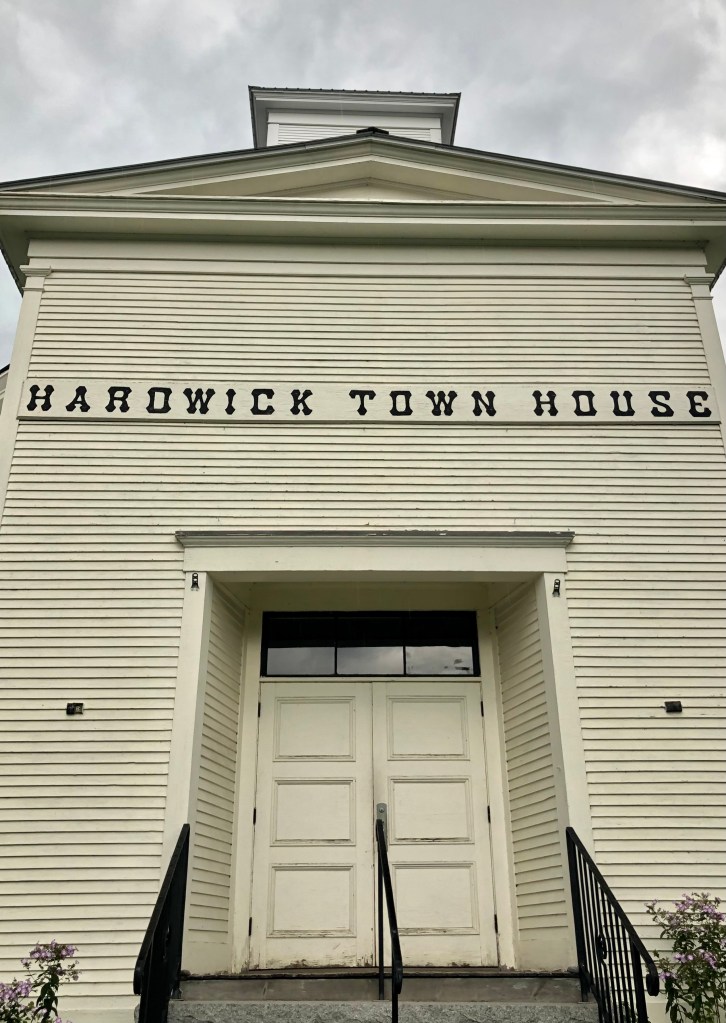
Pub date for Unstitched arrives Tuesday. The lovely Galaxy Bookshop and the equally terrific Jeudevine Memorial Library (both in Hardwick) are hosting a reading Tuesday (9.14.2021) at the Hardwick Town House.

If you’re in town and interested in coming out, please do.

I’ll also be chatting virtually with the fantastic poet Kerrin McCadden this Thursday, September 16, at 7:30 p.m., in an evening hosted by Phoenix Books. No charge, of course, for these events.

How much our world has changed since those days when I walked downtown and spent Tuesday evenings in the Galaxy, listening to writers and drinking cider. I hope you’re all well….

Short excerpt…

Like many others, I arrived [in Vermont] as a transplant. As a child and into my twenties, I moved frequently, from deserty New Mexico to New Hampshire’s red-brick mill cities to mountainous western Washington. Gradually, I became smitten with this tight-knit town. I joined the five-member school board and chaperoned walks into the wetlands. Our world was stitched together by carving jack-o’- lanterns, giggling at sleepovers, voting yay or nay on town and school budgets at community meetings, and baking surprise birthday cakes for friends. When I discovered the library had been broken into after hours, what remained was a lingering residue not only of cigarette smoke but also of fear. I began to wonder if maybe this world wasn’t so fine.”
Taking Stock.

The little apple tree that someone planted at our house before I bought it boasts fist-sized apples this year, surprising me. The previous year, the tree produced just a handful of apples. The first year we lived here bore only a single fruit. But this year, one branch bends so low beneath the weight it threatens to break.

On an evening walk, I pick a single apple, its skin tart, the flesh mealy. Enough good for pie. That’s fine news for the day.

*

I’m honored to participate as an author in CLiF’s Book Club for Grown-Ups. The Children’s Literacy Foundation is an inspiring, give-books-to-kids organization. If you’re interested, you can participate, too. Link included for a free sign-up.

Last, a little Richard Brautigan from Tokyo-Montana Express on this autumn morning:

“There are not too many fables about man’s misuse of sunflower seeds.” 

Fat Beauties.

Our cucumbers withered and died this year, producing little. For years, I’ve built my little mounds and buried seeds or planted my seedlings. This year, the extreme heat, the fluctuations of cold and rain, and sultry heat again, made the vines lie down and quit.

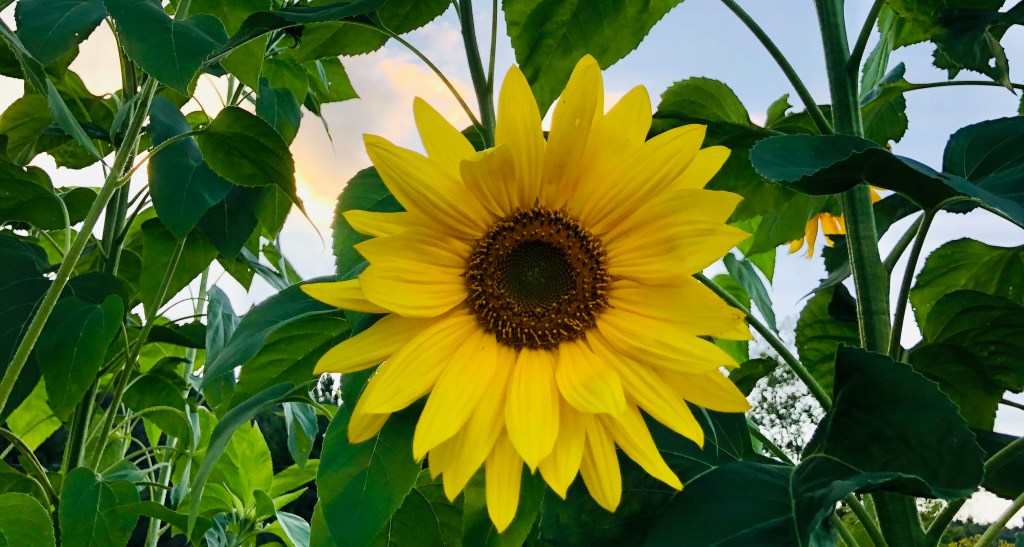
The queen of my garden is the sunflower, their golden faces open high above my head, friend to the sparrows and finches who dart through their stalks.

In the face of grim news, I offer this as a tiny sliver: the sunflowers are growing mightily. Bees are fattening.

Love Lies Bleeding.

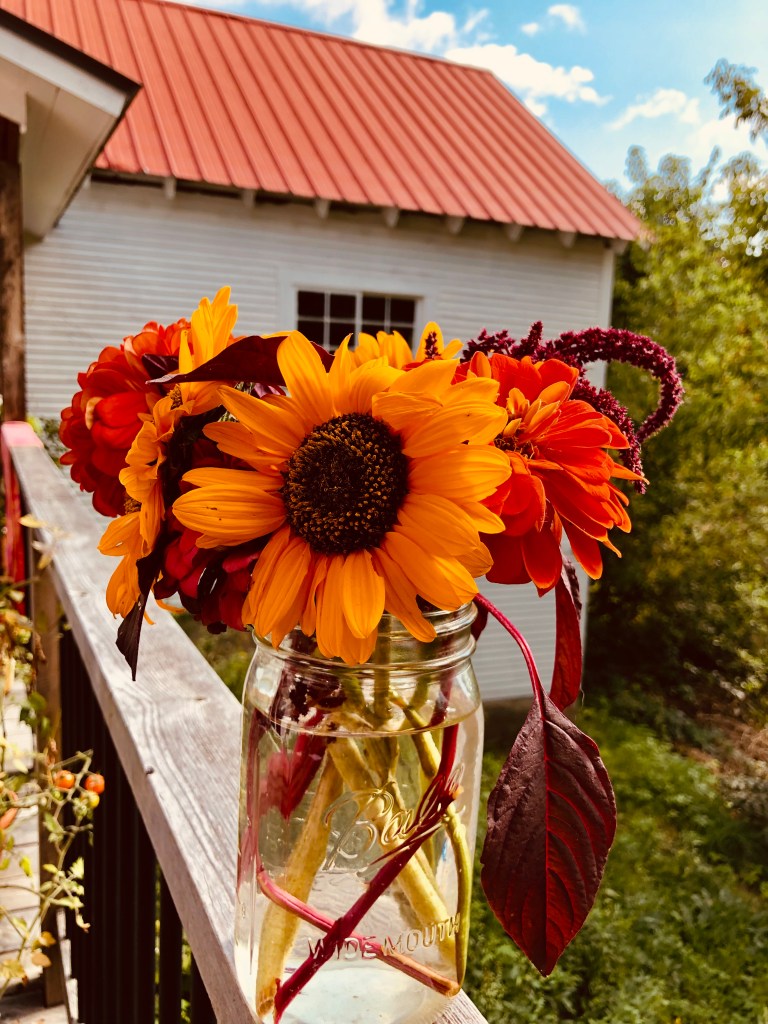
My daughter returns from a hectic work week with a mason jar of flowers from a friend. Our cat immediately gnaws on a zinnia leaf, and so my daughter sets the jar of flowers on our table on the back porch.

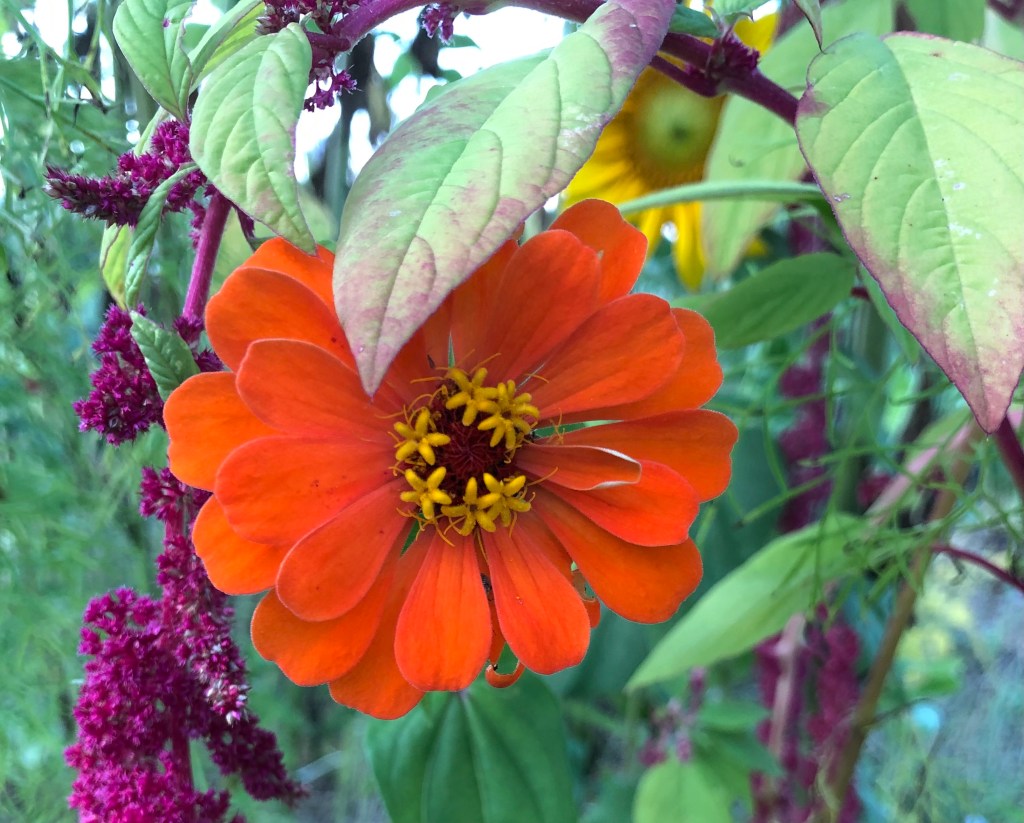
A week later, the flowers are still vibrant — giant orange zinnias and sunflowers and maroon amaranth that drapes over the jar’s edge. This, despite the fluctuations of cold and heat for days.

The other name for amaranth is Love Lies Bleeding.

On this Saturday morning, my daughters already at work and soccer, I drink coffee and catch up with email. Next year, I imagine, maybe I’ll plant my entire garden in flowers, vegetables be damned. I won’t; I know that. But I sowed an enormous variety of Love Lies Bleeding in along my brassica this year. We’re devouring all of that.

September 1.

Geese are bunching together and flying south. They’re hightailing it out of Vermont, following their instinctive, ancient pathways.

My youngest and I eat dinner on the back porch — chard and carrots dumped into noodles, stirred with spoonfuls of a chili garlic sauce. I ask about her first days as a high school junior. As I listen, our littlest cat pushes his nose against the screen. It’s growing late, and there isn’t much daylight remaining. When she leaves for a walk, I wash up our few dishes, listening to a podcast my father emailed.

How utterly complex this world is.

Afterwards, I wander out with the compost bucket and then stand in the garden. The sunflowers are crazy tall this year. Also, utterly amazing.

“The greatest sources of our suffering are the lies we tell ourselves.” 

― Bessel A. van der Kolk, The Body Keeps the Score: Brain, Mind, and Body in the Healing of Trauma

Garden, Hardwick, Vermont

Poetry, For Now.

Talking with friends by the side of a road, I notice a flock of Canada geese in the field across the road.

My friends tell me hunting season is just a few days away. The geese should move along.

My friends leave, too, one by one, and I linger with one woman, talking about farming in Vermont, an acquaintance we believe may have gone down the rat hole of QAnon, our elderly parents who live thousands of miles away. We branch into motherhood and gardening.

At the end of August, my youngest starts 11th grade today. The cats and I are up long before dawn this morning, the days dwindling at each end rapidly now. Next spring, with its promises of coltsfoot and trilliums seems forever away. I stand at our kitchen counter, drinking coffee, reading the New York Times.

Here’s a poem, not offered as an antidote to so many families, all over the globe, just solidarity.

Hope has holes

in its pockets. 

It leaves little

crumb trails

so that we, 

when anxious,

can follow it.

Hope’s secret: 

it doesn’t know

the destination–

it knows only

that all roads

begin with one 

foot in front

of the other.”

–Rosemerry Wahtola Trommer
Hardwick, Vermont